48 779 résultats
1849055266Istanbul Constantinople: Darü't-Tibaatü'l-Âmîre. AH 1265 1849. 1st Edition . Hardcover. Very Good. 8vo - over 7¾ - 9¾" tall. Contemporary cloth marbled boards. Slight chippings on the panels' extremities fading on board and slightly stained front pastedown overall a very good copy. Demy 8vo. 21 x 15 cm. In Ottoman script Old Turkish with Arabic script. 101 p. Framed text. First printed edition of this extremely rare description and account of Jerusalem narrated through the earliest Islamic Jewish and Christian legends and sources by a 17th-century Islamic scholar. As stated in the preface of the book the author came to Jerusalem in 1635 AH 1051 and wrote this book based on his own observations in first-hand style for three years gathered from the scholars and saints from the oldest Arabic sources written in the Jerusalem where he came as a "contiguous" Tr. mücâvî and an observer. This early Islamic work offers an invaluable insight into the early Jewish culture of the region in and around Jerusalem the Christian culture and the arrival of Islam in the region the Islamic history of the city architecture scholars the legends formed around and the history of religions here the prophets and most importantly the social structure of the region is compiled from unnamed sources. Several manuscripts of the work are also available in important libraries such as Vatican Cairo Kastamonu and Konya. Demirci. Not in Özege.; Eight copies in the US libraries in OCLC in University of Michigan Concordia Theological Seminary Virginia Tech Butler University Libraries Concordia College Library Morningside University Dallas Theological Seminary and Library of Congress Karl Süssheim Collection 756161183 933219362. <br/> <br/> Darü't-Tibaatü'l-Âmîre., [AH 1265] hardcover
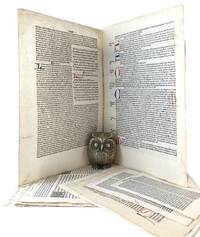
1476179736N: N 1476. kerning21 1476 J. de Colonia & J. Mathen. Antoninus. Summa Confessionum. Printed in double columns with red initial letters. 21 cm. x 15.3 cm. 2 1478 J. de Colonia & J. Manthen. Lactantius. Opera Roman letter. 29.3 cm. x 20 cm. 3 1481 Michael Manzolus. Horatius Flaccus. Opera. Roman letter. Commentary round the text. 30 cm. x 21 cm. 4 1489 B. de Zanis. Pliny. Historia Naturalis. Roman letter double columns. 31 cm. x 25 cm. 5 1489-1491 Peregrinus de Pasqualibus. Mesue. Opera. Double columns with coloured initial letters. 30 cm. x 21.3 cm. 6 1491 D. Bertochus. Augustinus. Opuscula Plurima. Printed in double columns. 22.3 cm. x 16.5 cm. 7 1491 Guilelmus Anima Mia Tridinensis. Valerius Maximi Factorum ac Dictorum. 64 lines of commentary surrounding the text. Fine capital letters. 29.7 cm. x 20.5 cm. 8 1491 Peregrinus de Pasqualibus Bononiensis. Augustinus. De Academicis. Printed in double columns. 22.3 cm. x 16.5 cm. 9 1492 B. de Choris. de Cremona. Seneca. Opera Philosophica. Roman letter. 30.3 cm. x 21 cm. 10 1493 J. Tacuinus Tridinensis. Silius Italicus. Punica. Double columns initial letters in red. 29.3 cm. x 20.7 cm. 11 1493 Damianus de Mediolano. Suetonius. Vitae Caesarum. Roman letter with commentary round the text. 28.2 cm. x 19.3 cm. 12 1493 Simon Bevilaqua. Tibullus. Elegiae. Roman letter commentary round text coloured initial letters. 32 cm. x 21.4 cm. 13 1493 J. Rubeus Vercellensis. Justinus. Epitome. Roman letters coloured initials. 31.2 cm. x 21.5 cm. 14 1493/1494 Simon Bevilaqua. Lucanus. Pharsalia. Roman letter with commentary round text. 30.2 cm. x 21.4 cm. 15 1495 Simon Bevilaqua. Opuscula. Printed in double columns. 14.7 cm. x 10.3 cm. 16 1496 G. Arrivabenus for B. Rusina & B. Fontana. Caracciolus. Sermones. Double columns gothic letter. 18.4 cm. x 12.5 cm. 17 1497 J. & G. de Gregoriis de Forlivio. Hieronymus. Commentaria in Bibliam. Roman and gothic letter. 32.3 cm. x 21.7 cm. 1476-1487. Together. N unknown
19616087Paris, Les Francs Bibliophiles, 1961 ; in-8 en feuilles ; couverture crème imprimée en bleu marine rempliée, étui de suédine noire (emboitage de l'éditeur) ; (3) ff. blancs, 108, (8) pp., (3) ff. blancs, 25 gravures dont 1 en frontispice, protégées par des serpentes de papier de soie.
0855-Co.J. Kaltnadel, 1923, signiert, auf Japan. 20:29 cm. ? Verso Papierabrieb an einer Ecke. Literatur: Müller 675. Sehr guter, vollrandiger Abdruck. Im Jahr 1919 kaufte Lovis Corinth ein Grundstück in Urfeld, auf dem seine Frau Charlotte Berend ihm ein Haus baute. Er benannte es mit dem Spitznamen für seine Frau Haus Peter-mann. Das Haus am Walchensee wurde zum Rückzugsort des Künstlers, an dem er vor allem Landschaftsbilder, Porträts und Stillleben produzierte, sich von der aktiven Kunstszene aller-dings auch immer mehr zurückzog. Seine Bilder vom Walchensee waren auch wirtschaftlich ein großer Erfolg. Nach seinen eigenen Worten wurde ?niemals mehr verkauft als gerade nach dem Zusammenbruch. Es wurden einem förmlich die Bilder von der Staffelei gerissen, und niemals blühten die Ausstellungen im ganzen Deutschland mehr denn jetzt.?
Xilografia, 1510 circa, firmata con il monogramma in basso al centro, nell’immagine. Della serie “La Piccola Passione”. Esemplare dalla prima edizione latina, edita nel 1511. Magnifica prova, ricca di toni e ben contrastata, rifilata alla linea del margine, testo latino al verso, in ottimo stato di conservazione. Nota Strauss che l'apostolo in primo piano ricorda "l’Altare Heller", mentre la Vergine ha una stretta somiglianza con quella di Schäufelein nel foglio corrispondente Conformemente alla Scrittura, i seguaci di Cristo sono sormontati da "lingue di fuoco" (Atti 2:1-3) che simboleggiano "l'effusione dello Spirito Santo". Contrariamente a Schäufelein, l'evento si svolge all'aria aperta, e ci sono molti partecipanti in quanto non c'è evidenza che alla scena assistitano solo i discepoli. Uno studio dettagliato, condotto dalla Hass, rivela l’interpretazione personale dell'artista. L'aspetto più sorprendente della versione di Dürer della Penecoste è che l'effusione dello Spirito Santo non è limitata a Maria e ai discepoli: quindici fiamme escono dalle corone di Maria e dei vecchi e nuovi seguaci di Cristo, mentre sullo sfondo tre dei devoti ebrei menzionati negli Atti sono ancora seduti e, guardando, discuno gli eventi davanti a loro. Mentre l'ampliamento del numero – da dodici a quindici - esseri illuminati dallo Spirito può essere giustificata in termini di descrizione fornita negli Atti, rimane una licenza in termini pittorici. I precursori locali, tra cui il maestro di Dürer, Wolgemut, mostrano principalmente dodici figure benedette tra cui la Vergine. Inoltre, nel suo testo di accompagnamento per questa immagine Chelidonius commenta la discesa dello Spirito Santo solo in relazione ai discepoli; anche questo è in contrasto con l'evidenza visiva nell'immagine di Dürer. Intorno al 1509, mentre stava ancora completando la Grande Passione, Dürer iniziò la sua serie più estesa delle passioni di Cristo, La Piccola Passione, che comprende trentasette xilografie. La serie fu pubblicata come libro; ogni tavola è accompagnata da un testo narrativo-descrittivo composto dall'amico di Dürer, il chierico umanista Benedictus Chelidonius, che aveva precedentemente collaborato con l'artista per i testi delle serie di xilografie della Vita della Vergine e della Grande Passione. Fu Friedrich Winkler che nel 1941 suggerì che a fornire il modello per la Piccola Passione fosse stato Hans Schäufelein, uno degli allievi di Dürer, ma questa proposta non è accettata all'unanimità dagli studiosi. Angela Hass nota che, dato ciò che sappiamo del carattere di Dürer e delle relative doti dei due artisti, il rapporto maestro/allievo da solo è in contraddizione. Così come il fatto che c'è un’alterazione sia nella scelta che nell'interpretazione dei soggetti. Dürer include nove temi che non appaiono nella serie di Schäufelein, il frontespizio e le quattro scene introduttive che precedono l'Entrata di Cristo a Gerusalemme, altre quattro scene leggendarie sono state aggiunte, includono i Santi Veronica, Pietro e Paolo; due scene che figurano nell'arco della serie di Schaufelein sono omesse da Dürer, la Spogliazione di Cristo e, più importante, l'Incoronazione della Vergine. Un'altra ragione per mettere in dubbio l'opinione di Winkler deriva dal fatto che una parte sostanziale dell'iconografia che Dürer impiega nella serie della Piccola Passione può essere ricondotta a opere d'arte contemporanee e precedenti che erano facilmente accessibili per entrambi gli artisti. Bibliografia Hollstein, 160; Bartsch, 51; Panofsky, 271; Strauss, 135; TIB 1001.251; A. Hass, Two Devotional Manuals by Albrecht Dürer: The "Small Passion" and the "Engraved Passion." Iconography, Context and Spirituality, in Zeitschrift für Kunstgeschichte 63. Bd., H. 2 (2000), pp. 169-230 (62 pages) Woodcut, 1510 circa, signed lower centre in the image with monogram. From the series The Small Passion. Example from the first latin book edition of 1511. Magnificent proof, printed with tone on contemporary laid paper, irreguralely trimmed to the borderline, very good condition. The apostle in the foreground is reminiscent of the “Heller Altarpiece”, whereas the Virgin bears a close resemblance to Schäufelein’s in the correspondong sheet. Conforming to Scripture, Christ’s followers are surmounted by “cloven tongues as of fire” (Acts 2:1-3) that symbolize the “outpourung of the Holy Spirit”. Contrary to Schäufelein, the event takes place in the open air, and there are many participans as there is no record that the scene was witnessed only by the disciples. However, a detailed study reveals the artist’s personal understanding. The most striking aspect of Dürer’s version of the Penecost is similarly that th inspiration of the Holy Ghost is not confined to Mary and disciples: fifteen flames issue forth from the crowns of Mary and Christ’s old and new followers, while in background three of the devout Jews mentioned in Acts are still seated, looking on and discussing the events before them. While Dürer's expansion of the common number of twelve to fifteen enlightened beings can be justified in terms of the description provided in Acts, it remains a license in pictorial terms. Local forerunners, including Dürer's teacher Wolgemut, principally show twelve blessed figures including the Virgin. Further, in his accompanying text for this image Chelidonius comments on the descent of the Holy Ghost in relation to the disciples only; this too is at odds with the visual evidence in Dürer’s image. The original wood block is in the British Museum. Around 1509, while still completing the Large Passion, Dürer commenced his most extensive series of the Passion of Christ, The Small Passion, which comprises thirty-seven woodcuts. The series was published as a book; each platesi s accompanied by a descritive narrative text composed by Dürer’s friend, the humanist cleric Benedictus Chelidonius, who had previously collaborated with the artist on the texts for the woodcut series of the Life of Virgin and the Large Passion. It was Friedrich Winkler who in 1941 suggested that Hans Schäufelein, one of Dürer’s students, provide the model for the Small Passion, but this proposal is not unanimously accepted by scholars. Angela Hass notes that given what we know of Dürer character and of the relative gifts of the two artists, the Master/pupil relationship alone speaks against it. So, too, does the fact that there is an altered emphasis in both the choice and interpretation of subject matter. Dürer includes nine themes that don't appear in Schäufelein's series , the title page and the four introductory scenes that precede Christ's Entry to Jerusalem, further four legendary scenes were added , they include Sts Veronica, Peter and Paul ; two scenes that feature in Schaufelein's series arc omitted by Dürer , the Disrobing of Christ and , more importantly , the Coronation of the Virgin . Another reason for questioning Winkler’s view arises from the fact that a substantial parte of the iconography which Dürer employs in the Small Passion series can be traced back to contemporary and prior works of art which were readily available to both artists. Bibliografia Hollstein, 160; Bartsch, 51; Panofsky, 271; Strauss, 135; TIB 1001.251; A. Hass, Two Devotional Manuals by Albrecht Dürer: The "Small Passion" and the "Engraved Passion." Iconography, Context and Spirituality, in Zeitschrift für Kunstgeschichte 63. Bd., H. 2 (2000), pp. 169-230 (62 pages)
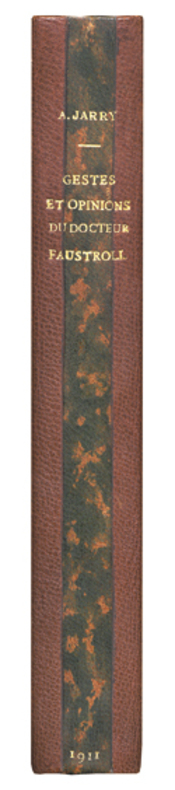
19111824Paris, Bibliothèque Charpentier, Eugène Fasquelle, 1911 ; in-12 ; demi chagrin noisette à coins, à la bradel, bande verticale de chagrin marbré mosaïqué au dos, titre doré, tête dorée, tranches non rognées, couverture et dos conservés (reliure de l'époque) ; (2) ff. (faux-titre et titre), 323 pp.
19325101Lyon, Imprimerie Vaucanson et chez le graveur Philippe Burnot, 1932 ; in-folio ; plein maroquin écorce de chêne (marron), dos lisse, titre en long composé de barettes chêne clair mosaïquées et lettres dorées, plats incrustés de quatre feuilles de placage acajou au centre, doublés de même sur une large bande entourant le papier de garde à la main, deux coins sont soulignés de trois filets dorés gras successifs, couverture et dos conservés, étui bordé (Germaine Cart) ; (80) pp. en tout dont 15 grands bois gravés en couleurs hors-texte et 5 bois in-texte.
197366417ABReykjavik., Dieter Roth., 1973. 47 x 33 cm. Ca. 1200 S. OKarton mit Gazeverleimten Rücken., 66417AB Auflage 150 Exemplare. Sehr gutes Exemplar. [Tränen 2].
FH-290o.J. Farbholzschnitt, 1910, auf Japan-Bütten, mit Bleistift signiert und datiert. 41,5:54,5 cm. Literatur: Thiemann-Stoedtner FH 150; Klaus Merx, Carl Thiemann, Meister des Farbholzschnitts. Darmstadt, Ed. Roether, 1976, 156 F, Farbabb. 58, S. 83. - Besonders rechts vom Druck etwas wellig, sonst tadellos frisches Exemplar und sehr selten! Das Motiv geht auf Studien zurück, die Thiemann während einer Genesungsreise mit seiner Frau 1920 an den Niederrhein und nach Holland machte. Seine Frau war seit der Geburt der Tochter 1909 an einem Nervenleiden erkrankt, das wiederholt Genesungsreisen erforderlich machte.
575-Eo.J. Schwarze Kreide, grau laviert, mit wenigen Deckweißhöhungen, mit Umfassungslinien, auf braunem Bütten mit Fragment des Wasserzeichens: Lilie. 24:20,8 cm. Verso: Gewandstudie. Bleistift. Durchgehend etwas braunfleckig. Provenienz: Sammlung Caroline Bardua (Malerin, 1781-1865); Sammlung Hans Geller, Dresden, mit Stempel des Kupferstichkabinetts Dresden, Inventar-Nr. C 1975-412.
FH-495o.J. Holzschnitt, aquarelliert, auf cremefarbenem Velin, mit Bleistift betitelt und signiert. Darstellungsgröße 18,3:47,5 cm, Blattgröße 40,8:59,8 cm. ? Der breite Rand mit leichten Gebrauchsspuren. Literatur: Ausst.-Katalog: Wege zu Gabriele Münter und Käthe Kollwitz. Holzschnitte von Künstlerinnen des Jugendstils und des Expressionismus. Reutlingen, Städt. Kunstmuseum Spendhaus 2013, S. 145, Abb. S. 67; Andreas Johns, The Art of Emma Bormann, 2016. [2 Warenabbildungen]
FH-038o.J. Farblinolschnitt, 1927, auf chamoisfarbenem Japan-Bütten, mit Bleistift signiert und als ?Handdruck? bezeichnet. Darstellungsgröße 19,8:25 cm, Blattgröße 24,4:28,5 cm. [2 Warenabbildungen]
FH-044o.J. Farblinolschnitt, 1922, auf Japan-Bütten, mit Bleistift signiert und nummeriert ?25?. Darstellungsgröße 18,5:19,5 cm, Blattgröße 19,6:20,1. - Mit ungleichmäßigem Büttenrand.
198269452AB1982. 61 x 69,8 cm., 69452A Keilrahmen leicht verzogen, Leinwand minimal gelockert, sonst noch guter Zustand, wie vom Künstler intendiert.
1309-Co.J. Kaltnadelradierung, 1920, auf chamoisfarbenem festem Velin, mit Bleistift signiert. Darstellungsgröße 24,5:19,7 cm, Blattgröße 38:28,3 cm. Literatur: Schwarz 432, II (von II). ? Vorzüglicher Abdruck mit leichtem Plattenton, tadellos.
369-Eo.J. Pinsel in Braun, braun laviert, mit Deckweiß gehöht, über Bleistift, mit schwarzer Tuschlinie umrandet, auf grauem P=apier. 28:19,1 cm. Das Deckweiß ist teils oxydiert, sonst tadellos erhalten. Typische und bildmäßig durchgeführte Zeichnung Dorners.
389-Eo.J. Bleistift, teilweise blau, grau und braun laviert, auf gelblichem Papier, verso betitelt ?Der Erzähler?. 29,2:36,4 cm; oben rundbogig geschlossen. In den Ecken leicht knitterfaltig, kleine Einrisse in den Rändern restauriert. Der oben rundbogige Abschluß der Darstellung läßt darauf schließen, daß das Bildmotiv ursprünglich als Wandmalerei ausgeführt werden sollte. Vorstudie zu dem Gemälde von 1834, das sich im Besitz des Museum Altona in Hamburg befindet. Vergleichsliteratur: Boetticher Bd. I, Tl. 1, S. 264, Nr. 6; Lexikon der Düsseldorfer Malerschule 1819-1918. München, Bruckmann, 1997, Bd. I, S. 307/308, Abb. 356.
410-Eo.J. Bleistift, auf festem, leicht strukturiertem und bräunlichem Velin, links unten datiert ?4ten Februar 1847?. 43,3:26,3 cm. Provenienz: Aus dem Nachlaß der Familie Fellner, Frankfurt am Main. Möglicherweise besteht ein Zusammenhang mit dem Gemälde das Fellner 1850 für seine Mutter gemalt hat und das von Gwinner als ?in Erfindung und Ausführung vorzüglich gelungen? bezeichnet wird (vgl. Ph.F. Gwinner, Kunst und Künstler in Frankfurt am Main, Ffm., J. Baer, 1862, S. 458).
1839150-W1839. Feder und Pinsel in Grau und Bleistift, grau laviert, auf chamoisfarbenem Velin, rechts oben bezeichnet und datiert ?Heilbrunn 27. Sept. 1839.?. 26,3:34,1 cm. In den Rändern ungleich. In der Graphischen Sammlung München befindet sich eine ebenfalls auf 1838 datierte, grau lavierte Bleistiftzeichnung, betitelt ?Oberbayerischer Bergbauernhof?.
149-Ho.J. Deckweiß und schwarze Tusche, auf Zeichenkarton, rechts unten signiert ?GHeck? (blauer Kugelschreiber). 14,7:24,8 cm.
074-Do.J. Schwarze und weiße Kreide, auf blauem Bütten, rechts unten mit brauner Feder nummeriert ?N.61.g?,, verso von unterschiedlichen Händen mit schwarzer bzw. brauner Feder nummeriert. 25,2:31 cm. Provenienz: Sammlung K, nicht bei Lugt.
089-Do.J. Pinsel in Braun, über roter und schwarzer Kreide, auf Bütten mit Wasserzeichen: 3 Mondsicheln, links unten numieriert ?191?. 29,4:29 cm. Das Wasserzeichen weist auf Venedig als Herkunftsort hin. Verso gerötelt, Reste von Verklebung an den Ecken, Papier im unteren Drittel etwas knitterfaltig. Provenienz: Sammlung Prof. R. Jung, nicht bei Lugt. Vermutlich Entwurf für eine größere Arbeit, Fresko oder Gemälde.
EN-034o.J. Lithographie 1921, auf China-Bütten, rechts unten mit Bleistift signiert, datiert und mit der Werknummer bezeichnet ?Kanoldt 1921/II?, links unten bezeichnet und nummeriert ?5/2 No 7/30? und bezeichnet ?Orig. Lith. 30/7?. Darstellungsgröße 21:24,2 cm, Blattgröße 35:49,7 cm. - Obere Ecken fehlen, verso alte Montierungsreste, zwei Braunflecken. Nr. 7 von 30 Exx. Schöner Abdruck! Literatur: Amman L 2.
348-Eo.J. Bleistift und Deckweiß, auf grautonigem Velin, links unten signiert, betitelt und datiert ?AEKirchner / Partie aus d. Au bei München / d 19ten Septbr. 1838.?, rechts folgende Widmung: ?Kirchner seinem Freund Rottmann 1840?. 15,1 : 27 cm. Verso am Oberrand Rest einer alten Verklebung. Provenienz: Antiquariat Wölfle, München; süddeutsche Privatsammlung.
365-Eo.J. Feder in Schwarz, über Bleistift, auf Bütten, oben bezeichnet und datiert ?Bei Mariabrunn. Den 29 Mai 1812?, links oben numeriert ?13?, verso bezeichnet, signiert und datiert ?Landschaft bei Maria Brunn zwei Stunden v. Wien. Federzeichn J.A. Klein d. 29. Mai 1812?. 13,2:19,9 cm. Verso 2 Skizzen. Provenienz: Sammlung R.Ph. Goldschmidt, Berlin, Lugt 2926; Graphisches Kabinett, München, bis 12.02.1937, dort erworben von Direktor Schütze, München; Süddeutsche Privatsammlung. Vergleichsliteratur: R. Freitag-Stadler, Johann Adam Klein 1792-1875. Zeichnungen und Aquarelle. Nürnberg 1975, Nrn. 37-57. Unter diesen 1812 bzw. um 1812 entstandenen Zeichnungen befinden sich zwei, Nr. 37 und 45, die in Wien, ebenfalls im Mai, nämlich am 8. bzw. 22 Mai 1812 datiert sind.