184 824 résultats
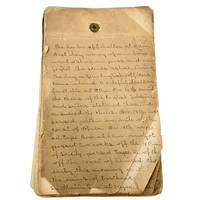
18990012049Donsol Pilar Manila Philippines New York Malta. Poor with no dust jacket. 1899-1901. Other. On offer is an unbelievable handwritten account of 19 months of action on the frontlines of the Philippine Insurrection the Philippine-American War between November 1899 and June 1901. An unknown American soldier writes of his experiences in a level of detail that cannot be overstated. This diary places the reader in the Philippines with shocking realism making this diary exceedingly rare. The 139 pages of this journalled account of events have been removed from a larger document and someone has pinned these loose pages together. This writing begins at the end of a sentence penned on presumably November 17 1899 and concludes half way through a sentence written on June 23 1901. There seem to be very few missing pages from within the journal and it reads very smoothly. The content is outstanding. The diary opens with our soldier diarist sailing from New York to the Philippines via the British Naval base at Gibraltar and the Suez Canal. He describes his experiences sailing sharing about a stop ashore in Malta a Thanksgiving spent at sea a concert enjoyed aboard the gunboat Nashville on the way to Manila and more. He arrives with his regiment in Manila on Dec 22 1899. The troops explore Manila and meet Filipino locals. In early January of 1900 they receive orders to head to southern Luzuon on the Kobbe Expedition which refers to General William Kobbes Expedition to Bicolandia. This expedition was in response to an urgent order from Washington to open up hemp ports of Southern Luzon due to an American hemp shortage. The problem was the port towns were largely controlled by Filipino Insurgents. Our diarist provides absolutely remarkable detail about Americas role in defeating the Insurgents and the tragedy of the Filipino peoples experience. Context indicates that our diarist was possibly a member of the 43rd Volunteer Infantry Regiments USV Company A. An excerpt that provides a sense of how our soldier explains the circumstances in the Philippines follows: Jan 16th we got the order to pack up and get ready to leave Mikata and to proceed to the Southern part of Luzon we were put aboard the transport Hancock which was at anchor in the Bay of Manila All combined we were named the Kobbe Expedition to the Southern Luzon to open up the Hemp ports and protect the natives from the Insurgents down there On the 21st of Jan 1900 our boats dropped anchor in a bay named the bay of Sorsogon in the Province of Albay All over this province there are large gangs of Insurgents holding the towns so at many towns our boys had a hard fight with the Insurgents before they could take the towns and the gun boat had to shell many of the towns. Our Regt. Occupied nine towns. Our detachment of A and D. Co. Were taken to a town named Donsol the gunboat Helena took us ashore from the Hancock On their arrival ashore they were met by a crowd of Philippinos. They had an order from the officers of the Insurgents it read saying that they would not haul down their colors nor surrender for three days. So our Major returned to the gunboat and a short conversation was held with the officers of the gun-boat and it was decided to prepare the gun boat for action and land all of us. If the Insurgents fired one shot at us the gun-boat would shell the town The hills were full of fleeing people. A detail of men were sent out on the hills at once then the Insurgents fired their first shot at us. Our boys had a warm fight for 15 minutes. They found the hills well entrenched and also found one big cannon. Lots of spears Bolas and wooden guns. They returned to town bringing in a few prisoners. A scouting party was seent and they saw a lot of Philippinos fleeing to the mountains. This town had a population of 10000 and three hundred were Insurrectors. The next thing we done was to find ourselves some good houses to live in. Outposts were put out all around the town. A few natives came across our post for a few nights and on the 22th Jan the Insurgents paid our town a visit setting fire to one of the big houses where our men were sleeping. Our men got out of the house without anyone being hurt. We surrounded the town fired a few volleys . Later in January our soldiers regiment goes on the first of many missions all of which he describes in glaring detail. On this mission the troops attempt to leave Donsol for Pilar when they run into trouble as the connecting bridge was destroyed by Insurgents. They make it to Pilar and find the town has been deserted. As they march back to Donsol they find someone has lit the bridge ablaze: Jan 28th We had a very hard time crossing the bridge burning our shoes and legs but we got safely on the Donsol side before the bridge fell with a crash into the river. We marched on we heard several shots from the Mauser and Remington rifles. Next we discovered a big fire and a call to arms and fire call was sounded The fire of the Insurgents got heavier. Our Major gave an order not to fire. He was going out in the front of our lines. He went out with a detail of men and discovered that our town was surrounded and the hills were full of Insurgents. He fired a few volleys then he came into town. The Insurgents answered him by firing a cannon. Then the Insurgents gave a yell and started to advance and we kept quiet and let them get close to our lines. Then we got the order to commence firing and the boys opened up all around the town and we soon put the Insurgents to flight firing a few shots as they ran. Next morning we discovered a few dead Insurgents close to our lines. The Insurgents almost always carry their dead and wounded along with them in their flight Our soldier does an absolutely phenomenal job of describing not only the day-to-day in Donsol where he spends majority of his time but also the various missions in which he participates. His words paint a fulsome picture of the war: 21st Feb at noon our Major asked for a detachment of men to volunteer to go up the river on a scouting expedition. I along with 12 more men went out of our company and 12 out of D. Co. Along with Capt. Hart of D. Co. And our Major left Donsol in a hard paddle boat and one white boat in tow On our way up the river we could see high hills on each side and the river was very narrow. There were many Insurgents outposts in the high trees all the way up and we fired at every one we saw. We went up a distance of 8 miles before we thought of coming home as it was getting late We had traveled one mile on our homeward way when the Insurgents fired on us from the left hand ashore. Our men in the rear boat fired a volley into the two Insurgents and were taking good aim for a second volley when the hills fairly echoed with the yells from the Insurgents. They then opened up on the right hand side which was aimed at the white boat hitting one of our men our company in the head and he was killed instantly. Then we answered their shots from each of our boats and from that time until we got back to Donsol we were under the hot fire of the Insurgents we could see the hills full of Insurgents and we had plenty to shoot at. We made every shot count. The insurgents even fired rocks at us from the high hills . More texture is added when our soldier discusses aspects of the war that dont involve active fire. Some examples follow: March 5th Gen Kobbe of the 8th Army Cor was here on a visit and he said these two companies were a very industrious lot of men and that the building of the stocade and trenches was a very sensible work he also brought us 17 of the Battery G 3rd Artillery men and one Hotch Kiss gun for reinforcements. April 10th the mail boat was here bringing the report of Gen. Pawa likely Jose Ignacio Paua an Insurgent Gen in Command of the Insurgent troops through this province. He surrender to our Colonel in Legaspi Legazpi and was sent to the Military Prison in Manila. April 21st We took a long march across the hills in a round about manner to a town named Sevilla merely an Insurgent camp. The town was deserted on our arrival. Fires were still burning in the houses. Everything was just as they had dropped it in their flight. We passed through the town and discovered many traps laid in the roads for us. One trap was an arrow trap on each side of the path in the bushes and by pulling a strong the arrows would stick into anyone going down the path. None of their traps caught us. Our soldier writes frequently about expeditions for which he volunteers. He describes a mission to Banningaran sic. En route the men captured Captain Hernandiz sic; possibly Adriano Hernández y Dayot and his family before being caught unprepared by the Insurgents who severely injured one of the American sargeants. On their hike back to Donsol they are again attacked by the Insurgents this time caught off guard as they attacked from the rear. And so it goes for many more months. Our author describes the movements of the men with whom he is stationed his commanding officers and the various wins and setbacks of both the Americans and the Insurgents. In May of 1901 our soldier and his regiment begin the process of boarding a ship to return to America. There is of course never a straightforward path and there are many bumps in the road. However our soldier does eventually board a ship and begins again to describe his journey in detail. The diary cuts off abruptly mid-sentence on June 23 1901 as our soldier is describing being at sea with nothing but a sailboat in sight for miles. While we do not know our soldiers identity we do know he was safely heading home at the conclusion of his diary. We know he was a highly motivated volunteer soldier who displayed total buy-in to the mission of the Americans in the Philippines and we know he was a gifted writer penning his experiences with such texture and realism that the reader feels as though they too have been on the front lines of a bloody wet miserable war in the Philippines - fighting for America and for the displaced Philippino people forced to flee from the Insurgents to the mountains. This journal measures 8x5 inches and contains 139 single-sided sheets. The pages were all loose so the author has pinned them together with a single round-headed fastener post. There are no covers to this journal. As a result the first and last few pages show obvious and significant wear and tear including a large corner of the first page being completely ripped off obstructing the text. The handwriting is quite legible. Overall Fair to Poor. ; Manuscripts; 8vo 8" - 9" tall; 139 pages . unknown
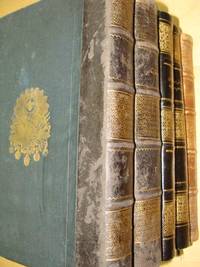
1883000521<p>Istanbul: Matbaa-i Bahriye the Navy press 1883 Book. Very Good. Hardcover. 1st Edition. 8vo - over 7¾ - 9¾" tall. THE MOST COMPREHENSIVE ENCYCLOPAEDIA IN THE OTTOMAN TURKISH ABOUT THE ARABIAN PENINSULA AND THE TOW HOLY SANCTUARIES IN HEDJAZ BY THE WELL-KNOWN AUTHOR WHO WAS EMPLOYED IN THE OTTOMAN ARMY IN HEJAZ IN C. 1865 AND THEN BECAME AN ADMIRAL IN THE OTTOMAN NAVY. EYUP SABRI PASHA WAS BORN IN TASALYA THESSALIA IN THE 19th C. AND DIED IN ISTANBUL IN 1890. HE IS BETTER KNOWN WITH HIS DESCRIPTIVE BOOKS ABOUT MECCA MEDINA THE ARABIAN PENINSULA AND THE WAHHABY ACTIVITIES BESIDE HIS RELIGIOUS BOOKS. HE WAS AWARE OF THE OFFICIAL ISSUES OF THE HEJAZ BECAUSE OF HIS BEING ACQUAINTED ON THE OFFICIAL CORREPONDENCE BETWEEN THE VILAYET OF HEJAZ AND THE CENTRAL AUTHORITY IN ISTANBUL Five parts in five volumes. Part 1 Mir'at Mecca in tow volumes. Vol. 1 44 Index pages 1 to 640 with lithographic plates of which tow are in colours on double pages and one gilted. Vol. 2 p. 45 to 58 index pages 641 to 1175 with lithographic plates of which one is in green and silver one unusual to be existing big folding plate in colours gilt and sprinkled in gold of the curtain of the gate of Ka'baa. One folding plan of the holy mosque in Mecca. The tow volumes of Mecca are in contemporary fine bindings with the arm of the Ottoman state and richly gilted spines. Part 2 Mir'at al Medina in tow volumes printed in 1886. Vol. 1 pages 1 to 698 with some diagrams and lithographic plates including one folding in green and silver. Vol. 2 8 index pages 699 to 1343 with a plan of the holy mosque in Medina. The tow volumes of Medina are in contemporary or possibly later fine Ottoman bindings with richly gilted spines. Part 3 Mir'at Jazirat al 'Arab View of the Arabian Peninsula one vol. printed in 1888. index 416 p. with 2 lithographic plates. Contemporary fine Ottoman binding with richly gilted spine. FINE SET WITH EXTRA PLATE WHICH IS VERY DIFFICULT TO EXIST. For other copies of this book see inventory no. 000276 000519 and 000520.</p> Matbaa-i Bahriye (the Navy press) hardcover
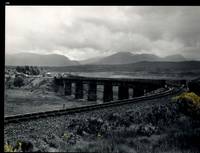
32483AB1974. Scotland 1974-2002. Oblong-Folio 44 cm wide x 36 cm high. Hardcover / Original Full-Leather Folders with stong black cardboards and original tissue-guards. Excellent condition with only minor signs of wear. With hundreds of manuscript annotations on the photography the photography-technique film used and with extensive elaborations on each photograph in these albums. More images on request ! Album 1: Covers the years 1974 1977 and 1978. The West Highland Line is walked from Arrochar a 1977 driving and camping holiday and a 1978 seventeen day touring holiday with many nights sleeping in a car fill the leaves with c. 200 b/w original photographs. Album 2: Covers the years 1991 and 1992. It is noted that 1990 is the fourth year that returning locomotives from the Mallaig line will work south over the West Highland main line. Images of Corrour Summit Glasgow to Fort William trains and many many more bridges viaducts tunnels stations and signalling equipment fill the leaves. c.182 b/w original photographs. Album 3: Covers 1993. More colour photographs now fill the leaves and annotations cease to second half of album. c 270 b/w colour and tinted original photographs. Album 4: Covers 1999 and 2002. Many images from The Highlands Rail Festival in Sept 1999. c.250 b/w and colour original photographs. An extraordinary photographic record and passion project presented in 4 huge well-bound albums containing over 900 fine photographs taken curated and annotated by an unidentified railway enthusiast and talented photographer. The albums span 4 decades recording trips to some of the most scenic and famous rail locations in the UK. The West Highland Line is returned to again and again over the decades and our photographer captures Scotlands most dramatic landscapes and railways as the route passes on its way from Glasgow to Mallaig through sections including Corrour and Rannoch Moor. Albums and contents in fine condition. A tissue guard between every leaf protects the photographs within. A single photograph of a middle aged man among every other photograph which records a detail of the railway is the only clue to the albums previous ownership and perhaps authorship. Partial description by our colleague Dr.Christian White from Christian White Rare Books in Ilkley UK. __________________________________________________________________________________________________________ The West Highland Line Scottish Gaelic: Rathad Iarainn nan Eilean "Iron Road to the Isles" is a railway line linking the ports of Mallaig and Oban in the Scottish Highlands to Glasgow in Central Scotland. The line was voted the top rail journey in the world by readers of independent travel magazine Wanderlust in 2009 ahead of the notable Trans-Siberian line in Russia and the Cuzco to Machu Picchu line in Peru. The ScotRail website has since reported that the line has been voted the most scenic railway line in the world for the second year running. The West Highland Line is one of two railway lines that access the remote and mountainous west coast of Scotland the other being the Kyle of Lochalsh Line which connects Inverness with Kyle of Lochalsh. The line is the westernmost railway line in Great Britain. At least in part the West Highland Line is the same railway line as that referred to as the West Highland Railway. History: The route was built in several sections: Glasgow Queen Street to Cowlairs Junction - Edinburgh and Glasgow Railway Cowlairs Junction to Bowling - Glasgow Dumbarton and Helensburgh Railway later absorbed into the Edinburgh and Glasgow Railway Bowling to Dumbarton Central - Lanarkshire and Dumbartonshire Railway operated by the Caledonian Railway Dumbarton Central to Dalreoch - Caledonian and Dumbartonshire Junction Railway Dalreoch to Craigendoran - Glasgow Dumbarton and Helensburgh Railway Craigendoran to Fort William opened 11 August 1894 - West Highland Railway sponsored by the North British Railway Crianlarich to Oban - Callander and Oban Railway operated by the Caledonian Railway. There is an additional section from Fort William or a junction near Fort William to Mallaig built as the Mallaig Extension Railway. The West Highland Railway approved the construction of the line at their annual meeting in January 1895. The line faced potential closure as part of the Beeching cuts in 1963 and again in 1995 due to reduced revenues. Route description: Shortly after leaving Glasgow Queen Street station and beyond Queen Street Tunnel the line diverges from the main trunk route to Edinburgh Waverley and Perth at Cowlairs and follows a northwesterly course through the suburbs of Maryhill and Kelvindale. Between Westerton and Dumbarton the route is shared with the North Clyde Line to Helensburgh Central before branching northward at Craigendoran Junction towards Garelochhead the section where the West Highland Line itself is generally accepted to begin. It gives high-level views of the Gare Loch and Loch Long before emerging alongside the northwesterly shores of Loch Lomond then climbs Glen Falloch to Crianlarich. The branch to Oban diverges at Crianlarich an important Highland junction of both road and rail and runs through Glen Lochy to Dalmally and through the Pass of Brander to reach salt water at Taynuilt and Connel Ferry before a final climb over a hill to Oban. About three miles five kilometres from Crianlarich the Mallaig and Oban routes both pass through the village of Tyndrum but they are served by separate stations making it an unusually small settlement to be served by more than one railway station. After Bridge of Orchy the line to Mallaig climbs onto Rannoch Moor past the former crossing point at Gorton Crossing to Rannoch station. In winter the moor is often covered with snow and deer may be seen running from the approaching train. The station at Corrour on the moor is one of the most remote stations in Britain and is not accessible by any public road. This is the summit of the line at 1347 ft 410 m above sea level. Carrying on northwards the line descends above the shores of Loch Treig and through the narrow Monessie Gorge. The final stop before Fort William is Spean Bridge. The section between Fort William and Mallaig passes over the Glenfinnan Viaduct through Arisaig with its views of the Small Isles of Rùm Eigg Muck and Canna and the white sands of Morar before coming to Mallaig itself. With the exception of the route between Glasgow Queen Street and Helensburgh Upper and the short section between Fort William Junction and Fort William station the railway is signalled using the Radio Electronic Token Block controlled from the signal box at Banavie station. Notable railway-related features Glenfinnan Viaduct The Horse Shoe Curve between Upper Tyndrum and Bridge of Orchy The Cruach Rock snowshed between Rannoch and Corrour Glenfinnan Viaduct between Locheilside and Glenfinnan The Pass of Brander stone signals between Dalmally and Taynuilt Arisaig is the most westerly railway station in Great Britain West Highland Line in film: Train crossing bridge at Banavie The summit of the line just north of Corrour Glenfinnan Viaduct on the line between Fort William and Mallaig is a filming location for the Hogwarts Express in the Harry Potter series of films. Eddie McConnell's poetic documentary A Line for All Seasons 1970 showcases the line and its history set against the scenery of the western highlands as it changes through the seasons. Corrour features in Trainspotting 1996 directed by Danny Boyle. Source: Wikipedia hardcover
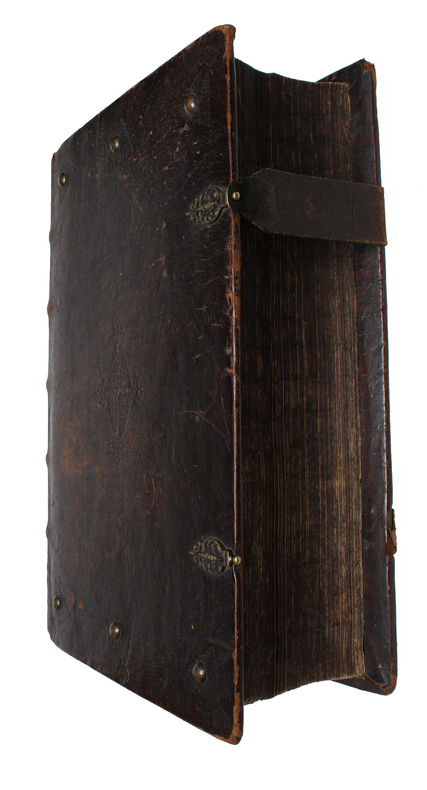
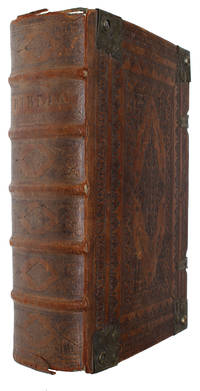
158857770Kiøbenhaffn, (Matz Vingaard), (1588-)89. Folio. (39 x 27 cm.). Samtidigt hellæderbind i brunt kalveskind over svært træ og med kanter i smig. Lettere ophøjede bind på ryg. Håndsyede kapitælbånd. Lille hak i skindet på nederste rygfelt. Med de 4 originale hængselsbeslag i støbt messing bevarede, men den ene strop fornyet og den anden mangler. Permerne har begge blindtrykte arabesker, i midterfeltet en stor arabesk og i hjørner og kanter 6 pyramideformede arabesker, som alle er med en blindtrykt krone i pyramidens top. Permerne har mindre messingstifter med store hoveder til beskyttelse af bindet ved opslag. Marmoreret snit. Bindet er ganske velbevaret med kun lidt kantslid og let slid på de ophøjede rygbind. (22),353(i.e.354),226,159 blade. Komplet, men uden de 3 blanke blade. Træskåret titelblad med tekst trykt i rødt i midterfeltet. Titelbladsvarianten med kongens kobberstukne portræt (af Goltzius) opklæbet på bagsiden (en del eksemplarer udkom uden portrættet). Blad 2 med rigsvåbnet, bladet er kantrepareret. 2 træskårne deltitelblade. Registerbladene med svag skjold i ydre marginer. De sidste 35 blade delvist omkantede, for det meste i ydre marginer. Ganske få spredte brunpletter. Iøvrigt ganske lette brugsspor. Et udmærket velbevaret og komplet eksemplar (bortset fra de 3 blanke).På forreste friblad er anført lidt af eksemplarets ejerhistorie fra 1819, - erhvervet af Mikkel Johannesson Fladebøe som her delvist klausulerer dens ejerskab til fremtidige ejere af gården (Fladebøe ?). Senere synes den overgået til andre i slægten bosat i U.S.A. (Olaf Albertsen, Axel Albertsen, Stanley Albertsen, Sidney Albertsen). Folio. (39 x 27 cm.). Contemporary brown full calf over heavy wooden boards with oblique edges. Sloghtly raised bands to spine. Hand-stitched capital bands. A small notch to the leather of bottom compartment of spine. With the four original brass clasps preserved, but one strap has been renewed and the other is missing. Boards with large blindstamped centre-arabesque and six pyramid shaped arabesques to corners and edges, all with a blindstamped crown on top. Large-headed bras spins to boards, to protect the boards when open. Marbled edges. A bit of wear to edges and light wear to the raised bands. (22), 353(i.e.354), 226, 159 ff. Complete, save for the three blank leaves. Woodcut title-page with centre-text printed in red. The title-page variant with the engraved portrait of the king (by Goltzius) mounted on verso. Several copies were issued without portrait, and some were issued, as here, with the title-page mounted on verso. F. 2 with the royal arms, restored at edges. Two woodcut helf-titles. The index-leaves with a vague damp stain to the outer margins. The last 35 leaves have been partly re-edged, mostly at the very outer margins. A bit of light scattered brownspotting. Light signs of wear. An overall well preserved copy in- as well as externally. Front free end-paper with handwritten notes on provenance from 1819 onward – bought by Mikkel Johannesson Fladebøe, who partly clauses the ownership of the copy to the future owners of the estate (Fladebøe?). It seems to have then passed to other generations of the same lineage located in The United States (Olaf Albertsen, Axel Albertsen, Stanley Albertsen, Sidney Albertsen).
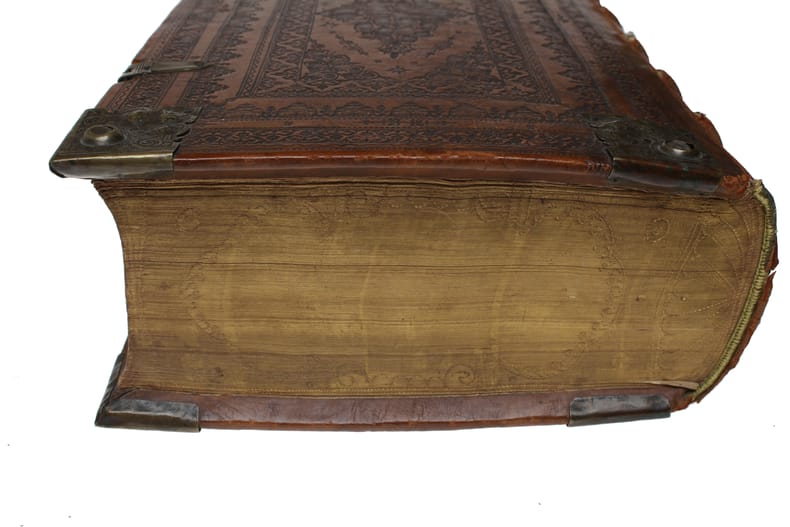
163360241Kiøbenhaffn, (Melchior Martzan og Salomon Sartor), (1632-) 1633. Folio (binding: 37 x 25 cm.). Bound in a spledid, contemporary full calf binding over wooden boards. Rich, elaborate gilding to both boards and spine. The gilding is vague, especially on the front board, but the tooling is very sharp, and the binding overall is magnificent. With four beautiful, ornamented brass edges to each board and two large ornamented brass clasps. All edges are gilt and beautifully blindtooled. Wear to capitals, where the cords are loosening a bit, and with a bit of loss of leather. A bit of wear to hinges, at the cords, which are showing. But overall the binding is in splendid condition. Also internally extremely well preserved. The title-page has a tiny restored hole to lower right corner, and the first four leaves might have been inserted. They are slightly smaller at the outer margin than the other leaves. But that might also be due to restoration, as the binding has not been tampered with at any point and is completely unrestored. The text is unusually nice, clean and fresh, by far the nicest copy we have ever come across. Pasted-down front end-paper with the ownership signature and lacquered coat-of-arms seal of Severin Svanenhielm (Severin Seehusen (1664-1726) ) as well as the ownership signatures of Søren Schiøtz (1796-1863) (with names of members of his family), C. Th. Zahle and Erik Zahle. With the book plate of William Davignon (d. 1924). The brass corners carry the initials HL and are depicted in Johannes Rudbeck's Svenska Bokband I (fig. 26, p.53). The binding there is dated 1622, whereas our binding is from 1633 or right after. The brass fittings were a commercial merchandise for sale in Germany and probably also in both Sweden and Denmark. Engraved title-page as well as the engraved portrait of Christian IV, all by the royal engraver Simon the Pas. Without the half-title, which merely contains the printed words ""BIBLIA / Paa Danske"", which is almost never present. (21 - not counting the engraved title-page and the portrait), 353 (i.e. 354 due to the erroneous double pagination 353), 226, 159 ff.
163360241Kiøbenhaffn Melchior Martzan og Salomon Sartor 1632- 1633. Folio binding: 37 x 25 cm. Bound in a spledid contemporary full calf binding over wooden boards. Rich elaborate gilding to both boards and spine. The gilding is vague especially on the front board but the tooling is very sharp and the binding overall is magnificent. With four beautiful ornamented brass edges to each board and two large ornamented brass clasps. All edges are gilt and beautifully blindtooled. Wear to capitals where the cords are loosening a bit and with a bit of loss of leather. A bit of wear to hinges at the cords which are showing. But overall the binding is in splendid condition. Also internally extremely well preserved. The title-page has a tiny restored hole to lower right corner and the first four leaves might have been inserted. They are slightly smaller at the outer margin than the other leaves. But that might also be due to restoration as the binding has not been tampered with at any point and is completely unrestored. The text is unusually nice clean and fresh by far the nicest copy we have ever come across. Pasted-down front end-paper with the ownership signature and lacquered coat-of-arms seal of Severin Svanenhielm Severin Seehusen 1664-1726 as well as the ownership signatures of Søren Schiøtz 1796-1863 with names of members of his family C. Th. Zahle and Erik Zahle. With the book plate of William Davignon d. 1924. The brass corners carry the initials HL and are depicted in Johannes Rudbeck's Svenska Bokband I fig. 26 p.53. The binding there is dated 1622 whereas our binding is from 1633 or right after. The brass fittings were a commercial merchandise for sale in Germany and probably also in both Sweden and Denmark. Engraved title-page as well as the engraved portrait of Christian IV all by the royal engraver Simon the Pas. Without the half-title which merely contains the printed words "BIBLIA / Paa Danske" which is almost never present. 21 - not counting the engraved title-page and the portrait 353 i.e. 354 due to the erroneous double pagination 353 226 159 ff. <br/><br/><em>A magnificent copy of the scarce first edition of the last i.e. the third of the Danish folio-bibles known as "Christian IV's Bible" being a slightly revised edition of the Bible of 1589. Christian IV is the most famous Danish king ever to have lived and the Christian IV bible is extremely sought-after. An unusually fresh and complete apart from the always lacking half-title copy of this splendid bible printed by the first royal printer Melchior Martzan and Salomon Sartor part 2. The numerous woodcut illustrations are the same that were used for the Frederik II Bibel from 1589. The four engraved leaves - the portrait and the three title-pages - are by Simon de Pas.Bibl. Dan.I9 - Thesaurus II 378. - Birkelund 41. - Darlow and Moule 3160. Provenance: Svanenhielm was a family of Danish and Norwegian nobility. Morten Hansen Seehuusen 1629-1694 was a merchant from Bredstedt in Schleswig-Holstein who re-located to Stavanger Norway. His son Severin Seehusen 1664-1726 was an official in Bergen as well as in Stavanger and Northern Norway. He owned among other properties Damsgård Manor outside Bergen Svanøy in Sunnfjord and Arnegård in Stavanger. In 1720 Severin Seehausen was ennobled under the name Svanenhielm. Søren Daniel Schiøtz 1796-1863 was a Norwegian bailiff and judge who was also very much engaged in religious matters and came to play an important role in the history of theology in Norway. He was one of the founders of the Norwegian Mission Society and the Norwegian Israeli Mission. He translated several important upbuilding pieces from German among them a comprehensive bible history. Carl Theodor Zahle 1866 – 1946 was a highly important Danish lawyer and politician. He was prime minister of Denmark from 1909 to 1910 and again from 1913 to 1920. In 1895 he was elected member of the lower chamber of the Danish parliament for the Liberal Party. A campaigner for peace in 1905 he co-founded the Social Liberal Party Det Radikale Venstre. He stayed on as a member of Parliament for Det Radikale Venstre until 1928 when he became a member of the upper chamber of Parliament Landstinget. In 1929 he became Minister of Justice a post which he held until 1935. Zahle was instrumental in starting negotiations for a new Danish–Icelandic Act of Union in 1917 which resulted in Iceland being recognized as a sovereign nation in a personal union with the king of Denmark the following year. Erik Zahle 1898-1969 was a famous Danish art historian author and museum director. </em> hardcover
158857770Kiøbenhaffn Matz Vingaard 1588-89. Folio. 39 x 27 cm. Samtidigt hellæderbind i brunt kalveskind over svært træ og med kanter i smig. Lettere ophøjede bind på ryg. Håndsyede kapitælbånd. Lille hak i skindet på nederste rygfelt. Med de 4 originale hængselsbeslag i støbt messing bevarede men den ene strop fornyet og den anden mangler. Permerne har begge blindtrykte arabesker i midterfeltet en stor arabesk og i hjørner og kanter 6 pyramideformede arabesker som alle er med en blindtrykt krone i pyramidens top. Permerne har mindre messingstifter med store hoveder til beskyttelse af bindet ved opslag. Marmoreret snit. Bindet er ganske velbevaret med kun lidt kantslid og let slid på de ophøjede rygbind. 22353i.e.354226159 blade. Komplet men uden de 3 blanke blade. Træskåret titelblad med tekst trykt i rødt i midterfeltet. Titelbladsvarianten med kongens kobberstukne portræt af Goltzius opklæbet på bagsiden en del eksemplarer udkom uden portrættet. Blad 2 med rigsvåbnet bladet er kantrepareret. 2 træskårne deltitelblade. Registerbladene med svag skjold i ydre marginer. De sidste 35 blade delvist omkantede for det meste i ydre marginer. Ganske få spredte brunpletter. Iøvrigt ganske lette brugsspor. Et udmærket velbevaret og komplet eksemplar bortset fra de 3 blanke.På forreste friblad er anført lidt af eksemplarets ejerhistorie fra 1819 - erhvervet af Mikkel Johannesson Fladebøe som her delvist klausulerer dens ejerskab til fremtidige ejere af gården Fladebøe . Senere synes den overgået til andre i slægten bosat i U.S.A. Olaf Albertsen Axel Albertsen Stanley Albertsen Sidney Albertsen. Folio. 39 x 27 cm. Contemporary brown full calf over heavy wooden boards with oblique edges. Sloghtly raised bands to spine. Hand-stitched capital bands. A small notch to the leather of bottom compartment of spine. With the four original brass clasps preserved but one strap has been renewed and the other is missing. Boards with large blindstamped centre-arabesque and six pyramid shaped arabesques to corners and edges all with a blindstamped crown on top. Large-headed bras spins to boards to protect the boards when open. Marbled edges. A bit of wear to edges and light wear to the raised bands. 22 353i.e.354 226 159 ff. Complete save for the three blank leaves. Woodcut title-page with centre-text printed in red. The title-page variant with the engraved portrait of the king by Goltzius mounted on verso. Several copies were issued without portrait and some were issued as here with the title-page mounted on verso. F. 2 with the royal arms restored at edges. Two woodcut helf-titles. The index-leaves with a vague damp stain to the outer margins. The last 35 leaves have been partly re-edged mostly at the very outer margins. A bit of light scattered brownspotting. Light signs of wear. An overall well preserved copy in- as well as externally. Front free end-paper with handwritten notes on provenance from 1819 onward – bought by Mikkel Johannesson Fladebøe who partly clauses the ownership of the copy to the future owners of the estate Fladebøe. It seems to have then passed to other generations of the same lineage located in The United States Olaf Albertsen Axel Albertsen Stanley Albertsen Sidney Albertsen. <br/><br/><em>The magnificent first printing of the second Danish-Norwegian Bible in folio. This the second Danish Bible in folio is also the first to be printed by a Dane. The scarce and famous "Frederik II-Bible" constitutes the magnum opus of the famed book printer Mads Vingaard "and the most extensive work of printing undertaken in Denmark during the sixteenth century. The book is profusely illustrated with woodcuts copied from a german Bible issued by Sigmund Feyerabend in Frankfurt a. M. 1560. The original woodcuts were made by the artist and craftsman Virgil Solis. Wide woodcut borders together with pictures using themes from the Scriptures surround the title pages and the illustrations. On the reverse of the first title page many copies have pasted in a portrait of Frederich II engraved by the Dutch artist Hendrick Goltzius. However this portrait may also be found on a separate leaf." Thesaurus I.Lauritz Nielsen 405. - Thesaurus I 129. - Birkelund 34. </em> hardcover
Wivel, Mikael and Hanne FIn Pristine Condition. unknown
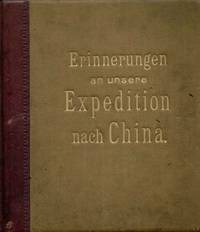
24054401China ca.1900-1901. 3/4 Gilt-stamped leather over buff cloth very good 25 x 29 cm. 30p. 26p. with photos 2 per side = total of 104 photographs16 x 11 cm. all very clean albumen type bit of fading but clear strong images. RARE! . . . ORIGINAL PHOTOGRAPHS OF THE BOXER REBELLION 1900 . . THE GERMAN RECORD OF THEIR ACTION IN PEKING . . This is a wonderful quite rare original period photo album. . It shows the German contingent sent to China to join in the defense of foreign embassies in Peking during the 1900 uprising of the siege of the Boxers. . The work begins with the group aboard the S.S. Strassburg from Bremen and their landing in the German colony of Tsingtao Tsingtau. From there it was a long trek down to Peking in the snowy winter. . Classic photos posed for the camera & history 4 in all. Arrival in China with more classic poses of the German troops before Chinese sights and in a temple where they were stationed. . One shows large wooden cases of their supplies stacked up in the temple garden with the commanders posing for a lovely memorial photos. Well taken photographs by the group's photographic officer nicely composed and carefully taken these are NOT tourist snap shots ! These average two photos per page. . A group of German military men pose before a wide variety of Chinese pagodas and sights some in long capes spiked helmets with Chinese officials ! Their arrival in Peking during a heavy snowfall in 1900 is documented by a series of superb & rare photographs from the Summer Palace where the lake is frozen ! Magnificent but frozen Peking sights architectural views palaces Germans on the move with horse and carts through the snow as they deployment on orders to defend the foreign legations. . Inside a legation taking lunch tiffin; outside two or three Chinese Boxers were executed hands bound they lay face down in the snow. More photos of travel along the way wonderful Chinese scenery & buildings architecture snowed in barracks their visit to the Great Wall in the dead of winter with snow sprinkled all over. . A passage through Chinese villages and towns with long columns of German troops. One comic and lovely image of a German dressed in Chinese clothes another in a Chinese garden. . A German celebration Chinese and German open-air trial where the accused Chinese are on their knees before a magistrate Germans playing badminton leisure time in a garden soldiers packing medical supplies on horses and German headquarters &c. . PEKING: A lovely series of photos showing the great sites of Peking and the Imperial Palace large battalion of German soldiers on parade another shows them marching to a great hall destruction of Chinese buildings superb views of fine Chinese architecture lakes bridges & bas-reliefs. . The Great Buddha with soldiers taking a memorial snap shot. A fascinating photo of "Coal Hill" and stunning panoramic bird's eye view of the Forbidden City. Interiors of the Forbidden city Temple of Heaven Emperor's throne & the great walled city. Germans guarding Chinese buildings Japanese Embassy Chinese gates and walls showing Chinese children saluting a German officer. . Magnificent temples with Fu-dogs Germans playing tourists taking commemorative photos before many great sights. . Fascinating photographs of ordinary Chinese who pose for the German camera with a German officer standing in the background and pagodas. Chinese officials and photos of the German cemetery with tribute paid to fallen comrades. Huge temple guardians stone bride & others. . A final pair of photos grace the last page the upper shows a large contingent of Germans on parade as they are reviewed by their officers on horse-back the lower shows them aboard a train in preparations for departure back to Germany thus ending the album. The remaining five pages are blank. . This album is an excellent example of the German contingent in China during the historic Boxer Rebellion 1900-1901. It is also a primary record of what they did where they went acting as tourists during free moments. Recording photos of the great and small wonders in China the people and their exotic culture. . This excellent album is in remarkable condition with tissue guards over each page intact all are photos neatly laid down and centered their condition is flawless. While the images have some degree of fading they are nevertheless still clear and sharp photographs taken by an officer with an excellent Leila German camera. . This bright officer had the great foresight to record this great adventure showing himself and his comrades-in-arms on their sojourn through China to Peking. We thank him for leaving this superb album for posterity. . Color photos are posted to our website. . . unknown
24054401China ca.1900-1901. 3/4 Gilt-stamped leather over buff cloth very good 25 x 29 cm. 30p. 26p. with photos 2 per side = total of 104 photographs16 x 11 cm. all very clean albumen type bit of fading but clear strong images. RARE! . . . . ORIGINAL PHOTOGRAPHS OF THE BOXER REBELLION 1900 . . THE GERMAN RECORD OF THEIR ACTION IN PEKING . . This is a wonderful quite rare original period photo album. . It shows the German contingent sent to China to join in the defense of foreign embassies in Peking during the 1900 uprising of the siege of the Boxers. . The work begins with the group aboard the S.S. Strassburg from Bremen and their landing in the German colony of Tsingtao Tsingtau. From there it was a long trek down to Peking in the snowy winter. . Classic photos posed for the camera & history 4 in all. Arrival in China with more classic poses of the German troops before Chinese sights and in a temple where they were stationed. . One shows large wooden cases of their supplies stacked up in the temple garden with the commanders posing for a lovely memorial photos. Well taken photographs by the group's photographic officer nicely composed and carefully taken these are NOT tourist snap shots ! These average two photos per page. . A group of German military men pose before a wide variety of Chinese pagodas and sights some in long capes spiked helmets with Chinese officials ! Their arrival in Peking during a heavy snowfall in 1900 is documented by a series of superb & rare photographs from the Summer Palace where the lake is frozen ! Magnificent but frozen Peking sights architectural views palaces Germans on the move with horse and carts through the snow as they deployment on orders to defend the foreign legations. . Inside a legation taking lunch tiffin; outside two or three Chinese Boxers were executed hands bound they lay face down in the snow. More photos of travel along the way wonderful Chinese scenery & buildings architecture snowed in barracks their visit to the Great Wall in the dead of winter with snow sprinkled all over. . A passage through Chinese villages and towns with long columns of German troops. One comic and lovely image of a German dressed in Chinese clothes another in a Chinese garden. . A German celebration Chinese and German open-air trial where the accused Chinese are on their knees before a magistrate Germans playing badminton leisure time in a garden soldiers packing medical supplies on horses and German headquarters &c. . PEKING: A lovely series of photos showing the great sites of Peking and the Imperial Palace large battalion of German soldiers on parade another shows them marching to a great hall destruction of Chinese buildings superb views of fine Chinese architecture lakes bridges & bas-reliefs. . The Great Buddha with soldiers taking a memorial snap shot. A fascinating photo of "Coal Hill" and stunning panoramic bird's eye view of the Forbidden City. Interiors of the Forbidden city Temple of Heaven Emperor's throne & the great walled city. Germans guarding Chinese buildings Japanese Embassy Chinese gates and walls showing Chinese children saluting a German officer. . Magnificent temples with Fu-dogs Germans playing tourists taking commemorative photos before many great sights. . Fascinating photographs of ordinary Chinese who pose for the German camera with a German officer standing in the background and pagodas. Chinese officials and photos of the German cemetery with tribute paid to fallen comrades. Huge temple guardians stone bride & others. . A final pair of photos grace the last page the upper shows a large contingent of Germans on parade as they are reviewed by their officers on horse-back the lower shows them aboard a train in preparations for departure back to Germany thus ending the album. The remaining five pages are blank. . This album is an excellent example of the German contingent in China during the historic Boxer Rebellion 1900-1901. It is also a primary record of what they did where they went acting as tourists during free moments. Recording photos of the great and small wonders in China the people and their exotic culture. . This excellent album is in remarkable condition with tissue guards over each page intact all are photos neatly laid down and centered their condition is flawless. While the images have some degree of fading they are nevertheless still clear and sharp photographs taken by an officer with an excellent Leila German camera. . This bright officer had the great foresight to record this great adventure showing himself and his comrades-in-arms on their sojourn through China to Peking. We thank him for leaving this superb album for posterity. . . hardcover books
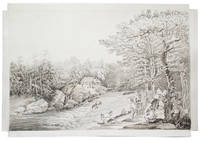
180052601Canada 1800. Graphite pen-and-ink and grey wash on wove paper watermarked "W. Elgar 1796". 13 5/8 x 20 inches. Corners clipped outside the image verso toned. Graphite pen-and-ink and grey wash on wove paper watermarked "W. Elgar 1796". 13 5/8 x 20 inches. Along the falls of a tree-lined river two First Nations men are pulling a canoe into the water directed by another in an elaborate feather headdress; a wigwam with mother and child is on the same shore to their left; across the river a longhouse and structure for smoking fish with another group of native people can be seen; at the far left a First Nations man is standing in his canoe fishing with a pole in the water just below the rapids.<br /> <br /> Although the 1796 watermark on the paper is consistent with drawings by Heriot the unfinished quality of this work make attribution difficult. However it is somewhat reminiscent of a smaller grisaille watercolor signed by Heriot titled FALLS OF THE POQUISQUE ON THE RIVER ST JOHN on verso sold at Waddington's March 15 2018 lot 137.<br /> <br /> Furthermore this scene is reminiscent of one described by Heriot in his Travels in the Canadas 1807 in which he describes Native American fishing on the cacasdes of St. Mary nine miles below the entrance to Lake Superior: "It is at the bottom of the rapids and even among their billows which foam with ceaseless impetuosity that innumerable quantities of excellent fish may be taken from the spring until the winter; the species which is found in the greatest abundance is denominated by the savages atticameg or white fish; the Michilimakinac trout and pickerell are likewise caught here. These aflford a principal means of subsistence to a number of native tribes. No small degree of address as well as strength is employed by the savages in catching these fish; they stand in an erect attitude in a birch canoe and even amid the billows they push with force to the bottom of the waters a long pole at the end of which is fixed a hoop with a net in the form of a bag into which the fish is constrained to enter. They watch it with the eye when it glides among the rocks quickly ensnare it and drag it into the canoe. In conducting this mode of fishing much practice is required as an inexperienced person may by the efforts which he is obliged to make overset the canoe and inevitably perish."<br /> <br /> Trained by Paul Sandby at the Royal Military Academy Woolwich London Heriot worked as a clerk for Board of Ordnance. "In 1792 Heriot was posted to Quebec and promoted clerk of the cheque in the Ordnance department. Heriot was to remain in Lower Canada until 1816 except apparently for two periods of absence in 1796-97 and in 1806. His first years at Quebec are not well documented. Sketches record visits in and about Quebec and Montreal perhaps on Ordnance business. In November 1792 he published a sketch of Jersey in the Quebec Magazine and the following year he prepared a view of Quebec perhaps also intended for publication. When he returned to Britain in 1796 he resided in London travelled to the south coast and made at least one sketching foray into Wales . A watercolour prepared from his sketches of Wales and two Canadian views were accepted by the Royal Academy of Arts for exhibition in the spring. Heriot probably sailed for Lower Canada soon afterwards taking notes and making sketches on the voyage. The impact of his visit to Britain was considerable. While there he had been stimulated by the art he had seen and by his success as an artist. He returned with a fresh enthusiasm for the Canadas; he began to read about their past and to make elaborate notes and numerous sketches of the places he visited and the peoples he encountered. His sojourn abroad had affected his artistic vision of the Canadas; his drawings and water-colours assumed a new confidence and his landscape forms developed a new strength and grandeur. In London he had probably studied the simply handled and remarkably strong water-colours of younger British artists such as Thomas Girtin Joseph Mallord William Turner and John Varley. Either in Britain or in Lower Canada he had also become familiar with Lieutenant George Bulteel Fisher's Six views of North America . London 1796. He was influenced by this work especially by Fisher's use of the Picturesque in depicting Canadian landscape" Dictionary of Canadian Biography. unknown
1937004544Tokyo: Kokusai Bunka Shinkokai The Society for International Cultural Relations 1937. First edition. Leporello. Hardcover boards paper pastedown. Very Good. The Japanese photobook equivalent of a Leni Riefenstahl movie! Deemed "arguably the high point of both the Japanese propaganda and the modernist photo book" by Parr and Badger in "The Photobook: A History". Oblong folio 27 by 30 cm. 64 pp. or 32 double-page back-to-back photomontages configured as an accordion fold-out and a deliberate attempt to adapt the traditional Japanese pillow book to a more modern usage. Text captions in English French and German. The photographers involved were also staff photographers of the Japanese photo magazine "Nippon". The black and white photos have an extraordinary dynamism and three dimensionality achieved by the artful juxtapositions and there is a cumulative power to the whole enterprise. Just as the photos themselves are able to convey movement the message of the whole is that Japan itself was on the march forward into a new dawn! And virtually every aspect of Japanese life is presented -- economic religious cultural architectural artisanal rural urban etc. Only two of the montages relate to the military -- one the army one the navy -- and this is in sharp contrast to similar publications emanating from Germany and Italy at the time. Japan had by then actually embarked on its program of foreign aggression and conquest whereas for the other Fascist regimes that still lay in the future. The scarce book was probably never for sale but rather was given as a gift to foreign dignitaries. Scarce with the only known institutional copies at the British Museum the Library of Congress. Two folds professionally and discreetly repaired with very minor loss a very thin sliver along those joints. A quarter sized infill to where there was a corner chip to the silver Japanese paper pastedown on the front cover. The front blue blank or endpaper does not have a title label pastedown which has been seen in other copies but it is obvious that there never was such a label pasted into this copy. Kokusai Bunka Shinkokai (The Society for International Cultural Relations) hardcover
1937004544Tokyo: Kokusai Bunka Shinkokai The Society for International Cultural Relations 1937. First edition. Leporello. Hardcover boards paper pastedown. Very Good. The Japanese photobook equivalent of a Leni Riefenstahl movie! Deemed "arguably the high point of both the Japanese propaganda and the modernist photo book" by Parr and Badger in "The Photobook: A History". Oblong folio 27 by 30 cm. 64 pp. or 32 double-page back-to-back photomontages configured as an accordion fold-out and a deliberate attempt to adapt the traditional Japanese pillow book to a more modern usage. Text captions in English French and German. The photographers involved were also staff photographers of the Japanese photo magazine "Nippon". The black and white photos have an extraordinary dynamism and three dimensionality achieved by the artful juxtapositions and there is a cumulative power to the whole enterprise. Just as the photos themselves are able to convey movement the message of the whole is that Japan itself was on the march forward into a new dawn! And virtually every aspect of Japanese life is presented -- economic religious cultural architectural artisanal rural urban etc. Only two of the montages relate to the military -- one the army one the navy -- and this is in sharp contrast to similar publications emanating from Germany and Italy at the time. Japan had by then actually embarked on its program of foreign aggression and conquest whereas for the other Fascist regimes that still lay in the future. The scarce book was probably never for sale but rather was given as a gift to foreign dignitaries. Scarce with the only known institutional copies at the British Museum the Library of Congress. Two folds professionally and discreetly repaired with very minor loss a very thin sliver along those joints. A quarter sized infill to where there was a corner chip to the silver Japanese paper pastedown on the front cover. The front blue blank or endpaper does not have a title label pastedown which has been seen in other copies but it is obvious that there never was such a label pasted into this copy. <br/><br/> Kokusai Bunka Shinkokai (The Society for International Cultural Relations) hardcover books
15695032541569. Book. A lengthy series of royal edicts / decrees / writs produced by the court under Philippe's close scrutiny in 1569 regarding financial and other obligations on the part of the persons in the area of Castro del Rio and elsewhere. 49 vellum leaves 98pp of manuscript 4 blank pages. The last page of which bears the date 18 November 1569 and the elaborate signatures and marks of the King and a number of his courtiers. Each page of the text bears 2 flourishes ie initials likely by the King and by the person responsible for the production of the document. In the original leather covers much rubbing and wear with remnants of the binding ribbons but the document still well-bound and with we think the original tri-coloured spine-cord binding the text to the cover. The first page with ornate decoration and illustrations in ink embellished with gold detailing and flourishes. Exquisite calligraphy throughout on well-preserved vellum. No seals present. 14" x 10". hardcover
18931276951893. LAWRENCE T.E. LONGUS. Daphnis and Chloe: A Most Sweet and Pleasant Pastoral Romance for Young Ladies. London: Vale Press 1893. Quarto contemporary full black crushed morocco elaborately gilt-decorated spine and covers raised bands top edge gilt uncut. $15000.An exceptional association copy: the finely printed and beautifully illustrated Vale Press Daphnis and Chloeone of only 210 copies 200 of which were for sale with 36 charming woodcuts in the Italian style by Charles Ricketts and Charles Shannon with ""T.E.L.""likely in T.E. Lawrence's handfaintly penciled in the upper right corner of the front free endpaper and a note from recipient Charles Francis Bell describing the circumstances in which Lawrence presented this copy to him. Beautifully bound in full morocco-gilt by C. & C. McLeish.""There are works which will never cease to be reprinted and which artists will ever love to illustrate according to their own individual fancies"" Jules Claretie Preface. This classical Greek work whose author Longus has not been fully identified has been dated to the 2nd or early 3rd century CE. Described by one scholar as ""an unknown best seller"" Giles Barber Daphnis and Chloe is considered ""the original or earliest survivor"" of the idyllic/pastoral romance Hardin Love in a Green Shade 1. This large-format illustrated edition is one of the Vale Press' most impressive books. It uses the quaint 17th-century translation of Thornley designed to convert the lascivious tale into reading matter for young ladies. One homosexual passage is left in the original Greek. In the Art Nouveau style the illustrations by Ricketts and Shannon effectively capture Longus' combination of decadence and sweet innocence.Born in 1859 binder Charles McLeish was apprenticed to Andrew Grieve in Edinburgh then came to London in 1890 to work for Riviere. When Cobden-Sanderson founded the Doves Bindery in 1893 he hired McLeish as the firm's finisher. McLeish held that estimable position until 1909 when he left to go into partnership with his son Charles who had apprenticed under Roger de Coverly. Although the senior McLeish was no longer in the employ of Cobden-Sanderson all of the bindings that were signed ""Doves Bindery"" between 1909 and 1921 were actually done in the McLeish workshop. The work produced by the McLeishes was beautifully designed and impeccably executed as evidenced in the present volume. With publisher's scarce four-page prospectus bound in at rear. Bookplate of recipient art historian Charles Francis Bell with his handwritten note regarding the circumstances of Lawrence presenting this copy to him tipped to the front free endpaper: ""This book was bound by McLeish for Colonel T.E. Lawrence whose initials in pencil in his own writing are in the top corner of the opposite endpaper. It was given by him to me at All Souls College Oxford on November 16 1920. C.F. Bell."" Bell 1871-1966 was curator of the Department of Fine Art in the Ashmolean Museum Oxford where he met Lawrence when the latter had brought fragments of pottery into the Ashmolean for identification. The two became friends and frequently discussed their shared enthusiasm for Medieval art and architecture. Although the brevity and faintness of the initials on the front free endpaper make it difficult to verify it as being in Lawrence's hand it is consistent with Lawrence's known practice of initialing his own books.Mild offsetting from woodcuts; offsetting from morocco turn-ins partially obscuring penciled initials in upper corner of front free endpaper binding beautiful and fine. An excellent association copy with distinguished provenance. hardcover
1804007897London: Printed by Thomas Bensley for R. Bowyer 1804. First Edition. Full Calf. Very Good. One of the greatest of early 19th century hand-colored plate books and a monumental work of publishing just at the juncture that interest in Egypt and other areas of the Middle East was intensifying and these areas were also becoming more accessible to Europeans. Folio 47 by 33.5 cm. 96 hand-colored plates. Egypt volume 1801: 6 -- title for entire set title for the volume 102 2 pp. 48 color plates. Ottoman Empire volume 1803: 40 pp. 24 color plates. Palestine volume 1804: 47 1 pp. 24 color plates. Beautiful full speckled calf bound set. Boards with gilt floral patterned border. Red leather title on spine. Five raised spine bands ruled gilt decoration. Bindings are more modern but sympathetic to period -- in a style compatible with an early nineteenth binding. Condition: The bindings are generally fine but the second volume in particular does have some light spotting distinct from the original speckling. The leaves generally have light age toning around their perimeters and also finger smudging and at times a light film of soiling much of which can be mitigated with a simple eraser if one wishes to make the effort. The scattered fox marks and the few dampstains generally small and relatively inconspicuous can't be so eliminated though. Moderate offsetting but if anything on the lighter side. The plates even with the occasional fox mark are invariably bright and we think most would deem them rather clean. A few minor closed tears 2-3mm and not ones likely to increase in length with circumspect handling. Overall this is a beautiful set that in some respects is Near Fine and others merely Very Good in our view. Printed by Thomas Bensley for R. Bowyer unknown
WB19687ENCYCLOPEDIA OF ALL THE KNOWLEDGE OF THE ANCIENT WORLD" Treviso: Michael Manzolus 1479. <br /> <br />An incunable edition of Pliny's "encyclopedia of all the knowledge of the ancient world" PMM with copious early scientific marginalia and illuminated white-vine initial. When it was published in Venice in 1469 this work marked the first appearance of any scientific text in print. This sixth Latin edition is one of the finest specimens from the press of Michael Manzolus and the second edition of Beroaldo's recension of the text. This copy is extensively annotated by an early learned owner with a particular interest in plants and animals. Pliny an enthusiastic student of nature unto death ultimately perished while observing the eruption of Vesuvius. BSB-Ink P-603; Goff P-791; <br /> <br />HC 13092; ip00791000. See PMM 5 1469 ed. <br /> <br />Folio 290 x 190mm. 356 leaves of 360; lacking bifolium rum4-6 and first and last blanks. <br /> <br />Illuminated white-vine initial M other large and small red and blue initials with 19th-century manuscript facsimile of lacking pages bound in; first few leaves worn some leaves of first gathering repaired at inner margin; occasional worming and dampstaining. Modern auburn morocco. Provenance: extensive early marginalia in several hands - Maffeo Pinelli 1736-1785 important Venetian collector his catalogue no. 1756 - George Kloss 1787-1854 bibliographer; his sale Sotheby's 7 May 1835 lot 3151 erroneously identified as Melanchthon's copyl - Lewis H. Machen 1790-1863 clerk of the United States Senate and Virginia farmer; pencil note. <br /> <br />15000 <br/><br/> unknown
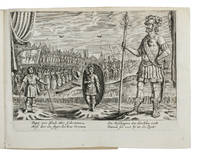
1648B1GGR2474I77Amsterdam 1648. Small 4to 19 x 15 cm. Tymen Houthaeck Modern marbled wrappers. With a engraved illustration of a labyrinth on title-page an engraved plate by P. Holsteyn after A. Vinckenbrinck 3 engravings in text and a folding engraved plate of David & Goliath. 8 ll. Extremely rare third edition the first with poems by Jan Vos and double the size of the two earlier editions of a description intended as souvenir of the "Oude Doolhof" literally: old labyrinth of Amsterdam a sort of amusement park at the Looiersgracht. It was the first public doolhof founded by the wine merchant and inn-keeper Vincent Jacobsz. Coster at the beginning of the 17th century. The Doolhof was a sculpture garden with a labyrinth exhibiting fountains sculptures and automata showing historical mythical and biblical figures and spectacles. The booklet was first published ca. 1645 by Crispyn Passe the younger in 4 leaves and other versions followed soon after. For the present edition one full-page and one folding engraved plate were added together with poems by Jan Vos 1612-1667 the most popular Dutch playwright of his time.With the outer corner of the foot of the title-page and the first plate torn off and two minor waterstains on the title-page otherwise in very good condition.l Franken 1375 note; Meijer "Het oude doolhof te Amsterdam" in: Oud Holland I 1883 pp. 119-135; Spies De Amsterdamse doolhoven pp. 70-71; STCN 2 copies; WorldCat same 2 copies. unknown
2011251607112CreateSpace Independent Publishing Platform 2011-03-03. Paperback. Very Good. Book is not new but in very good condition. Overall- Minor Wear. Cover is very good with minor - moderate wear. Buy with confidence.customer service is our TOP PRIORITY! Quick Shipping/ Free Delivery Confirmation! CreateSpace Independent Publishing Platform paperback
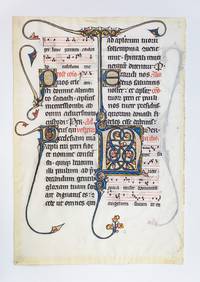
ST20214Northern France perhaps Beauvais or Amiens late 13th or early 14th century. 286 x 199 mm. 11 1/4 x 7 3/4". Double column containing a mixture of staves and text approximately 21 lines in an excellent formal gothic book hand. <br/> Attractively matted. Rubrics in red chant text containing black penwork initials with red and yellow geometric elaboration BEAUTIFULLY ILLUMINATED with five two-line initials painted blue or pink with white tracery on a ground in the contrasting color two of the initials filled with grotesques and swirling vines and two with the filler design traced out but never completed each initial with blue and pink extensions terminating in orange leaves or spiky shapes; the verso featuring AN IMPRESSIVE SIX-LINE "N" 58 x 50 mm. in the same style filled with an intricate knotwork design and orange leaves with long extensions including a horizontal extension across the upper margin. Margins with light offsetting of the designs from the facing leaf; remnants of mounting tape on recto corners and bottom edge; verso apparently with a barely visible Medieval "14" in lower margin. An area measuring 5 mm. at edges just faintly yellowed from mat burn but IN FINE CONDITION the vellum otherwise quite bright the paint rich and the gold brightly glittering.<br/> <br/> This sumptuously decorated leaf--which is beautifully preserved and contains a particularly large and handsome initial--comes from the last volume of a three-volume Missal presented to Beauvais Cathedral by Canon Robert de Hangest d. 1356. The Missal remained at the cathedral at least through the 17th century when it is noted in an inventory but was removed from the church at some point likely in the aftermath of the French Revolution. The parent volume eventually entered the collection of Henri-Auguste Brölemann 1775-1854 of Lyon who passed it to his grand-daughter Etienne Mallet who then sold it at Sotheby's in 1926. It was then acquired for the collection of William Hearst where it remained for the next 25 years. In 1941 it was again sold at auction and subsequently dismembered. Though long thought to have been the work of famed biblioclast Otto Ege recent scholarship suggests that it was actually Phillip Duschnes who was responsible for breaking up the book keeping some leaves for himself and selling others on to his colleague Ege for inclusion in his portfolios of "Fifty Original Leaves from Medieval Manuscripts." The Beauvais Missal has been a subject of interest for many notable scholars chief among them being Christopher de Hamel--see: "Otto Ege and the Beauvais Missal" in "Gilding the Lilly: A Hundred Medieval and Illuminated Manuscripts in the Lilly Library" and it is currently the focus of a major effort to "reconstruct" the manuscript digitally--a project spearheaded by Lisa Fagin Davis. Other leaves from the parent volume are in the collections of the Morgan Library the Metropolitan Museum of Art the Cleveland Museum of Art and the Houghton Library at Harvard among many others. Although there is some dispute among art historians the illumination has been tentatively attributed to the artist of the Hours of Yolande of Soissons produced in Amiens ca. 1280 and now held by the Morgan Library MS M.729. It is worth noting that the town of Hangest home to the original owner is only 10 miles from Amiens and is a likely place of origin for the Missal. The present leaf contains a text for a major feast day and thus contains a large and extravagantly decorated initial for its opening "'Nunc scio vere." It is not too much to say that the decoration here is masterful but curiously--and of special interest to us from a modern perspective--the illuminators seem to have forgotten to put the finishing touches on the two smaller initials above which still contain sketches of the preliminary design. unknown
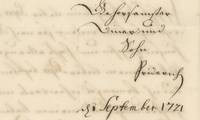
17213633109/1721. <blockquote><p>Theirs was a famously combative relationship; Frederick would attempt to flee to Britain 9 years later</p></blockquote><p>In his early youth Frederick lived with his mother and sister Wilhelmine although they regularly visited their father's hunting lodge at Königs Wusterhausen. Frederick and his older sister formed a close relationship which lasted until her death in 1758. Frederick was educated to speak both French and German and many of his tutors were French Calvinists.</p><p>The relationship between Frederick the Great and his father Frederick William I was deeply strained and often hostile. Frederick William I was a rigid militaristic ruler who valued discipline obedience and a strong army above all else while his son was drawn to music literature and French Enlightenment culture. The King saw these interests as weak and unmanly and he frequently criticized and even physically punished Frederick in an attempt to force him into a more soldierly mold.</p><p>Their conflict reached a peak in 1730 when Frederick attempted to flee Prussia to escape his father’s control. The plan failed and Frederick William I reacted harshly—he had Frederick arrested and forced him to watch the execution of his close friend Hans Hermann von Katte who had helped in the escape attempt. Although Frederick later became a brilliant military ruler the emotional distance between father and son never fully disappeared. In fact Frederick’s later embrace of culture and philosophy can be seen partly as a reaction against his father’s severity.</p><p>Wusterhausen was an important royal residence in early 18th-century Prussia and played a key role in the upbringing of Frederick the Great. In the early 1720s when Frederick was still a child he spent time there with his father Frederick William I who used the palace as a retreat from Berlin. The site was known for the King’s informal “Tobacco Parliament†where political and military matters were discussed. For the young Frederick Wusterhausen symbolized the strict militaristic environment imposed by his father which sharply contrasted with his own developing interests in culture music and Enlightenment thought—tensions that would later shape his character and reign.</p><p><strong>Autograph letter signed</strong> in old Germanic script from then Prince Frederick to the King ""<em>My dear Papa"" ""in September 1721.""</em> The General mentioned is likely Johann Matthias von der Schulenburg.</p><p><em>""I hope that my dear Papa is still doing well and I am longing very much to go to Wusterhausen. I am constantly hoping that my dear Papa will order for me to come. I am awaiting with the greatest impatience to see my dear Papa. I am humbly requesting my dear Papa that he may let me come to Wusterhausen. I remain my dear Papa’s Most obedient servant and son Frederich.""</em></p><p><em>""The general Schulenburg has told me that my dear Papa is still doing well about which I am very glad and he also asked me to be godfather.""</em></p><p><img class=""alignnone wp-image-25018 size-post-window"" src=""https://cdn.raabcollection.com/wp-content/uploads/20231204144051/Folder-site-11-1600x1327.jpg"" alt=""historical memorabilia dealer"" width=""1600"" height=""1327"" /></p> unknown
Lerhard, Morten, edNot in perfect condition. unknown
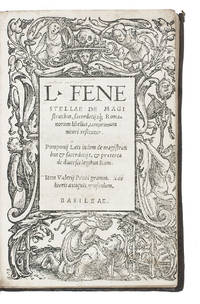
15236849Basel: colophon: Valentino Curio 1523. Contemporary panel-stamped calf sewn on 4 supports each board with the same 3 panel stamps: 2 virtually identical panels 76 x 52 mm with the foot of the panels toward the spine with 6 animals in 2 grape vines the animals from head to foot in the left vine: a monkey dog and wyvern 2-legged dragon; and in the right vine: a squirrel hare and lion in a border of a diaper of quatrefoils in lozenges the two separated by a small panel stamp 12 x 75 mm with a peacock right side up with its head toward the right but turned back and pecking at the ground paste-downs made from a leaf from an Aristotle manuscript on vellum with a fragment of another manuscript in a bastarda script under it. 8vo 16 x 10.5 cm. Ad 1: With the general title in a woodcut border with a woman mounting a man as if he were a horse a head on a stake and other grotesque or satirical figures Curios large architectural woodcut device on the otherwise blank final page with a shield held by 4 putti bearing a hand emerging from a cloud painting or writing on a tablet with what appears to be a brush 4 woodcut decorated initials 2 series: roman inscriptional capitals with pictorial backgrounds and a vine-leaf ornament Vervliet 7. Ad 2: With 2 woodcut decorated initials. Ad 3: With 3 woodcut decorated initials 2 series and 2 different vine-leaf ornaments Vervliet 7 & 8. All three editions set in italic type with upright capitals ad 2 with equally extensive passages in roman. 3 works in 1 volume. Including with a drop-title: POMPONIO LETO Giulio. De Romanorum. magistratibus .With:2 LUCIANUS OF SAMOSATA. Complures . dialogi à Desiderio Erasmo Roterodamo . in Latinum conversi & à Nicolao Buscoducensi illustrati additis Fabularum & difficilium vocabulorum explanationibus.Colophon: Antwerp Michael Hillen van Hoochstraten 1524.3 MOSELLANUS Petrus Peter SCHADE. Paedologia . in puerorum usum conscripta & aucta. Dialogi XXXVII. Dialogi pueriles Christophori Hegendorphini. XII. .Including with a drop-title: HEGENDORF Christoph. Dialogi pueriles . XII. .Colophon: Antwerp Michael Hillen van Hoochstraten 1523. Three rare editions of humanist works in a contemporary panel-stamped binding all well produced and the panel stamps finely rendered. Fogelmark p. 33 calls panel-stamps with gothic animals in foliage "the Flemish panel stamp par préférence". We have not found an exact match in the literature. The impressions of the panels are very crisp and clear especially that on the lower half of the front board.Ad 1: First Basel edition of an account of the sacerdotium priesthood and administration in ancient Rome written by the Florentine humanist Andrea Domenico Fiocco d. 1452 assuming the name of a first century Roman writer Lucius Fenestella. It is followed by a work on the same subject by the Italian humanist Giulio Pomponio Leto 1428-1498 and a list of abbreviations by Valerius Probus. While these works by Fiocco and Leto had been published together since 1510 the present edition introduces a new form that seems to have become the standard followed by others.Ad 2: Rare Antwerp edition of satirical dialogues by the 2nd-century rhetorician Lucianus of Samosata now in Turkey near the Syrian border often simply called Lucian in English. They come from his Dialogues of the gods and Dialogues of the dead. The present translation from the Greek by Erasmus first appeared at Louvain in 1512. Only one other copy of the present edition is known.Ad 3: Rare early Antwerp edition of a very popular pedagogical work by the German humanist and professor at Leipzig Peter Schade better known as Petrus Mosellanus 1493-1524. The present edition includes as usual the dialogues for children by the German Hellenist Christoph Hegendorf 1500-1540. Only one other copy of the present edition is known.With several early owners' and other inscriptions and an occasional manuscript note or underlining in the text. The title page of ad 1 with an owner's inscription removed and about a millimetre shaved from the fore-edge of the woodcut border a small worm hole in the first 5 leaves and some mostly marginal water stains not significant outside the last 8 leaves: still in good condition. Recased with the four corners of each board and the head and foot of the spine restored and a few small wormholes and cracks in the calfskin of the boards slightly affecting the panel stamps but nearly all of each of the 6 panel impressions survives in very good condition. Three humanist works in Latin two in extremely rare Antwerp editions with finely executed contemporary panel stamps.l Ad 1: Adams F597; BMC STC German p. 300; Hieronymus Oberrhein. Buchillustr. 377c; USTC 671401; VD16 F1641; ad 2: Netherlandish books 19680 1 copy; Nijhoff & Kronenberg 1401 same copy; USTC 437231 same copy; not in Adams; BMC STC Dutch; UniCat; ad 3: Netherlandish books 21706 1 copy; USTC 404733 same copy; not in Adams; BMC STC Dutch; Buisson; EOL www.erasmus.org; Nijhoff & Kronenberg; UniCat; the main panel stamps not in Fogelmark; Goldschmidt; Indestege "De boekband in de Zuidelijke Nederlanden ." in De Gulden Passer XXXIV 1956 or the addendum in XXXV 1957; Oldham; Weale. (colophon:) Valentino Curio, hardcover
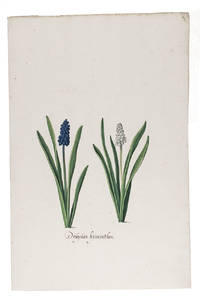
165019905Netherlands 1650. Watercolour ca. 13.5 x 13 cm on laid paper 31.5 x 21 cm with caption below. Delicate watercolour of two grape hyacinths by the Dutch watercolour painter and engraver Pieter Holsteyn de Jonge 1614-1673. Holsteyn made many drawings of plants birds and insects which were often composed in albums. Some of those albums are still intact and supplied with a title-page by the artist himself and as a result many of the drawings in those albums were not signed. These grape hyacinths were in such an album which was later taken to pieces. With certificate from Dr. S. Segal Amsterdam. In very good condition. unknown
192312039ABBerlin, Amsler & Ruthardt, (1923). 36,5 : 26 cm. Title, 76 pages, 2 leaves with 46 original aquatinta-etchings by Max Klinger. Original blue morocco, spine and boards with gilt fillets, inside dentelles.