BUILDER, THEBiblio.com

184 824 résultats
39529London: 1843-1899. 77 Vols. folio numerous illustrations throughout first 6 volumes bound in orig. publishers cloth re-backed the rest bound in half hard grain morocco spines lettered in gilt some light rubbing but a very nice usable set. A complete run cover the nineteenth-century of this highly important and influential architectural periodical. Originally published as a weekly magazine from 31 December 1842 onward complete runs such as this are extremely rare. Each volume is illustrated large woodcut illustrations showing newly designed buildings by the major architects of the time. "The most informative and influential works in the field of architecture. incomparable in the scope and range of their coverage and they form an extraordinary record of aesthetic and cultural progress not only in the United Kingdom but around the world. yet the wealth of architectural information in The Builder. still lies buried in the weekly descriptive reports on literally thousands of buildings that include churches schools hospitals town halls libraries market halls office blocks factories private houses court houses hotels workhouses monuments public baths exhibitions halls clubs and even cemetery monuments public parks and engineering structures. These articles do not appear to have ever been methodically examined or presented in a digital format in a manner that can be easily used by historians architects artists heritage planners conservation officers community heritage groups students restoration consultants or anyone in the related fields of research or in the building trades."Robert G. Hill. London: 1843-1899 hardcover
1562376729Frankfurt am Main: David Zöpfel 1562. Woodcut title vignette 43 woodcut illustrations some repeated. Title page in red and black. 8 300 leaves. Small 4to 7-3/4 x 5-7/8 inches. Late nineteenth century brown crushed morocco gilt by Frances Bedford marbled endpapers gilt edges. Provenance: William Title inscription dated 1856 on front free endpaper; C. S. Ascherson bookplate and inscription to; Edward Ascherson bookplate. Woodcut title vignette 43 woodcut illustrations some repeated. Title page in red and black. 8 300 leaves. Small 4to 7-3/4 x 5-7/8 inches. The first of two Frankfurt printings by David Zöpfel that year using the same woodcuts. The text is descended from the Low German version Reynke de Vos first printed at Lübeck in 1498. <br /> <br /> Among the most widely adapted of the beast fables the tales of Reynard the Fox originated in the 12th and 13th centuries with early versions in French Dutch Latin and German being notable. One of the most important secular literary traditions of the Middle Ages Reynard the Fox is at its essence biting satire and parody. The character of Reynard an anthropomorphic fox and trickster has since become almost an archetype in the literatures of many languages. "The supreme 'anti-hero' of medieval fiction" Cambridge Guide to Children's Books in English.<br /> <br /> This copy from the renowned library of the eminent British architect and book collector Sir William Tite 1798-1873 whose sale at Sotheby's in May-June 1874 took sixteen days certainly one of the greatest collections of the time. [David Zöpfel] unknown
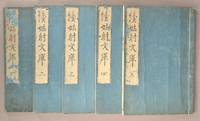
179890506a<p>ChÅ Gessho 張月樵 and Kazaore YÅ«jo 風折有丈 artists.<b> Zoku Koya Bunko 続姑射文庫 5 vols.</b> Nagoya Kansei 寛政 10 1798. 5 volumes 27 X 18cm string-bound Japanese-style fukuro-toji. Original format with original covers and title labels housed in a modern striped chitsu with clasps 27.3 x 19cm. Original monochrome woodblock prints many double page with Japanese text. Edited by BÅkŠ暮雨巷. A sequel to Koya Bunko 姑射文庫 done in 1768.</p><p>The "Sequel to the Koya Library" done by principal artist ChÅ Gessho 張月樵 1765-1832 and Kazaore YÅ«jo 風折有丈 is a remarkable rarity that captures the vibrant world of art and poetry centered on haikai and haiga in Nagoya. It is justly celebrated by critics from Brown to Hillier and was featured in the Library of Congress' major Japanese art exhibition "The Floating World of Ukiyo-e: Shadows Dreams and Substance." With hundreds of full-page black and white woodblock images it is probably the most extensive original example of the Haiga aesthetic in existence. Vol 1 has 52 cho Vol 2 has 50 cho Vol 3 has 53 cho Vol 4 has 53 cho and Vol 5 has 56 cho including colophon. Identical to Volumes held in ARC Koten Seki portal database online Ritsumeikan University ç«‹å‘½é¤¨å¤§å¦ with the exception of an added modern page to their introduction in Vol 1.</p><p>In very good condition throughout worn original covers and title labels worming on rear wrapper of vol 5 very good impressions. Mitchell 564</p><p><br /></p> books
Professionally rebound, including 95% of the contemporary full leather boards. New endpapers. Original bookplate (steel engraving) Frontispiece of "Capt. Lemuel Gulliver, Splendide Mendax. Hor. " Four steel engraved maps of the islands and numerous ornaments and smaller illustrations throughout the book. A very handsome, tight, early edition of one of the most famous books ; Including the four parts: I: A Voyage to Lilliput. II: A Voyage to Brobdingnag. III: A Voyage to Laputa, Balnibarbi, Luggnagg, Glubbdubdrib and Japan. IV: A Voyage to the Country of the Houyhnhnms. This is the (apparent) third editon, lightly corrected and preceded by the London edition and the first Dublin edition. - Stored in a custom-made decorative box with petrol colored marbled paper and leather spine with gilt lettering; 8vo; 404 pages
20202081502111906754Hoo shubbansha 2020. Soft Cover. Fine. The book is in fine condition. Hoo shubbansha paperback
20192081502111906862Hoo shubbansha 2019. Soft Cover. Fine. The book is in fine condition. Hoo shubbansha paperback
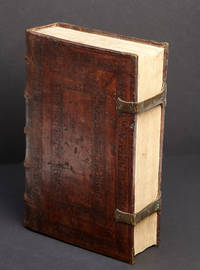
6759Numerous fine woodcut initials diagrams tables & maps in the text. Woodcut printer’s device at end. 14 p.l. 18 leaves 6 leaves 30 xxxi-cxxvi leaves 4 leaves. Folio cont. Flemish blindstamped calf binding over wooden boards rather well rebacked a few unimportant stains rolls of medallion heads & foliage forming a double panel orig. clasps and catches metal corner guards. Cologne: J. Prael for P. Quentel 1537.<br /> <br/> <br/> bound after:<br /> <br/> <br/> ANSELM ARCHBISHOP OF CANTERBURY. In Omnes Pauli Apostili Epistolas enarrationes. Title within fine woodcut border by Anton Woensam of Worms. Some fine large woodcut initials. 8 p.l. 531 pp. Folio. Cologne: E. Cervicornus for G. Hittorp 1533.<br/> <br/> A most attractive sammelband of two well-illustrated books in an attractive contemporary blind-stamped binding probably made at the Stavelot monastery in Belgium.<br/> <br/> I. First collected and illustrated edition of the scientific writings of the Venerable Bede including De Natura Rerum dealing with cosmology and natural history and De Temporum Ratione a work on chronology that still exercises a considerable influence over our daily life today. This edition was edited and commented upon by Joannes Noviomagus i.e. Jan van Bronchorst of Nijmegen 1494-1570 philosopher and mathematician then a professor of philosophy at the Collegium Montanum in Cologne. It would appear that he used the manuscript at the Dombibliothek no. 103 of Cologne to prepare this edition.<br/> <br/> The De Temporum Ratione is a significant book in several ways. Most notably “this book helped to establish the custom of counting years from the birth of Christ. When we say that Queen Elizabeth II was born in 1926 not ‘in the 16th year of the reign of George V’ or ‘in the year 2678 after the foundation of Rome’ or in the ‘2nd year of the 481st Olympiad’ we are indebted to the Venerable Bede.â€â€“Printing & the Mind of Man 16n.<br/> <br/> “Bede’s greatest practical effect was on the Western calendar. His decisions beginning the year calculation of Easter names of days and months calculations of eras and so forth in most instances finally determined usage that was only refined not changed by Gregorian reform.â€â€“D.S.B. I p. 565.<br/> <br/> “The De Ratione Temporum first published in 1505 is particularly important. It contains a remarkable theory of tides based upon Pliny but also upon personal observation; first mention of the establishment of a port i.e. the mean interval between the moon’s meridian passage and high water following; this interval is different in different ports.â€â€“Sarton I p. 511. Pierre Duhem described Bede’s establishment of a port as the only original formulation of nature to be made in the West for some eight centuries. <br/> <br/> Also contained here is the De Natura Rerum 1st printing: 1529 which contains such physical science as was then known. It collects the wisdom of the ancient world on these subjects and has the special merit of referring phenomena to natural causes. It contains a particularly important section — the “De Comptu vel Loquela digitorum†— which is “our main almost our only source for the study of mediaeval finger reckoning or symbolism.â€â€“Sarton I pp. 510-11. See also Smith History of Mathematics II p. 200.<br/> <br/> The rest of the book contains further treatises by Bede on arithmetic astronomy and the calendar and chronology.<br/> <br/> II. Very rare.<br/> <br/> PROVENANCE: Early inscription of “Antonius abbatis a Sancto Remaclo†on front flyleaf; Benedictine monastery of Stavelot Belgium inscription “Liber Monasterii Stabulensis†on title-page of Anselm; auction sale of the monastery library Catalogue d’une belle Collection de Livres et Manuscrits précieux sur vélin du VIIIe et du IXe siècle Ghent 26 April 1847 lot 42; Michel Chasles 1793-1880 the mathematician with bookplate his sale Paris 27 June-18 July 1881 lot 28; Robert B. Honeyman 1897-1987 his sale Sotheby’s 30 October 1978 lot 265.<br/> <br/> BINDING: Stavelot had its own bindery at this time and it is quite likely that this binding was executed there see Goldschmidt Gothic & Renaissance Bookbindings no. 90.<br/> <br/> Fine large copies preserved in a box.<br/> <br/> ⧠I. Adams B448–calling for two additional preliminary leaves but no other collation calls for them. Smith Rara Arithmetica p. 159n. Zinner 1657. II. Adams A1174. unknown
6759Numerous fine woodcut initials diagrams tables & maps in the text. Woodcut printer's device at end. 14 p.l. 18 leaves 6 leaves 30 xxxi-cxxvi leaves 4 leaves. Folio cont. Flemish blindstamped calf binding over wooden boards rather well rebacked a few unimportant stains rolls of medallion heads & foliage forming a double panel orig. clasps and catches metal corner guards. Cologne: J. Prael for P. Quentel 1537. bound after: ANSELM ARCHBISHOP OF CANTERBURY. In Omnes Pauli Apostili Epistolas enarrationes. Title within fine woodcut border by Anton Woensam of Worms. Some fine large woodcut initials. 8 p.l. 531 pp. Folio. Cologne: E. Cervicornus for G. Hittorp 1533. A most attractive sammelband of two well-illustrated books in an attractive contemporary blind-stamped binding probably made at the Stavelot monastery in Belgium. I. First collected and illustrated edition of the scientific writings of the Venerable Bede including De Natura Rerum dealing with cosmology and natural history and De Temporum Ratione a work on chronology that still exercises a considerable influence over our daily life today. This edition was edited and commented upon by Joannes Noviomagus i.e. Jan van Bronchorst of Nijmegen 1494-1570 philosopher and mathematician then a professor of philosophy at the Collegium Montanum in Cologne. It would appear that he used the manuscript at the Dombibliothek no. 103 of Cologne to prepare this edition. The De Temporum Ratione is a significant book in several ways. Most notably "this book helped to establish the custom of counting years from the birth of Christ. When we say that Queen Elizabeth II was born in 1926 not 'in the 16th year of the reign of George V' or 'in the year 2678 after the foundation of Rome' or in the '2nd year of the 481st Olympiad' we are indebted to the Venerable Bede."-Printing & the Mind of Man 16n. "Bede's greatest practical effect was on the Western calendar. His decisions beginning the year calculation of Easter names of days and months calculations of eras and so forth in most instances finally determined usage that was only refined not changed by Gregorian reform."-D.S.B. I p. 565. "The De Ratione Temporum first published in 1505 is particularly important. It contains a remarkable theory of tides based upon Pliny but also upon personal observation; first mention of the establishment of a port i.e. the mean interval between the moon's meridian passage and high water following; this interval is different in different ports."-Sarton I p. 511. Pierre Duhem described Bede's establishment of a port as the only original formulation of nature to be made in the West for some eight centuries. Also contained here is the De Natura Rerum 1st printing: 1529 which contains such physical science as was then known. It collects the wisdom of the ancient world on these subjects and has the special merit of referring phenomena to natural causes. It contains a particularly important section - the "De Comptu vel Loquela digitorum" - which is "our main almost our only source for the study of mediaeval finger reckoning or symbolism."-Sarton I pp. 510-11. See also Smith History of Mathematics II p. 200. The rest of the book contains further treatises by Bede on arithmetic astronomy and the calendar and chronology. II. Very rare. PROVENANCE: Early inscription of "Antonius abbatis a Sancto Remaclo" on front flyleaf; Benedictine monastery of Stavelot Belgium inscription "Liber Monasterii Stabulensis" on title-page of Anselm; auction sale of the monastery library Catalogue d'une belle Collection de Livres et Manuscrits précieux sur vélin du VIIIe et du IXe siècle Ghent 26 April 1847 lot 42; Michel Chasles 1793-1880 the mathematician with bookplate his sale Paris 27 June-18 July 1881 lot 28; Robert B. Honeyman 1897-1987 his sale Sotheby's 30 October 1978 lot 265. BINDING: Stavelot had its own bindery at this time and it is quite likely that this binding was executed there see Goldschmidt Gothic & Renaissance Bookbindings no. 90. Fine large copies preserved in a box. ❧ I. Adams B448-calling for two additional preliminary leaves but no other collation calls for them. Smith Rara Arithmetica p. 159n. Zinner 1657. II. Adams A1174. hardcover books
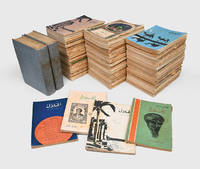
1924169966Cairo: Dar al-Hilal 1924-38. One of the most important cultural institutions in Egypt Rare in commerce and institutions this set of 85 issues of the Egyptian magazine al-Hilal from the 1920s-30s is richly illustrated with rotogravures and notable cover art. Alongside contemporary Arabic literature and poetry the journal documents rapid change in Egypt and the wider Arab world driven by science politics and women's emancipation. Founded in 1892 by the Lebanese intellectual Jurji Zaydan 1861-1914 a central figure of the Arab Nahda al-Hilal was conceived as a broad cultural forum. After his death his sons Emil and Shukry expanded participation encouraged public contributions and developed illustration and advertising attracting leading writers of the period including Taha Husayn Khalil Mutran Muhammad Husayn Haykal Salama Musa Mahmud Taymur and Zaki Mubarak with cover art by figures such as D. Hidayet. The issues offer a vivid cross-section of early 20th-century Egyptian life: illustrated reportage on current events travel writing debates on modernization poetry and fiction social commentary historical studies science notes readers' questions puzzles and illustrated advertisements aimed at a growing middle class. Special numbers treat themes such as Art and Beauty November 1935 and the medieval poet Abu l-'Ala' al-Ma'arri June 1938 confirming al-Hilal's role as a major intellectual record of the modern Arab world. 85 issues large octavo. Each issue richly illustrated with rotogravures with colour front covers and pictorial advertisements. Original decorative wrappers wire-stitched as issued. Issues for 1924 one issue Oct.; 1925 five issues Feb.-May Dec.; 1926 six issues Jan. Mar.-June Dec.; 1927 eight issues Jan. Feb. Apr.-July Nov. Dec.; 1928 nine issues Jan. Mar.-Aug. Nov. Dec.; 1929 nine issues Jan.-Aug. Nov.; 1930 six issues Jan.-Apr. Aug. Nov.; 1931 three issues June Nov. Dec.; 1932 five issues Jan. Mar. June July Dec.; 1933 five issues Jan. Mar. Aug. Nov. Dec.; 1934 six issues Mar.-July Dec.; 1935 eight issues Mar.-Aug. Nov. Dec.; 1936 four issues Feb. Mar. May Dec.; 1937 six issues Jan.-Mar. July Nov. Dec.; 1938 six issues Mar.-Aug. Accompanied by complete run of issues Nov. 1930-Oct. 1931 complete year 1349 Hijri bound in two vols large octavo original publisher's blue cloth. Some pencillings throughout. Wrappers generally foxed and creased spines worn and often chipped wrappers of 12 issues missing. Overall contents with some foxing but rotogravures almost universally fresh and bright. Some staining spill marks water damage small tears and creases a few issues suffering from more significant damage such as large open tears to opening pages front wrappers and/or last few pages detached. A good and unusually large set of this fragile journal covering a rich period in its history with outstandingly crisp illustrations. hardcover
19292091502135421944Not Available 1929. Soft Cover. Fine. Volume: 56 Not Available paperback
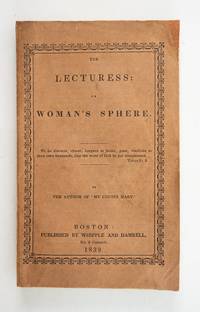
1839ST20899Boston: Whipple and Damrell 1839. FIRST EDITION. 155 x 95 mm. 6 x 3 3/4". 124 pp. 1 leaf ads. <br/> Original brown printed paper wrappers flat spine inside wrappers and back cover with ads discreet repairs to upper corners of front cover. Housed in a fine custom made green cloth drop-back box. Wright I 1081. For the author see: Oxford Companion to Women's Writing in the United States pp. 371-72; Feminist Companion to Literature in English pp. 474-75. See also: Ganter "The Unexceptional Eloquence of Sarah Josepha Hale's 'The Lecturess'" in "Journal of the American Antiquarian Society" 2004. Covers vaguely soiled front corners a little creased text with frequent foxing sometimes noticeable due to paper quality but still an extremely well-preserved copy of a fragile item with joints and hinges as good as new.<br/> <br/> In an excellent state of preservation in its original wrappers this is the first known American novel featuring a women's rights activist written by one of the 19th century's leading editors and tastemakers. The story follows Marian Gaylord an educated and outspoken young woman who earns a living by lecturing on the importance of female education. As the story progresses Marian's attempts to step into public life bring serious personal consequences affecting her reputation relationships and health. At the novel's end Marian on her deathbed repents her lifestyle to a close friend telling her that "approaching death has taught me how wrong were all my opinions. It taught me that true pride true independence in a woman is to fill the place which her God assigns her; to make her husband's happiness her own and to yield her will to his in all things." Despite the author's apparent belief that woman's natural place is in the home Sarah Josepha Hale 1788-1879 was herself a successful career woman and seems to have been as progressive as often as she was conservative on a number of issues related to women's rights. According to ANB "In an age when women were regarded as natural invalids confined to the home she urged the necessity for women doctors women nurses and women teachers and helped found schools for their training; she advocated physical exercise and fresh air for women sensible dress and an end to tight lacing. In addition she supported the use of any labor-saving devices that would make domestic work easier such as the sewing machine and the washing machine and in spite of religious opposition she fought for the use of anesthesia for surgery and in childbirth." Hale was not however a suffragist and the "Oxford Companion to Women's Writing in the United States" notes that "Debate continues about the nature of Hale's feminism. Some scholars criticize her as a proponent of 'women's sphere'; as a believer in women's moral superiority she expected women to provide spiritual leadership for western civilization and for the Christianization of the world. . . . But she disliked women public speakers abolitionists and women's rights proponents. Yet she advocated property rights for married women female doctors and in her later life support for working women." Despite displaying considerable ambivalence in the world of emerging feminism Hale is acknowledged by modern scholars as having an important role in literary history being "the most prominent American woman engaged in literary enterprise in the mid-nineteenth century" and "the first of the great 'lady editors." Oxford Companion Widowed at the age of 34 and with five children to support Hale turned to writing to provide a living for her family. Her first successful novel "Northwood" 1827 is considered to be "one of the first American novels to deal with the question of slavery." ANB She also wrote children's books and poetry including the popular nursery rhyme "Mary Had a Little Lamb." Her success led to editorial positions at "Ladies' Magazine" and "Godey's Lady's Book" where she remained for 40 years. There she made her most enduring marks on American culture publishing original work by American writers particularly women campaigning for causes such as the Bunker Hill Monument and a national Thanksgiving Day and promoting female education including the founding of Vassar College. "The Lecturess" is a very rare book in the marketplace: we could find just one rather dog-eared copy sold at auction fetching $6930 at Christie's in 2023. Whipple and Damrell unknown
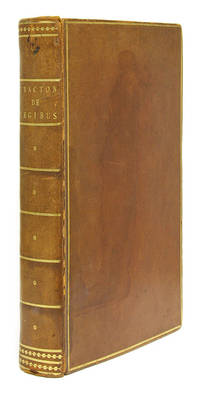
1569673671569. London 1569. First edition. Folio. London 1569. First edition. Folio. PMM 89: "The Crown and Flower of English Medieval Jurisprudence" Bracton Henry de d. 1268. De Legibus & Consuetudinibus Angliae Libri Quinq; In Varios Tractatus Distincti ad Diversorum et Vetustissimorum Codicum Collationem Ingenti Cura Nunc Primum Typis Vulgati; Quorum Quid Cuiq; Insit Proxima Pagina Demonstrabit. London: Apud Richardum Tottellum An. do. 1569. With imprimatur "Cum priuilegio" at foot of title. xvi 172 175-444 ff. Complete. Folio 11-1/4" x 7-3/4"; 28.6 x 19.7 cm. Nineteenth-century diced calf gilt rules to boards gilt fillets ornaments and title to spine gilt rules to board edges gilt inside rules marbled endpapers ribbon marker. Light rubbing to boards faint dampstain to front board moderate rubbing to extremities front joint starting at head rear joint cracked corners bumped and somewhat worn armorial bookplate "Ex Libris Munden" to front pastedown. Attractive large woodcut decorated initials. Light toning to text somewhat heavier in places light foxing and finger smudges to some leaves some fading to text of ff. 1 and 2. A handsome copy of a landmark work with an interesting provenance perserved in a navy blue clamshell box. $13000. First edition. Written between 1250 and 1256 De Legibus et Consuetudinibus Angliae The Laws and Customs of England is the first treatise on English law. A systematic work it emphasizes the separation of procedural and substantive matters and also cites cases as sources of at least intellectual if not formal authority. Both the principles formulated in this work and its use of precedents determined the development of English law and established the method adopted by Littleton and Coke. In Maitland's words it is "the crown and flower of English medieval jurisprudence" and "by far the greatest of our medieval law books." This copy belonged to Arthur Henry Holland-Hibbert 3rd Viscount Knutsford 1855-1935 of Munden House Hertfordshire. He served as both a justice of the peace and High Sheriff of Hertfordshire. His bookplate was engraved by Sir Henry Badeley who designed bookplates for a number of important clients including the House of Lords Library. Maitland Collected Papers II:43. Dauchy et al. Eds. The Formation and Transmission of Western Legal Culture: 150 Book. unknown
1881SET25-A-3London : Trustees of the British Museum 1881-1904. Fine Binding. Very Good Indeed. 13.5" by 10". None. An extensive and comprehensive catalogue of the printed books included in the British Museum at the end of the nineteenth century in a fine binding. Organised alphabetically by author. The volumes contained in this set cover authors A. through to Z. in forty-seven volumes along with nine volumes of supplements to the main catalogue. Also included are one volume containing a catalogue of every edition of the Bible in the posession of the British Museum at the time of publication 1892 a volume on the periodicals in the collection 1885 and two volumes containing a list of the laws statutes and treaties of England 1900 and France and Germany 1898. During its long history the British Museum Library/British Library has published several catalogues describing its collections of printed books periodicals and ephemera. Each edition is inclusive incorporating all material included in previous versions. BL This edition was originally published in three-hundred and ninety-three parts with a forty-four part supplement and is referred to by the British Library and British Museum as GK1. Complete in sixty volumes. In half-morocco bindings. Externally mainly smart although with some rubbing in places particularly to the spines and a few marks to the boards. Dusting to textblock edges. Five joints of one hundred and twenty starting. Internally generally firmly bound although slightly strained in places. Hinges of the third volume have failed and textblock is detached. Hinges are reinforced with cloth tape. Pages are mainly bright and clean with just some scattered light spotting in places. Very Good Indeed Trustees of the British Museum unknown
1842098065Great Britain 1842. A near complete run from 1842 to 1930 lacking only 3 half years Jan/Jun 1848 1899 & 1916 . 133 volumes. Books measures 13 x 9 inches or slightly larger 13 1/2 x 9 inches. 115 volumes bound in red quarter calf or red cloth with gilt title lettering. All these volumes are in very good clean firm condition. The other 18 volumes are bound in black half calf. Showing some minor wear occasional abrasion wear with minor loss. All in good firm condition. Generally all volumes are in very good clean firm condition. Internally extensively illustrated throughout many single page and folding plates occasional small library mark/stamp occasional minor defect or repair. Pages in very good clean condition throughout. A very nice clean well bound run. . Very Good Plus. Small Folio. hardcover
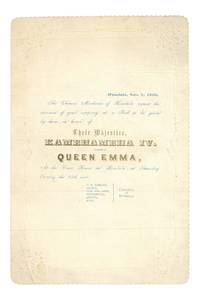
1856140946651Honolulu HI: Committee of Invitation 1856. Near Fine. 5.8"x7.25. Single sheet with scalloped edges and decorative embossed borders with text printed in gold and blue. Near Fine with minor soiling light toning and old folds. <p>One of the earliest printed works commissioned by Chinese immigrants in what is now the United States. While the first Chinese explorers reached Hawaii in the late 18th century Chinese immigration to any part of the United States began in appreciable numbers about the time of the California Gold Rush. While much writing about Chinese immigrants survives from the mid-19th century almost nothing survives by any of those immigrants. This invitation represents a rare and very early instance of such printed matter. <p>The Great Chinese Merchants' Ball of 1856 was thrown in celebration of the marriage of Liholiho Kamehameha IV to Emma Naea Rooke. Following a series of celebrations including balls thrown by the American Club and German Club roughly three dozen Cantonese in Honolulu felt that it was necessary for them if they were to succeed in the mercantile trade during the reign of the king to have a personal relationship with him. They decided to demonstrate the depth of their loyalty to the throne by presenting an extravaganza that would surpass those given by the Americans and Germans. <p>A respected Cantonese merchant Chun Afong who was proficient in the Hawaiian and English languages and conversant with Western manners was persuaded to head the committee of arrangements for a ball. Afong would eventually become the first Chinese millionaire in Hawaii. <p>The Chinese Merchants' Ball was one of the most Hawaiian elaborate affairs of the 1850s. It was a key event in Honolulu's social history where for the first time "East" and "West" met as social equals greatly solidifying the Chinese community's position in Honolulu. <p>A rare survival of an invitation to an important social event in Hawaiian cultural history as well as an unusually early document printed by Chinese immigrants in America. Committee of Invitation unknown
151969853Princeton:: Princeton Tiger 1915-1916. framed to an overall size of 15-1/4 x 18-1/4 inches. Very slightest of silvering to the outside areas of the image; otherwise very fine. . Image size 9-3/4 x 13 inches . The sitters are named by last name only on the verso in ms. Signed in the image by the photographer: initial illegible White N.Y." Princeton Tiger, unknown
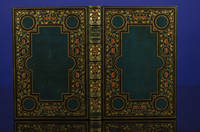
04421New Rochelle New York: The Elston Press 1901. Early Twentieth Century American Designer Bookbinding at its Very Best<br/>Shakespeare's Sonnets Bound by Henry Blackwell of New York<br/><br/>BLACKWELL Henry binder. SHAKESPEARE William. The Sonnets of Shakespeare now newly imprinted from the first edition of 1609 by Clarke Conwell at the Elston Press. New Rochelle New York: The Elston Press 1901.<br/><br/>Large octavo 9 1/8 x 6 1/4 inches; 232 x 159 mm. iv blank iv 1-126 1 127-154 1 limitation 5 blank pp.<br/><br/>".The Sonnets of Shakespeare newly imprinted by Clarke Conwell at The Elston Press from the first edition of 1609 with initial letters designed by H.M. O'Kane. Sold by Clarke Conwell at The Elston Press Pelham Road New Rochelle New York. Two hundred and ten copies have been printed: Finished this twelfth day of December MDCCCI."<br/>Limitation leaf. <br/><br/>Superbly bound ca. 1901 by Henry Blackwell stamp-signed in black "Bound by Blackwell" on verso of front end-paper. Full teal crushed levant morocco covers with triple-ruled borders surrounding an inlaid border of maroon morocco in turn surrounding a highly elaborate gilt and inlaid morocco design featuring 'Cobden-Sanderson' style gilt leaves and inlaid red morocco flowers. Each cover with four circles of inlaid maroon morocco. Spine with five raised bands decoratively tooled and inlaid in the same style lettered in gilt in the second compartment. Gilt ruled board edges and highly elaborate gilt decorated wide turn-ins. Doublures of orange morocco with a very intricate and pleasing geometric design. Lilac purple and cream decorated silk end-papers all edges gilt. A truly amazing example. Early twentieth century designer bookbinding at its very best.<br/><br/>Henry Blackwell 1851-1928 bookbinder and bookseller bibliographer and biographer was the son of bookbinder Richard Blackwell of Liverpool whose bindery appeared in the Liverpool & Birkenhead Trades Directory in 1870.<br/><br/>Henry emigrated to New York in 1877 where he supervised a large bindery. In 1892 he established his own shop in New York City. Blackwell played a prominent part in the Welsh-American life of his adopted country. He was a scholar of Welsh literature as well as binding his 1899 essay Notes on Bookbinding was a memorable contribution. He had the largest Welsh Collection of books on this side of the Atlantic and wrote articles books and bibliographies about Welsh-American books. In 1893 he commissioned H.T. Sears to engrave a Welsh bookplate for his Welsh books.<br/><br/>He also wrote articles about bookplates. He was a member of ex libris societies in America England France and Germany. He wrote the Introduction and a chapter on the study and arrangement of bookplates for W.G Bowdoin's book The Rise Of The Book-Plate New York 1901. His Private Library was sold at The Collectors Club in November 1915.<br/><br/>"A New Book on Bookbinding. In the coming fall the Briggs Brothers of Plymouth Mass. will publish under the title of "Twentieth Century Cover Designs." an elaborate volume devoted almost exclusively to the work of American binders and artists. Engravings of bindings by Toof & Co. Stikeman Dudley & Hodge F.J. Pfister Henry Blackwell Emily Preston Schleuning & Adams the Club Bindery and a few of the leading foreign binders will illustrate the text." The American Bookbinder Volume VI No. 4 November 1895 p.127. <br/><br/>"Among the binders who now have notable shops in New York City Henry Blackwell is one." The Outlook. Volume LXXI May-August 1902 p. 258.<br/><br/>"The most important of the New York private presses was in a suburb. The Elston Press began in Manhattan in 1900 but its owner Clark Conwell moved it to New Rochelle in 1901. Conwell with the aid of his designer and wife Helen Marguerite O'Kane was one of the most brilliant of the Kelmscott disciples. His books exemplify the best in the private press spirit: with traditional models as a point of departure they achieve freshness of their own. They were printed by handpress in limited editions on handmade paper and Japan vellum bound in boards or cloth or vellum with ties." Susan Otis Thompson. American Book Design and William Morris.<br/><br/>While Thompson compares the Elston Press books to those of the Kelmscott Press many of the Elston books are closer in style to the books of the Vale Press of Charles Ricketts. Either way the books of the Elston Press are some of the finest examples of printing and book design ever done in America. <br/><br/>Herbert H. Johnson. Notes on The Elston Press #7; Will Ransom. Private Presses and Their Books p. 260 #6. New Rochelle, New York: The Elston Press, 1901 unknown books
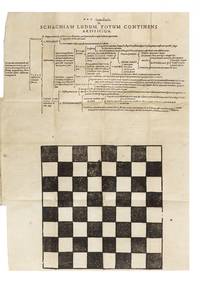
6429Woodcut port. of the author on verso of title & several woodcuts in the text. Title within typographical border. 12 p.l. last leaf a blank 348 4 pp. Small thick 8vo cont. vellum over boards stamped in blind on upper cover "M N H L" & "1613." Wittenberg: W. Meisner at the expense of C. Berger date of Foreword "1612". bound with: MATENESIUS Johann Friedrich. Critices Christianae Libri Duo de Ritu Bibendi super Sanitate Pontificum Caesarum Principum Ducum Magnatum Amicorum Amicarum &c. Woodcut printer's vignette on title. 8 p.l. 189 pp. one blank leaf. Small 8vo tear to first leaf of text in blank portion of gutter lacking folding plate as is often the case. Cologne: C. Butgen 1611. bound with: - De Luxu et Abusu Vestium nostri temporis Discursus quadraginta ex Sacrarum Scripturarum grauissimorumque Auctorum fontibus deducti. Woodcut printer's vignette on title. 6 p.l. 120 i.e. 121 one blank leaf. Small 8vo. Cologne: J. Crith 1612. bound with: VIDA Marco Girolamo. Schachia.Ludus ingenii virtutis et honestae voluptatis.in quibus de eius Usu Origine et Autore nec non latrunculis.agitur: adeo ut omni difficultate.obscuritate & ambiguitate sublata.Opera & Studio Lucae Wielii Ligio-Silesii. Small woodcut printer's vignette on title & one large folding sheet with two plates one of letterpress & another of a chessboard. 39 unnumbered leaves. Small 8vo. Strasbourg: P. Ledertz from a chronogram on title: "1604". A wonderful sammelband containing four very interesting books. I. First edition of a rare book. WorldCat wrongly attributes this to Balthasar Menz the elder 1500-85; it was written by his son also Balthasar 1537-1617 historian and dean of the University of Wittenberg who specialized in writing about the Saxon nobility. This is an account of several Saxon dukes and princes - including Albrecht III 1443-1500 Ernst 1441-86 Friedrich III the Wise 1463-1525 Heinrich IV the Pious 1473-1541 and Johann Georg I Elector of Saxony 1585-1656 - and their tours of Palestine and Rome. Menz has provided detailed descriptions of Jerusalem and Rome as recorded by the Saxon noblemen in their diaries. II & III. First editions. Matenesius d. 1621 was professor of history and Greek at the University of Cologne. The first work is on alcohol its uses in various religions and therapeutic values. "A catalogue of the greatest drinkers known to the author."-Simon Bibliotheca Gastronomica 1024. Like most copies ours lacks the folding woodcut "Catechismus M. Luther". The second work which is rare is concerned with the nature of luxury and its abuses especially regarding the wardrobes of the wealthy and ecclesiastics. IV. A valuable edition edited by Lucas Wielius of Vida's Scacchia ludus one of the most popular works on chess ever written. Vida 1485-1566 first published this work in 1525 and it was widely reprinted and translated for 300 years afterward. The chief historical interest of the work lies in its influence upon the names of pieces: the use of "castle" for rook still survives. Fine copies. hardcover books
6429Woodcut port. of the author on verso of title & several woodcuts in the text. Title within typographical border. 12 p.l. last leaf a blank 348 4 pp. Small thick 8vo cont. vellum over boards stamped in blind on upper cover “M N H L†& “1613.†Wittenberg: W. Meisner at the expense of C. Berger date of Foreword “1612“.<br/> <br/> bound with:<br/> <br/> MATENESIUS Johann Friedrich. Critices Christianae Libri Duo de Ritu Bibendi super Sanitate Pontificum Caesarum Principum Ducum Magnatum Amicorum Amicarum &c.… Woodcut printer’s vignette on title. 8 p.l. 189 pp. one blank leaf. Small 8vo tear to first leaf of text in blank portion of gutter lacking folding plate as is often the case. Cologne: C. Butgen 1611.<br/> <br/> bound with:<br/> <br/> — De Luxu et Abusu Vestium nostri temporis Discursus quadraginta ex Sacrarum Scripturarum grauissimorumque Auctorum fontibus deducti. Woodcut printer’s vignette on title. 6 p.l. 120 i.e. 121 one blank leaf. Small 8vo. Cologne: J. Crith 1612.<br/> <br/> bound with:<br/> <br/> VIDA Marco Girolamo. Schachia…Ludus ingenii virtutis et honestae voluptatis…in quibus de eius Usu Origine et Autore nec non latrunculis…agitur: adeo ut omni difficultate…obscuritate & ambiguitate sublata…Opera & Studio Lucae Wielii Ligio-Silesii. Small woodcut printer’s vignette on title & one large folding sheet with two plates one of letterpress & another of a chessboard. 39 unnumbered leaves. Small 8vo. Strasbourg: P. Ledertz from a chronogram on title: “1604“.<br/> <br/> A wonderful sammelband containing four very interesting books.<br/> <br/> I. First edition of a rare book. WorldCat wrongly attributes this to Balthasar Menz the elder 1500-85; it was written by his son also Balthasar 1537-1617 historian and dean of the University of Wittenberg who specialized in writing about the Saxon nobility. <br/> <br/> This is an account of several Saxon dukes and princes — including Albrecht III 1443-1500 Ernst 1441-86 Friedrich III the Wise 1463-1525 Heinrich IV the Pious 1473-1541 and Johann Georg I Elector of Saxony 1585-1656 — and their tours of Palestine and Rome. Menz has provided detailed descriptions of Jerusalem and Rome as recorded by the Saxon noblemen in their diaries.<br/> <br/> II & III. First editions. Matenesius d. 1621 was professor of history and Greek at the University of Cologne. <br/> <br/> The first work is on alcohol its uses in various religions and therapeutic values. “A catalogue of the greatest drinkers known to the author.â€â€“Simon Bibliotheca Gastronomica 1024. Like most copies ours lacks the folding woodcut “Catechismus M. Lutherâ€.<br/> <br/> The second work which is rare is concerned with the nature of luxury and its abuses especially regarding the wardrobes of the wealthy and ecclesiastics.<br/> <br/> IV. A valuable edition edited by Lucas Wielius of Vida’s Scacchia ludus one of the most popular works on chess ever written. Vida 1485-1566 first published this work in 1525 and it was widely reprinted and translated for 300 years afterward. The chief historical interest of the work lies in its influence upon the names of pieces: the use of “castle†for rook still survives.<br/> <br/> Fine copies. unknown
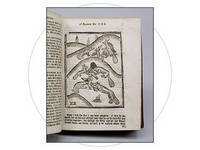
00654London: Printed by T. Ilive for Edward Brewster 1701. Early English Edition of the Reynard Fables<br/><br/>REYNARD THE FOX. The Most Delectable History of Reynard the Fox. Newly Corrected and Purged from all grossness in Phrase and Matter. Augmented and Enlarged with sundry Excellent Morals and Expositions upon every several Chapter. To which may now be added a Second Part of the said History: As also the Shifts of Reynardine the Son of Reynard the Fox Together with his Life and Death &c. London: Printed by T. Ilive for Edward Brewster 1701.<br/><br/>Bound together with:<br/><br/>REYNARD THE FOX. The Most Pleasant and Delightful History of Reynard the Fox. The Second Part. Containing Much Matter of Pleasure and Content. Written For the Delight of young Men Pleasure of the Aged and Profit of all. To which is added many Excellent Morals. London: Printed by A.M. and R.R. for Edward Brewster 1681.<br/><br/>And:<br/><br/>REYNARD THE FOX. The Shifts of Reynardine The Son of Reynard the Fox Or a Pleasant History of His Life and Death. Full of Variety &c. And may fitly be applied to the Late Times. Now Published for the Reformation of Mens Manners. London: Printed by T.J. for Edward Brewster and Thomas Passenger 1684.<br/><br/>Three parts in one small quarto volume 7 5/16 x 5 9/16 inches; 186 x 141 mm. 156 2 table of contents 2 publisher's advertisements; 111 1 publisher's advertisements; 8 160 pp. Mostly black letter with titles and side notes in roman letter. Sixty-two woodcuts in the first part printed from thirty-nine blocks and fifteen woodcuts in the second part five repeated all repeats from the first part. Most cuts signed "E.B." Edward Brewster. Woodcut on C1 recto Part I printed upside down.<br/><br/>Contemporary sprinkled sheep. Covers ruled and decoratively tooled in blind spine decoratively tooled in gilt in compartments with two red morocco gilt lettering labels. Minor restoration to covers. Some browning occasional light dampstaining and soiling. Part I with tiny puncture marks in the lower blank margin through gathering I just touching one letter in the imprint on the title-page six small holes in I3 and one tiny hole in I4 causing loss of a couple of letters. Part III with paper flaw in the upper blank corner of A3 and A4 tiny tear 1/4 inch in the lower blank margin of F4 and paper flaw in the lower blank corner of I2 none affecting text. Armorial bookplate of Gloucester on front free endpaper. Bookplate of Hugh Cecil Lowther 5th Earl of Lonsdale 1857-1944 on front pastedown his sale 12 July 1937 lot 445. An excellent copy. Housed in a quarter morocco clamshell box.<br/><br/>Reynard the Fox "hero of several medieval European cycles of versified animal tales that satirize contemporary human society. Though Reynard is sly amoral cowardly and self-seeking he is still a sympathetic hero whose cunning is a necessity for survival. He symbolizes the triumph of craft over brute strength usually personified by Isengrim the greedy and dull-witted wolf. Some of cyclic stories collected around him such as those telling of the wolf or bear fishing with his tail through a hole in the ice are found throughout the world; others like that of the sick lion cured by the wolf's skin are derived from Greco-Roman sources. The cycle arose in the area between Flanders and Germany in the 10th and 11th centuries when clerks began to forge Latin beast epics out of popular tales. The main literary tradition of Reynard the Fox descends from the extant French ‘branches' of the Roman de Renart about 30 in number nearly 40000 lines of verse. The facetious portrayal of rustic life the camel as a papal legate speaking broken French the animals riding on horses and recounting elaborate dreams all suggest the atmosphere of 13th-century France" Merriam-Webster's Encyclopedia of Literature.<br/><br/>"Caxton's immediate successors as printers of the Historye of Reynart the Foxe Wynkyn de Worde and Richard Pynson both published illustrated editions using the same woodcuts. Although neither a de Worde nor a Pynson edition survives intact there are fragments and there is circumstantial evidence to show that a Wynkyn de Worde edition of about 1495 or earlier was illustrated by a series of 43 woodcuts.apparently newly made for that edition.The earliest nearly complete fully illustrated History of Reynard the Fox to come down to us probably dates from the period 1560-1586. It survives in a unique copy.sometimes described as the ‘Anonymous' edition because it lacks the first few and the last few pages were we would expect to find the name of the printer and the place of publication. It contains 39 of the 43 Wynkyn de Worde cuts. To judge by their worn state.they had been much used since they were first made. This Anonymous edition also contains a series of 19 smaller artistically inferior pictures.They too are quite worn and may date from soon after the earliest illustrated editions.I have ascribed this Anonymous edition to the period 1560-1586. It is therefore just possible that it is either the lost William Powell edition of 1560-1561 or the lost Edward Allde edition of 1586 for both of these are mentioned in the Stationer's Register but neither survives" Kenneth Varty Reynard Renart Reinaert and Other Foxes in Medieval England: The Iconographic Evidence Amsterdam: 1999 pp. 98-99.<br/><br/>"From William Caxton's first edition 1481 to Thomas Gaultier's only edition 1550 the story is divided into 43 chapters. This may explain why the Wynkyn de Worde picture cycle contained 43 vertical cuts though in fact some chapters were not illustrated and some were illustrated with more than one picture. In the period before the appearance of the Anonymous edition we know.of only three illustrated editions: the one by Wynkyn de Worde sometime before or in 1495 and the other by him c. 1515; and the one by Richard Pynson somewhere between 1501 and 155. In the Anonymous edition between 1560 and 1585 the story is divided into 58 chapters. This may account for the frequent repetition of the vertical cuts as space-fillers and even for the introduction and occasional repetition of the smaller horizontal cuts. For most of the seventeenth century the story now short-titled The Most Delectable History of Reynard the Fox is divided into 25 chapters but this does not result in any noticeable reduction in the number of cuts used of either the vertical or the horizontal kind nor in the introduction of new illustrative material. In short the same cuts go on in much the same order apart from space-filler repetitions illustrating the same episodes. The first seventeenth-century edition to continue this picture cycle tradition is Edward Allde's 1620 followed by Elizabeth Allde's 1629. It continues in the two editions published in 1640 by Richard Oulton one for John Slater and the other for John Wright; also in the editions published by Jane Bell in 1650 1654 and 1656; and in the first edition published by Edward Brewster in 1662. By this date the Wynkyn de Worde blocks had become so worn and damaged that it is not surprising to discover a totally new set closely modelled on them and on the sixteenth-century horizontals and that this set should appear in an edition made for the publisher who last owned the de Worde blocks; that is in Edward Brewster's second edition in 1671 of The most Delectable History of Reynard the Fox.The forty different cuts which illustrate this edition all prominently display his initials EB. He published further illustrated editions in 1676 1681 1694 and 1701. In 1671 Brewster gave a new lease of life to the old picture cycle and in 1672 he grafted new life onto the old story with A Continuation Or Second Part Of The Most Pleasant and Delightful History of Reynard the Fox.In due course this new story about Reynard was to attract new illustrations but in this volume Brewster makes do with a sprinkling of fifteen cuts from his new cycle bearing the initials EB and he uses them again in his 1676 edition of the old story now called Part One and in his 1681 edition of both Part One and Part Two.In 1684 Brewster marketed a further sequel to this Continuation. Since Reynard was dead the chief role in this new story is given to one of his sons the one called Reynardine. It is entitled The Shifts of Renardine The Son of Reynard the Fox.Edward Brewster was not the only late seventeenth-century publisher of the Beast Epic to feel the need to renew it. His contemporary John Shurley sometimes spelled Shirley also felt that need and in 1681 he published his Most Delightful History of Reynard the Fox in Heroic Verse.Unlike other earlier renovations of the story it was never reprinted perhaps because the verse form was unpopular and because the illustrations were poor and few" Varty pp. 254-257.<br/><br/>Brunet IV cols. 1228-1229. Lowndes p. 2076. Varty Appendix Three: "A Short-Title List of All Extant Illustrated Histories of Reynard the Fox from Wynkyn de Worde c. 1495 to A. Soulby c. 1800 which are kept in United Kingdom libraries based on H. Menke Bibliotheca Reinardiana" 24 18 and 21. Wing S3512 Part II and S3436 Part III. London: Printed by T. Ilive, for Edward Brewster, 1701 unknown books
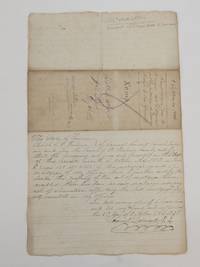
1838291492New Orleans 1838. unbound. very good. Rare autograph document signed: The Citizens Bank of Louisiana trades shares in the capitol stock of the bank for parcels of land and slaves. Folio 4 pages City and Parish of New Orleans Louisiana September 8th 1838 whereby Demey Kemp and wife who are wealthy land owners with many slaves enters into a contract with Victorin Patin President of the Citizens Bank of Louisiana to secure the sum of fifteen-hundred dollars the amount equal to fifteen shares in the Capital Stock of said bank with fifteen shares in an additional allowance of stock for the following described property to wit as adjudicated by Judge Samuel Leonard and certified by Theodore Seghers notary public in small part: ".that including four tracts or parcels of land in the Parish of St. Helena containing two-thousand and forty acres; a tract of land situated on the River Licksaw containing six-hundred acres. Likewise further: Demey Kemp declares that one of the Slaves therein mentioned and named Adelin aged nine years has died since appraisement; and he referred to the title papers in the possession of the said Bank to show from when the appraised property is derived; with the exception of twenty-eight slaves who were born on the property. A mortgage is granted by the said Demey Kemp . to secure fifteen additional shares allowerd on his subscription in the Capital Stock of the Citizens Bank of Louisiana. According to the Judge's certificate there is no mortgage in this office on the different described properties except the mortgage granted in the sum of two-hundred schares in the Capital Stock of said Bank . then this said . Demey Kemp will be recognized as a stockholder of the Citizens Bank of Louisiana for fifteen additional shares." This document has been certified by Justice Samuel Leonard on verso with his signature and embossed seal October 6th 1938. Condition: usual folds with light soiling and minor toning on the Court Filing page: Very good.<br/> <br/> Between 1831 and 1866 Citizens Bank of Louisiana currently owned by J.P. Morgan Chase & Co. accepted 13000 slaves as collateral on loans and repossessed 1250 enslaved individuals on loans that plantation owners defaulted on. Though this information is readily available through extensive historical research much of it financed by J.P. Morgan Chase and personally authorized by Jamie Dimon 2003-2005 this is the first document we have ever encountered whereby Citizens Bank of Louisiana is knowingly trading stock in their bank for slaves to shareholders.<br/> <br/> unknown
1838291492New Orleans 1838. unbound. very good. Rare autograph document signed: The Citizens Bank of Louisiana trades shares in the capitol stock of the bank for parcels of land and slaves. Folio 4 pages City and Parish of New Orleans Louisiana September 8th 1838 whereby Demey Kemp and wife who are wealthy land owners with many slaves enters into a contract with Victorin Patin President of the Citizens Bank of Louisiana to secure the sum of fifteen-hundred dollars the amount equal to fifteen shares in the Capital Stock of said bank with fifteen shares in an additional allowance of stock for the following described property to wit as adjudicated by Judge Samuel Leonard and certified by Theodore Seghers notary public in small part: ".that including four tracts or parcels of land in the Parish of St. Helena containing two-thousand and forty acres; a tract of land situated on the River Licksaw containing six-hundred acres. Likewise further: Demey Kemp declares that one of the Slaves therein mentioned and named Adelin aged nine years has died since appraisement; and he referred to the title papers in the possession of the said Bank to show from when the appraised property is derived; with the exception of twenty-eight slaves who were born on the property. A mortgage is granted by the said Demey Kemp . to secure fifteen additional shares allowerd on his subscription in the Capital Stock of the Citizens Bank of Louisiana. According to the Judge's certificate there is no mortgage in this office on the different described properties except the mortgage granted in the sum of two-hundred schares in the Capital Stock of said Bank . then this said . Demey Kemp will be recognized as a stockholder of the Citizens Bank of Louisiana for fifteen additional shares." This document has been certified by Justice Samuel Leonard on verso with his signature and embossed seal October 6th 1938. Condition: usual folds with light soiling and minor toning on the Court Filing page: Very good.<br/><br/> Between 1831 and 1866 Citizens Bank of Louisiana currently owned by J.P. Morgan Chase & Co. accepted 13000 slaves as collateral on loans and repossessed 1250 enslaved individuals on loans that plantation owners defaulted on. Though this information is readily available through extensive historical research much of it financed by J.P. Morgan Chase and personally authorized by Jamie Dimon 2003-2005 this is the first document we have ever encountered whereby Citizens Bank of Louisiana is knowingly trading stock in their bank for slaves to shareholders.<br/><br/> unknown books
2110824Moscow: Imperial University Press. 1768. 4to. Contemporary Russian mottled calf marbled endpapers; pp. iv 138 14 spine with some loss and wear; light spotting internally a good copy; provenance: early 20th-century collector's stamp Aleksandr Ivanovich Ivanov to title-page and beginning of text early 1960s Russian bookseller's stamp to rear fly-leaf.This is the Law Code of Ivan Vasilievich. Ivan IV's reform of the law code shifted power from the aristocracy to State and local institutions and introduced a conscription army. This is the first edition prepared by G.F. Miller from the manuscript owned by Vasilii Tatishchev the Russian statesman and historian a contemporary of Karamzin.Bitovt 1638; SK 6936; Sopikov 11593. unknown
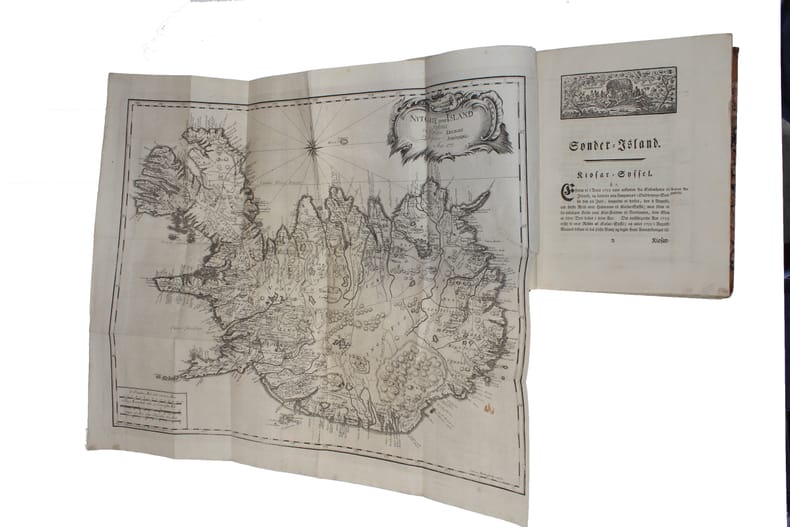
177260321Sorøe, Jonas Lindgrens, 1772. 4to (260 x 214 mm). 2 volumes, uniformly bound in two nice contemporary half calf bindings with five raised bands and gilt title- and tome-labels to spines. Ex-libris (Hjalmar Hartmann) pasted on to pasted down front end-paper in both volumes. Previous owner's stamp (Hvedholm Castle) to upper part of title-page in both volumes and two small paper-labels (stating respectively 1592 and 1593 - indicating the booknumber in Hvedholm Castle's catalogue) to lower compartment on spines. A few leaves in vol. 1 with brown stripe in upper margin. An excellent and wide-margined copy. (12), 618 pp. Pp. (2), 519-1042, (62), 20, (2) + 51 engraved plates (numered I-L, with 2 plates numbered XXX) and 1 large folded map.
Sorøe, Jonas Lindgrens, 1772. 4to (260 x 214 mm). 2 volumes, uniformly bound in two nice contemporary half calf bindings with five raised bands and gilt title- and tome-labels to spines. Ex-libris (Hjalmar Hartmann) pasted on to pasted down front end-paper in both volumes. Previous owner's stamp (Hvedholm Castle) to upper part of title-page in both volumes and two small paper-labels (stating respectively 1592 and 1593 - indicating the booknumber in Hvedholm Castle's catalogue) to lower compartment on spines. A few leaves in vol. 1 with brown stripe in upper margin. An excellent and wide-margined copy. (12), 618 pp. Pp. (2), 519-1042, (62), 20, (2) + 51 engraved plates (numered I-L, with 2 plates numbered XXX) and 1 large folded map.