(Sting, The) Gebr, Jerry (Jaroslav)Biblio.com
184 822 résultats
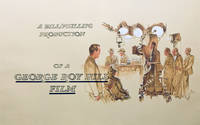
2316951973. Pen and ink watercolor and pencil heightened with white on cream paper. 27 x 42 inches. Framed. Fine. Pen and ink watercolor and pencil heightened with white on cream paper. 27 x 42 inches. The original illustration for the second of four title cards used in the opening credits of the classic 1973 motion picture "The Sting" Provenance: Estate of George Roy Hill unknown
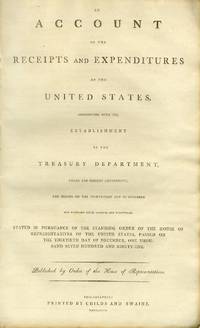
179032820355<p>Three volumes. Folio. Generally in very good condition details below.</p><p>Three rare Treasury reports as follows:</p><p>1. <i>An Account of the Receipts and Expenditures of the United States commencing with the establishment of the Treasury Department . . . ending on the thirty-first Day of December One Thousand Seven Hundred and Ninety-one.</i> Philadelphia: Childs and Swaine 1793. Folio 61 pp. folding table. Removed. Very good.</p><p>FIRST EDITION. This is a highly detailed report of the federal government's receipts and expenditures during the crucial first two years of the new government 1790-91. Locations: AAS Library Company Brown Harvard Yale and Princeton. Evans 26341. </p><p>2. <i>The Treasurer of the United States' Accounts of Payments and Receipts of Public Monies from 1st October 1790 to 30th June 1791</i>. Philadelphia: Childs and Swaine 1791. Folio. Original front wrapper. First few leaves stained. 52 pp. </p><p>FIRST EDITION. Samuel Meredith was first Treasurer of the United States. This is a detailed report of the expenditures and receipts of the federal government in 1790-1. Evans 23923. </p><p>3. <i>The Treasurer of the United States' Accounts of Payments and Receipts of Public Monies from 1st of January to the 30th of September 1792</i>. Philadelphia: Childs and Swaine 1793. Folio. Removed. Untrimmed. 67 pp. Very good.</p><p>FIRST EDITION. This is a detailed report of the expenditures and receipts of the federal government in 1792. Evans 24939.</p><br /> Childs and Swaine
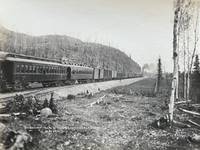
161959078Anchorage & Seward A.T.: Alaska Engineering Commission AEC Phinney S. Hunt ca. 1916-1917. 4to. 86 silver print photographs sized 6.25 x 8.25 in. nearly all w/ photographer’s imprint w/in negative at lower fore-edge as well as caption negative number and AEC some w/ occasional pencil annotations on verso all preserved in mylar sleeves occasional creasing at corners a couple w/ slight loss at corners in the small blank margin. Recent 3-ring clamshell binder an excellent set of photos with all retaining bright strong contrast. This outstanding photo archive provides not only some of the earliest photographs of Anchorage Alaska Territory but also this immense railroad project first authorized by the US Congress in 1912. The few existing privately-run railroads operating in Alaska at the time including the Alaska Northern Railway and the Tanana Valley Railroad primarily fulfilled the needs of the mining companies carrying resources to sea ports and very little allowance was made for passenger traffic and it was impossible to travel by rail from Ship’s Creek at the Cook Inlet north to Fairbanks. Through an April 1915 executive order President Wilson directed that the newly created Alaska Engineering Commission construct a railroad along the surveyed “Western Route†from Seward or Portage Bay along the Turnagain & Knik Arms of Cook Inlet North through the Suitna Valley and then follow the Nenana River until it joined the Tanana with the intent it would connect eventually to Fairbanks. Employing discarded surplus railroad equipment from the Panama Canal Railroad project and under the direction of engineer Mears who had worked on both the Panama Canal and Great Northern Railroads the tiny tent city of Ship’s Creek swelled to 5500 people within two years and was officially labeled by the Post Office as “Anchorage.†Photos included here reveal the barren original landscape of Ship’s Creek with one of the photos showing the steam launches “Alaska†& “Seagull†who carried cargo and passengers from ships offshore. In addition there are views of the construction of the immense AEC Railway machine shop by Sept. 1916 as well as the newly completed first Railroad Depot in Anchorage with the progression of buildings erected beyond. These early views of the fast developing project portray the Commissary Hospital Bunkhouses finished machine shop interiors of the powder house for blasting along with a view of the AEC’s photo studio and the completed electrical power house. Early street views of the nascent city are quite scarce and one of particular interest shows Fourth Ave. looking East with newly built stores and homes built along both sides of the roadway stretching into the distance. Brutal working conditions continually interfered with the pace of the project with one of the images showing the AEC’s “Electric Thawing Machine†on a sled whie others depict piles of snow work camps in snow and even sternwheeler and docks trapped in an ice flow in March 1917. A couple of the photographs feature the sternwheeler SS Omineca underway which had been originally constructed in 1909 for the Grand Trunk Railway running the Skeena River from 1909-1912 and powered by the original SS Caledonia’s engines. By the end of 1916 60 miles of track had been laid 100 miles were graded and right-of-way cleared for 230 miles with photos in this archive showing AEC Construction camps at various mile markers blasting activity and track laying. At the same time they rehabilitated the bankrupt Alaska Northern Railroad tracks and by Oct. 24 1917 the first AEC Railway train reached the Chickaloon coal mines 74 miles North of Anchorage. The railroad would actually not be finished until 1923 when the Tanana River Bridge was completed and last 57 miles of track to Fairbank converted to standard gauge. Photos also show the Anchorage Baseball Field which featured games for the Cook Inlet Baseball League composed at the time of Matanuska Anchorage and Turnagain Arm teams. There’s also a very fine series of the Decoration Day parade held May 30 1917 depicting many of the main streets and businesses in the background. In addition several photographs show the ocean docks completed which allowed ships to directly dock at Anchorage rather than lightering passengers and cargo to shore prior to 1917. Hunt 1866-1917 originally worked as a California optician before trekking to Valdez Alaska as a gold rush prospector but quickly established himself as a photographer opening his studio and documenting Valdez and development of the region. He would bring his wife and children to Alaska by 1907. He later secured work as one of the AEC’s official photographers shooting some of the early survey work by 1914 and through the project until suffering a heart attack Oct. 14 1917 in Seward AK. Hunt’s son A.O. Hunt also worked as an assistant photographer for the AEC. A few of these images appear as negatives in the Alaska State Library Historical Collections with a couple shown in their Digital Archives and some appear in the Alaska Engineering Commission archive at the U of W Collect. No. PH0495 but the bulk of that collection features photographs by James McPherson H.G. Kaiser and A.J. Johnson who were the other official photographers on the project; See: Phinney S. Hunt Photographs of Alaska 1902-1909 Photographs in and around Valdez and Sitka Alaska University of Washington Special Collections; Phinney S. Hunt Obituary Alaska Railroad Record Vol. I No. 49 Oct. 16 1917 p. 389. Alaska Engineering Commission, AEC, Phinney S. Hunt, unknown
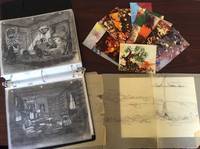
13256Used; Like New/Used; Like New. A remarkable and important collection of 178 original drawings designs and color samples by the Academy Award-nominated art director Franz Bachelin from the 1959 Jules Verne adaptation Journey to the Center of the Earth together with several original documents relating to the production of the film. The drawings include designs for almost every important location in the film from set designs for the opening scenes in 1880's Edinburgh with bagpipers on parade to action scenes of the whirlpool at the Earth's core the attack of a winged lizard and the lost city of Atlantis. 145 drawings are in black ink and graphite on 8.5 x 11" sheets hole-punched each labeled with a scene number and many with other indications; 5 are in colored pencil 9 x 8." A further 4 larger plans on tracing paper approx. 22-26 x 9" show Bachelin's meticulous planning of the final sequence of adventure scenes and the geographical location of the lost city of Atlantis! <br style="">Also with the drawings are 10 small cards 3 x 5 to 6 x 7" bearing vibrant sample color and texture schemes in marbleized patterns; 13 mimeographed 10 x 5" copies of drawings of the "prehistoric animal fight" showing dinosaurs battling it out in the water; and a lovely small painting of a tree and a sunset on card 5.5 x 4.5". <br style="">Together with the drawings are several documents from the production of the film including: a set construction estimate 4 pp.; May 12 1959; a large production cross plot showing the complete filming schedule over 52 days 1 p.; June 9 1959; a complete list of the crew members including a duck trainer! with phone numbers 1 p.; June 15 1959; a chart showing the total labor and materials costs for each of the elaborate set and location shoots - over $449000 2 pp.; December 3 1959; a typed copy of the film's credit 1 p.; n.d.; and a telegram inviting Bachelin to a pre-Academy Awards cocktail party for nominees 1 p.; n.d.<br style="">The drawings are in fine to very fine condition overall with only slight toning a few with slight tears or corner creases; one of the larger tracing paper drawings is in delicate condition with some creasing and tearing due to the paper. The documents are in good to fine condition some with toning creases and tears.<br>Overall a superb collection of drawings and materials from this iconic adventure film.<br style="">Journey to the Center of the Earth a loose adaptation by Charles Brackett from the novel by Jules Verne was directed by Henry Levin and starred James Mason Pat Boone and Arlene Dahl. Released in 1959 it was a box office success pleasing audiences with its fantastical plot sets and special effects a particular feature were iguanas with glued-on fins playing the part of dimetrodons! The film was nominated for three Academy Awards for Best Art Direction-Set Decoration Lyle R. Wheeler Franz Bachelin Herman A. Blumenthal Walter M. Scott Joseph Kish Best Effects Special Effects and Best Sound Carlton W. Faulkner. unknown books
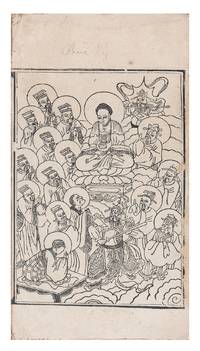
10902Two full-page frontis. woodcuts printed on each side of first leaf of Vol. I & one full-page woodcut on final leaf of Vol. II. 61.5; 107 folding leaves. Three parts in two vols. 8vo 287 x 171 mm. orig. wrappers Vol. I & modern wrappers Vol. II stitched orig. stitching in Vol. I. Quần phÆ°Æ¡ng hạ xã: Anh quang tá»± 1928.<br /> <BR> <BR> First edition of this very rare Vietnamese edition of the story of MaudgalyÄyana. The journey of MaudgalyÄyana rendered in Chinese as mulian 目連 one of the Buddha’s earliest disciples into the most abysmal and gruesome of Buddhist hells in his quest to rescue the soul of his mother was perhaps the single most important story in Chinese popular Buddhism since medieval times. The detailed depictions of tortures inflicted upon sinners relayed in MaudgalyÄyana’s story made Buddhist cosmology and morality vividly graspable to the laity and since the 12th century at the latest staged performances of his underworld travel have accompanied the Ghost Festival held at the full moon of the seventh month attended by masses of people across social strata. These theatrical retellings of MaudgalyÄyana’s travels remained highly popular until the early 20th century and are still sometimes staged today. The tale’s popularity and influence since medieval times had been so immense that David Johnson a historian of Chinese popular culture writes that “among the tens of thousands of Chinese operas none had deeper religious significance or was watched with greater excitement or was integrated into a more complex ritual matrix than MaudgalyÄyana†“Actions Speak Louder than Words: The Cultural Significance of Chinese Ritual Opera†in Ritual Opera Operatic Ritual IEAS Publications: 1989 p. 2.<br /> <BR> <BR> Unsurprisingly then there was wide dissemination of MaudgalyÄyana narratives and rituals not only in China but throughout East Asia in local and vernacular retellings of his story in a large range of religious and literary genres. Our copy of Penitence at the Compassionate Ritual Grounds of MaudgalyÄyana printed in northern Vietnam in 1928 is one such example. It opens with two illustrations from the canonical narrative of MaudgalyÄyana: the assembly of disciples attentively surrounding the Buddha and MaudgalyÄyana entering AvÄ«ci Hell riding a cloud holding the Buddha’s magical staff. The book itself is simultaneously a narrative account of MaudgalyÄyana’s travels and a Buddhist ritual of penitence opening as it does with prayers of refuge and devotion to “Shakyamuni the benevolent father†ThÃch-ca từ phụ 釋迦慈父 an interesting appellation. The prayer sections also make use of the placeholding name giáp má»— ç”²æŸ which during ritual readings of the text was probably to be replaced with one’s own name.<br /> <BR> <BR> Despite sharing the same title as a canonical Buddhist scripture T. 1909 composed in the Liang dynasty a comparison of contents suggests that ours is a related but substantially different text. The first Preface makes it clear that this text is indeed based on an original in the “northern country†— i.e. China — and an earlier domestic edition was made possible by the secular and ritual offerings of the monk Trà Giác 智覺. For some time the woodblocks had been stored in the Trác Ä‘iá»n temple å“田寺 in Bình Lục 平陸 Hà Nam province and did not circulate widely. As a result a reprint was made in Tá»± Äức 9 1856 by a monk named Thanh Tuyá»n Bhiká¹£u 清泉比丘. His Preface also dated 1856 is found in the first volume.<br /> <BR> <BR> By the 1920s however there was another problem: there were too many variants of the text in circulation which became a source of confusion. The monk Thanh Hưởng 清亨 using the earlier woodblocks stored at the Anh quang temple 英光寺 Quần phÆ°Æ¡ng hạ 羣芳下 commune Nam Äịnh province and with the guidance of Phổ Tụ æ™®èš collated various editions in circulation and created a new edition. This editorial history might explain why our copy does not correspond to known Chinese versions of the text as it probably has incorporated local Vietnamese elements. The woodblocks were carved by two craftsmen named Phó Dung 付瑢 and Phó Huênh 付轟 from the Liá»…u choà ng xã 柳幢社 with monetary offerings from monks and laypeople across many temples and communes listed towards the end of the second volume. The carving began in Bảo Äại 1 1926 and concluded two years later in 1928; the completed woodblocks were kept at the Anh quang temple.<br /> <BR> <BR> Despite the country’s long history of Buddhist and Confucian learning woodblock-printed books published within Vietnam itself are far fewer in number today than their Chinese or Japanese counterparts. This scarcity of extant Vietnamese books is due to a variety of factors including the cost of local printing a humid climate that makes preservation difficult as well as the country’s recent war-torn past. Outside of Buddhist texts kept by individual temples in Vietnam whose collections are difficult to access the bulk of these books are now kept at a handful of institutions such as the Institute of Sino-Nôm Studies in Hanoi and l’École française d’Extrême-Orient in Paris. The catalogue of these collections shows two items with the same title as ours Viện nghiên cứu Hán nôm AC.607 and AC.647 but there is insufficient detail to determine their editions. We find no Vietnamese woodblock-printed copy by this title on WorldCat.<br /> <BR> <BR> Very good set. Final three leaves of the second volume are carefully repaired. The full-page woodcut on the final leaf is partially defective at the borders but the main image is completely intact.<br /> <BR> <BR> ⧠Rostislav Berezkin Many Faces of Mulian: The Precious Scrolls of Late Imperial China Univ. of Washington: 2017; Beata Grant and Wilt Idema Escape from Blood Pond Hell: The Tales of Mulian and Woman Huang Univ. of Washington: 2011; David Johnson ed. Ritual Opera Operatic Ritual IEAS Publications: 1989; Stephen F. Teiser The Ghost Festival in Medieval China Princeton: 1988; Yuenan Hannan wenxian ziliaoku 越å—漢喃文ç»è³‡æ–™åº« Academia Sinica. unknown
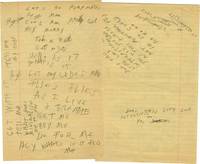
1977127072N.p.: N.p. 1977. Original manuscript by Joey Ramone for an unrecorded Ramones song "Let's Go Playmates" executed by the punk legend in holograph pencil on both the recto and verso of a legal size sheet of lined notebook paper. The lyrics appear in every orientation a beautiful messy gathering of ideas-some crossed through-rather than a finished song. They read variously: Recto "Let's go playmates / Hey man / Cool man / Pretty cool / Hey Mommy / Take a bath / Get a job / What is it / Hey got my ludes man / Tell me my son / Flies flies / As I live and breathe / Get me / Buy me / Do for me / Hey what's in it fer me / Get with it / Tell me / What does minimalism me to you." Verso: "Does this life look interestin to you well you too can have all this and more / Not another fly / Im so cold / No no no." <br/><br/>A rare example of the songwriting process of a writer for a band whose work stands not only at the top of the punk ladder but really in a realm of its own. The manuscript is not dated but judging from the content it could not have been written after 1978 though probably not prior to the 1977. The final lyric "Does this life look interestin to you" puts it right on the borderline between the band's early fun-drug-crazed songs and the later more goofily philosophical ones. In any case one hell of a piece of paper. <br/><br/>Lined legal size notebook paper 8 x 12.5 inches. Fine. N.p. unknown books
178341192Bath 1783. Watercolour on laid paper with manuscript description on verso of the fine gold-leaf frame. Image size: 13 1/2 x 8 3/4 inches. Framed size: 22 1/4 x 18 inches. Thomas Robins a native of Bath was an enigmatic artist known for his watercolors. A small number of signed watercolors in the Broughton Collection at Cambridge University have been attributed to him particularly in an album inscribed as 'Drawings of Flowers Ehret and Robins.' In 1967 the Bath and West Agricultural Society sold a collection of 'Pictures of Exotic Plants and Insects' by Thomas Robins the Younger who was the son and pupil of the first Thomas Robins. Though there have been debates about differentiating their artistic styles the exhibition Gardens of Delight curated by John Harris at the R.I.B.A. in 1976 not only established the importance of the elder Robins' work in 18th-century English Topographical drawing but also shed light on the distinctive style of his son. Thomas Robins the Younger followed in his father's footsteps focusing on capturing grand residences gardens and the natural world. He drew inspiration from his father both in the subjects he chose and his artistic approach. Robins the Elder's views and landscapes are often noted for exuding the charm and freshness of a personal discovery and the similar joy of a chance encounter manifests here in the watercolour's dynamic scene. The image captures a split-second moment when a butterfly and a bee hovering into the scene from different directions about to land on the plant already blissfully occupied by their fellow creatures. By choosing to depict this moment Robins the Younger suspends the viewer in a state of anticipation that intense delicious but ultimately fleeting moment that can only be re-lived through memory or masterly depictions; the present's work ability to captivate and delight makes it an exquisite example of an especially fine decorative watercolour. The Linnaean and common English names of the plants and insects along with their classification and order are noted on a sheet of paper accompanying this watercolour. Depicted plants include: "shrubby rose colour'd periwinkle" "greater Indian cress or Nasturtium" and "double strip'd stock Gilliflower." The insects shown descending upon the petals are "Marmoris or Half Mourner Butterfly" "East Indian Bee Tyger Moth" and "English Bee Tyger Moth or Death's Head."<br/> <br/> The Fitzwilliam Museum University of Cambridge exhibition catalogue: British Flower Drawings: An Eight Selection Principally from the Broughton Collection 1 July - 18 October 1981. unknown
108981 p.l. 38 folding leaves. 8vo 280 x 174 mm. orig. wrappers with cover wrappers old stitching. Thần Xá: An Thái French colonial period.<br /> <BR> <BR> An extremely rare woodcut book printed by nuns in a rural monastery in northern Vietnam. “An eponymous MahÄyÄna sutra that recounts the qualities vows and pure land of the buddha Bhaiá¹£ajyaguru — the Master of Healing also known as the Medicine Buddha or the TathÄgata of Lapis-Lazuli Light. The scripture was most likely written in northern India during the early centuries of the Common Era. In this sutra Bhaiá¹£ajyaguru vowed that his name if merely uttered would cure diseases free prisoners secure food and clothing for the impoverished and produce other similar benefits. He also vowed that his body would be as resplendent as lapis lazuli itself so that it might illuminate the world†Donald Lopez & Robert Buswell The Princeton Dictionary of Buddhism “Bhaiá¹£ajyagurusÅ«traâ€.<br /> <BR> <BR> The Scripture of the Medicine Buddha T. 450 translated from Sanskrit into Chinese by Xuanzang 602–664 in the year 650 C.E. has been a popular text in East Asian and Tibetan Buddhist traditions. In our copy the sutra itself is bookended by a liturgical opening including the “Incense Praise†praises for the Buddha and a “sutra-opening gÄthĆand a final homage to the Medicine Buddha. According to the colophon bound at the beginning of the volume the scripture was printed for a specific occasion by three bhikkhuni or ordained Buddhist nuns affiliated with the An Thái temple 安泰寺 in the Thần Xá village 神èˆæ‘ of the An Lại commune 安賴社 in the Thanh Khê canton 清溪 Äại An district 大安縣 Nam Äịnh province å—å®šçœ of northern Vietnam. <br /> <BR> <BR> Only the names of two of them are fully legible: they are Quảng Thuáºn å»£é † and Quảng Thà nh 廣æˆ. They printed and disseminated this Scripture of the Medicine Buddha with a sincere mind when the statues of three of their masters were completed and placed into stupas. In their colophon they traced the lineage of themselves and their masters to the bhikkhuni An DÆ°Æ¡ng Tháp 安陽塔 dharma name Nguồn Hạnh æºå¹¸ and pseudonym Minh Lâm 明ç³. <br /> <BR> <BR> Despite the country’s long history of Buddhist and Confucian learning woodblock-printed books published within Vietnam itself are far fewer in number than their Chinese or Japanese counterparts. This scarcity is owed to the high cost of domestic production: according to the estimate of Kathlene Baldanza as late as the 19th century “the labor cost of printing in Vietnam was five to ten times higher than in China. Even ink and brushes were more expensive to produce in Vietnam.†Extensive international trade between northern Vietnam and southern China — where plentiful books were printed at very low costs — meant that “it was generally cheaper to purchase books from China than to buy them locally†“Publishing Book Culture and Reading Practices in Vietnam†Journal of Vietnamese Studies 13.3 2018 pp. 10–11. <br /> <BR> <BR> Beyond the limited cases of official and temple-based publishing Vietnamese publishers were pushed toward niche genres such as Sino-Vietnamese dictionaries ritual manuals or morality books. Regardless of genre woodblock-printed books from Vietnam are very difficult to find today outside a few major collections such as the Institute of Sino-Nôm Studies in Hanoi and l’École française d’Extrême-Orient in Paris. We will not focus on the humid climate of the country or the massive destruction of the nation’s cultural heritage during its long war of independence in the post World War II period.<br /> <BR> <BR> The catalogue of materials kept at the Institute of Sino-Nôm Studies mentions two copies VHv.1071 AC.116 of the Scripture of the Medicine Buddha printed in 1911 and it is unclear if those were printed with the same woodblocks as ours. We know for certain however that no material at the Institute of Sino-Nôm Studies gives the An Thái temple as the place of publication despite the large numbers of temples and monasteries listed. This copy being an example of Vietnamese women’s printing in a rural monastery is extremely rare.<br /> <BR> <BR> Fine copy. First leaf a little frayed and the outer wrappers are quite frayed.<br /> <BR> <BR> ⧠Li Guimin æŽè²´æ°‘ “Zaizhi yu bianyi: Yuenan hanchuan fojiao dianji de zhuanhua å†è£½èˆ‡è®Šç•°â€”—越å—漢傳佛教典ç±çš„轉化†Foguang xuebao 佛光å¸å ± 7 No. 1 2021: pp. 111–37. Yuenan Hannan wenxian ziliaoku 越å—漢喃文ç»è³‡æ–™åº« Academia Sinica. unknown
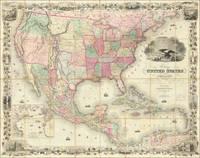
1849NL-02377<p>This map is among the earliest printed maps to reference the California Gold Rush issued just months after the 1848 discovery of gold and shortly after the Treaty of Guadalupe Hidalgo which ended the Mexican-American War and transferred a vast swath of territory from Mexico to the United States.</p><p>It offers a snapshot of the United States at a pivotal moment featuring newly annexed western lands an oversized Texas shown at its maximum claimed extent and a fascinating depiction of the West before the creation of the Utah New Mexico Washington and Kansas Territories.</p><p><em>Texas at Its Maximum Claimed Extent</em></p><ul><li>Texas is depicted with <strong>its boldest territorial claims</strong> reflecting the boundaries asserted during its years as an independent republic and carried into early U.S. statehood 1845–1849.</li><li><strong>Northern "stovepipe" panhandle</strong> stretches far into present-day Wyoming and Colorado an area Texas claimed based on historical Spanish and Mexican precedent.</li><li>The w<strong>estern boundary</strong> extends to the <strong>Rio Grande</strong> including parts of modern-day New Mexico—territory that has been hotly contested between Texas and the federal government.</li><li>These expansive claims were largely rolled back in the <strong>Compromise of 1850</strong> when Texas ceded land to the U.S. in exchange for debt relief.</li></ul><p><em>The Western United States: Undefined & Expansive</em></p><ul><li><strong>California</strong> appears as a single vast entity—still undefined as a state it would join the Union in 1850 but newly American after the Mexican War. The <strong>"Gold Region"</strong> is labeled near the Sacramento River though modestly.</li><li><strong>Oregon Territory</strong> stretches from the Pacific to the Continental Divide including all of present-day Oregon Washington Idaho and parts of Montana and Wyoming.</li><li><strong>Nebraska Territory</strong> occupies a huge central swath encompassing the Great Plains but with minimal internal detail. It predates its 1854 formal organization.</li><li>No sign yet of <strong>Utah or New Mexico Territories</strong> which would be organized in 1850.</li><li>Native American lands and major overland routes like the <strong>Oregon Trail</strong> are marked but the interior West is largely unmapped described only in vague geographic strokes.</li></ul><p><em>Other Notable Boundary Details</em></p><ul><li><strong>Florida</strong> is a state admitted 1845 but much of the Southeast is still recovering from earlier Native displacement and territorial reorganization.</li><li>The <strong>Mississippi River</strong> still functions as a crucial east–west boundary between developed states and the expanding frontier.</li><li><strong>Great Basin and interior California</strong> remain largely uncharted—there is no depiction of the Sierra Nevada range or detailed hydrography beyond a few major rivers.</li></ul><p><em>Summary</em></p><p>Colton's 1849 map presents a <strong>liminal geographic vision</strong>: the United States in the immediate aftermath of war on the edge of gold fever and before Congress imposed structure on the new western lands. It captures:</p><ul><li><strong>Texas at its most ambitious</strong>—a vision quickly curtailed.</li><li>A <strong>California that is American but not yet a state</strong> already drawing attention for its gold.</li><li>A <strong>vast western void</strong> soon to be filled by settlers railroads and legal boundaries.</li></ul><p>As a historical artifact this map offers a <strong>pre-legislative snapshot</strong> of U.S. expansion—what the country looked like before federal compromises surveys and sectional battles remapped it.</p> The Colton Mapmaking Company
196817042JBurbank: Warner Brothers - Seven Arts February 7 1968. Original 128 page shooting script with blue and pink re-write pages. Bradbound in printed yellow studio wrappers. This script belonged to distinguished Mexican actor Alfonso Arau who played Herrera the Lieutenant of General Malpache Emilio Fernandez. Arau has boldly written “ALFONSO ARAU - HERRERA in large letters at the top of the front cover in black ink. In the lower right hand corner of the front wrapper Arau has written in red ink the name of “Lonnie Becker†who was the film’s casting director in Mexico. Very good set used script. Enclosed in a custom morocco and cloth clamshell box. Sam Peckinpah’s masterpiece The Wild Bunch is considered by many to be among the greatest of western films. The picture contains career highlight performances by William Holden Ernest Borgnine Robert Ryan Edmond O'Brien Warren Oates Jaime Sanchez Ben Johnson Emilio Fernandez Strother Martin L. Q. Jones Albert Dekker Bo Hopkins Dub Taylor Jorge Russek and Alfonso Arau. This screenplay was nominated for an Academy Award. The finished film has been chosen by the American Film Institute as one of the 100 outstanding American films. Warner Brothers - Seven Arts hardcover
1794277980Philadelphia: John Fenno 1794. Second. paperback. very good-. Published for the House of Representatives. 4 folding tables. 65pp. 12pp. appendix. Folio original blue wrappers margins uncut backstrip of spine lacking front and back wrapper with some light dampstaining internally very good. Philadelphia: Printed by John Fenno 1794. Very Scarce.<br/> <br/> Enlarged second edition printed the same year as the first edition. Folding tables show the exact expenditures and receipts of the United States government for the year 1793. The rest of the text are figures of receipts from custom duties duties on alcohol and other revenue sources and payments by the Federal government are delineated item by item and dated. Payments to individuals have each person's name listed. The appendix is titled: Appendix containing statements shewing the operation of the funds for reducing the domestic debt to the close of the year 1793. Also statements of the foreign and domestic debts of the United States and of the expenditure of the proceeds of foreign loans to the same period. In 1793 the revenue for the Federal budget was 4.8 million dollars and the public debt was 80.4 million dollars. John Fenno the printer of this work printed many works for the administration of George Washington and the Congress. He was an ardent Federalist and a protege of Secretary of the Treasury Alexander Hamilton. Fenno also was the publisher of the Federalist newspaper Gazette of the United States. Evans 27931<br/> <br/> John Fenno unknown
1794277980Philadelphia: John Fenno 1794. Second. paperback. very good-. Published for the House of Representatives. 4 folding tables. 65pp. 12pp. appendix. Folio original blue wrappers margins uncut backstrip of spine lacking front and back wrapper with some light dampstaining internally very good. Philadelphia: Printed by John Fenno 1794. Very Scarce.<br/><br/> Enlarged second edition printed the same year as the first edition. Folding tables show the exact expenditures and receipts of the United States government for the year 1793. The rest of the text are figures of receipts from custom duties duties on alcohol and other revenue sources and payments by the Federal government are delineated item by item and dated. Payments to individuals have each person's name listed. The appendix is titled: Appendix containing statements shewing the operation of the funds for reducing the domestic debt to the close of the year 1793. Also statements of the foreign and domestic debts of the United States and of the expenditure of the proceeds of foreign loans to the same period. In 1793 the revenue for the Federal budget was 4.8 million dollars and the public debt was 80.4 million dollars. John Fenno the printer of this work printed many works for the administration of George Washington and the Congress. He was an ardent Federalist and a protege of Secretary of the Treasury Alexander Hamilton. Fenno also was the publisher of the Federalist newspaper Gazette of the United States. Evans 27931<br/><br/> John Fenno unknown books
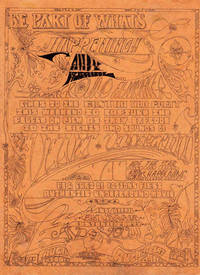
196712983Boston: np 1967. First Edition. Fine. 11 3/8” x 8.5” offset poster black ink on brown paper. Hand-lettered in a psychedelic style designed by "T. F Murphy.” PROVENANCE: From the estate of Velvet Underground guitarist Sterling Morrison with Morrison's widow Martha's signed letter of provenance included. Originally glued to another piece of paper the poster has been professionally restored and is now backed with archival rice paper. Fine. <br/><br/>Rare poster to what has become an historic event. The Velvet Underground played The Boston Tea Party the Beantown equivalent of Max's Kansas City numerous times throughout their career. And their performances over the weekend of August 11th-12th might have been just another appearance had Andy Warhol not been present to film the band. The footage he shot is one of only two performance films of The Underground with synched sound and more importantly is the only footage of the band in color extant. Capturing The Velvets just before the WHITE LIGHT/WHITE HEAT sessions Warhol's footage features the Exploding Plastic Inevitable and utilizes numerous experimental techniques – in- camera edits sudden zooms single-frame stills sweeping panoramas – meant to mimic the experience of seeing live The Velvets and their troupe. Warhol's film was long believed lost. As Steve Nelson remembered: "There's this mythical film that was shot at the Tea Party in August 1967 . That weekend was the first time they incorporated the Andy Warhol side of The Velvet Underground into the Tea Party presentation. Andy actually came there . and Paul Morrissey was there and supposedly they filmed . I know they were there; I know they were pointing cameras. Was there any film in the cameras or did it just disappear I really don't know. The film just never seems to have shown up" quoted in WHITE LIGHT/WHITE HEAT 158. The film was unearthed remastered and restored in 2009-2010 and toured museums and art houses around the country from late 2010 through early 2011 as THE VELVET UNDERGROUND IN BOSTON 1967 16mm 33 mins. Dir: Andy Warhol. C/O THE VELVET UNDERGROUND 53 and NEW YORK ART 202 reproduce the original art for this poster but not the poster itself the latter noting it now seems erroneously that the shows “never took place.” Not in DeRogatis. A rare artifact to an important Warhol film and document of The Velvet Underground in their prime. Warhol's film work continues to be recognized as being as groundbreaking as anything he did on canvas and The Velvets remain probably the most influential band of the last fifty years. As Lester Bangs has written: "Modern music begins with the Velvets and the implications . of what they did seem to go on forever." With extraordinary provenance from the estate of VU member Sterling Morrison knee-weakeningly cool. np unknown books
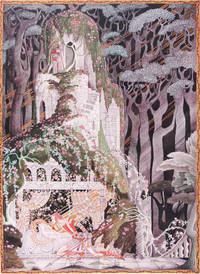
192533084London: Hodder & Stoughton 1925. FIRST EDITION AND THE BEST OF THE LIMITED EDITIONS. One of only 600 copies hand-numbered and SIGNED BY KAY NIELSEN. This copy also with the laid-in announcement from Leicester Galleries regarding the availability for purchase of the original watercolours produced to illustrate this book. With 12 tipped-in color plates 10 black & white illustrations decorated title-page decorated initials and red decorative endleaves all by Kay Nielsen. 4to publisher’s best original binding of beautiful ivory cloth the upper cover lettered in gilt and pictorially decorated with Nielsen's all-over designs in gold and turquoise-blue the spine exquisitly decorated and lettered in gilt and with the artist's name gilt within a field of blue t.e.g. 276 pp. plates. A very handsome copy with only very light evidence of age the text-block plates and binding all in very pleasing condition. A TRULY HANDSOME COPY OF THE VERY RARE LIMITED FIRST EDITION IN BEST BINDING OF THE PREFERRED ENGLISH ISSUE SIGNED BY NIELSEN. Along with the title story a full twenty-two of Grimm's Tales are beautifully illustrated throughout with Kay Nielsen’s wonderfully evocative paintings. Copies this fine and beautiful are very rare. The white cloth the gilt work and decorative work to the covers the text-block and plates are in remarkably pristine condition.<br> This is the last book Kay Nielsen would illustrate for Hodder and Stoughton. It was a book begun many years prior and worked on throughout Nielsen's early career. Nielsen had started work on his paintings to illustrate Grimm's stories in 1912 but the work was halted due to the occurrence of The Great War. After the 1918 Hodder and Stoughton resumed the publishing work on Nielsen’s illustrated books. In 1924 it was finally decided to complete Nielsen's Grimm project. The book was offered only to the luxury market and was not issued in a trade edition in England. Hodder & Stoughton hardcover
19356911935 - reliure - Sanjian Shuwu 三閒書屋 - Yinyu ji 引玉集 (« Recueil pour attirer le jade ») 木刻五十九幅 - Deuxième tirage, avril 1935 - In-8 (19,5 × 15,5 cm) reliure cartonnée de l'éditeur, dos noir, pièce de titre contrecollée sur le premier plat - 68 pages - 59 reproductions de gravures sur bois soviétiques imprimées au procédé collotype (珂羅版) d'après les tirages originaux fournis par les artistes - Comprend un texte de Chen Jie (陳節), traduction abrégée d'un essai de A. D. Chegodaev consacré à la gravure soviétique contemporaine - Tirage limité à 215 exemplaires, dont 15 exemplaires hors commerce - Diffusion assurée par la librairie Uchiyama (內山書店), Shanghai - Ouvrage en chinois - Avec des œuvres de Dmitri Isidorovich Mitrokhin, A. Kravchenko, N. Piskarev, Vladimir Andreevich Favorsky, P. Pavlinov, A. Goncharov, M. Pikov, Sergei Mikhalovich Mocharov, L. Khizhinsky, Nikolai Vasilievich Alekseev et Sergei Mikhailovich Pozharsky - A PROPOS : Rare anthologie consacrée à la gravure soviétique moderne, publiée à Shanghai par 三閒書屋 et diffusée par la librairie Uchiyama (內山書店). L'ouvrage réunit cinquante-neuf reproductions en collotype de gravures sur bois réalisées par plusieurs figures majeures de l'école russe et soviétique de la gravure des années 1920-1930, parmi lesquelles Vladimir Favorsky, Dmitri Mitrokhin, Alexei Kravchenko et Pavel Pavlinov. Accompagné d'une traduction abrégée par Chen Jie d'un essai de l'historien de l'art soviétique A. D. Chegodaev, ainsi que d'une préface, d'un catalogue des planches et d'une postface, le volume fut conçu comme une introduction à l'estampe contemporaine soviétique pour le public chinois. Témoignage remarquable des échanges artistiques sino-soviétiques dans le Shanghai républicain des années 1930, il s'inscrit dans le contexte du mouvement de la Nouvelle Gravure (新興木刻運動), alors en plein essor sous l'influence des milieux intellectuels de gauche et des réseaux culturels gravitant autour de la librairie Uchiyama et de la figure de Lu Xun. Les reproductions furent réunies à partir de documents et publications soviétiques découverts au début des années 1930, notamment par l'intermédiaire de la revue Graphika. /// ENGLISH: Sanjian Shuwu (三閒書屋) - Yinyu ji (引玉集, “Collection to Draw Forth Jade”): Fifty-Nine Woodcuts (木刻五十九幅) - Second printing, April 1935 - Octavo (19.5 × 15.5 cm), publisher's boards with black spine and mounted title label on upper cover - 68 pages - 59 collotype (珂羅版) reproductions of Soviet woodcuts printed from original impressions supplied by the artists - Includes a text by Chen Jie (陳節), an abridged translation of an essay by A. D. Chegodaev on contemporary Soviet printmaking - Limited edition of 215 copies, including 15 non-commercial presentation copies - Distributed by Uchiyama Bookstore (內山書店), Shanghai - Text in Chinese - Featuring works by Dmitri Isidorovich Mitrokhin, Alexei Kravchenko, Nikolai Piskarev, Vladimir Andreevich Favorsky, Pavel Pavlinov, Aleksandr Goncharov, Mikhail Pikov, Sergei Mikhailovich Mocharov, Leonid Khizhinsky, Nikolai Vasilievich Alekseev and Sergei Mikhailovich Pozharsky. ABOUT: Rare anthology devoted to modern Soviet wood engraving and printmaking, published in Shanghai by Sanjian Shuwu and distributed through Uchiyama Bookstore (內山書店). The volume gathers fifty-nine collotype reproductions of woodcuts by several leading figures of the Russian and Soviet printmaking revival of the 1920s and 1930s, including Vladimir Favorsky, Dmitri Mitrokhin, Alexei Kravchenko and Pavel Pavlinov. Accompanied by Chen Jie's abridged translation of an essay by Soviet art historian A. D. Chegodaev, as well as a preface, plate catalogue and postface, the work was conceived as an introduction to contemporary Soviet printmaking for Chinese readers. A remarkable testimony to Sino-Soviet artistic exchanges in Republican-era Shanghai, it belongs to the context of the New Woodcut Movement (新興木刻運動), then flourishing under the influence of left-wing intellectual circles and cultural networks associated with Uchiyama Bookstore and the figure of Lu Xun. The reproductions were assembled from Soviet books, periodicals and documentary sources discovered in the early 1930s, notably through the journal Graphika. /// 中文:三閒書屋出版 — 《引玉集:木刻五十九幅》 — 1935年4月再版 — 32開(19.5 × 15.5厘米)精裝本,黑色書脊,封面貼書名籤 — 68頁 — 收錄蘇聯木刻作品59幅,以珂羅版工藝依據藝術家提供之原拓本複製印製 — 附陳節摘譯 A. D. Chegodaev(契戈達耶夫)論蘇聯現代版畫藝術之文章 — 限印215部,其中15部為非賣贈送本 — 上海內山書店代售 — 中文版 — 收錄 Dmitri Isidorovich Mitrokhin、Alexei Kravchenko、Nikolai Piskarev、Vladimir Andreevich Favorsky、Pavel Pavlinov、Aleksandr Goncharov、Mikhail Pikov、Sergei Mikhailovich Mocharov、Leonid Khizhinsky、Nikolai Vasilievich Alekseev 及 Sergei Mikhailovich Pozharsky 等藝術家作品。關於本書:本書為三閒書屋於上海出版、由內山書店代售之珍稀蘇聯現代木刻版畫選集。全書收錄59幅以珂羅版精印之蘇聯木刻作品,作者均為1920至1930年代俄羅斯及蘇聯版畫復興運動的重要藝術家,其中包括弗拉基米爾·法沃爾斯基(Vladimir Favorsky)、德米特里·米特羅欣(Dmitri Mitrokhin)、阿列克謝·克拉夫琴科(Alexei Kravchenko)及帕維爾·帕夫利諾夫(Pavel Pavlinov)等人。書中除收錄陳節摘譯之蘇聯藝術史家 A. D. Chegodaev 論文外,尚附序言、圖版目錄及後記,旨在向中國讀者介紹蘇聯當代版畫藝術。本書不僅是研究俄蘇版畫的重要文獻,亦是1930年代上海中蘇藝術交流的珍貴見證。其出版背景與中國新興木刻運動(新興木刻運動)密切相關,反映了左翼知識界、內山書店文化網絡以及魯迅所倡導之版畫思想的深遠影響。書中圖版主要彙集自1930年代初傳入中國之蘇聯書籍、期刊及藝術資料,其中包括《Graphika》等重要出版物。
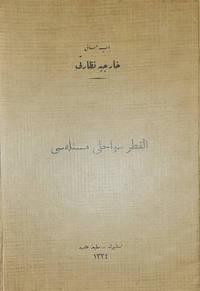
1918000233<p>An official report containing the formal agreements of the Ottoman state and its official position on the Qatari coastal issue as well as the settlement of this matter with Britain. The report was prepared by the Ottoman ambassadors Fakhr al-Din Rum Beyoğlu and Muhammad Nabi in 1917. It consists of 16 pages in Ottoman Turkish and French and was printed in a limited edition.</p> Al Amira The Imperial Press paperback
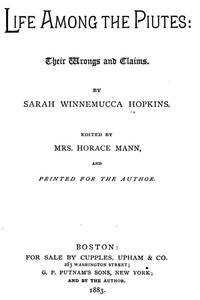
19963406V.p. 1996. A collection of 410 titles concerning Women in the West. Condition Statement: Overall most of the books in the collection are in "good" or "good" condition which typically describes a book that is sufficiently worn the binding soiled scuffed stained or spotted and may have loose joints hinges pages etc. To a lesser extent there are books in "fair" condition namely a well-worn book that has complete text pages including those with maps or plates but may lack endpapers half-title etc. The binding and/or jacket may also be worn. Women in the American West: Books and Ephemera from the Collection of Dorothy Sloan. SEE DETAILED FINDING AID on our website. <br/><br/>Dorothy Sloan b. 1943 is justly considered to be one of great scholar-booksellers of Western Americana Texana and Latin Americana. Dorothy Sloan Rare Books auction catalogues are recognized as models of their kind and feature an unusually broad array of printed books maps manuscripts and ephemera and are particularly strong in 19th-century materials. In many instances Sloan's bibliographic descriptions have become the description of record.<br/>She began her career at John Howell in San Francisco and thence to Jenkins Company in Austin. She issued her first rare book catalogue in 1984 and her first auction catalogue in 1994. Suffice it to say that as a woman she was literally a pioneer in such an endeavor. <br/><br/>Over the years she built a collection of Women in the West which is described in the 29-page Inventory below. Here is a collection of both women authors and women as the subject of historical and literary narrative. Most of the collection was kept in storage for the last twenty-eight years awaiting cataloguing and eventual sale. As we all know "Life" often interferes with our plans particularly as we grow older. <br/><br/>When Dorothy retired last year we acquired the collection of Women in the West. We are pleased to offer it en bloc for the price of $8200 which includes free shipping in the Continental United States. <br/><br/>Of the 410 titles in the collection nearly 25% are more than a century old. The earliest book in the collection is Sally Hastings' Poems on different subjects. To which is added a descriptive account of a family tour to the West. Lancaster 1808. The author describes her travels from Lancaster County to Washington PA. through the Alleghenies and gives an account of the Ohio River at Pittsburgh.<br/><br/>Only a handful of titles in the collection were published in the last 30 years the "newest" one dated 1996 namely: Anne Butler and Ona Siporin Uncommon common women. which contains culturally and ethnically diverse accounts of women who lived in the American West.<br/><br/>The physical size of the collection is considerable. Without any packing material it would encompass 15 large boxes. There are photographs gum cards engravings various inscribed books plays of the California Gold Rush memoirs and captivity narratives travelogues captivity narratives autobiographies Western novels pamphlets private press material a few 'zines journals catalogues and magazines. It is the culmination of decades of labor spanning all genres in the Western Americana tradition. The collection represents women's voices of a myriad of ethnicities including various Native American tribes African and African-American women Hispanic women prostitutes madams cowgirls ranchers pioneers and their struggles in the face of physical social and cultural adversity. <br/><br/>We are reluctant to mention "highlights" as it would suggest that "lowlights" do not merit attention from scholars and bibliophiles alike. We invite readers to peruse the Inventory of the collection capably prepared by Hunter Corb to allow readers to make that determination for themselves. <br/><br/>Included is the first edition of Miriam Colt's autobiography which describes her ill-fated expedition to Kansas Went to Kansas 1862 in which she traveled more than 1300 miles to establish a communal vegetarian colony. Colt provides vivid and frightening details of a family's ordeals on the frontier landscape including severe illness and encounters with lawless gangs. Defrauded of their investment in the Vegetarian Settlement Company the Colts left Kansas in the fall of 1856. Colt's husband and son died en route leaving only mother and daughter to return to New York. <br/><br/>Another work of interest is Sarah Hopkins's Life Among the Piutes an autobiography written at the encouragement of Ralph Waldo Emerson. This is considered to be the first book written and published in English by a Native American woman. It provides "extensive information about pre-White northern Paiute culture the types of foods marriage and other social practices as well as political leadership" Paher while simultaneously increasing awareness and sympathy for the plight of Native Americans. <br/><br/>Melinda Rankin's Twenty Years Among the Mexicans describes her missionary labor in south Texas and Mexico. Herein are depicted the experiences of the first Protestant woman missionary in Latin America. Although laws in Mexico at the time forbade the introduction of any form of Protestantism into the country Rankin traveled there in 1852 and established the first Protestant mission in Northern Mexico continuing her work there for a few decades before returning to the United States due to health problems. This narrative describes not just Rankin's missionary labors but also many dramatic events in Texas and Mexico including revolutionary turmoil the American Civil War and her capture by the notorious military leader rancher and outlaw Juan Cortina.<br/><br/>From early settlers of the West during and shortly after the American Revolution; to ranchers and pioneering women in the early days of the Republic of Texas and the fight for independence; to overland travels in covered wagons on the famed Oregon Trail at the outset of the American Civil War; to excursions into Mexico and Latin America at the end of the 19th and into the 20th centuries. Over two hundred years of women's experiences can be found within this collection and as such there is something for every student and subject matter.<br/><br/>SEE DETAILED FINDING AID ON OUR WEBSITE which enumerates each and every one of the 410 titles:<br/><br/>https://www.michaellaird.com/cat.phpid=307. unknown books
181478167Paris: De l'Imprimerie de P. Didot l'aîné 1814. Fine. De l'Imprimerie de P. Didot l'aîné Paris 1814 12.50 x 20.50 cm relié De l'Imprimerie de P. Didot l'Aîné Paris 1814 125 x 205 cm bound in calf First edition of Stendhal's very first book published under the pseudonym of Louis-Alexandre-César Bombet. Contemporary binding in half brown calf spine decorated with gilt fillets and tooling as well as a red morocco title piece. Very rare according to Clouzot De l'Imprimerie de P. Didot l'aîné unknown
190322087<p>London Frederick Ware & Co Ltd. Printed in Great Britain 1903 1903 Hard Cover. No Jacket. Signed by Author. Hardback NODJ 1903 PRESENTATION COPY EARLY Edition 1 Volume F-/VG AS-IS NODJ Bound in the publisher's pictorial boards inner and outer hinges fine head of spine lightly rubbed generally a VG copy Salmon Cover Sunning Extremites & Spine with Paper inset onlay Label on front in Triangle Shape of color illustration of Mouse Reading Paper sitting on Spool thread Slight Lean to Book Tiny Chips Extremites Spine Interior Nice tight Clean light Wear light Wrinkling85 pgs with Title author & Publishers Name on Front in White White lettering of Title on Spine. Signed by Author. F. Hard Cover.</p> London Frederick Ware & Co, Ltd. Printed in Great Britain, 1903 hardcover
A very fine copy of the rare English edition. Established in 1903, the Wiener Werkstätte (Vienna's workshops) was a production community of visual artists in Vienna. With 174 plates, partly in color. Compiled by Mathilde Flögl. Texts by Franz Cizek, Peter Behrens, Josef Hoffmann, A.S. Levetus and Egon Fridell. The cover designed by Vally Wieselthier and Gudrun Baudisch. - Schweiger, Wiener Werkstätte S. 124-125.
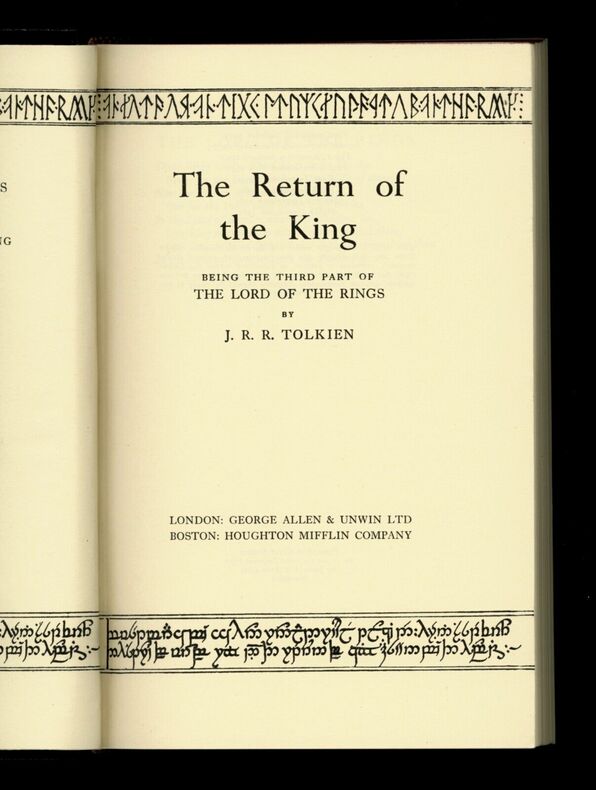
1961AMO-4505London : George Allen & Unwin ltd. Boston : Houghton Mifflin Company. 3 vol. 8vo 9.0" x 6.0" inches (23 x 15,5 cm) 423pp, folding map ; 352pp, folding map ; 416pp, folding map. First edition. Later printings (12/9/8). The Fellowship of the Ring. First edition first published in July 1954. Twelfth impression 1962. The Two Towers. First edition first published 1954. Ninth impression 1962. The Return of the King. First edition first published, October 1955. Eight impression 1961. Printed in Great Britain in 11 on 12 point Imprint type by Jarrold & Sons Ltd, Norwich. Each volume with a folding map at the end printed in red and black, top edges stained red. Exquisite full dark blue morocco fine leather binding, gilt ruled covers with the gilt "Ring & Eye" design stamped on the both covers, spine with decorated 5 raised bands ans two red gilt lettered morocco labels in the second and fourth compartments, with intertwined "J.R.R.T." initials in the bottom compartment. The amazing quality of the binding in in the style of Sangorski & Sutcliffe in fine condition. Extremely rare and absolutely spectacular.
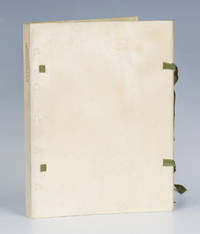
1910420London: Chatto & Windus for the Florence Press 1910. Limited Edition. Fine. Norman Wilkinson. 4to 10 x 7 1/2 in. 253 x 189 mm; 6 leaves including 1 blank 120 pp 2 leaves including 1 blank. 12 chromolithographed plates by Norman Wilkinson printed on plate paper and not included in the pagination legends on tissue guards printed in red. This is COPY no. 4 OF 12 COPIES PRINTED ON VELLUM as noted on the limitation page on verso of second leaf: «Of this edition of Virginibus Puerisque / have been printed on Aldwych hand- / made paper 250 copies of which 235 are / for sale; on vellum 12 copies of which 10 / are for sale. / Vellum Copy No. 4». Limp vellum binding with four green ties; gilt lettering on spine and upper cover t.e.g. Very faint spotting to front free endpaper slight offsetting of ties. Otherwise a pristine copy.<br /> <br /> Provenance: William Russell Flint from the family by descent.<br /> Beinecke Stevenson 79; Ransom 278:6; Tomkinson 85:6; Prideaux 13. A splendid edition of Stevenson's first collection of essays which promote a spirit of playfulness in defiance of both the hardships of human life and the restrictions imposed by bourgeois callowness. The volume brought together essays that had been previously published in the Cornhill Magazine and Macmillan's: "Virginibus Puerisque i" 1876; " ii" 1881; "iii: On Falling in Love" 1877; "iv: The Truth of Intercourse" 1879; "Crabbed Age and Youth" 1878; "An Apology for Idlers" 1877; "Ordered South" 1874; "Aes Triplex" 1878; "El Dorado" 1878; "The English Admirals" 1878; "Some Portraits by Raeburn" previously unpublished; "Child's Play" 1878; "Walking Tours" 1876; "Pan's Pipes" 1878; "A Plea for Gas Lamps" 1878<br /> The essays inspired Norman WILKINSON 1878 - 1971 to create the 12 striking and lyrical images that accompany the texts. Wilkinson was a British artist renowned for his poster work and honored by the British Admiralty for coming up with the idea and design for "dazzle camouflage" to protect Royal Navy ships from attacks by German submarines.<br /> Founded in 1908 by the London publishers Chatto & Windus and operated by Philip Lee Warner THE FLORENCE PRESS had as its mission to produce "beautiful books in the choicest types" but in somewhat larger and less costly editions than Kelmscott and the other more celebrated English fine presses. Florence books are readily distinguishable by their special type designed by Herbert P. Horne after 15th century Italian faces that are elegant simple and easily readable. Tomkinson p. 84<br /> This volume comes from the collection of Sir William Russell Flint 1880 - 1969 a Scottish artist illustrator and author who was linked to the Pre-Raphaelites and art nouveau designers. He enjoyed much commercial success during his career was on staff for years at 'The Illustrated London News' was commissioned to illustrate many books and the librettos of several Gilbert and Sullivan librettos. He served as president of both The Royal Society of Painters Etchers and Engravers and the Royal Watercolour Society and was knighted in 1946. Chatto & Windus for the Florence Press unknown
19732316951973. Pen and ink watercolor and pencil heightened with white on cream paper. 27 x 42 inches. Framed. Fine. Pen and ink watercolor and pencil heightened with white on cream paper. 27 x 42 inches. The original illustration for the second of four title cards used in the opening credits of the classic 1973 motion picture "The Sting" Provenance: Estate of George Roy Hill unknown books
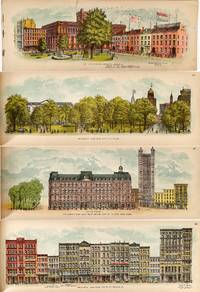
18991827New York: The Mail and Express 1899. First Edition. Very Good. Oblong folio 6 1/8 x 16 7/8 inches 155 x 428 mm 74 chromolithographs pages printed on both sides 2 pp. publisher's statement 1 p. advertisement and 3 pp. index; stapled on short side. Paper wrappers and some advertisement pages missing but all images are present and intact with just small margin tears on the first two pages not affecting the images. Plates are evenly printed with clearly defined lines and vivid colors. Statement page detached and with some tears chips and stains. Paper evenly toned. The original blue paper envelope is included. <br /> <br /> NYPL catalog ID B-number: b12714370<br /> RLIN/OCLC: 29278445. A scarce and important block-by-block record of what both sides of Broadway looked like at the turn of the 20th Century from Steamship Row to Bowling Green to 59th Street. The series of beautiful chromolithographs documents the most important thoroughfare of the city block by block on facing pages corresponding to the West Side and East Side of Broadway. Issued by The Mail & Express Company which was the publisher of the Evening Mail a New York City daily newspaper this publication was a precursor of photographic books which became popular in the next decades. The Mail and Express unknown
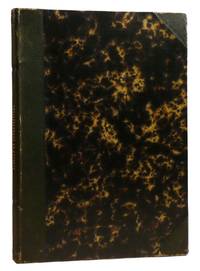
1866211806New York: The Tribune Association 1866. First Edition; First Printing. Hardcover. Very Good in decorative quarter leather boards. Ex-library. Owner personalization on FEP. Bookplate on both pastedowns. The Tribune Association hardcover