184 822 résultats
Very Good Arabic Original autograph document/letter sealed by Ahmad I of Tunisia. 54x42 cm. 1 p. 6 long lines. The letter includes full of poetic praise. It must be sent after successful diplomatic intercourse with Naples. Ferdinand II (Ferdinando Carlo) was King of the Two Sicilies from 1830 until his early death in 1859. It starts with 'Thank God alone', and goes on 'From poor Ahmad Pasha to Lord Almighty Field Marshal Amîr [ruler]. Sealed by the seal of Ahmad Basha Beg including an impressive qasidah in Arabic. Ahmed I (ibn Mustafa), born 2 December 1805 in Tunis died May 1855 at La Goulette, was the tenth Husainid Bey of Tunis, ruling from 1837 until his death. He was responsible for the abolition of slavery in Tunisia in 1846. He succeeded his father Mustafa Bey on 10 October 1837. He had grand ambitions - to expand his army and create a modern navy; to build a new royal residence, a mint and modern institutions of education but neither he nor his brother-in-law the young Mustapha Khaznadar who served as his finance minister, had a clear idea of what such initiatives would cost. As a result, many of his projects became expensive failures which damaged the financial health of the country. Soon after his accession, Ahmad Bey received the traditional Firman from the Sublime Porte which formally invested him with authority to rule from the Ottoman Empire and furnished him with the insignia of office. The Ottoman envoy, Osman Bey, arrived in la Goulette on 15 May 1838 onboard a frigate. The following day, Osman Bey made his official entry into Tunis on horseback, preceded by all the ministers of the beylical cabinet who went before him until he was two leagues from the city. Before he were carried the sword of honor and the caftan to be presented to the Bey. He was escorted by spahis and followed by a large contingent of regular troops an Arab cavalry. Three days after his official entry into the city, the envoy presented himself at the Bardo Palace to formally invest Ahmad Bey with his insignia of office and present gifts. Named as a Divisional General in the Ottoman army in May 1838, he was later promoted by the Sultan to the rank of Marshal on 14 August 1840. This was the first time that a Bey of Tunis had held a rank higher than Divisional General. The purpose of these honors was to emphasize the supremacy of the Ottoman Empire over the Regency of Tunis. Under a treaty with France signed in 1830 by Hussein Bey, a piece of land in Carthage had been ceded to allow the erection of a monument to Louis IX of France who had died there during the Eighth Crusade. On 25 August 1840, the first stone was laid in the cathedral of Carthage. Ahmad Bey also permitted the Christian community of Tunis, consisting mainly of European merchants, to enlarge their small church near the Bab el Bhar. In June and July 1846 the Duke of Montpensier, son of King Louis Philippe of France visited Tunis and Carthage. He was received with great solemnity by Ahmad Bey. According to the Tunisian historian Mohamed Bayram V, Bey's reforms were focused on state structures, the army, and education. He established a modern structure of government and gave his high officials the title of 'minister'. His senior ministers were his Grand Vizier Mustafa Sahib at-Taba'a, Mustapha Khaznadar, Minister of Finance and of the Interior, Mustafa Agha as Minister of War, Mahmoud Khodja as Minister of the Navy and Giuseppe Raffo as Foreign Minister. At certain times Mahmoud Ben Ayed also served as Trade Minister, Kuchuk Muhammad in the honorific post of Minister in charge of the security home of Ahmad Bey's reforms wasted money, such as the large frigate built at La Goulette that could not make it through the channel to the sea. of Tunis and Mohamed Lasram IV as Minister of the Pen. The historian Ibn Abi Dhiaf was the Bey's private secretary. Among Ahmad Bey's successes may be counted as the abolition of slavery in January 1846. To this may be added the formation of the military academy at...
19802091202133212040Nigensha 1980. Soft Cover. Fine. Volume: 1 Nigensha paperback
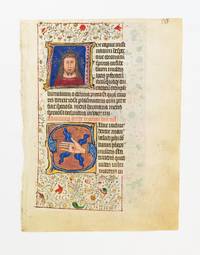
1465ST17243aBruges ca. 1465. 193 x 145 mm. 7 5/8 x 5 3/4". Single column 21 lines in a gothic book hand. <br/> Rubrics in red WITH THREE LARGE HISTORIATED INITIALS: ONE WITH A PORTRAIT OF CHRIST WEARING THE CROWN OF THORNS AND TWO WITH DISEMBODIED HANDS SHOWING THE STIGMATA each initial in pink or blue with white tracery filled with dark pink or blue with thin gilt lines and dots hands with wavy blue rays radiating from behind the appendage all within a thin gilt frame both sides with a three-quarter border consisting of hairline vines gold bezants and a few colorful flowers. ◆Margins with a little light soiling BUT IN FINE CONDITION THE PAINT OF THE INITIALS ESPECIALLY RICH AND WELL PRESERVED.<br/> <br/> From a manuscript probably produced in Bruges for the English market this leaf contains arresting initials that direct the viewer's attention to the wounds endured by Christ during the Passion. According to Roger Wieck Passion Cycle images enjoyed a particular vogue in 15th century Dutch Flemish and English Books of Hours including those that were exported to England. In the present example the strikingly unusual imagery includes a portrait of Christ wearing the Crown of Thorns his gaze fixed directly at the viewer and in separate initials his left and right hands appear disembodied and displaying the stigmata. A sister leaf to the present item features three additional initials showing the wounds of the left and right foot as well as the spear injury to Christ's side depicted as an oval piece of flesh with a laceration across the center. The parent manuscript containing the present leaf sold at Christie's on 15 November 2006 lot 16 the description for which gives us additional information about the book's contents and provenance: it was made for the Use of Sarum included a calendar with the English saint Thomas Becket and Popes Gregory and Silvester with their names crossed out indicating that it was in England through at least the time of the Reformation and contained an early ownership inscription of a woman named Bridget Lowe with a Middle English inscription on the pastedown. Christie's also attributed the parent manuscript to the workshop of William Vrelant with miniatures possibly by his chief assistant the Master of the "Vraie Cronique Descoce." They note that this work is "of higher quality than many of the works that satisfied the English demand for Netherlandish illumination" and that it "demonstrates why Vrelant appealed to the great bibliophiles of the Burgundian Netherlands." Vrelant was the leading purveyor of books of private devotion in Bruges during the third quarter of the 15th century and his prominent position among Flemish illuminators of the time is indicated by the considerable number of manuscripts illustrated in his manner by other miniaturists both in Bruges and in nearby cities in Flanders. Similar examples to the present leaf can be found in intact Books of Hours at the Philadelphia Free Library MS Widener 3 and the Huntington HM 1086--both of which were produced in Flanders or the Netherlands around the same time as the present work--but the present leaf surpasses both of these examples in terms of excellence of the artistic hand and level of detail depicted. unknown
1460ST12839Paris ca. 1460. 153 x 110 mm. 6 x 4 3/8". Single column 14 lines of text in a fine gothic book hand. <br/> One-line initial in burnished gold on a pink and blue ground with white tracery a two-line initial and a three-line initial in pink with white tracery on a ground of burnished gold the center filled with twining blue vines bearing pink and scarlet flowers verso with a rinceau panel border featuring twining hairline stems bearing burnished gold ivy leaves and fruit blue and gold acanthus leaves and flowers recto WITH AN ARCH-TOPPED MINIATURE OF THE HOLY TRINITY SURROUNDED BY THE HEAVENLY HOST this and the accompanying text enclosed by a pink blue and burnished gold bar border on one side and a brushed gold bar border with pink lotus flowers on two sides the whole surrounded by A FULL RINCEAU BORDER DENSE WITH ACANTHUS LEAVES FOLIAGE FRUIT FLOWERS AND TINY GOLD BERRIES on hairline stems. ◆A little paint flaked from the book held by the Trinity a couple of small spots in the margin otherwise in fine condition--clean and smooth with comfortable margins and bright gold.<br/> <br/> The Trinity is shown here seated on a canopied throne with God the Son his hand raised in blessing to the left of the Father. The latter in a towering crown holds a gold orb and the Father and Son together support a large book opened between them. The dove of the Holy Spirit hovers above the book radiating golden beams. The Trinity is flanked on both sides by cherubim and seraphim in rich red and soft yellow. It is the rendering of this angelic ambiance that elevates the level of aesthetic achievement here: both red and yellow celestial beings are given a ghostly appearance as if appearing out of a filmy yellow or a densely red fog. The artistic qualities as a whole suggest that this leaf comes from a manuscript commissioned by a person of significant means. unknown
1800CJW1405London: T. Bensley for T. Macklin final volume Bensley for T. Cadell & W. Davies 1800. First Printing of this Edition. 484 x 390 mm. 19 x 15 1/4". Seven volumes. <br/> Once splendid contemporary black straight-grain morocco gilt covers framed by Greek key roll palmette roll and multiple gilt rules double raised bands spine compartments densely gilt with rows of alternating star and circlet tools gilt titling turn-ins with gilt chain roll purple endpapers all edges gilt some inexpert but not obvious repairs to joints and backstrips. With more than 100 allegorical headpieces and tailpieces and some 70 SPLENDID LARGE-FOLIO SIZE COPPER PLATES after Fuseli Reynolds West and others. Herbert 1442 and 1651. ◆Extremities rather rubbed boards a bit scuffed but the decorative contemporaneous bindings solid and not without appeal. Plates somewhat foxed mostly to margins mild to moderate offsetting from plates occasional mild offsetting in the text bed but still a fresh wide-margined copy.<br/> <br/> The most prodigious form of scripture in English ever published the Macklin Bible features very large and bold type fine Whatman paper and a series of engravings by some of the most celebrated artists of the period. Like the Boydell "Shakespeare Gallery" also printed by Bensley our Macklin Bible is a vast picture book with illustrations that are grand both in size and emotional impact. According to DNB Macklin 1752/3-1800 announced his intention to produce a lavishly illustrated luxuriously produced folio Bible in 1789 and he spent the next 11 years and £30000 making his dream a reality. His efforts paid off: "the subscription list for 703 copies at £46 1s. apiece was headed by the king the queen and the prince of Wales." Sadly Macklin died just five days after the last engraving was finished and did not live to see his masterpiece become one of the most acclaimed English Bibles. As DNB observes "The Macklin Bible endures as the most ambitious edition produced in Britain often pirated but never rivalled." Copies of the Macklin Bible were often put into ornate bindings as was the present set; despite the depradations of time the workmanship of a superior London binder remains apparent. T. Bensley for T. Macklin [final volume Bensley for T. Cadell & W. Davies] unknown
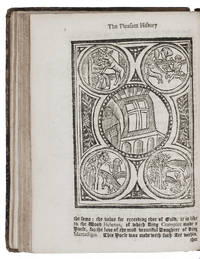
170122642London 1701. 4to. Thomas Ilive for Edward Brewster Late-18th-century sprinkled calf sewn on 5 cords 3 attached to the boards and 2 cut short gold double fillets blind-tooled board edges red morocco spine label in 2nd of 6 compartments red sprinkled edges. With woodcut of King Lion's court on the title page 61 woodcuts in text of part 1 including 23 repeats all signed Edward Brewster and all half-page 7.5 x 10.5 cm to nearly full-page 13 x 9.5 cm and 15 woodcuts in part 2 all repeated from part 1. Further with a large woodcut decorated initial in part 3 and decorations built up from cast fleurons in parts 1 and 2. Set in textura types with incidental roman and italic including Moxon's 1669 Canon roman on the title-page of part 3. 3 parts in 1 volume. 160; 112; 4 160 pp. One of the rare sets of all 3 parts of the English Reynard the Fox the third part here in its first edition. The Reynard stories were already established as a coherent collection in the 12th century and were first printed in 1479 in a Dutch prose edition. They became especially well known when translated into English and adapted for Caxton's 1481 edition in 43 chapters. The publisher Edward Alde in London began work on an extensive revision of Caxton's text with many new additions but he published only the first part probably in 1620 the first edition of the present part 1 containing 25 chapters some corresponding with chapters in Caxton's edition and some not. Although the second part would have to wait 52 years the first part quickly became the standard English version of the Reynard the Fox stories with 8 editions from 1620 to 1671. Its language was modernized giving both a view of the stories as they were known through most of two centuries and insights into English values and culture of the time. In 1684 Brewster added the present first edition of part 3 giving the adventures of Reynard's son Reynardine.With 20th-century woodcut bookplate. The woodcut on C1 of part 1 is printed upside down. In good condition with parts 2 and 3 slightly browned. One front endleaf is detached the spine slightly damaged at the head and the front hinge cracked.l Ebert II 18879; ESTC T60836 R218371 R40614; Kirmse 15; Menke V B c note on pp. 221-222 nos. 35 29 30; Wing S3512 S3436 parts 1-2; not in Prien. hardcover
A document which should have rocked the USA to its core but was squelched by the very powers it exposed. In the course of her duties as legal analyst for the Committee, Kathryn Casey was granted access to the archived minutes of the board of directors of the Carnegie Endowment for International Peace. According to the Committee's Research Director Norman Dodd, it was here that Ms. Casey discovered the board's conclusion that the best way to create world government, and permanent peace, was to involve the United States in a terrible war. The Reece Committee and its findings came to prominence decades later when Norman Dodd, Research Director for the Committee, came forward with stunning revelations of the Committee's findings. Printed for the use of the committee, this booklet contains pages 627-665b from the printed hearings. Includes 20 tables, 12 charts and 10 data sheets. Moderate wear. Unmarked. Crease to lower corner. A sound copy of this powerful document. Book
Stable Money Association gift bookplate inside front board is signed by Irving Fisher, James Rand, Jr., and Frederic A. Delano. Delano [1863-1953] was uncle to FDR, President of the Stable Money Association and was appointed to serve on the first Board of the Federal Reserve by Woodrow Wilson. James Rand Jr. [1886-1968] was Chairman of the Committee For the Nation and a prominent American businessman. This copy inscribed to Ethan Bates Stanley who was President of the American Laundry Machinery Company. pp. [vi], vii-xxiii, 484. Selected bibliography. Index. Extensive footnotes. "The present book is intended to be not so much a history of [monetary] catastrophes, due to unstable money and endured by unsuspecting millions subject to the money illusion, but rather a history of the efforts of a few to remedy or prevent such catastrophies." - xxi. Pages 443-484 constitute a lengthy list of Stable Money Pioneers, individuals who supported the movement. Corporate affiliations are included for most of these names, thus the list reads like a corporate Who's Who of America. Dust jacket not included. Average wear to publisher's pebbled navy cloth. Binding sound. Bookseller ink stamp inside front board. 21 x 14.5cm. Rist p.379, Cohen p.186, Fisher M-2058, Book
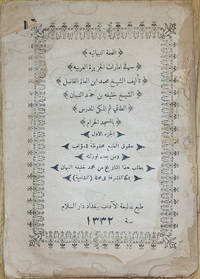
1914000555<p>Bagdad: Dar us Salam press 1914 Book. Good. No Binding. 1st Edition. 12mo - over 6¾ - 7¾" tall. Printed on weak paper. The first and only part printed in Bagdad of 3 parts by the author later printed together in Cairo. Very rare printed book in Bagdad during the world war about the political and military history of Bahrain and al-Khalifa. 144 p. Arabic text with one photographic plate of the author. Scarce.</p> Dar us Salam press
Lucky Strike cigarette ad on back cover provides a truly classic and timeless example of a mis-timed advertisement. Consider that the great Wall St. stock market crash of 1929 occurred mere days before this issue hit the newsstands. Beneath the caption "An Ancient Prejudice has been removed" appears a clenched fist labeled as "American Intelligence" breaking a heavy chain. Top left a paranoid miser stacks his gold by candlelight. Top right a wealthy couple visits their palatial bank. Text beneath miser reads "Hoarding gold with the fanatical zeal of the miser has vanished. American Intelligence sponsors thousands of banking institutions to which the individual (i.e. the wealthy couple) safely entrusts his wealth." The message is clear. Readers should put their trust (and money) in the banks, and shun gold. This issue was likely printed just as the Great Crash occurred, causing countless financial institutions to go under - and destroying even more individual fortunes. (The ad goes on to claim that cigarettes have similarly overcome the prejudice against them.) A truly stunning work which deserves to be preserved and reflected upon in this age of limitless fiat currency printing. Average wear with three-inch crease to lower corner of back cover. Suitably framed and mounted, this ad will make a superlative office display for any precious metals executive. Magazine
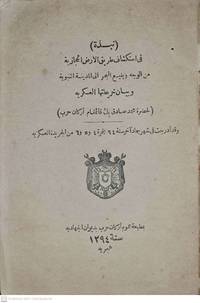
1877000604<p>Cairo: Diwan al- Jihadiyya war office 1877 Book. Very Good. No Binding. 1st Edition. 12mo - over 6¾ - 7¾" tall. An early work about Hejaz and the Hajj by Muhammad Sadiq bey mainly published in the military newspaper of the Egyptian general military staff Nos. 4 5 and 6 in 1294 AH. 1877 AD. and published separately by the same press in the same year. 28 p. and 4 lithographic plates of which one is folding.</p> Diwan al- Jihadiyya (war office)
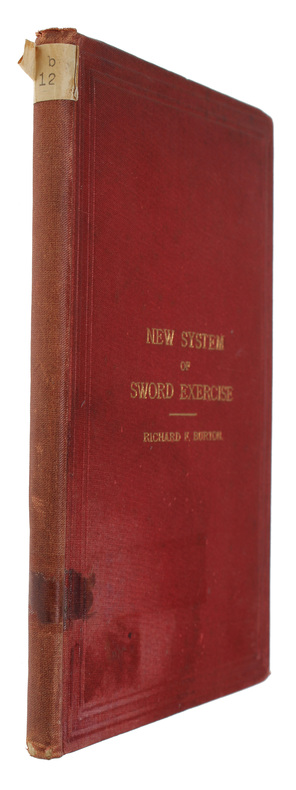
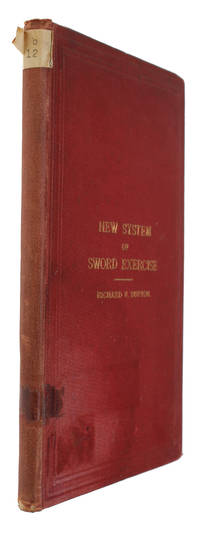
187659271London, William Clowes and Sons, 1876. Small 8vo. Original full red cloth. Title and author stamped in gold on upper wrapper. A small paperlabel at top of spine. A small stamp on top of title-page. Faint discoloration to lower part of upper wrapper. Frontispiece. 59 pp., textillustrations. Faint scattered brownspots, mainly to the first leaves. With dedication from the author on front free endpaper ""H.P./ General Baron von Bülow/ with the authors compliments."" Bülow is probably the Danish Genreral-Major Otto Chr. Severin August von Bülow (1812-95) or it could be General-Lieutnant Carl Ernst Johan Bülow (1814-1890) who was a member of the Danish legation to the English Court from 1865 to 1880. A note on the front free endpaper states, that the book in 1885 was handed over to the School of Gymnastics by General Fog. On foot of the same leaf some discoloration left over from a paperlabel.
187659271London William Clowes and Sons 1876. Small 8vo. Original full red cloth. Title and author stamped in gold on upper wrapper. A small paperlabel at top of spine. A small stamp on top of title-page. Faint discoloration to lower part of upper wrapper. Frontispiece. 59 pp. textillustrations. Faint scattered brownspots mainly to the first leaves. With dedication from the author on front free endpaper "H.P./ General Baron von Bülow/ with the authors compliments." Bülow is probably the Danish Genreral-Major Otto Chr. Severin August von Bülow 1812-95 or it could be General-Lieutnant Carl Ernst Johan Bülow 1814-1890 who was a member of the Danish legation to the English Court from 1865 to 1880. A note on the front free endpaper states that the book in 1885 was handed over to the School of Gymnastics by General Fog. On foot of the same leaf some discoloration left over from a paperlabel. <br/><br/><em>First edition. - Extremely scarce. Penzer p.93: 'very rare'. </em> hardcover
176354525Kiøbenhavn Godiche 1763 - 81. 4to. Indbundet i 8 tome V i 2 samtidige helldrbd. Rig rygforgyldning og forgyldte skindtitler. Rygge på de 4 første bind med lette brugsspor. Marmorerede snit. Stempel på titelblade. Slesvigbindet på skrivepapir. Med 295 kobberstukne prospekter planer grundtegninger foldekort m.v. Nogle af foldekortene fint forstærkede på bagsiden. rent eksemplar kun enkelte spredte brunpletter. Nogle eksemplarer er forsynet med Pontoppidans Danmarkskort. Dette er ikke her og det er heller ikke nævnt i oversigterne. <br/><br/><em>Originaludgaven af Danmarks topografiske hovedværk. </em> unknown
176354525Kiøbenhavn, Godiche, 1763 - 81. 4to. Indbundet i 8 (tome V i 2) samtidige helldrbd. Rig rygforgyldning og forgyldte skindtitler. Rygge på de 4 første bind med lette brugsspor. Marmorerede snit. Stempel på titelblade. Slesvigbindet på skrivepapir. Med 295 kobberstukne prospekter, planer, grundtegninger, foldekort m.v. Nogle af foldekortene fint forstærkede på bagsiden. rent eksemplar, kun enkelte spredte brunpletter. Nogle eksemplarer er forsynet med Pontoppidans Danmarkskort. Dette er ikke her og det er heller ikke nævnt i oversigterne.
In-4, [12] ll. (incl. frontispiece), 689 pp., [9] ll., engraved title-page, full-page coat of arms of the dedicatee on the verso of the title, 12 copper-engraved plates; contemporary vellum, ms. title stamp, one clasp remaining, blue edges (tiny stain touching some margins, very rare sporadic browning, small cover defects). Genuine beautiful copy.
19782091502135710696Yoshikawakobunkan 1978. Soft Cover. Fine. The book is in fine condition. Yoshikawakobunkan paperback
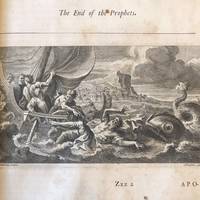
1717062622Oxford: John Baskett Printer to the King's most Excellent Majesty 1717. Leather Bound. Folio. Measures 52 x 34 x 14 cm. Bound in leather likely late 19th century. Binding split at rear joint. Some damage to text block especially prelims; a few loose pages some chips and tears foxing some pages darkened. Three rounds of restoration are evident the most recent carefully documented a fourth round required. Herbert 942A: "A magnificent edition printed in large type. With many plates at the beginning and end of books engraved on steel from the designs of various artists. Some of the initial letters are similarly engraved. Unfortunately the book contained many misprints and earned the nickname 'A Baskett-ful of Errors'. From the misprint The Parable of the Vinegar for vineyard in the headline above Luke xx this edition is commonly known as the 'Vinegar Bible'." "John Baskett 1665–1742 attained the title of “printer to the King’s most excellent majesty†in 1709 but his publishing career turned for the worse when he issued this richly-engraved folio Bible in 1717. Quick to point out the Bible’s numerous misprints Baskett’s competitors branded it “a Baskett-ful of Errors.†The edition’s more lasting nickname has been the “Vinegar Bible†because the words “Parable of the Vinegar†appear at the top of the page containing Luke 20:9 Christ’s Parable of the Vineyard." - smu.edu Special Collections. John Baskett, Printer to the King's most Excellent Majesty unknown
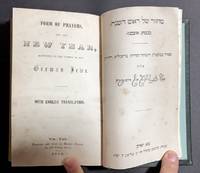
185440798New York: Henry Frank 1854. Hardback. 1st edition. Period-style gilt tooled Morocco leather. 12mo various pagination aprox 475 pages total . Singerman 1284 listing only 1 copy anywhere Goldman 40. One of the four first Ashkenazi machzor volumes printed in America all published in 1854 by Henry Frank. Based upon the celebrated Wolf Heidenheim edition Henry Chaim Frank of New York published in 1854 2 prayer-books for the Days of Awe: This volume for the New Year as well as a volume for Yom Kipur. This enabled the newly rising community of German American Jews to conduct services according to their own custom as opposed to that of the Sephardic rite. <br> Frank went on in later years to issue other volumes for other Holidays and reflecting the customs of the Polish Jews as well. <br> OCLC: 45963598. OCLC lists only 2 copies of this volume anywhere Columbia and Yale. A set New Year and Yom Kipur with repairs sold at auction for over $17000 with commissions in 2012. No copies of either volume have appeared at major auction since then. <br> Faint blindstamps on title pages. Exquisite tooled binding an absolutely stunning copy. SBK KH-9-9-KK. New York: Henry Frank unknown
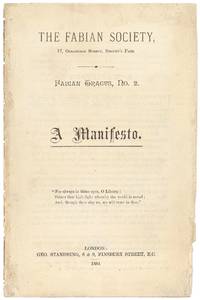
1884589907London: The Fabian Society / Geo. Standring 1884. Softcover. Very Good. First edition. One quarto sheet folded to make four pages. Removed from a larger volume with stab holes and several nicks along the spine chips and a few small creased tears along the edges modest soiling very good. Issued unsigned the Nobel laureate's first separate publication issued as "Fabian Tracts No.2" when he was 28 years old; Shaw was elected a member of The Fabian Society the British socialist organization still in operation today on September 5 1884. While many early tracts from The Fabian Society may be found this pamphlet is rare. ABPC locates only two copies at auction both in 1976. Laurence A1. The Fabian Society / Geo. Standring unknown
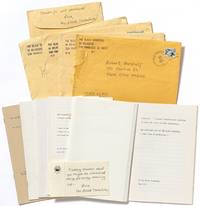
539637San Diego California: Community Congress Press 1973. Softcover. Fine. First edition. Complete in six volumes. Octavos. Stapled printed and unprinted wrappers. One issue with splash mark on the cover and another with small stain on the rear wrap but overall fine with bright white wrappers typically found toned. Laid into the first volume is a Autograph Note Signed by Acker as The Black Tarantula along with a small drawing of a spider: "Fielding Dawson said you might be interested being put on my mailing list - Love The Black Tarantula." Accompanied by five original mailing envelopes stamped with The Black Tarantula return address and addressed in Acker's hand to Robert Bertholf the influential poetry professor and former curator of The Poetry Collection at Buffalo. The first of Acker's three six-volume novels preceded only by her poetry collection Politics written in parts and issued separately in very limited numbers and consequently very difficult to find complete and in original form. A wonderful copy in remarkable condition with an handwritten note by Acker and the rarely found original mailing envelopes. Community Congress Press) unknown
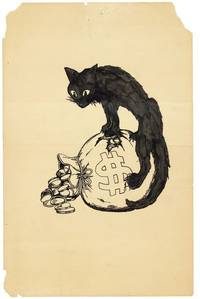
191332077Chicago: I.W.W. Publishing Bureau n.d. but 1913. Reprint 1917. 12mo 17cm.; original drab pictorial staplebound card wrappers; 32pp. Wrappers separated and staples cleanly removed; still a Good complete copy of a very uncommon pamphlet. Accompanied by the original cover artwork 43x27.75cm. black ink on cream stock several losses and a few closed tears to margins none approaching image old vertical fold line stock rather brittle from age and poor quality else Near Very Good. Quite possibly the earliest iteration of Ralph Chaplin's now-ubiquitous "Sabo-Tabby" the I.W.W.'s black cat symbol for sabotage. The present work shows the black cat with its claws fully extended while it arches its back on top of a bag of money coins spilling out. As Chaplin later wrote "My 'Sab Cat' was supposed to symbolize the 'slow down' as a means of 'striking on the job'" cf. https://iww.org/history/icons/black_cat though many including the United States government interpreted it as something much more pernicious. In fact the accompanying pamphlet with its cover art and title raised serious red flags and by the time the United States entered WW1 all copies of Sabotage still in the hands of the I.W.W. were destroyed. The present copy has the small promotional blurb by Jack London dated 1913 on p. 32 though the headquarters address printed on the recto and verso of the rear wrapper 1001 W. Madison St. in Chicago indicates that this is a reprint dating around 1917 probably just before an order was made to destroy all copies. MILES 462. I.W.W. Publishing Bureau unknown books
738736 folding leaves of which four are blank. 8vo 240 x 170 mm. orig. blue semi-stiff wrappers wrappers somewhat worn orig. label heightened in gold with manuscript title new stitching. Japan: n.d.<br /> During the Edo period there were 12 Korean delegations to Japan whose purposes were mostly to congratulate a new Tokugawa shogun. The missions which normally included 300-500 Koreans accompanied by roughly 1500 Japanese escorts symbolized the amicable relationship between the two nations and in the early years served to legitimize the Tokugawa shogunate.<br /> These delegations which usually took nine or ten months round-trip were enormously expensive undertakings for both countries. The Koreans brought many luxurious presents both public and private gifts and the Japanese in turn furnished equally lavish gifts including large quantities of silver. Also the receiving Japanese were obligated to fund a number of elaborate and costly banquets during the delegation's travels on the mainland and in the capital city as well as provide accommodations throughout.<br /> Our manuscript is concerned with one of the three final missions which took place in 1748 1764 and 1811 this last mission was held on the island of Tsushima located roughly halfway between Kyushu and the Korean mainland. All three of these missions experienced considerable cost-cutting. We suspect our manuscript is a record of the banquets for the final 1811 mission as there is a reference to a Russian translator at this time there was considerable tension between Japan and Russia because of the Russian desire to open trade with the island nation.<br /> Our manuscript describes a series of banquets served during one of these three final missions. In spite of the newly instituted austerity it is clear that the participants ate very well. For each of the 13 banquets we are given the number of guests and their official positions the number of dishes per tray what foods were served etc. Some of the banquets were limited to just a dozen or so guests and others included more than 300 people. <br /> The cuisine is very much in the tradition of the ritualistic preparation and serving of the food on a series of trays known as honzen ryori "main tray cuisine" which was the dominant banqueting style for the elite from the Muromachi period through the Edo period. Various seafoods including luxury items like lobster smoked fish roe octopus and preserved fish are listed along with preparations of chickens eggs many kinds of vegetables burdock daikon radish ginger eggplant wild wasabi and many vegetables that are today quite obscure cooked in various ways pickles mushrooms fruits persimmons pears yuzu nuts rice and other grains and elaborate confections including sweets of Portuguese origin like pound cake or kasutera.<br /> Fine copy preserved in a chitsu. unknown books
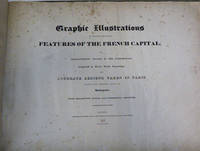
51-6998London : Harper and Co. successors to Mr. Kearsley 1816. Oblong elephant foilio. Much rarer than the smaller format edition. 69 x 50cm. 27 x 19.5 inches.Original printed boards rubbed and soiled; repaired with new goatskin spine. The more common smaller format is 43x38cm. 17 by 15 inches. .12 engraved plates scattered spotting and marginal browning throughout damp stain to lower margin of one plate one leaf loose repaired tear to final leaf.OCLC Number / Unique Identifier:461746497.Description by Juliette Jestaz.Conservatrice des manuscrits livres rares et plans à la Bibliothèque historique de la Ville de Paris. Référente d'histoire de Paris pour la bibliothèque:."These very discreet graphic illustrations of the most prominent features of the French capital with characteristic figures in the foregrounds bear no artist's name on the title page. The plates themselves are signed “S. Porter sculpsit†“Sparrow sculpsit†“Dadley sculpsit†or “Angus sculpsit.†The latter is probably William Angus 1752–1821 a British draftsman and engraver. We have not been able to identify the other engravers.At least one of the plates is based on a drawing by Pierre-Antoine Demachy 1723–1807 author of numerous views of Paris particularly panoramas of the quays. It is tempting to attribute to him all the aquatint drawings in the collection—a technique decidedly in vogue for veduta at the turn of the century. The drawings of him that are kept at the Musée Carnavalet or in the Destailleur collection of the BnF do not however correspond to those in our album and cannot confirm this attribution.The first edition was published in 1815 by Howlett and Brimmer in London. This edition published by Harper the following year suggests that the album was successful coming just a few months after Waterloo had reopened France to the British after twelve years of closure. These two publishers had previously produced picture albums of the Allied countries: The Costume of the Russian Empire 73 engravings 1803 with descriptions in French the international language at the time and English and Sketches of Military Costume in Spain and Portugal 1810.Like Nattes's album this one does not focus on the Empire's achievements in Paris: neither the Arc de Triomphe du Carrousel nor the Place du Châtelet the Palais de la Chancellerie Hôtel de Salm nor the Louvre's expansions. The buildings depicted on the plates could as in Nattes's work be presented in their state from 1802-1803.The album nevertheless focuses primarily on the heart of Napoleonic power the Louvre-Tuileries-Champs-Élysées district to which eight of the twelve plates are devoted. It also provides two panoramas from the North and the South. The panorama from Montmartre is a classic viewpoint dating back to that captured by Mathieu Merian in 1620.". London : Harper and Co. (successors to Mr. Kearsley), 1816 hardcover
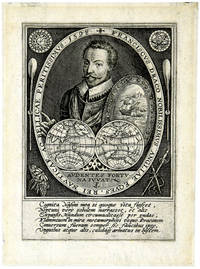
1598WRCAM41697Cologne 1598. Approximately 4 1/2 x 6 1/4 inches. An excellent sharp crisp impression. Fine. In a blue half morocco slipcase. This rare portrait of Drake by Crispin van de Passe comes from an early volume of engraved portraits EFFIGIES REGUM AC PRINCIPUM EORUM SCILLICET Cologne 1598. Drake who circumnavigated the globe in 1577-80 appears under the title "most noble English knight very experienced in all things nautical and military." "The portrait of Drake is of especial interest: it is a close copy of the smaller Hondius Drake portrait which in its first state exists in only two copies Royal Geographical Society and Huntington Library. It depicts him in bust with a shield and with a two-hemisphere terrestrial map displaying the track of his circumnavigation" - Kraus. De Passe's stylized monograph appears near the bottom of the portrait. Epigrammatic verses in Latin by Matthias Quad appear beneath the portrait. KRAUS DRAKE 59. SABIN 58995. GRAESSE V:154. BRUNET IV:414. unknown books