184 822 résultats
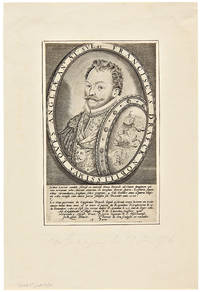
1598235791598. Engraved portrait approximately 4 1/2 x 6 1/4 inches. An excellent sharp crisp impression. Fine. In a blue half morocco slipcase. The very rare Crispin van de Passe portrait of Drake.<br/> <br/>This rare portrait of Drake by Crispin van de Passe comes from an early volume of engraved portraits Effigies Regum Ac Principum Eorum Scillicet Cologne 1598. Drake who circumnavigated the globe in 1577-1580 appears under the title "most noble English knight very experienced in all things nautical and military." "The portrait of Drake is of especial interest: it is a close copy of the smaller Hondius Drake portrait which in its first state exists in only two copies Royal Geographical Society and Huntington Library. It depicts him in bust with a shield and with a two-hemisphere terrestrial map displaying the track of his circumnavigation" - Kraus. De Passe's stylized monograph appears near the bottom of the portrait. Epigrammatic verses in Latin by Matthias Quad appear beneath the portrait.<br/> <br/>Kraus Drake 59; Sabin 58995; Graesse V:154; Brunet IV:414. unknown books
1583WRCAM47035Paris 1583. Engraved portrait oval with surrounding legend and text beneath on laid paper 6 7/8 x 4 1/4 inches. Cut to just within plate mark and inlaid into later wove paper sheet. Later ink inscription on verso reading: "from Holland / 1809." Minor wear and soiling. Matted. Very good. A clean impression of the second state of this famous portrait of Sir Francis Drake at age forty-three shortly after he returned from circumnavigating the globe the basis for most of the later images of him. The image is taken from a portrait purportedly painted from life by Jean Rabel the Elder and is said to be a credible likeness of the famed navigator. The legend beneath the portrait indicates the dates of Drake's circumnavigation listing Rabel as the painter and Thomas de Leu as the engraver. Thomas de Leu 1560-1612 a pupil of Rabel moved to Paris around 1576 and became one of the most noted portrait engravers of his time. This engraving of Drake was the basis for many later images of him including the well-known engravings by Jodocus Hondius and Crispin van de Passe. <br> <br> The earliest graphic image of one of the greatest figures in maritime history. Marianne Grivel "Au Sieur Rabel Parangon du la 'pourtraicture'." in H. Zerner and M. Bayard's RENAISSANCE EN FRANCE Paris 2009 pp.227-92 2d state. unknown books
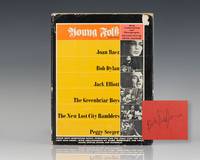
196343008New York: Simon & Schuster 1963. First edition of this collection of songs from the 1960's folk music scene. Quarto original cloth with 112 pages with photographs. Signed by Bob Dylan in a contemporary hand on the front free endpaper. Features photos and tabulature of music by Joan Baez Bob Dylan Jack Elliott The Greenbriar Boys The New Lost City Ramblers and Peggy Seeger. Introduction by Pete Seeger. Notes by Earl Robinson. Rare and desirable signed by Dylan. Bob Dylan often performed and sometimes toured with Joan Baez starting when she was a singer of mostly traditional songs. As Baez adopted some of Dylan's songs into her repertoire and even introduced Dylan to her avid audiences a large following on the folk circuit it helped the young songwriter to gain initial recognition. By the time Dylan recorded his first LP 1962 he had developed a style reminiscent of Woody Guthrie. He began to write songs that captured the "progressive" mood on the college campuses and in the coffee houses. Simon & Schuster hardcover
1859620331859. Oblong folio sheet 7 1/4 x 14 in. staff ruled by hand in red ink. Music notation with corrected lyrics on recto additional verses on verso.<br/>An extremely rare complete vocal score with accompanying dance entirely in Emmett's hand. Emmett joined Dan Bryant's minstrel troupe in 1859 when the company introduced his "Dixie" on the New York stage as well as the present composition for which sheet music evidently was published in 1860 although locating a recorded copy has proved unsuccessful. <br/>Virtually all of Emmett's manuscripts were deposited early on in the Ohio State Library and are now in the archives of the Ohio History Connection. There are three drafts of the 'John Come Down de Hollow' there: a pencil ms. of words only entirely different from the finished version about a slave pursued by a bulldog in the rain; a fragment of Emmett's walk around in a different key a variant setting and the first two lines of lyrics only dated 1860; and a fair copy dated 1859 comparable to ours with full score and extra verses on the verso. Ours contains a textual revision not in the OHC copy. The lyrics of Emmett's song involve the dandy John's courtship advice to the ladies on how to avoid ending up an old maid the dandy John and the efforts of the singer to avoid marriage. Written in dialect with the usual stereotypical transgressions such lyrics are now generally accepted as having been appropriated and adapted from African-American sources. Intriguingly William Cullen Bryant collected the lyrics of a work-song version of 'John Come Down de Hollow' from slave sources during a visit in 1843 to a plantation in South Carolina. There "he witnessed a corn-shucking arranged for his benefit by the obliging proprietor unnamed but it may have been William Gilmore Simms. See Norris Yates "Four Plantation Songs Noted by William Cullen Bryant" in Southern Folklore Quarterly v. 15 1951. As described by Bryant "The negroes began to strip the husks from the ears.keeping time to the music.the songs were generally of a comic character but one of them was set to a singularly wild and plaintive air which some of our musicians would do well to reduce to notation." The differences between Bryant's 'plaintive' version and Emmett's provides a rare documentation of the typical way in which African-American sources were changed into comic minstrel repertoire.<br/>At the conclusion of the vocal score is a "Dance" in ten measures which would have been the 'walk round' element of the song mentioned in the title a minstrel dance which Emmett introduced in 1859 to the Bryant's Minstrels' performance routine one which typically closed the first half of the show. It is generally thought to have its origins in African circle shouts brought over by slaves and typically included a competitive element in which each dancer gets a chance to display his best moves while others clap or 'pat Juba' on their bodies. All stops were pulled out for these boisterous minstrel finales which were soon adopted by other bands and Emmett's walk-'rounds defined the type and are considered his most significant contribution to minstrelsy. Hans Nathan devotes an entire chapter to the walk-'rounds in his definitive biography of Emmett and closes with particular mention of "John Come Down de Hollow." As previously mentioned the song was evidently published as sheet music but Nathan could not locate a copy nor have we succeeded.<br/>Although he is today remembered chiefly as the composer of "Dixie" Emmett's importance to minstrelsy the overwhelmingly dominant American musical entertainment of the 19th century can hardly be underestimated. He was a founding member in 1843 of the Virginia Minstrels generally accepted as the first black face Negro minstrel troupe with what would become the full complement of banjo fiddle bones and tambourine. Their popularity and influence quickly spawned the genre with numerous imitators on both sides of the Atlantic and the devoted following of both white and black audiences. He was an accomplished banjoist and his many compositions were central to the repertoire. Hollywood produced a movie of his life starring Bing Crosby in 1940 and he was inducted into the Song Writer's Hall of Fame in 1970. For the definitive study of Emmett and his music with an entire chapter on Emmett's walk-rounds see Hans Nathan's "Dan Emmett and the Rise of Early Negro Minstrelsy." Apart from later transcriptions and quotes from "I Wish I was In Dixie's Land" and a transcription of seven verses of "Old Dan Tucker" which sold at auction in 1978 the present manuscript is the only strictly contemporary full draft of any of Emmett's numerous other compositions to appear in the auction records of the past fifty years this copy in 1964 to 2016. <br/><br/> unknown books
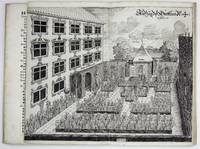
1641401738Augsburg: Johann Schultes and Mathias Rembold 1641. From the Collection of Arthur & Charlotte Vershbow. Folio 300 x 203 mm. Letterpress title printed in red and black torn and repaired 15 double-page or folding engraved plates or plans by Matthäus Rembold 1629-1657 on guards. Contemporary vellum. Some plates trimmed closely. Provenance: purchased from Ars Libri 1990. FIRST EDITION of this work on civil architecture by the eminent Ulm architect Joseph Furttenbach the Elder. The Architectura privata describes his own dwelling-house and grounds and the fine copperplates show the basics and elevations of the house windows portals grotto and gardens among other things. With its small grotto richly decorated with rare flowers arranged in compartments Furttenbach's garden courtyard epitomizes the intimate "secret garden" owned by the wealthy bourgeoisie in early seventeenth-century Germany and the Netherlands. The grotto in his garden is described as being filled with artifice and exotica including shell-encrusted sculptures and waterworks painted cosmological imagery and mirrors. The flowers depicted are identifiable as the most sought after and costly bulbs of the period the narcissus tulip fritillary and crown imperial demonstrating Furttenbach's knowledge of current botanical research. Following his studies in architecture and engineering in Italy Furttenbach returned to Ulm where he designed buildings and gardens and published a number of treatises on architecture and fortification. His construction of the Ulm city fortifications were among the strongest of their time remaining impregnable during the Thirty Years' War. Berlin Kat. 1958. <br/><br/> Johann Schultes and Mathias Rembold hardcover books
608287"Judy Garland" & "Mrs. Ethel M. Garland" in blue/black fountain pen ink June 30 1939. 4to 12 pages signed by Garland on page 12 with original stiff light blue wrappers with "Agreement Re: 'The Wizard of Oz'" typed on upper cover. Also signed by Garland's mother Mrs. Ethel M. Garland an Assistant Treasurer of Loew's and the President of Robern Sportswear; with blindstamped corporate seal of Loew's. Agreement between Loew's incorporated and Robern Sportswear Inc. for their manufacture and sale of children's skirts and suits marked or labeled with the names of fanciful characters from the film "The Wizard of Oz" and/or the books "The Wizard of Oz" and "The New Wizard of Oz" for which Loew's is to receive 4 1/2% of the selling price and Judy Garland "a minor and her mother Mrs. Ethel M. Garland" to receive 1/2%. Signed by Authors. No Binding. Very Good. paperback books
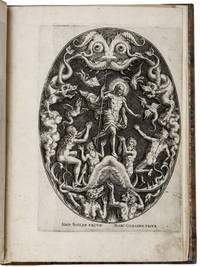
15705934b<b>GHEERAERTS THE ELDER'S GROTESQUE SUITE OF ENGRAVINGS DEPICTING SCENES OF CHRIST'S PASSION</b><br /><br />8vo 1 engraved title page and 13 full-page engravings and extra illustrated with additional 4 engravings from other suites. Quarter bound in 19th-century calf and marbled paper boards gold-stamped lettering piece laid to spine marbled end papers. Only minor edge wear to boards joints tender. The suite of engravings in fine dark strikes with only the occasional minor stain; two of the additional engravings Labors of Hercules are trimmed laid down and carry later annotations in pencil.<br /><br /><p>Rare first and only edition only state of a suite of 14 full-page 16th-century engravings which ingeniously refigure the traditional subjects of Christ's Passion in a manner at once timely/fashionable and archaizing/antique. The <i>Passio verbigenae</i> published by Jan Sadeler I 1550-1600 after the designs of Marcus Gheeraerts the Elder c. 1520-c. 1590 depicts scenes occurring between Christ's meditation on the Mount of Olives and his Resurrection each presented in the manner of ancient Roman <i>grottesche</i> a form widely popular in Renaissance and Mannerist art following the rediscovery in the late 15th-century of grotesque frescos at Nero's Domus Aurea in Rome. The symmetrical exquisite obscure delicate and often bizarre nature of this style suited the Mannerist tastes of Flemish printmakers in the late 16th century. Here however Gheeraerts and Sadeler use the style not for weird or frivolous ancient iconography but instead to recount the most central and important story of Christianity the Crucifixion of Jesus and his triumph over death. In this case it is likely that Gheeraerts and Sadeler saw the grotesque mode as a historical form dating from the time of Christ which conferred authenticity to the subject matter. In this way the suite of engravings is both a fine curio and a document participating in the new movement of Early Christian archeology which rose to prominence in the decades before 1600.</p><p>The suite's engraved title page and 13 full-page engravings are arranged in an oval frame as quasi-symmetrical compositions with a principal iconographic moment from the Passion in the upper-middle register and an ancillary scene below. The title page shows the <i>Arma Christi</i> or Instruments of the Passion surmounting death/demons with Latin verse by Favolius at the bottom the attribution to Favolius "D. Favol: canebat" has been abraded in the present example. The principal plates depict the Last Supper with as the ancillary scene Judas receiving thirty pieces of sliver Agony in the Garden Judas and soldiers enter garden Judas embracing Jesus leading to his arrest Simon Peter cuts off ear of Malchus Christ before Caiaphas the Denial of Peter the Flagellation tormentors bind sticks for flogging Crowning with Thorns Christ given reed <i>Ecce Homo</i> mocking of Christ; Christ carrying Cross Instruments of the Passion Soldiers take Christ's cloak and prepare him for Crucifixion soldiers dig post hole for Cross Crucifixion soldiers roll dice over cloak Descent from Cross tomb sealed Harrowing of Hell demons in Hell and the Resurrection soldiers at tomb.</p><p>The present volume was extra illustrated by an early collector with 4 further grotesque plates designed by Gheeraerts. These are 1 the <i>Ignis</i> Fire plate from the Four Elements series published by Philips Galle 2-3 Hercules fighting Hydra and Hercules afflicted by the Cloak of Nessus from Gheeraerts' suite of the Twelve Labors of Hercules and 4 Hercules drawing his bow against the Centaur Nessus who is absconding with Deianeira from the 'Ornaments for goldsmiths in squares octagons and lozenges' suite by Gheeraerts and Galle.</p><p>Complete suites of the <i>Passio verbigenae </i>are very rare with OCLC locating U.S. examples only at the National Gallery of Art and the Metropolitan Museum of Art; the Blanton Museum of Art Texas holds a partial suite.</p><p><i>Ornamentprenten in het Rijksprentenkabinet</i> 85; Hollstein <i>Dutch and Flemish etchings engravings and woodcuts c. 1450-1700</i> v. 7 p. 102 nos. 87-99; SKB 230; Foulc 544; Jessen 289; E. Hodnett <i>Marcus Gheeraerts the elder of Bruges</i> pp. 60-61 72.</p> hardcover books
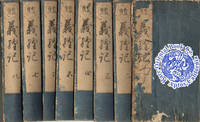
20038101Kyoto 1697 Umemura. Blue stitched wrs. very good covers basically clean scuffed rubbed tiny bit of old worming in vol. 1 else clean entirely woodblock printed on hand-made paper 43 woodcut illustrations 8 volume set complete. . . . AN EXCEPTIONALLY RARE & EARLY ILLUSTRATED RESOURCE . . . COMPLETE IN 8 ILLUSTRATED VOLUMES AS ISSUED . A most famous and valuable illustrated biography & historical work. . The FIRST EDITION of this was published in 1635 and is a biography of Yoshitsune. complete in 8 stitched & beautifully woodblock illustrated volumes. . Per Toda: "The illustrations suggest was a sugared pill of warning against the occupants of the Yoshiwara. Drawings are in simple outline with here and there a note of black. Another GIKEI-KI an extremely rare series of historical books on Yoshitoshi and his time profusely illustrated and with some sets coloured by hand appeared in Shohho 2 1645. It is one of the most interesting works of the period and when complete in 8 volumes in which it was issued is very valuable." See pp.3233 et al. . The title is written in Kambun old Chinese characters as used by Japanese the common title reading: GIKEI KI YOSHITSUNI KI in Japanese. . This set is complete in 8 uniformly bound volumes and follows the original in volume count & contents 18 x 25.5 cm. as cited in Brown's bibliographical notes see below. . ABOUT YOSHITSUNE: . Yoshitsune was the son of Mina-Moto No Yoshitomo his father turned against the Taira clan in the Heiji uprising. Yoshitsune entered Kuramadera temple in Kyoto to become a monk. Around 1180 he joined his half-brother to fight the Taira and at the famous battle of Dan No Ura spelled the end of the Taira. Yoshitsune and his famous retainer Benkei are the subject of a good number of dramatic books & stories performed as Kabuki plays. . This work outlines the life of Yoshitsune until his death at the hands of the Yoritomo forces. With a group set of charming woodblock illustrations. One in particular shows a young Yoshitsune testing his arm and sword against a solid tree another shows him in a successful defense against four assassins as he beheads two and cuts another in the heart as blood sprays forth the fourth attacker flees for his life. . THE ILLUSTRATIONS: The work is nicely woodblock print illustrated in black outline with a good number of examples. . Per Toda: There is a complete list of text pagination & illustrations of the 1635 edition but he also cites the 1659 edition as well. . Per Toda there are no titles to the illustrations nor is any artist indicated. Each illustration was divided into two printed on the front & back pages of the sheet. In many cases two plates are used to show a successive single picture. See Toda pp.28-30. . Color photos are posted to our website. . CONDITION: The set is bound in the original indigo-blue paper over boards with stitched spine as issued by the publisher. . Volume 1 front cover has more rubbing than the other volumes including to the title slip. With some usual loss see photos posted to our website typical cover edge corner & spine wear and rubbing to the blue paper covered covers with some typical minor loss & chipping. . The balance of the volumes show the minor and typical corner edge & spine wear all volumes art firmly stitched. Contents is clean there is a touch of the usual but minor old worming in vol. 1. first page some minor worming to the last few pages. Also some minor worming to the last few pages of vols. 7 & 8 very minor loss back covers rubbed old worming but solid and stable. No illustrations are affected. . The impression & registry are excellent & firm the contents are clean no stains or issues. There is some of the typical old worming here and there by and large mostly not a great distracting affecting the text or illustrations. All in all the contents & illustrations are quite clean and nice. . Seldom found & seldom found complete as issued. Our first copy in 55 years tenure. . REFERENCE: . K. Toda.: DESCRIPTIVE CATALOGUE OF JAPANESE AND CHINESE ILLUSTRATED BOOKS IN THE RYERSON LIBRARY OF THE ART INSTITUTE OF CHICAGO cites this on pp.28-30 with a careful list of the illustrations and two editions p.32-33. L. Brown.: BLOCK-PRINTING & ILLUSTRATION IN JAPAN p.32 & 48. She states:".each illustration extends over 2 full pages.it is one of the most interesting sets of books of this period not only because it represents rather typical Kwanyei work in wood-engraving but also because it shows the dress armor weapons etc. for the time of Yoshitsune." S. Iwao: BIOGRAPHICAL DICTIONARY OF JAPANESE HISTORY p.92 et al. F. Brinkley: A HISTORY OF THE JAPANESE PEOPLE.p.294 et al E. Papinot: HISTORICAL & GEOGRAPHICAL DICTIONARY OF JAPAN. pp.383-385. H. Murakami: GREAT HISTORICAL FIGURES OF JAPAN p.75 et al. J.M. Goedertier: DICTIONARY OF JAPANESE HISTORY index p.347 for several entries. . . unknown
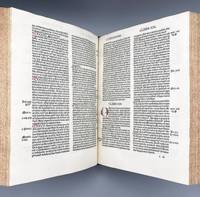
149511825Paris: Ulrich Gering and Berthold Rembolt 1495. Late 17th- or early 18th-century mottled calf worn hinges cracked slightly wormed crown repaired spine and label gilt edges sprinkled red. <p> The Moralia brings Christian mysticism asceticism dogma and allegory to bear on the story of Job's suffering. Pope Gregory deeply engages Scripture in his massive commentary which bridged the ancient and medieval worlds and remained a preeminent guide to moral theology through the Enlightenment.<br /> For this edition THE PRINTERS ADDED TWO NEW INDICES FOR YOUNG SCHOLARS and busy clerics. The first index provides access to all Bible verses referenced or quoted in the text - some fifteen hundred entries. THE SECOND INDEX TREATS THE NATURAL WORLD in three hundred entries - animals metals herbs stars human body parts precious gems rivers etc. Two copies in U.S. libraries. In good condition a few pale scattered stains and minor worming loss of six sorts on the title verso a handful of contemporary annotations manuscript title inscription Ex biblioteca Sanctae Crucis Viridariensis 1669.<br /> ¶Seow Job 1-21: Interpretation and Commentary 193; Manitius Geschichte der lateinischen Literatur des Mittelalters I: 971; ISTC ig00431000; Goff G-431.</p> Ulrich Gering and Berthold Rembolt unknown
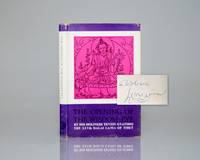
19684545Bangkok: The Social Science Association Press of Thailand 1968. First edition in English of the Dalai Lama’s first book on Buddhist philosophy. Octavo original cloth. Signed by the Dalai Lama on the title page in Tibetan "with prayers." A near fine copy in an excellent dust jacket that is lightly rubbed. Housed in a custom half morocco clamshell box. Rare especially signed. The Opening the Eye of the Western Eye is a succinct thorough overview of the doctrines of Buddhism as they have been practiced for a thousand years in Tibet. The Dalai Lama here discusses the need for religious practice and the importance of kindness and compassion. Originally written for Tibetan lay people this was the Dalai Lama's first book on Buddhist philosophy to appear in English. Written for both Tibetan and Western readers Opening the Eye of New Awareness is the Dalai Lama's first religious work. It is not an edited transcript of public lectures but is His Holliness' own summation of Buddhist doctrine and practice. Completed in 1963 just four years after his escape from Tibet and four years after completing his religious education it is a work of consummate scholarship by a twenty-seven year-old geshe wise beyond his years. The Social Science Association Press of Thailand hardcover
191222680EGlen Ellen Sonoma County CA 1912. Original Autograph Letter Signed by Jack London to his friend poet George Sterling. 3 pages 8†x 5†dated July 13 1912. With the postmarked envelope which is addressed by Charmian London to George Sterling Carmel-by-the-Sea CA - which is crossed out with “Bohemian Club San Francisco†at the bottom of the address. The text of the letter indicates that it was written on board the ship Dirigo toward the end of the voyage and reads in full: “133 days at sea On board Ship Dirigo 145 W. Long. 42 N. Lat. July 13 1912. Blessed Greek: Just to let you know we’re back. Expect to see you at Jinks and later at ranch to tell you all about the voyage. Say - never let him know it - I’ve forgotten the name of our partner in the tent at Bohemian Grove. You and I are third owners each in the outfit. Only I don’t know what I’ll have to bring. A cot Blankets of course. Find out from him and have a letter at Glen Ellen giving me his name and all essential data. Of course you’ll be at the Jinks. I haven’t had a drink for 144 days! Wolf. Charmian sends love. Say: this time you shall not escape me. You must play pinochle. Greatest two-handed game invented.†Creases from folding else fine. The voyage London speaks of is that of a 148 day sail from Baltimore to Seattle aboard the windjammer Dirigo he took with his wife Charmian. The Bohemian Club is a private club in San Francisco which has a restricted campground called Bohemian Grove in nearby Monte Rio. On August 18 1904 Jack London went with his close friend the poet George Sterling to "Summer High Jinks" at the Bohemian Grove. Subsequently London was elected to honorary membership in the Bohemian Club and took part in many activities. Other noted members of the Bohemian Club during this time included Ambrose Bierce Gelett Burgess Allan Dunn John Muir Frank Norris and Herman George Scheffauer. George Sterling 1869 - 1926 was an American writer based in the San Francisco California Bay Area and Carmel-by-the-Sea. He was considered a prominent poet and playwright and proponent of Bohemianism during the first quarter of the twentieth century. In addition to Jack London his work was admired by writers as diverse as Upton Sinclair Theodore Dreiser and Sinclair Lewis. The American historian Kevin Starr wrote this about Sterling: “The uncrowned King of Bohemia so his friends called him Sterling had been at the center of every artistic circle in the San Francisco Bay Area. Celebrated as the embodiment of the local artistic scene though forgotten today Sterling had in his lifetime been linked with the immortals his name carved on the walls of the Panama-Pacific International Exposition next to the great poets of the past.†unknown books
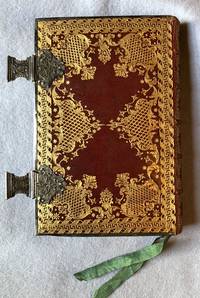
17562896Rome: Gioacchino & Giovanni Giuseppe Salvioni 1756. 8vo 208 x 133 mm. 24 407 1 pp. 2 parts the Office of the Dead separately titled. Printed in red and black. Engraved frontispiece and 12 full-page engravings by Arnold Van Weserhout and Jacob Frey after Joseph Passarus Giuseppe Passaro two engraved title vignettes 12 engraved tailpiece vignettes a few unsigned others by Frey after Passaro or by M. Schedi engraver 3 engraved capital initials numerous red-printed woodcut initials. Foxing occasionally severe short marginal tear to fol. Z7.Slightly later eighteenth-century Roman gold-tooled red goatskin covers with large dentelle border composed of a triple neo-classical roll-tooled outer frame enclosing six large ornaments each with a basketweave design of diagonally crossing gilt fillets framed in volutes and leafy sprigs a few tiny petal or star tools board edges protected with a probably later frame of silver or silver-plated metal discreetly nailed to the binding two elaborately chased silver fore-edge clasps and catches spine in six uniformly gold-tooled compartments gilt edges with gauffred border design pair of green ribbon page markers marbled endpapers; 20th-century black morocco felt-lined case. Provenance: with Gumuchian Catalogue XII/1930/225; Maurice Burrus bookplate purchased from Gumuchian in 1934 purchase notes at end. A striking rococo binding in fine condition on a luxuriously printed and illustrated Office of the Virgin from the official Vatican press.From the mid- to late eighteenth century the Salvioni press used one or more bookbinding workshops that produced finely gold-tooled bindings for their Vatican publications. Although often referred to as the "Salvioni bindery" this appellation is circumstantial: "the Salvioni firm was responsible for promoting the bindings but it is not known which workshop produced them" British Library Database of Bookbindings. Some of these "Vatican" bindings incorporated variously colored or mottled leather. This example with its basketweave cartouches relies purely on tooling for its effect. An example evidently from the same workshop on a book printed at Rome in 1791 by Salomini using analogous cartouches as corner-pieces as well as a similar "spiraling" border design and some of the same leafy spray and star tools is reproduced in Legature papali no. 264."Whereas the . more flamboyant bindings produced by the Salvioni Bindery rely frequently on polychrome enamel heightening these Vatican bindings strike a somewhat more sober note with their very fine dark-red morocco and rich gold-tooling of high quality" Martin Breslauer Catalogue 107/428.Gumuchian Catalogue de Reliures du XVe au XIXe siecle no. 225 plate 68. Cf. British Library Database of Bookbindings Shelfmark c27e18; For other "Salvioni" bindings see Miner / Walters Art Gallery The History of Bookbinding no. 523; Biblioteca Apostolica Vaticana Legature papali da Eugenio IV a Paolo VI no. 264 plate CXCIII. Gioacchino & Giovanni Giuseppe Salvioni hardcover books
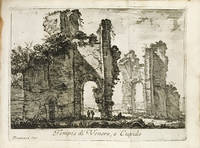
17501656031750. PIRANESI Giovanni Battista. Il Mercurio Errante delle Grandezze di Roma. Text by Giovanni Pietro Rossini the Elder. Two volumes in one. 10 192; 2 146 8 pp. Illustrated with 19 folding engraved plates by Piranesi Jean-Laurent Legeay and Philothée-François Duflos. 16mo. 160 x 86 mm bound in contemporary Italian vellum. Rome: A spese di Fausto Amidei 1750. First Edition of the Mercurio Errante guidebook to Rome to be illustrated with Piranesi's etchings; the seventh edition chronologically. This copy contains seven original Piranesi etchings of Roman vedute; they are considered to be "some of his earliest known works; they must have been executed between 1740 the year of his arrival in Rome and 1741 the date of the first edition of Barbiellini's publication Roma antica and Roma moderna" Exploring Rome: Piranesi and His Contemporaries p. 73. "They are of particular importance in plotting the development of Piranesi's graphic skills as they range from his first tentative efforts to some highly sophisticated compositions" Wilton-Ely. Piranesi's etchings were subsequently reissued in the Varie Vedute in 1745 and 1748 and following their appearance in the 1750 edition of Rossini's Mercurio Errante they reappear in the 1760 1771 and 1789 editions. "Scott has suggested that all these views were designed like modern-day postcards and were probably kept loose and then added to the volumes at the request of the buyer. No two editions of the work exhibited here have the same number of plates by the different artists" Exploring Rome idem. Rossini calls for 18 plates; the present volume contains 19. Overall a very appealing copy. Rossetti Rome G-1210. Borroni 8066/8. Schudt 294. Kissner Collection 992. Schlosser Magnino p. 601. Wilton-Ely 1994 p. 90 et seq. hardcover books
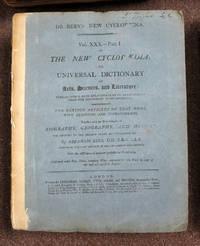
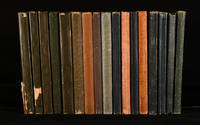
182041461London: Printed for T. N. Longman and O. Rees No. 39 Paternoster-Row 1820. 1st edition thus. 80 volumes in original publishers quarter-bound cloth beige spines over light blue paper-covered boards black lettering printed to front board and paper title labels on spine. 7 volumes period half-bound in black leather spine and edges with gilt & brown lettering and labels to spines over green cloth boards. Boards heavily worn and rubbed edges bumped and spines chipping. Some boards detached. Some volumes with previous owner signature penned to front board B. Fulford. Binding and paper age-toned as one would expect with the ages of the titles with the occasional stain & foxing. Withal a Good original set sold w.a.f. 87 volumes total. 80 of the Cyclopaedia 7 volumes of Plates. 7 volumes of plates b/w engravings. Cyclopaedias: ~ 11-1/4" x 9". Plate Volumes: 11" x 8-3/4" <br/><br/>"I. The Work will be printed in Quarto at the Office of A. Strahan Esq. with New Types cast for the Purpose and on a superfine yellow woven Paper. II. The Work will be comprised in about Twenty Volumes. III. Three sheets stitched in blue paper will be regularly published every Week till the whole be completed price One Shilling. IV. Numerous Plates engraved in a superior stile sic of elegance will be given in the course of the Publication. V. A Part of Half a Volume containing Seventeen Numbers together with the Plates will be regularly published in advance price Eighteen Shillings in boards. VI. A few copies will be printed on a superfine royal woven Paper with proof impressions of the Plates to be sold in Parts of Half Volumes only price One Pound Sixteen Shillings in boards. VII. Number I and Part I was published on Saturday January 2 1802." <br /> <br />"The encyclopaedia was largely Rees' own work and was especially strong in new and well-written biographical articles. The articles on music were written by Dr. Charles Burney and those on botany were mostly written by Sir James Edward Smith the founder of the Linnean Society.Rees's Cyclopaedia is said to have outclassed the Encyclopaedia Britannica of that time and 'remains a monument to the memory of another native of Wales namely dr. Abraham Rees the Encyclopaedist who was a native of Llanbrynmair Montgomeryshire." Cyclopaedia - dot - org. <br /> <br />Dr. Rees' Cyclopaedia is known all over the world and is often hailed as one of the greatest collections of material in the field of Encyclopedias. Printed for T. N. Longman and O. Rees, No. 39 Paternoster-Row hardcover books
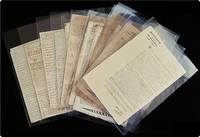
150437063Campeche Merida: Various publishers 184243. Folio and slightly smaller 31 cm; 12.25"; and slightly smaller. 38 pp. 11 blank. <br><br>The culture and politics of central Mexico in the 19th century often did not coincide with those of the Yucatan especially after the dissolution of the constitution of the First Empire. The long-smoldering discontent that the post-Empire constitutions engendered reached the breaking point for the Yucatecans in March of 1841 and on the 16th of that month => the peninsula declared its independence from the rest of Mexico.<br>Â Â Â Â The Yucatecans were perhaps encouraged by the Tejanos and their successful separation from Mexico in 1836.<br>Â Â Â Â The four manuscript documents two broadsides and nine newspapers in this collection date from the period of the first Mexican invasion of the peninsula and the central government's failed attempt to quell what it saw as a rebellion an invasion that was not repelled until April 1843. Included here are: 1 A pair of letters dated Merida 17 and 24 January 1843 from Juan de Regil to Mauricio de Santelices of Havana regarding the political situation. 2 A printed broadside proclamation by President Miguel Barbachano Mérida 2 December 1842 imposing a heavy tax on and forced loans from the nation's industrialists merchants and professionals. 3 A manuscript extract from a letter Merida 21 December 1842 from an unknown Spanish national to Santelices requesting assistance in leaving Yucatan due to the oppressive new tax but also giving first-hand information about => military operations. 4 An Autograph Letter Signed Campeche 17 February 1843 from Geronimo Ferrer y Valls Spanish commercial agent in Yucatan to the Captain General of Cuba in Havana expressing concern for the safety of Spanish nationals in the Yucatan and containing details of => murders and summary military executions. 5 A printed broadside entitled Opinion General Verdaderas ideas y convicciones de las secciones del ejército del Estado acampadas extramuros de esta Ciudad Campeche: José M. Peralta 1843. And 6 Nine issues of the Boletin del Espiritu del Siglo dated January to June 1843 most with => excellent content on Yucatecan resistance to the invasion by Mexico.<br>Â Â Â Â The Boletin del Espiritu del Siglo published in Campeche by Jose Maria Peralta is quite scarce with only Yale reporting ownership of a very good but incomplete run. Present here are issues from 1843: 43 7 January 46 13 January 48 15 January 52 19 January 53 20 January 63 30 January 144 22 April 148 26 April and 189 6 June.<br>Â Â Â Â => Primary source material on the Republic of the Yucatan is rare. <br>Â Â Â Â <br>Â Â Â Â Neither broadside is found in WorldCat CCILA or Palau. Boletin del Espiritu del Siglo is not listed in Charno Latin American Newspapers nor in CCILA. Some newspaper issues and one broadside are browned or partially so. Overall condition is good or better. Various publishers unknown books
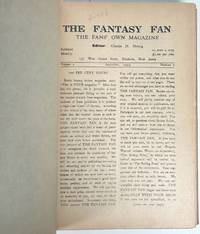
193334594Elizabeth New Jersey: Charles D. Hornig 1933-1935. Bound in brown buckram titled in gold on the front and spine panels with "F. Lee Baldwin" stamped on the upper cover retaining the original wrappers where so issued. Overall the issues are in excellent condition which is not usually the case as they tend to be quite fragile when encountering single issues. A unique set of this uncommon and important publication. Complete sets are rare. 34594. Octavo 18 issues printed or self wrappers bound in cloth. Label affixed to front paste down with a presentation inscription from editor Charles D. Hornig to noted fan and publisher Gerry de la Ree. A contributor's complete set of this amateur magazine the first important weird fiction fanzine and one of the most desirable of the fanzines of the thirties. This set belonged to F. Lee Baldwin whose name is stamped in gold on the upper cover of the binding. "Franklin Lee Baldwin 1913-1987 corresponded with H. P. Lovecraft 1933-1936. "Baldwin first wrote HPL in the fall of 1933 proposing to issue 'The Colour Out of Space' as a booklet. HPL revised the tale slightly for the prospective publication but the plan never materialized. In early 1934 HPL put Baldwin in touch with Duane W. Rimel who by coincidence lived in the same small town Asotin Washington. The two took turns reading HPL's letters to each of them. Baldwin wrote two columns of news notes for the FANTASY FAN: 'Side Glances' April May September 1934 and 'Within the Circle' June July August October November 1934 January February 1935 much of the information for which was derived from HPL's letters to him as was the significant early article 'H. P. Lovecraft: A Biographical Sketch' originally scheduled to appear in the FANTASY FAN but following the magazine's demise published in FANTASY MAGAZINE April 1935. Baldwin later revised the article as 'Some Lovecraft Sidelights' FANTASY COMMENTATOR Spring 1948" Joshi and Schultz An H. P. Lovecraft Encyclopedia pp. 14-15. In 1989 Baldwin's copy was presented to early fantastic fiction fan and publisher Gerry de la Ree by Charles D. Hornig the editor of THE FANTASY FAN.<br /> Stories first published in THE FANTASY FAN include H. P. Lovecraft's "The Other Gods" and "From Beyond" Clark Ashton Smith's "The Epiphany of Death" "The Ghoul" "The Kingdom of the Worm" and "The Primal City" as well as tales by Robert Bloch August Derleth Robert E. Howard David H. Keller and others. THE FANTASY FAN was "an interesting mix of news articles stories poems and miscellany. Hornig however made an error in initiating a column of controversy entitled 'The Boiling Point' which quickly led to acrimonious letter exchanges between Lovecraft Forrest J. Ackerman Clark Ashton Smith and numerous others; the column was terminated with the February 1934 issue. Perhaps Hornig's greatest accomplishment was the serialization of the revised version of Lovecraft's 'Supernatural Horror in Literature' October 1933-February 1935. However the serialization proceeded at such a slow pace that it had reached only the middle of Chapter VIII before the magazine folded. THE FANTASY FAN also saw the first publication of Lovecraft's stories. 'The Other Gods' November 1933 and 'From Beyond' June 1934 as well as reprints from amateur papers of 'Polaris' February 1934 and 'Beyond the Wall of Sleep' October 1934; it also published 'The Book' October 1934 'Pursuit' October 1934 'The Key' January 1935 and 'Homecoming' January 1935 from 'Fungi from Yuggoth.' Brief excerpts of Lovecraft's letters to Hornig appeared regularly in the magazine's letter column. The October 1934 issue was dedicated to Lovecraft. After the demise of THE FANTASY FAN numerous attempts were made to revive or succeed it but no magazine truly filled its place as a news organ a forum for the expression of fan's views and a venue for work by distinguished writers in the field" Joshi and Schultz An H. P. Lovecraft Encyclopedia pp. 90-91. "As a real help to the lover of weird and fantasy fiction Hornig's magazine reigned supreme in the field at that time . Almost every weirdist of importance in fandom was at one time or another represented in its pages. And as a love-feast for such fans it has never again been equaled" Moskowitz The Immortal Storm pp. 18-20. ". one of the legendary magazines of the 1930s . an extremely consistent and reliable magazine ." Tymn and Ashley eds. Science Fiction Fantasy and Weird Fiction Magazines pp. 822-23. According to Hornig writing in 1988 "THE FANTASY FAN was printed by Conrad Ruppett of Jamaica New York hand set. Julius Schwartz and I helped him collate and staple each copy every month for eighteen months. Except for the second issue 500 copies there were only 250 printed and the paid circulation never reached over 50. What happened to the residue Well I found someone to buy up most of the unsold copies and that was B. K. Gores of Austin Texas. I never heard from him before or since never knew him in fandom and don't know whatever happened to him. Somewhere there should be stacks of TFF unless they're destroyed." Reference: See Kenneth W. Faig Jr. ed. Within the Circle: In Memoriam F. Lee Baldwin Moshassuck Press 1988. Pavlat and Evans Fanzine Index 1965 p. 37. Charles D. Hornig unknown
198255071Washington DC: Department of the Air Force 1982. Presumed First Edition First printing. Wraps. fair. Quarto approx. 1900 pages. 6-vol. set. Wraps. Many illustrations and fold-outs some in color. Appendices. References. Volume I: Program Overview; Volume II: Full-Scale Engineering Development; Volume III: Missile Flight Testing; Volume IV: Basing Mode Evaluation; Volume V: Appendices; Volume VI: Public Comments. All text complete. Items have been poorly stored and have some warping edge soiling and a few instances of peripheral insect damage. The U.S. Air Force is developing a new advanced ICBM and basing system known at MX for Missile-eXperimental. This Final Environmental Impact Statement represents a full exposition of the impacts associated with a decision to proceed with Full-Scale Engineering Development. The complete 6-volume set is very rare; print-on-demand and microfilm versions of individual volumes may be available but typically they do not have comparable quality for illustrations especially fold-outs. Department of the Air Force paperback
1938552364New York: The Columbia Broadcasting System Orson Welles and The Mercury Theatre on the Air 1938. Hardcover. Near Fine. Quarto. 94 mimeographed leaves printed rectos only. Bound or likely rebound at an early date with quarter canvas spine and thick card boards with typed title labels on front board and spine. Modest evidence of bookplate removal inside front board small chip at the corner of the label on the front board else very near fine. Adapted from the Charles Dickens novel. The Mercury Theatre on the Air produced 22 radio plays based on literary novels plays or short stories in 1938 this was the third play produced. Up until October 1938 all of the adaptations including this one were written by Orson Welles and John Houseman. Overwhelmed by the weekly deadlines Welles also starred in most of the dramas sometimes playing multiple parts they hired Howard Koch to assist - three weeks later they collaborated on The War of the Worlds - arguably the most famous dramatic radio broadcast in history. In A Tale of Two Cities Welles played both Sidney Carton and Dr. Alexandre Manette in this production. In the script page two is blank except for the word "Welles" - presumably Welles would deliver his introduction extemporaneously. The Mercury Theatre on the Air scripts are rare. OCLC locates a single copy of this script Dartmouth. (The Columbia Broadcasting System, Orson Welles and The Mercury Theatre on the Air) hardcover
1519702L19Kobe: Kobe Herald 1915-1924. Cloth. Good. 9" by 6.5". None. A very scarce collection of recollections regarding the mountains of Rokko-san. Compiled by 'The Bell Goat' a member of the Japan Alpine Club. Comprising of volumes I-XIII and XV-XVIII of this very scarce set. It is extremely scarce to have so many volumes together. An important account of mountaineering during the Golden Age of this sport and at a time where mountaineering in Japan was becoming a popular activity. A charming work written in English which provides a detailed description of journeys on Mount Rokko in the Hyogo Prefecture in Japan. Volumes IV to X are signed by the author with an association to one of their fellow 'mountain goats'. There is no volume XIV to this set. Volume IV is signed by the author with an inscription to the recto of front endpaper. 'J G S Gausden The flying Goat with the author's best compliments Kobe July 8th 1916'. Volume V is also signed by the author with the inscription 'To the flying goat with the Bell Goat's best compliments Kobe Xmas 1916'. Author's inscription to volume VI reads 'With the author's compliments'. Inscription to volume VII reads 'J G S Gausden The flying goat with the Bell Goats' Compliments Kobe Xmas 1916'. Inscription to volume VIII reads 'To the flying goat with the Bell Goats' best Compliments Kobe Japan May 1918'. Author's inscription to volume IX reads 'J G S Gausden from . Kobe New Years Day 1919'. Inscription to volume X reads 'With the Editors' best compliments and Thanks Kobe June 30th 1919'. Inscription to the recto of front endpaper to volume XV 'With love from Jim'. To the start of volume I there is a dedication to Arthur Groom who had a home at Mount Rokko and opened the first golf course in Japan Kobe Golf Club. Rokko-san was also the first place that rock climbing was introduced in Japan. Forty-four illustrations to volume I thirty-four illustrations to volume II fifty illustrations to volume III fifty illustrations to volume IV fifty-five illustrations to volume V fifty illustrations to volume VI VII thirty-five illustrations to volume VIII with thirty seven illustrations to volume IX forty-one plates to volume X thirty plates to volume XI twenty-five plates to volume XII twenty-five illustrations to volume XIII twenty-five illustrations to volume XV twenty-five illustrations to volume XVI twelve illustrations to volume XVII with thirteen plates to volume XVIII. With the colophon in Japanese. With poems and diary entries anecdotes and transcripts this work is a thorough account of many mountaineering expeditions over the course of several years. A delightful examination of Rokko-san. In the publisher's original cloth bindings. Externally generally smart. Loss to the spine of volume I and II. Bumping to the head and tail of all spines. Damp staining to the bottom of boards to all volumes. Gilt to the front board of volume X is fading. Author's inscription to the recto of front endpaper to volumes IV to X inclusive. Further inscription to the recto of front endpaper to volumes XII and XV. Internally most volumes are firmly bound. Volume XIII has a tender binding. Pages 75-78 of volume XIII are detached but present. 'The Bessan Ridge' plate is detached but present to volume X. 'The sword peak' plate to volume VIII is detached but present. Pages are bright with occasional scattered spots. Good Kobe Herald hardcover
19912091202133213041Hanayama Bungei Publishing Company 1991. Soft Cover. Fine. Number of books: 40 books in total Hanayama Bungei Publishing Company paperback
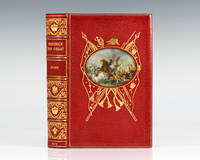
191927014London: Constable 1919. Octavo bound in full scarlet crushed levant morocco Cosway-style binding by Bayntun-Riviere. Front and rear panels with single gilt filler border upper cover set with an oval miniature painting of a battle scene under glass framed with a variety of weapons and emblems gilt; spine in six compartments with five raised bands a decorative panel in the rest each bearing crown eagle or fleur-de-lys; board edges gilt dotted turn-ins gilt doublures and free endpages of yellow watered silk all edges gilt. In fine condition. Housed in a custom cloth folding box. Frederick the Great was King of Prussia from 1740 until 1786 the longest reign of any Hohenzollern king. His most significant accomplishments during his reign included his military victories his reorganization of Prussian armies his patronage of the arts and the Enlightenment in Prussia and his final success against great odds in the Seven Years' War. Frederick was the last titled King in Prussia and declared himself King of Prussia after achieving full sovereignty for all historical Prussian lands. Prussia had greatly increased its territories and became a leading military power in Europe under his rule. Cosway bindings named for renowned 19th-century English miniaturist Richard Cosway were popularized if not invented in the early 1900s by the renowned London bookselling firm of Henry Sotheran. The earliest Cosway bindings were created by Miss C.B. Currie who faithfully imitated Cosway's detailed watercolor style of portraiture from designs by J.H. Stonehouse Sotheran's manager. These delicate miniature paintings often on ivory were set into the covers or doublures of richly-tooled bindings and protected by a thin pane of glass. Constable hardcover books
18622092902144201293Not Available 1862. Soft Cover. Fine. The book is in fine condition. Not Available paperback
2006__4861660203Routledge 2006. Hardcover. New. 1st fac edition. 5400 pages. 14.96x13.78x11.02 inches. Routledge hardcover
2012L3 box257 a1os<p>Masterpieces of Early Chinese Painting and Calligraphy in American Collections From Chinese Five Dynasties 907-960; Song Dynasty 960-1279; Yuan Dynasty 1271-1368. Sponsored by The Metropolitan Museum of Art Museum of Fine Arts Boston The Cleveland Museum of Art The Nelson-Atkins Museum of Art Shanghai Museum. Edited by Shanghai Museum Editors-in-Chief: Chen Xiejun Chen Kelun. Published by Shanghai Fine Arts Publishing House 2012. Burgundy red buckram cloth hardcover 600 pages. This book is oversize and heavy: 17" x 12.5" x 3". This book includes: Five Forewords and Dedication by the five Museum Directors in Chinese and English; Six introductory articles in Chinese and English; Sixty pieces of painting and calligraphy collections: 52 painting 8 calligraphy with brief introduction in Chinese and English detailed introduction in Chinese.</p> Shanghai Fine Arts Publishing House. hardcover
H789Rangoon Government Printing Burma 1900-1901. 4to. Mit zahlreichen Tabellen Falt- Karten Pl‰nen fotogr. Abbildungen und teilw. handkolorierten Illustrationen auf Tafeln. Original-Leinenb‰nde mit goldgepr. R¸ckentiteln. Im Original nahezu unauffindbares durch Register erschlossenes Monumentalwerk in einem guten Exemplar mit insgesamt geringen Gebrauchsspuren ein Set in gutem Zustand. unknown