184 825 résultats
20212081502111902865Tianjin People's Art Publishing House 2021. Soft Cover. Fine. The book is in fine condition. Tianjin People's Art Publishing House paperback
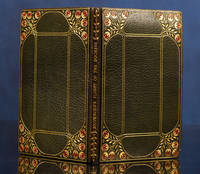
04964Campden Gloucestershire: Essex House Press 1905. You're my friend: I was the man the Duke spoke to;<br/>I helped the Duchess to cast off his yoke too;<br/>So here's the tale from beginning to end My friend!<br/><br/><br/>ESSEX HOUSE PRESS. BROWNING Robert. THE BELVOIR BINDERY.<br/>The Flight of the Duchess. Campden: Essex House Press 1905. <br/><br/>One of 125 copies all printed on vellum this being no. 123. <br/><br/>Small octavo 7 1/4 x 4 7/8 inches; 184 x 124 mm. 42 pp. Hand colored frontispiece by Paul Woodroffe hand-painted initials throughout printers device on colophon.<br/><br/>Bound ca. 1905 by The "Belvoir" Bindery stamp-signed in gilt on front paste-down. Full sage green crushed levant morocco covers with central panel and four rounded side panels formed by gilt rules the corners with a spray of five inlaid red morocco water lilies and gilt foliage. Smooth spine vertically lettered in gilt and decoratively tooled with foliate extensions. Gilt-dotted board edges gilt rolled turn-ins vellum liners and endleaves all edges gilt. A very very pretty little binding in near mint condition.<br/><br/>A lovely copy of the fourteenth and last of the Essex House "Great Poems Series" in a very attractive binding by the respected craftsman and teacher James Samuel Hewitt-Bates at his Belvoir Bindery. <br/><br/>J.S. Hewitt-Bates born 1864 taught bookbinding at the Leicester School of Art and also operated a bindery on Belvoir Road in that city. A disciple of William Morris and an enthusiastic participant in the Arts & Crafts Movement he was the author of a number of works on bookbinding including the pamphlet included with this binding which reprints an essay he wrote for the journal "The Bibliophile" outlining his philosophy of bookbinding. According to Bates "The principles which ought to govern the right and proper binding of a book are strength durability and fitness. The decoration of a book ought to be in harmony with the nature of the work. The design ought always to be simple and flat without shading." He emphasizes the importance of high-quality materials sound construction and expert forwarding. <br/><br/>This actual binding is featured on a full-page black and white photograph facing p. 6. on his promotional pamphlet for The Belvoir Bindery entitled "Bookbinding for the Book-Lover" circa 1918 40 pp. brown pictorial wrappers with many full-page photos of bindings. Bates' qualifications and skills as a bookbinder are treated in the work citing awards of First Class Honors First Prizeman Silver Medallist of the City and Guilds of London Institute and holder of the SkinnerÃs Company Prize.<br/><br/>"After Kelmscott had closed several of the workmen employed there moved to the Essex House Press started by C.R. Ashbee in 1898 as an addition to the several crafts practiced at his 10-year-old Guild of Handicrafts originally at Essex House in Mile End Road London. It was different from the other private affairs of the time in that it was deliberately conceived as a part of a larger whole. The Essex House Press was then an Arts and Crafts press par excellence; no doubt as a result of Ashbee's work in other crafts such as jewelry and metalwork it reveals more of Art Nouveau in many of its books than one would have expected from so devoted a follower of Morris. Cave. The Private Press pp. 125-125.<br/><br/>"Three other important presses date from the nineties - Eragny Essex House and Ashendene. The Essex House Press was one of several activities of the Guild of Handicraft founded and led by C.R. Ashbee first in the Mile End Road later at Campden in Gloucestershire. The books and bindings were often excellent experimental and generally small. The Press began in 1898 consciously to carry on the traditions of William Morris and continued to issue books almost until the Great War; but the whole enterprise is perhaps most interesting in the context of Guild Socialism and the application of ideas which had been preached by Ruskin and Morris." Franklin. The Private Presses pp. 10-11<br/><br/>Franklin. The Private Presses p. 201; Cave. The Private Press pp. 124-125. Campden, Gloucestershire: Essex House Press, 1905 unknown books
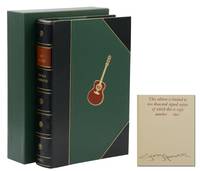
140942517Guildford Surrey: Genesis Publications Limited 1980. Signed Limited First Edition. Near Fine. Signed limited first edition. Copy number 1321 of a limited 2000 signed by George Harrison; from the collection of best-selling poet Rod McKuen with his personal emboss on two preliminary pages. In publisher's original half black leather over black cloth all edges gilt in original black cloth slipcase with paper title label to front panel. Near Fine with light wear in a Near Fine slipcase. A lovely production signed by the late Beatle. Genesis Publications Limited unknown
1962148398Chicago: University of Chicago Press 1962. First edition of Friedman's magnum opus. Octavo original blue cloth. Near fine in a near fine dust jacket with light wear with a laid in signature of Milton Friedman. Housed in a custom half morocco clamshell box made by the Harcourt Bindery. An exceptional example. "Friedman a laissez-faire economist and professor at the University of Chicago is considered one of the leading modern exponents of liberalism in the 19th-century European sense. In Capitalism and Freedom he argued for a negative income tax or guaranteed income to supersede centralized bureaucratized social welfare services which in his view are inimical to the traditional values of individualism and useful work" Britannica. Selected by the Times Literary Supplement as one of the "hundred most influential books since the war". It also placed tenth on the list of the 100 best non-fiction books of the twentieth century compiled by National Review and on Time Magazine's top 100 non-fiction books written in English since 1923. University of Chicago Press hardcover
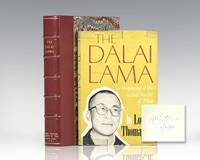
196283782New York: Duell Sloan and Pearce 1962. First edition of this early biography of The Dalai Lama. Octavo original cloth frontispiece. Signed and dated in the year of publication by His Holiness The Dalai Lama on the front free endpaper. Laid in is a note to the recipient on official Tibetan letterhead from the private secretary to the Dalai Lama stating that The Dalai Lama has signed this copy. Also inscribed on the half-title page by the author "With warmes regards and best wishes to Kenneth Crouch- and with a special salute from- Lowell Thomas Jr. Dec. 14 62." Near fine in a very good dust jacket with some tape to the exterior. Jacket design by Gary Gore. Contemporary signatures of His Holiness are scarce. Housed in a custom half morocco clamshell box. Rare and desirable signed. Duell, Sloan and Pearce hardcover books
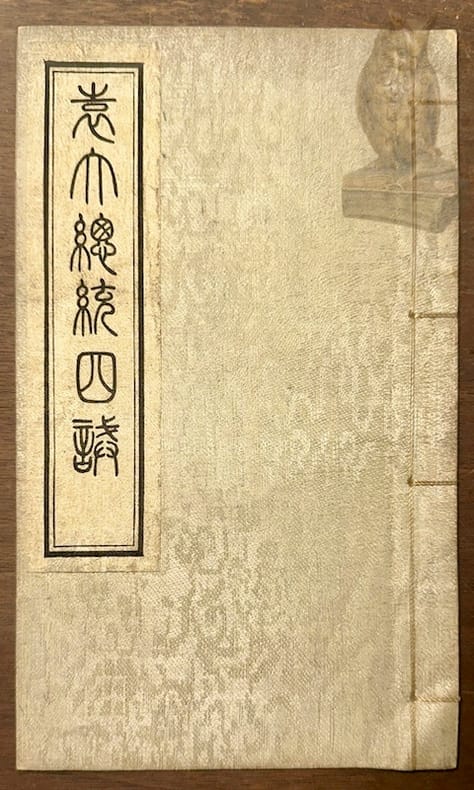
121009Beijing, The Ministry of Foreign Affairs Printing Office and Yuan Shikai’s Presidential Office Printing Office 1915, 200x125mm, paperback. Cover made from paper produced from blue sandalwood bark (Qingtan / Pteroceltis tatarinowii) and inner pages made from rice-straw paper (Xuan paper) folded in the Chuanzi (traditional thread-bound or butterfly pamphlet style) - is characteristic of elite government publications of the era. - Bearing the red seal of the Ministry of Foreign Affairs in the bottom right-hand corner of the first page. - The use of Seal Script (Zhuanshu) for the title asserts historical legitimacy and archaism, while the crisp Song/Ming Regular Script (Kaishu) was the gold standard for official, highly readable governmental documentation. Documents of this nature : printed directly by the Ministry of Foreign Affairs Printing Office and Yuan Shikai’s Presidential Office Printing Office, were produced in incredibly limited runs. Because Yuan Shikai’s empire collapsed after just 83 days, and his regime was immediately discredited, vast quantities of imperial presidential papers were destroyed, abandoned, or lost in the subsequent warlord era.The presence of the official red seal of the Ministry of Foreign Affairs anchors its authenticity, elevating it from a mere historical curiosity to an archival-grade artifact. - Book in very good condition.
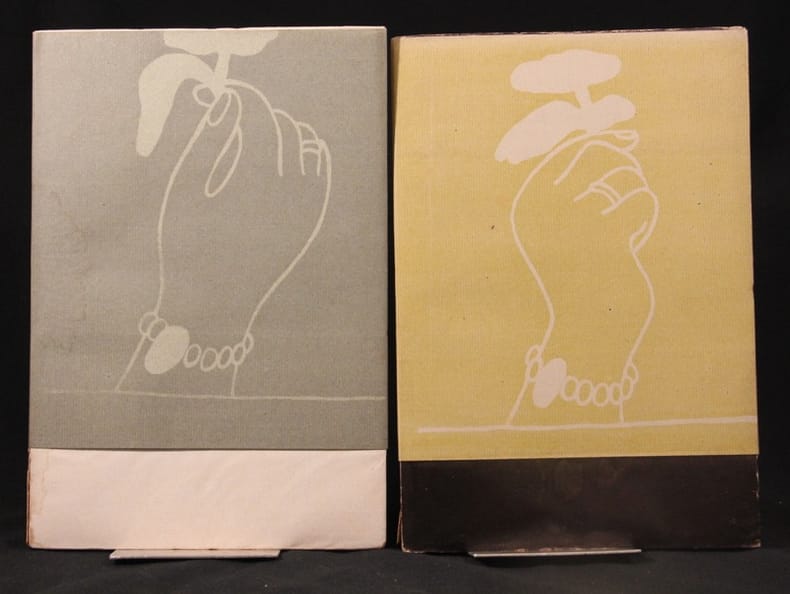
18954681Paris, S. Bing, Noël 1895. 2 volumes brochés: Les Vierges, 24 pages, couverture muette de papier moiré blanc, recouverte d'une large bande de papier gris vert rempliée, illustrée d'un bois tiré en blanc. Les Tombeaux: broché, 28 pages, couverture muette de papier moiré noir, recouverte d'une large bande de papier vert-jaune rempliée illustrée d'un bois tiré en rose (passé).2 volumes: Les Vierges 24 pages, blank cover of white shimmering paper, covered with a wide band of grey-green paper wrapped, illustrated with a woodcut printed in white. Les Tombeaux: 28 pages, blank cover of black shimmering paper, covered with a wide band of green-yellow paper wrapped, illustrated with a woodcut printed in pink (faded).
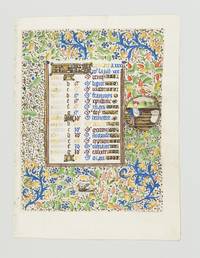
1460ST12835Paris ca. 1460. 195 x 143 mm. 7 3/4 x 5 1/2". Single column 16 lines in a gothic book hand. <br/> Minor feast days in red and blue major feasts in gold numerous gold and painted line fillers the five "A" initials and the "KL" highly decorative and painted pink and blue against a gold background gold and pink bar surrounding the text on three sides BOTH SIDES OF THE LEAF WITH EXTRAVAGANTLY DECORATIVE BOTANICAL FULL BORDERS with two small birds hidden within and INCORPORATING TWO MEDALLION MINIATURES DEPICTING THE LABOR OF THE MONTH SOWING AND THE SIGN OF THE ZODIAC SCORPIO FOR OCTOBER. ◆IN VERY FINE FRESH CONDITION with gold and paint extraordinarily bright.<br/> <br/> The extraordinarily lavish and animated full borders coupled here with extensive use of brushed and burnished gold--for major feast days for decorative border elements and even for the hundreds of seeds being sown!--suggests that this calendar folio comes from a Book of Hours that was commissioned for a person or persons of high rank since it would have been very costly. The leaf comes from a manuscript that included numerous roundels depicting the lives of St. Catherine and the more obscure St. Alexius and it is possible that the Book of Hours belonged to a husband and wife for whom these saints served as patrons. The style of the delicately painted figures especially in the roundels indicates an artist who was familiar with the early output of the Coëtivy Master who according to Avril and Renaud can be identified with Colin d'Amiens who made a great name for himself in Paris not as was previously thought with Henri de Vulcop who made a great name for himself in the Loire region. The master takes his name from the Book of Hours now in the Austrian national library that he painted for Olivier de Coëtivy and his wife Marie de Valois one of some 30 works that have been identified as his. Although there is considerable Flemish influence that can be seen in his work he has links for example with Simon Marmion Colin d'Amiens was active in Paris during the third quarter of the 15th century and with Barthélmy van Eyck and Jean Fouquet was among the three great artists of this period patronized by the French court--Avril and Renaud says flatly that our master was "the most important artist practising in Paris in the third quarter of the century from about 1450 to 1485." For more on the Coëtivy Master see Avril and Reynaud pp. 58-69. unknown
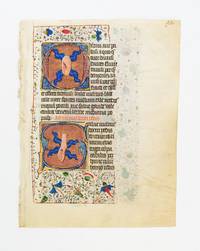
1465ST17243bBruges ca. 1465. 193 x 145 mm. 7 5/8 x 5 3/4". Single column 21 lines in a gothic book hand. <br/> Rubrics in red one two-line initial in gold filled with blue on pink ground WITH THREE LARGE HISTORIATED INITIALS: ONE FEATURING AN OVAL-SHAPED PIECE OF FLESH WITH A GASH IN THE CENTER AND TWO WITH CHRIST'S DISEMBODIED FOOT SHOWING THE PUNCTURE WOUND FROM THE CRUCIFIXION each initial in pink or blue with white tracery filled with dark pink and thin gilt lines and dots four wavy blue rays radiating from behind each appendage all within a thin gilt frame both sides with a three-quarter border consisting of hairline vines gold bezants and a few colorful flowers. ◆Vellum a shade less than bright faint marginal rumpling trivial paint transfer on one initial BUT IN FINE CONDITION the initials richly painted and extremely well preserved.<br/> <br/> From a manuscript probably produced in Bruges for the English market this leaf contains arresting initials that direct the viewer's attention to the wounds endured by Christ during the Passion. According to Roger Wieck Passion Cycle images enjoyed a particular vogue in 15th century Dutch Flemish and English Books of Hours including those that were exported to England. In the present example the strikingly unusual imagery includes the wounds of the left and right foot as well as the spear injury to Christ's side depicted as an oval piece of flesh with a laceration across the center. A sister leaf to the present item features three additional initials showing a portrait of Christ wearing the Crown of Thorns his gaze fixed directly at the viewer and in separate initials his left and right hands appear disembodied and displaying the stigmata. The parent manuscript containing the present leaf sold at Christie's on 15 November 2006 lot 16 the description for which gives us additional information about the book's contents and provenance: it was made for the Use of Sarum included a calendar with the English saint Thomas Becket and Popes Gregory and Silvester with their names crossed out indicating that it was in England through at least the time of the Reformation and contained an early ownership inscription of a woman named Bridget Lowe with a Middle English inscription on the pastedown. Christie's also attributed the parent manuscript to the workshop of William Vrelant with miniatures possibly by his chief assistant the Master of the "Vraie Cronique Descoce." They note that this work is "of higher quality than many of the works that satisfied the English demand for Netherlandish illumination" and that it "demonstrates why Vrelant appealed to the great bibliophiles of the Burgundian Netherlands." Vrelant was the leading purveyor of books of private devotion in Bruges during the third quarter of the 15th century and his prominent position among Flemish illuminators of the time is indicated by the considerable number of manuscripts illustrated in his manner by other miniaturists both in Bruges and in nearby cities in Flanders. Similar examples to the present leaf can be found in intact Books of Hours at the Philadelphia Free Library MS Widener 3 and the Huntington HM 1086--both of which were produced in Flanders or the Netherlands around the same time as the present work. The present leaf surpasses both of these examples in terms of excellence of the artistic hand and attention to detail. unknown
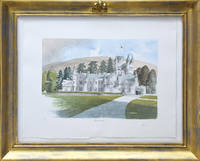
165476Elstree: Anna Hunter 1991. The King as artist Edition of 295 signed and dated in pencil by King Charles lower right titled lower middle numbered and blind stamp of the publisher and of the printer at the lower left publisher's and printer's blind stamp lower left; together with the publisher's prospectus. "One of the world's most beautiful fairytale castles Balmoral was designed by architects working with Prince Albert consort of Queen Victoria and has been the favourite home of the Royal Family for four generations. Charles writes: 'What I love about Balmoral and this sketch was done in August is the wonderful shadows. They alone made my painting finger itch so I sat out in a field on three consecutive days at exactly the same time of day being examined by some rather inquisitive Highland cows'" prospectus. Lithograph in 12 colours after an original watercolour on watermarked Somerset paper. Image size: 31 x 45 cm. Sheet size: 45 x 60 cm. Framed size: 61 x 76.5 cm. Light rubbing to frame else in excellent condition. Presented in the publisher's gold leaf frame embellished at the top with the Prince of Wales heraldic feathers with acrylic glazing. unknown
1897526<p>A collection of 50 albumen prints from the British Museum Series numerous manuscript captions slight age-related toning photographs mounted to album occasional light marginal foxing not affecting image original maroon cloth with quarter morocco spine retaining studs title gilt to spine slightly rubbed folio London: W.A. Mansell c.1897 </p><p><br /></p><p>The 50 photographs of antiquities in the British Museum covering Greek Roman and Etruscan Statues and Vases including 24 of the Parthenon Frieze. Many of the images are accompanied by manuscript captions. Other photographs include:</p><p>Horse of Selene Ilissos "Colossal Lion" The Piranesi Vase "Marble Vase found in the Villa of Hadrian at Tivoli" "Mercury" "Venus de Medici" "The "Townley" Venus" "Venus Entering Bath" "Apollo as a Player of the Lyre from Cyrene" "Hercules" Hercules found in Hadrian's villa at Tivoli Drum of Sculptured Column from Temple of Diana Artemision Ephesus "Casts from Balustrade of Temple of Wingless Victory - Athens -" Etruscan Sepulchral Monument in terracotta "Thalia"</p><p>T. Aurelius Fulvius Antonius Pius Aurelius Antoni Satyr Apollo Demeter Ceres and Sepulchral Rites at the Tomb of a Hero. </p><br /><p>The Elgin Marbles are a collection of statues and architectural decoration acquired by the Earl of Elgin during his time as Ambassador to the Ottoman Empire. He successfully petitioned the authorities to be able to measure draw and remove figures in various ruins. The most extensive work was on the Parthenon or Temple of Athena but he also received permission to remove sculptural and architectural elements from a number of other ruins including the Acropolis and the Temple of Nike Athena. </p><br /><p>The most famous of the Elgin Marbles are the Parthenon Sculptures a collection of different types of marble architectural decoration on the Parthenon. The Parthenon Frieze 75 metres in length depicts various scenes including the battle between the Lapitas and the Centaurs at the marriage feast of Peirithoos. Elgin originally intended on using the Frieze as decoration in his private home but due to the collapse of his marriage he sold them to the British Museum. There have been debates over the legitimacy of Elgin's excavation. After an investigation from a Parliamentary Select Committee in 1816 Elgin's actions were found to be entirely legal. Since 1983 Greece has formally requested the British Museum to return all the Parthenon Sculptures in the Museum's collection the British Museum states there are no current discussions with the Greek Government on this issue. </p><br /><p>Roger Fenton is one of the most celebrated figures in the history of photography. He was a creative and highly influential photographer in the mediums "golden age" of the 1850s. In his role as the British Museum's first official photographer Fenton demonstrated his sure sense as a 'photo artist'. He was initially engaged to photograph cuneiform tablets but that soon developed into taking pictures of other antiquities. As early as 1852 Fenton received permission from the Trustees to photograph antiquities within the museum establishing a small studio inside the museum the following year. He left in 1854 to serve as a photographer in the Crimean War for which he is most widely known but he was re-appointed on his return in 1856 until the termination of his contract in July 1859. The Trustees decided that photography was not cost effective and after they failed to negotiate the South Kensington Museum now the V&A as an alternative Fenton terminated his association with the British Museum. </p><br />References: The British Museum The Metropolitan Museum of Art Luminous-Lint. W.A. Mansell
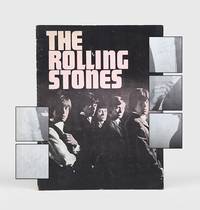
1964190422New York: Souvenir Publishing and Distributing Co. 1964. Signed by the Stones in 1964 First edition of this tour programme published to coincide with the Stones first North American Tour signed in blue ball-point pen on each of their full-page portraits by Mick Jagger Keith Richards listed as "Keith Richard" as he was originally known Brian Jones Charlie Watts and Bill Wyman. Quarto. Original photographic wrappers lettering to front and back covers in pink. Illustrated throughout with black and white photographs many full-page. Spine rubbed and covers lightly creased but overall a very good copy. unknown
1935169367Aden: 1935-36. A superb window onto Yemen in the 1930s Two albums depicting the experiences of British servicemen stationed in Yemen around the time of the Second Italo-Abyssinian War 1935-7 mixing the documentary and the personal. The images include very rare contemporary aerial photographs of towns including Aden Ta'izz and Shibam graphic pictures of war in Addis Ababa urban military and agricultural scenes and records of free time on the RAF base at Khormaksar. Nearly all carry explanatory manuscript captions. Aden was of crucial strategic importance to the British Empire having been brought under the control of the East India Company in 1839. After the opening of the Suez Canal in 1869 it became one of the world's busiest ports. The RAF maintained a base at Khormaksar now Aden International Airport which played host to numerous squadrons throughout the 1930s. Of these No. 8 Squadron was stationed at Khormaksar for the longest period of time maintaining a policing and day-bombing role. Photographs of military aircraft belonging to No. 8 Squadron can be seen in these albums alongside pictures of planes flown by Nos 203 41 and 55 Squadrons. The photographs give a vivid impression of the volume of air and maritime traffic - mostly British but also French and Dutch - which passed through Aden after Mussolini's invasion of Ethiopia. Aerial shots show Fairey MK IIIs and Vickers Vincent planes flying in formation as well as night and day bombers and flying boats. There are also detailed close-ups of ships including British aircraft carriers. It seems probable that the photographer who assembled these albums was involved in surveying: there are fine aerial shots of Aden and Crater the Sultan's palace at Lahij Shuqra Shibam Tarim Ibb al-Mukalla and Ta'izz giving an outstanding sense of how these towns looked in the early 20th century. The pictures of Ethiopia include one aerial photograph of Addis Ababa a number of ground shots of an execution the wounded and the dead and images of buildings on fire. There is only one photograph captioned as having been taken in Somaliland but this provides a further clue that the photographer was sent from Yemen to the Horn of Africa with the intention of documenting Italian military activities there. As a result of the Second Italo-Abyssinian War Ethiopia was incorporated into Italian East Africa consisting of Italian Somalia Ethiopia and Eritrea. Britain ruled British Somaliland and France controlled French Somaliland Djibouti. Many of the images may have been taken when the photographer was off duty. There are several almost touristic shots of everyday life in Crater showing children playing and Friday prayers images taken on the beach and in the salt pans around Aden pictures of Yemeni pastoralists with their cattle and photographs of Yemeni Indian and Somali women. A significant minority of the pictures show downtime at Khormaksar with a string of images depicting airmen in fancy dress playing football and drinking. There are even two photos of the squadron's dog in a cap and glasses and with a pipe in its mouth. 2 albums. Album I with 175 silver print photographs of various dimensions 100 x 65 mm - 240 x 180 mm mounted on card. Album II with 55 silver print photographs all c.100 x 150 mm or c.75 x 100 mm. Almost all photographs with period ink captions. Album I: quarto 290 x 230 mm. Original cloth covers spine and sides decorated with pictorial designs in relief marbled endpapers 36 card stock leaves. Album II: landscape octavo 130 x 187 mm. Contemporary black card wrappers "Aden" title sticker on front cover 22 card stock leaves. Album I: superficial rubbing to spine and rear cover short splits to inner hinges fore edges nicked. Album II: rear inner hinge split glue residue to gutters. Photographs all in very good condition. hardcover
Brøndum, Hans JørgenIn Pristine Condition. unknown
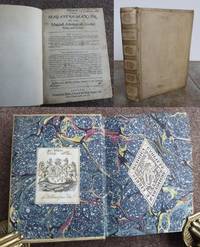
165252876<p>London printed for Joshua Kirton at the Kings Arms in St. Pauls Church-yard 1652. FIRST EDITION 1652. First word of title and part of running title in Greek characters. Small 4to approximately 180 x 125 mm 7 x 5 inches pages: 16 1-240 24 241-376 bound in full vellum gilt lettering and decoration to spine gilt decoration to edges of covers marbled endpapers all edges gilt 3 bookplates: Sir William Grace; Henry Cunliffe Armiger to first pastedown and first free endpaper; Fox Pointe Collection on last pastedown. Vellum slightly dusty and soiled pale age-browning and staining to title page title page slighty dusty with small ink letter and small repair on blank side to top margin trimmed copy affecting the lower margins of pages 369-374 with loss in lower margin of 4 catchwords and 2 signature numbers 16 ink pointing hands in margins plus a few ink marginalia small repair to 3 margins not affecting text occasional small ink stain or brown spot otherwise a very good copy. An attack on magical practices and beliefs with dedication to Oliver Cromwell. John Gaule 1603 1687 was an English Puritan cleric now remembered for his sceptical views on astrology witchcraft and hermetic philosophy. See: A Catalogue of Printed Books in the Wellcome Library Volume 3 page 96; William Lowndes & Henry Bohn Volume 2 page 869; Sotheby's Catalogue Tuesday 14th December 1993 The Fairfax Library and Archive No. 395; ESTC R3643. MORE IMAGES ATTACHED TO THIS LISTING ALL ZOOMABLE FURTHER IMAGES ON REQUEST. POSTAGE AT COST.</p> London, printed for Joshua Kirton at the Kings Arms in St. Pauls Church-yard, 1652. hardcover
1888g5899London: Vizetelly & Co. G: in Good condition without dust jacket. Boards lightly rubbed and bumped with slight lean to spine. Tissue guard missing from frontispiece. Rear endpaper missing. 1888. Reprint unexpergated edition. Brown decorated hardback cloth cover with gilt titles. 190mm x 130mm 7" x 5". 392pp. This seemingly insignificant book is from the Mermaid Series of Best Plays of the Old Dramatists belonged to Aubrey Beardsley. On the ffep a hand drawn bookplate by Aubrey Beardsley is pasted dated Xmas 1888. On the half title page there is the signature A V Beardsley Xmas 1888. On the reverse of the frontispiece in the top corner is an ink stamp BEARDSLEY. . Vizetelly & Co hardcover
Probably Mitchell's most interesting letter. To the editor of the San Antonio Light, San Antonio, Texas: "Dear Sir: I am Mrs. John R. Marsh (Margaret Mitchell) of Atlanta, Georgia, author of 'Gone With the Wind'. I am writing you about an item published in your newspaper on August 5, 1947, stating that 'Mrs. John R. Marsh (Margaret Mitchell) , nationally known author had just arrived in San Antonio from Mexico City. With this item you published a photograph with the caption 'Margaret Mitchell Back to Hollywood'. I have learned that this woman also autographed copies of my novel 'Gone With the Wind' and in other ways created the impression she was me. This has caused me great embarrassment and I must ask you to publish a correction. I was not in San Antonio on August 5 and I have never been in your city, much to my regret. I have never been in Mexico City, where you said I had been, and I have never been in Dallas or Hollywood, where you said I was going. The photograph you published is not my photograph and does not resemble me in any manner. (...) " ; 2 pages
19792110502151002264Masterpiece publisher 1979. Soft Cover. Fine. Number of books: 52 Masterpiece publisher paperback
159 pages. Third printing of the 1928 first edition. The landmark work by the man who has come to be known as "The Father of Spin." "The conscious and intelligent manipulation of the organized habits and opinions of the masses is an important element in democratic society. Those who manipulate this unseen mechanism of society constitute an invisible government which is the true ruling power of our country." - from page 9. Chapters include: Organizing Chaos; The New Propaganda; The New Propagandists; The Psychology of Public Relations; Business and the Public; Propaganda and Political Leadership; Women's Activities and Propaganda; Propaganda for Education; Propaganda in Social Services; Art and Science; The Mechanics of Propaganda. Average wear. Unmarked. Binding intact. Moderate age-toning to contents. A sound early copy of this profoundly influential work. Bibliographic references: Cole p.14, Larson p.9. Book
x, [2], 423 pages. Index. "There is no man living who, from the beginning or in the progress or at the ending of federal reserve legislation, was more closely or constantly than I privy to and identified with the consideration and enactment of the law under which the federal reserve banking system was set up. Ever since the enactment of the federal reserve law it has been my intention to write, some day, a story of the many inside events, word of which never reached beyond a closely restricted circle and had no such thing as current newspaper attention. Very likely my desire to tell the dramatic story would have abated if not for the recent publication of the 'Intimate Papers' in which the paternity of the Federal Reserve Act and its particular management are placidly ascribed to Colonel E.M. House." - Introduction. Accordingly, Chapter III of this book is devoted to a scathing critique of the veracity of 'The Intimate Papers of Colonel House', first published in 1926. Colonel House was an intimate confidant of Woodrow Wilson, President when the Federal Reserve Act was passed. Latter day conspiracy researchers argue House successfully advocated for the interests of the House of Rothschild during the development and passage of the Federal Reserve Act. In response to Glass's book, Paul Warburg, also instrumental in the founding of the Federal Reserve, was "impelled to lay down in black and white my recollections of certain events in the history of banking reform." - Preface to his two-volume work The Federal Reserve System, Its Origins and Growth - Reflections and Recollections, published in 1930. Commenting on Glass's book, James Grant, of Interest Rate Observer fame, notes "the story of the creation of the Fed by its chief progenitor, Carter Glass, makes you doubt he would recognize today's Federal Reserve, were he brought back to life to inspect it. He explodes in indignation at any who would impugn the proposed Federal Reserve note as mere fiat money. In fact, he considered the currency to be as good as gold - or better." Clearly, Glass's recollections herein represent a profoundly important chronicle of the origins and founding of the Federal Reserve System. Frontispiece photo portrait of Woodrow Wilson. Former university library copy with usual markings. Sturdily rebound in navy buckram. Book
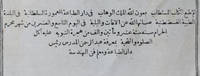
1801000449<p>.Istanbul Üsküdar: Imperial Press DÄr al-ṬibÄÊ¿a al-ʿĀmira 1801.<br />Folio over 12–15 in.<br />KitÄb Laḥjat al-LughÄt<br />Tri-lingual Dictionary Turkish–Arabic–Persian<br />First edition. An early Ottoman printed dictionary produced at the Imperial Press of Muhendishane established by imperial decree following the closure of the İbrahim Müteferrika press. Printed under the supervision of Ê¿Abd al-RaḥmÄn al-Mudarris head administrator of the Üsküdar printing house.<br />Contemporary French binding in yellowish-brown morocco richly gilt in Ottoman Turkish decorative style with original folding envelope flap. Gilt panels and tooling spine and flap partially worn.<br />Collation:<br />2 pp. imperial decree and justification for the establishment of the press signed by Ê¿Abd al-RaḥmÄn al-Mudarris<br />7 pp. index<br />851 pp. text<br />Upper left corners of the imperial decree index and first six pages with early professional restoration slightly affecting the first letters of the opening lines on some pages. Light water staining throughout as commonly encountered in early Ottoman imprints. The upper half of the colophon leaf is neatly adhered to the rear cover. Otherwise complete with the text internally clean crisp and fully legible.<br />Binding shows wear: minor losses to spine and flap covers lightly rubbed. Overall good condition with notable bibliographical integrity.<br />Provenance / Reference:<br />An identical copy recorded in the Atabey Sale Sotheby's 28 May 2002 Lot 844.</p><p>Rare and important: among the earliest products of the post-Müteferrika Ottoman state press representing a major milestone in Ottoman lexicography and multilingual scholarship.</p><p>Muḥammad EsÊ¿ad Efendi was a prominent Ottoman jurist Ê¿Älim religious authority and statesman who served as Åžeyhülislâm the highest religious office in the Ottoman Empire during the mid-18th century.<br />Educated in the classical Ottoman madrasa system he rose through the ranks of the Ê¿ilmiyye learned hierarchy serving in various judicial and scholarly posts before attaining the office of Åžeyhülislâm where he exercised authority over Islamic law Sharīʿa legal opinions fatwÄs and religious appointments throughout the Empire.<br />EsÊ¿ad Efendi was known for his legal scholarship administrative prudence and engagement with intellectual life at a time when the Ottoman state was navigating institutional consolidation and reform. He authored and supervised works in Islamic jurisprudence theology and language and his name appears on several important Ottoman scholarly and administrative publications of the period.<br />He died in 1166 AH / 1753 AD leaving a legacy as one of the notable religious jurists of the 18th-century Ottoman Empire.</p> the Imperial press, Muhendishane hardcover
Signed and inscribed by author upon front free endpaper. 552 pages. Index. Black and white photographic plates. "One of the most important autobiographies of the post-war period, for there can be few personalities still alive who have been so intimately connected with the march of world events for so many years... His first great triumph was to rescue the German Mark from the inflation of 1921... As the Nazi avalanche swelled, Hitler persuaded him to occupy the Presidential chair at the Reichsbank... but (Schacht) soon saw that the Fuhrer was driving relentlessly towards war. A quarrel resulted and he left the Government, remaining under a cloud until he was arrested towards the close of the regime." - from dust jacket. Schact was aquitted of war crimes at Nuremberg. Moderate wear to book. Binding intact. Several patches and touch-ups to dust jacket which is now preserved in archival-grade Brodart. Kehr & Langmaid 1217, Aldcroft & Rodger p.83. Book
192059766Portland OR New York & Hollywood & Los Angeles CA: Earl Mossman Revue and Productions ACME Commercial Studio Allara Blixt Braun Bruno Allen J. De Lay Photo-Art Commercial Studio et al ca. 1920-1976. Three vols. Thick 4to. 179; 124; 117 leaves unnumbered. all archival mylar sleeves some 2-pocket for 5 x 7 in. material most for holding 8 x 10 in. images. With 425 photographs sized from 4 x 4 in. up to 8 x 10 in. over 90% are 8 x 10 in. most images w/ photographer’s imprints on versos many w/ pencil annotations editing notes camera-ready copy several are negative contact print sheets a few colour images many are signed some have minor tears or creasing a few show remnants of old scrapbook leaves together with several newspaper and magazine clippings printed promotions holiday leaflets. All preserved in three black cloth 3-ring clamshell binders an excellent archive. This unequaled archive of photographs chronicling the successful and colourful Vaudeville and entertainment career of Earl Mossman reveals wealth of musical and theatrical history from the Pacific Northwest during first album in this archive is largely devoted to Earl Mossman’s contributions and managing of his the first half of the 20th Century as well as impact on historic events. The chorus-line all-girl revue shows at the Frontier Village during the 100 day run of the Oregon Centennial Exposition. This re-created town from the 1870’s Old West featured the Golden Nugget dance hall & saloon as well as livery stable church post office and hotel and proved to be the most successful attraction. Mossman’s Can-Can girls put on daily shows and held dances where the daringly dressed women would dance with visitors and hired actors. The 1859-1959 Centennial Exposition lasted from June 10 to Sept. 17 on 65 acres along the Columbia River formerly Vanport wiped away in the tragic 1948 flood and also featured a Gayway Amusement Park Garden of Tomorrow & Adventureland. The photos depict not only Mossman’s Can-Can girl revue but also steam locomotives Modernist sculptures and murals by Louis Bunce and other Oregon artists as well as photos of the Mid-Century Modern Lumber Industry Pavilion and the striking Hall of Religious History in the Garden of Tomorrow which featured murals of Carl Morris. Also shown are neon sculptures the filled arena showing the opening ceremonies which featured actor Raymond Burr as master of ceremonies the Nelson Picket Dancers the Golden Nugget and Frontier Trading Post from the air and more. The second album includes as well more images from the Centennial as well as many from Earl Mossman’s “Productions†talent agency and entertainment group who supplied vaudeville dance and music acts such as Beverly Short Eleanor Malcolm Gary Marvin Ginger McClane Gwen Gibson Jerry Brown Freddie Keller’s Orchestra and Maury Meriweather’s Band to Portland OR and surrounding Pacific Northwest clubs and venues. Photos included here depict as well the Nelson Pickett Dancers The Glenns “originating new tricks in a dancing mood;†The Carsony Brothers; the Earl Mossman Girls featuring models from the Gloria LaVonne modeling agency; along with Walter Blacke Jacqueline Clark Earl Mossman’s Dolls for “Delta Dome†and more. Other notable names include Billy Daniels d. 1988 with photos of his ‘The Masculine Touch†recorded live at the Mocambo on the Sunset Strip well-known African-American singer form the mid-1930’s to 1986 who launched his career in the Harlem Renaissance; along with Jeanne Gayle who sang with Bob Crosby and starred in the Great Gildersleeve 1954 Jack Nagel and even Shirley of the Hoti PocaDot Bikini Contest.The many photos also depict Mossman meeting and greeting celebrities rolling into Portland running for mayor of Portland OR he never won: touting and promoting the “Straw hat day May 15†by not only wearing straw hats himself but inducing his all-girl revues to wear as well along with leading parades including the 1972 Merrykhana Parade where he was appointed “King of the Parade.†Many of the images show him with many different canes drawn from his large collection signing contracts for the American Legion seated in limousines and Porsches and even attending dinners. One photo includes dinner guests of Miracle Oxygen which featured the editor of The Oregonian Dick Nokes Paul Hauron stage feature writer the Todds and others. Of additional interest are the photos of Mossman showing off his scrapbook filled with images from his long career as well as images while convalescing with his bevy of beauties in the Shriner’s Hospital in Portland OR. Mossman 1894-1976 was an Oregon native and grandson of Isaac Mossman who had fought in the 1855-1856 Indian Wars rode with the Washington Territory’s Pony Express out of Walla Walla and was the first Washington Territorial librarian in 1870. Earl Mossman began running away from home as a young boy to perform in taverns and saloons in downtown Portland later worked for Pacific Power & Light Co. as an office boy and in 1913 after marrying his childhood sweetheart Catherine Groos launched his career on the Vaudeville Circuit. He initially played with the Basco Comedy Co. and later with Connie & Mack’s and the Bert Levy Circuit. Walter Winchell coined him as the “Beau Brummel of Broadway†during the 1920’s and by the 1930’s was performing with Norma Lawton in Broadway productions such as “The Dancing Producer†and performed with his partner Ray Vance at the Lotus Isle Amusement Park and the Peacock Ballroom. He would marry five different times performed at civic activities Rose Festivals and beauty pageants across the Pacific Northwest.Over half the photographs in this collection were shot by Allen J. De Lay photographer with The Oregonian from 1947 until the newspaper strike of 1960 who was not only an extraordinary photographer but also musician and competitive swimmer. He is perhaps best remembered for his photographs of the darker seamier side of Portland in the post-World War II era. Other Oregon photographers represented include Maxwell Allara Paul Blixt Kirk Braun Bill Gray Hodge Kennell-Ellis Verne Lewis Alfred Monner Dick Slater Don Thompson Donald Wilson and others. Of particular interest are noted theatrical photographers such as Bruno in Hollywood and James J. Kriegsmann 1909-1994 celebrity & theatrical photographer from 1929 to the 1980’s. We could find no similar archive of Mossman related photos in any institutional holdings except for a few images. See: Ellis Lucia Earl Mossman Oral History Recording pacific University Archives 1914-1918 Washington County Oral Histories; Walkathons - Dance Marathons Al Painter’s Lotus Isle Walkathon Organization PDX History 2022; David Kludas Centennial Exposition of 1959 Oregon Encyclopedia 2022. Earl Mossman Revue, and Productions, ACME Commercial Studio, Allara, Blixt, Braun, Bruno, Allen J. De Lay, Photo-Art Commercial hardcover
141846N.p.: N.p. 1970. Archive of 16 photographs seven double weight and ten single weight of rock performers circa the late 1960s and early 1970s. Struck by photographer Jim Marshall circa 1990s most with his stamp and manuscript identification number on the verso. <br /> <br /> Artists represented include Bob Dylan The Rolling Stones The Who Bob Dylan Joni Mitchell Sly and the Family Stone Santana Jim Morrison Tina Turner The Allman Brothers Band including standalone shots of Duane Allman and others. The Santana photos are especially notable as the band already a live sensation is performing at Woodstock just ahead of the release their first album. <br /> <br /> As a photographer for both record labels and magazines such as "Rolling Stone" Jim Marshall was one of the most prolific and influential chronicles of rock music during the 1960s and 1970s. Among his most iconic photographs are images of Jimi Hendrix setting his guitar on fire at Monterey Pop Johnny Cash performing at San Quentin and The Beatles backstage at their final live concert at Candlestick Park. In 2014 he was posthumously awarded a Lifetime Achievement Grammy the only photographer to be so honored. <br /> <br /> Photographs variously 5 x 7 inches and 8 x 10 inches. Fine overall. <br /> <br /> For details please inquire. N.p. unknown
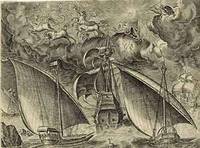
51-4349Netherlands: Late 16th-early 17th Century. Original engraving on old laid paper. 211 x 279 mm. Thread margins. Watermark of a bugle surmounted by a crown JPG Turner as 1616; not located in Briquet or Heawood Ref: The Prints of Peter Bruegel the Elder by René van Bastelaer and Susan Gilchrist San Francisco Alan Wofsy Fine Arts 1992;no. 106 state A before the text in the cartouche; De Ramaix and Lebeer 49; Lari 103. Netherlands: Late 16th-early 17th Century. unknown