184 792 résultats
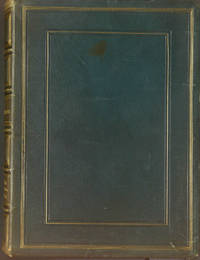
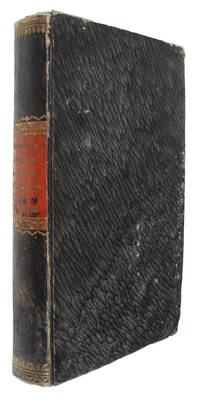
168736Paris: Paris chez Mademoiselle Jablier 1687 1687. First Edition. Rebound in full calf.Octavo 7.5 x 6 inches Latin and French Condition: Near Fine. 24 engraved tables in Latin and 24 parallel tables in French. Near Fine. A Rare Parallel Latin-French Edition of Sabbathier's Christian Kabbalah Engravings<br /> 1687<br /> <br /> Esprit Sabbathier edited by François-Marie of the same order<br /> Idealis Umbra Sapientiae Generalis 1687<br /> <br /> Publisher: Paris chez Mademoiselle Jablier 1687<br /> Octavo 7.5 x 6 inches<br /> Latin and French Condition: Near Fine<br /> <br /> A rare mystical work of Christian Kabbalah authored by the Capuchin friar Esprit Sabbathier and edited by his brother François-Marie. The book sets out a symbolic system of universal wisdom presented through 24 engraved tables in Latin and 24 parallel tables in French. Both parts were originally engraved onto one or two very large copperplates by the engraver Caumartin then cut apart glued down and bound on tabs a curious production method that explains why surviving complete copies are so scarce. This a very rare work of high mysticism and Christian Kabbalah.<br /> <br /> Rebound in modern full leather with five raised bands gilt title to the spine over a red paste down and blind-stamped ruling to the borders of the boards. Inside are the two parts one in Latin and one in French each containing 24 double-page engraved tables mounted as described above.<br /> <br /> Near Fine condition with only light smudging to some pages and smudge marks at the base of the title page. Paris, chez Mademoiselle Jablier, 1687 unknown
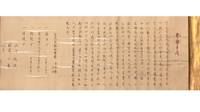
7413Scroll 365 x 5560 mm. with gold endpaper at beginning on a wooden roller. Japan: at end in trans.: "this secret information was given by Shichibei Itsuki to Shingobei Saijo in 1769."<br /> The spear yari was one of the primary weapons used in the feudal period of Japan. Many variations of the head of the spear were developed some for thrusting by foot soldiers and some for slashing designed for men on horseback.<br /> This finely illustrated scroll describes the teachings of the Oshima ryu school of fighting with a spear sojutsu. The Oshima ryu traces its origins to the 16th century and the first prominent teacher was Yoshitsuna Oshima 1588-1657. He taught the fiefdom lord of Kii Wakayama Yorinobu Tokugawa 1602-71 the tenth son of Ieyasu Tokugawa. The school continued for several centuries with branches throughout Japan.<br /> The scroll is beautifully heightened with gold and silver motifs of mist throughout. It begins with a history of the school and its essential tenets and disciplines necessary to fight skillfully with a spear. The following text describes the varieties of spearheads used by the school naginata jumonji two kinds of kagi techniques of handling the spears using wonderfully poetic phrases physical positioning of the body for the most efficient use of the spear the nuances of movement in combat and additional remarks.<br /> The motto of the school given next is in rough translation "Reach high for the school's knowledge with a clear and sharp mind and focus on understanding your opponent."<br /> Following this are a series of illustrations beginning with icons of the school and five illustrations of different spears and spearheads. For each spear measurements are given. Each spearhead is painted with gold pigment.<br /> At the end there is written a certificate granting permission to transmit this secret information and then a most valuable family tree of the primary teachers of the Oshima school beginning with Yoshitsuna Oshima. Finally there is the seal of Shichibei Itsuki the provider of this secret information.<br /> In fine condition. unknown books
7413Scroll 365 x 5560 mm. with gold endpaper at beginning on a wooden roller. Japan: at end in trans.: “this secret information was given by Shichibei Itsuki to Shingobei Saijo in 1769.â€<br/> <br/> The spear yari was one of the primary weapons used in the feudal period of Japan. Many variations of the head of the spear were developed some for thrusting by foot soldiers and some for slashing designed for men on horseback.<br/> <br/> This finely illustrated scroll describes the teachings of the Oshima ryu school of fighting with a spear sojutsu. The Oshima ryu traces its origins to the 16th century and the first prominent teacher was Yoshitsuna Oshima 1588-1657. He taught the fiefdom lord of Kii Wakayama Yorinobu Tokugawa 1602-71 the tenth son of Ieyasu Tokugawa. The school continued for several centuries with branches throughout Japan.<br/> <br/> The scroll is beautifully heightened with gold and silver motifs of mist throughout. It begins with a history of the school and its essential tenets and disciplines necessary to fight skillfully with a spear. The following text describes the varieties of spearheads used by the school naginata jumonji two kinds of kagi techniques of handling the spears using wonderfully poetic phrases physical positioning of the body for the most efficient use of the spear the nuances of movement in combat and additional remarks.<br/> <br/> The motto of the school given next is in rough translation “Reach high for the school’s knowledge with a clear and sharp mind and focus on understanding your opponent.â€<br/> <br/> Following this are a series of illustrations beginning with icons of the school and five illustrations of different spears and spearheads. For each spear measurements are given. Each spearhead is painted with gold pigment.<br/> <br/> At the end there is written a certificate granting permission to transmit this secret information and then a most valuable family tree of the primary teachers of the Oshima school beginning with Yoshitsuna Oshima. Finally there is the seal of Shichibei Itsuki the provider of this secret information.<br/> <br/> In fine condition. unknown
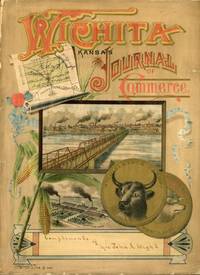
188854232Wichita Kansas: Eagle Printing House 1888. 1888. KANSAS. First edition.4to. Original color pictorial wrappers 92 pp. introduction numerous illustrations numerous advertisements mostly printed in double column. This promotional publication by the Wichita Board of Trade was published to counter the "malignant attacks" conducted by "powerful newspapers all over the country" who have "deliberately leveled their batteries at Wichita." The promotional contains an historical overview of Wichita in the cattle trade information on crops and capabilities of Kansas and calls Wichita "The Southwestern Metropolis." Illustrations include street cars telegrams churches private residences and schools. Containing also a directory of wholesale business information on Wichita's railroads and railway connections lists of industrial enterprises the meat packing centers the livestock market and information on taxes and building enterprises. In addition there are numerous advertisements for various businesses in Wichita. Light cosmetic touch-up to the spine and extremities by a master paper conservator else an attractive informational and scarce promotional for Wichita. Housed in a quarter leather and color decorated boards with raised bands and titles stamped in gilt on the spine. Not in Adams Herd. Not in Graff Eberstadt or Howes. OCLC locating only three copies. Considered to be very scarce with only a few known surviving copies. Eagle Printing House, 1888. hardcover
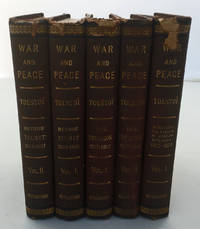
1886021928New York : William S. Gottsberger Publisher 1886 First printing of the first American edition and first English edition. Brown cloth boards with gilt lettering and black line illustrations. Five volumes of a 6 volume set missing the last volume vol. II Borodino 1812-1820. Vol.I Before the Tilsit: head of spine chipped paper along gutter of endpaper slightly cracked moderate age-toning to page margins; vol. II Before the Tilsit: head of spine chipped light rubbing to covers moderate age-toning to page margins; vol. I The Invasion: head of spine chipped light rubbing to board edge moderate age-toning to page margins; vol. II The Invasion: bottom corner slight bump light rubbing to corners endpaper slightly cracked faint age-toning to page margins; vol. II Borodino: 1 inch chip to head of spine light rubbing to covers light age-toning to page margins; vol. II Borodino: missing from set. Overall in very good to near fine condition. William S. Gottsberger, Publisher hardcover
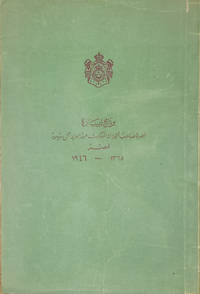
1946000234<ol><li>General Historical Context<br />King ʿAbd al-ʿAzīz Āl Saʿūd's visit to Egypt in 1946 took place at a critical moment in Middle Eastern history immediately following the end of the Second World War amid the reconfiguration of the international order and the beginning of the decline of British colonial influence in the region. At that time Egypt was a pivotal actor in Arab politics while the Kingdom of Saudi Arabia had firmly established itself as a central state with growing religious and political influence.</li><li>Political and Diplomatic Dimensions of the Visit<br />The document reveals the highly official and symbolic nature of the visit reflecting:<br />Mutual recognition of the leading status of both states in the Arab world.<br />A clear desire to coordinate political positions at a stage preceding the escalation of major Arab issues foremost among them the Palestinian question which was approaching a decisive turning point.<br />Support for the course of joint Arab action which had been crowned by the establishment of the League of Arab States in 1945 followed by efforts to consolidate Arab solidarity.<br />The programme further demonstrates meticulous protocol intended to project Arab unity in the face of international powers.</li><li>The Symbolic Significance of King ʿAbd al-ʿAzīz<br />The visit represents the peak of King ʿAbd al-ʿAzīz's external diplomatic presence. The programme illustrates the high level of esteem accorded to him as:<br />The founder of a modern state in the Arabian Peninsula.<br />A political and religious authority of particular weight in the Islamic world.<br />The document highlights how royal symbolism and formal protocol were employed to reinforce the legitimacy of the Saudi state within both the Arab and international spheres.<br />4. Importance of the Document as a Primary Source<br />The core value of the publication lies in its nature as:<br />An official primary source reflecting the governmental perspective rather than later historical narratives.<br />An organizational document revealing the nature of official relations mechanisms of coordination and priorities of engagement.<br />A precise record of Arab political protocol in the mid-twentieth century.<br />Unlike personal memoirs or retrospective studies this programme provides raw material for researchers without subsequent interpretive overlay.<br />5. Protocol and Cultural Dimensions<br />The book illustrates the level of royal diplomatic traditions of the period including:<br />Reception ceremonies and official honors.<br />The arrangement of meetings reflecting hierarchies of authority and political symbolism.<br />The blending of Arab and Islamic elements within official state ceremonies.<br />This offers scholars valuable insight into the culture of the modern Arab state in its formative stages.<br />6. Archival and Documentary Value<br />As a document of limited circulation produced for official or commemorative purposes the book possesses:<br />High archival value.<br />Particular importance for national libraries and historical research centers.<br />Strong potential for use in comparative studies of royal and diplomatic visits in the Arab world.</li></ol><p><br />The book "Programme of the Visit of His Majesty King ʿAbd al-ʿAzīz Āl Saʿūd to Egypt 1365 AH / 1946 CE" is a document of exceptional historical importance. Its value lies not only in its organizational content but in its profound political and symbolic implications. It stands as a reliable witness to a pivotal phase in the formation of the modern Arab order and to the central role played by both Egypt and the Kingdom of Saudi Arabia in shaping its early dynamics.</p> The Egyptian Royal Court paperback
1879007687London: 69 Ludgate Hill. E.C. Edinburgh and Dublin: William Mackenzie 1879. 1st Edition . Hardcover. Very Good. Elephant Folio - over 15 - 23" tall. LYDON A.F. Alexander Francis 1836-1917. Complete with Forty One Fine Coloured Plates. First edition VG folio full dark green morocco rounded edges elegant gilt & blind tooling corners rubbed. Spine raised bands decorative gilt tooling & titles edges rubbed. Internally half title coloured frontis 7 viii-xxvi 1 204 pp 41 brightly coloured large folio chromo-lithographed plates tissue guarded 39 vignettes B&W and 25 illustrations within text occasional very light foxing a.e.g. gilt tooled turn ins blue marbled endpapers small bookseller label to fpd Gilbert. 372277 mm. Drawn from nature by LYDON A.F. A very handsome copy beautifully bound. Houghton a Shropshire clergyman aimed his book at the fisherman rather than the naturalist and the text of which there is unusually plenty gives information about recognition feeding and breeding habits habitat bait and so on Buchanan - Nature into Art 168. Nissen ZBI 2009. Anker 59 Nissen IVB 136 . Bree. <br/> <br/> William Mackenzie hardcover
67922Barcelona, M. Moleiro Editor,, 2009 Bound in luxurious brown-marron leather with gilt Greek lettering, housed in a slipcase with gold motifs. 384 pages, 204 illuminations with gold-decorated miniatures, either full-page or arranged across the page in multiple pictorial strips. Full-colour facsimile edition. Size: 32 × 23 cm. ****NUMBERED COPY NO. 588 OF A LIMITED FACSIMILE EDITION OF 987 COPIES, ISSUED WITH A CERTIFICATE OF AUTHENTICITY.**** Includes a full-colour commentary volume, 376 pages, hardcover with dust jacket, text by Marianne Besseyre.
V00A-12576The University of Chicago Press. Collectible - Good. Chicago: The University of Chicago Press 1930. 1st edition. The University of Chicago Oriental Institute Publications 8. Medinet Habu -- Volume I. Elephant folio tan boards with brown spine. Gilt spine lettering and color plate to the front board. xviii 10pp. 54 plates and 2 text figures. The personal copy of contributing epigrapher William Franklin Edgerton with his name neatly printed to the front pastedown. Good book. There is shelfwear to the edges and corners resulting in light bumping and some fraying. The spine and boards show minor rubbing and dust soiling though the front board has some additional water staining to the lower front. The interior is fairly clean and bright for the book's age with the exception of the endpapers which are a bit dust soiled and toned with a few small closed tears. A wonderful volume depicting reliefs and inscriptions exclusively drawn from the Temple of Ramses III. epigraphs epigraphy Ramses III pharaohs ancient Egypt Egyptology Inquire if you need further information. NOT AVAILABLE FOR SHIPMENT OUTSIDE OF THE UNITED STATES. The University of Chicago Press hardcover
V00A-12577The University of Chicago Press. Collectible - Acceptable. Chicago: The University of Chicago Press 1932. 1st edition. The University of Chicago Oriental Institute Publications 9. Medinet Habu -- Volume II. Elephant folio tan boards with brown spine. Gilt spine lettering and color plate to the front board. xpp. 76 plates and 6 text figures. The personal copy of contributing epigrapher William Franklin Edgerton with his name neatly printed to the front pastedown. Fair book. Lightly edgeworn with minor fraying to the lower corners. The spine and boards show minor rubbing and dust soiling. The front hinge is cracked at the title page and Plate 55 is detached and laid in. The interior is fairly clean and bright for the book's age with the exception of a few more heavily toned plates. A rare volume depicting reliefs and inscriptions exclusively drawn from the Temple of Ramses III. epigraphs epigraphy Ramses III pharaohs ancient Egypt Egyptology Inquire if you need further information. NOT AVAILABLE FOR SHIPMENT OUTSIDE OF THE UNITED STATES. The University of Chicago Press hardcover
19932110502151001837Toyo shorin 1993. Soft Cover. Fine. Number of books: 36 Toyo shorin paperback
19922091502135703935Nihonhyoronsha 1992. Soft Cover. Fine. The book is in fine condition. Nihonhyoronsha paperback
19222091202133212997Not Available 1922. Soft Cover. Fine. Number of books: 10 books in total Not Available paperback
19422090502113707228Not Available 1942. Soft Cover. Fine. The book is in fine condition. Not Available paperback
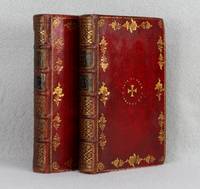
1779ST12581London: Sold by Dodsley 1779. 165 x 102 mm. 6 1/2 x 4". Complete with usual jump in pagination in volume II. Two volumes. <br/> Pleasant contemporary crimson morocco BOUND FOR JONAS HANWAY BY HIS SECOND BINDER covers gilt with twining border enclosing a frame of roses with sunburst cornerpieces upper cover with Greek cross at center encircled by the motto "O save us from ourselves" lower cover with winged hourglass and the motto "Revere the appointment of Nature"; raised bands spine compartments gilt in a checkerboard pattern punctuated by daisies one olive and one black morocco label gilt turn-ins marbled endpapers all edges gilt. Engraved title pages with emblem depicting Death hovering over socializing persons with a lutist in the background. A Large Paper Copy. Verso of front free endpapers with armorial bookplate from which the name has been excised. ◆Spines a bit darkened with muted gilt leather on covers varying in color from fading or soiling but the bindings entirely solid and with only trivial wear to the joints. Leaves with a hint of offsetting and isolated soiling faint dampstain to lower fore edge of one gathering otherwise extremely pleasing internally the text clean fresh and bright and with vast margins.<br/> <br/> These bindings were specially crafted for Jonas Hanway 1712-86 an eccentric philanthropist and prolific pamphleteer who designed custom bindings for edifying works usually his own which he often presented to libraries friends and even the king; our binding was in fact probably intended for presentation though the recipient is unknown. In his "English Bindings in the Library of J. R. Abbey" G. D. Hobson has done a census of 26 Hanway bindings but the present one is not listed there. Hobson states that Hanway has been unjustly overlooked whereas another 18th century eccentric "who took an interest in the art of decorating bookcovers Thomas Hollis has appeared in every account of English binding" after J. A. Arnett's "The Books of the Ancients" appeared in 1837. "The bindings executed for Hanway are of better material" says Hobson "and the tools which decorate them are more amusing than those of his contemporary; perhaps they have been neglected because they are comparatively rare." Hanway employed two different binders to translate his ideas into leather and the present volumes represent the work of his second binder who entered his employ in 1765. This binder has not been identified by name but his work is known as here by the appearance of a small number of tools used in various combinations. For example our winged hourglass rose ornaments twining roll sunburst and checkerboard design on the spine also appear on Hobson's "Abbey" #91 and on item #155 in Maggs Catalogue 1212. An enthusiastic and effective philanthropist concerned with child welfare Hanway founded schools to teach boys farming trades and seamanship. He also wrote some 150 books and pamphlets and perhaps his reputation as an eccentric derived from his being the first male in London to use an umbrella. Nixon notes in "Oldaker Collection" that he was "a highly estimable character but one of the greatest bores of his day." An advocate of such practices as the consumption of whole wheat bread and abstinence from tea drinking he inveighs in the present work against "nocturnal diversions" and the keeping of late hours. Midnight should be the signal to end dancing music and other amusements if one wishes to preserve one's health and virtue. Thankfully the author's bindings remain more interesting than the written works he produced. Sold by Dodsley unknown
1872ST17640-G121872-1921. 60 different editions in 61 volumes. <br/> Most items in their original publisher's bindings mostly cloth or wrappers and a few in limp suede; one in half morocco. Condition ranging from very good to very fine; many of the cloth items with light shelfwear rubbing to edges mild soiling fraying to head and tail of spine and minor condition issues internally light scattered foxing and browning a handful of items with more noticeable condition issues spine partially lost rubbed joints moderate browning etc. but on the whole an excellent group.<br/> <br/> Amassed over the course of many years by a passionate collector of the Rubaiyat this is a very substantial and wide-ranging group of 60 works that attest to the work's enduring popularity more than 150 years after Edward FitzGerald introduced it to the West. Son of a wealthy Irish landowner FitzGerald had enough money to pursue a rather desultory literary career as a "genteel gipsy" in Terhune's words before beginning to study languages in middle age. He started his translation of the quatrains "rubáiyát" in Persian attributed to "Umar Khayyam" in 1856; according to DNB about half of FitzGerald's final work paraphrases rather than directly translates portions of the 11th century poem while the rest is original verse inspired by Omar. "The result is generally seen as being in some ways an original English poem one that is much better known than Omar's poem is in Persian." DNB In Jewett's opinion it certainly earned FitzGerald "a prominent place among the immortals of English literature." In 1858 FitzGerald submitted 25 of the "less wicked" verses to "Fraser's Magazine" only to be rejected. He had 250 copies published anonymously at his own expense but had no luck selling them. Admitting defeat he gave 200 copies to Quaritch; these sold so poorly that they were relegated to the penny bin where Potter says they were discovered--and soon celebrated--by Dante Gabriel Rossetti and Algernon Swinburne. Those copies that remained unsold when Quaritch moved to Piccadilly in 1860 were either lost or destroyed but by 1861 Rossetti and his Pre-Raphaelite brethren along with Celtic scholar Whitley Stokes were evangelizing for the work embracing the lush lyrical verse that would move English poetry away from Victorian orthodoxy and convention. According to Day by the end of the 19th century "a copy of the 'Rubaiyat' upon an Oxford table was a symbol of sophistication. Today . . . it remains the most popular single poem of the Victorian era." The present collection is especially strong in illustrated editions with more than 25 artists represented including Edmund Dulac Elihu Vedder Willy Pogany Adelaide Hanscom Gilbert James Edmund J. Sullivan Arthur Szyk René Bull and Abanindro Nath Tagore. Notable text editions in this group include a Third Edition of FitzGerald's translation; a First Published American Edition; and a signed and inscribed copy of Eben Francis Thompson's translation. There is also a small group of fine press printings including examples by the Gregynog Press Thomas Mosher and Elbert Hubbard. There are no duplicated editions in this collection and there are no trade paperbacks. A full list of the collection's contents is available upon request. unknown
Very Good Turkish, Ottoman (1500-1928) Contemporary quarter brown morocco. Red boards. Staining on the red cloth. Roy. 8vo. (25 x 17 cm). In Ottoman script (Turkish with Arabic letters). 64 p. Extremely rare first and only edition of this Turkish guide to the Turkish delegation of intelligence officers formed within the Niedermayer-Hentig Expedition, also known as the Kabul Mission to carry out counter-activities in the region against the British and Russian alliance, to return from India, through Russia, Afghanistan, and Iran, published after the expedition failed in 1916. This work both in very rare institutional holdings and market rarity is probably printed in no more than 100 copies. It was expected from the Turkish delegation, organized by Ömer Fevzi Bey, who was in charge of the Eastern Branch of the Turkish Intelligence (Teskilât-i Mahsûsa), by reaching Afghanistan through Iran and bringing "Jihad-i Akbar" to this country, to provide an important ally on the Indian border and to support the pro-independence Indian committees and an uprising against the British rule in India and the region. This book was prepared by the Ottoman Army Headquarters-General Intelligence Branch in 1916, during the First World War. In its introduction, the commission described their purpose of publishing this book, which is providing secret information to officers and other staff of the Ottoman army who will travel to Iran, Afghanistan, and Russia, telling them which roads to use, how to use their passports, where and how much food they need to take with them, etc., otherwise being a very comprehensive and detailed guide to the officers. The first chapter includes Iran and its environment, and the second chapter includes Russia and its environment. The first addendum contains detailed passport information, and the second part consists of the routes and towns requiring passports. According to the introduction, references of this book are some early British sources and reports by "Kralliik siyasi ve sehbenderhane zâbitâni, sabik müsahid atasemiliteri" H. Smith, "Harbiye Nezâreti Erkân-i Harbiye-i Ummiyesinden" A. D. Geddesi and "Istihbarat Subesinden" Captain S. M. Gibbon. Additionally, they are Foreign Ministry's 'tahrirât' documents, Intelligence Branch's 'kuyudâti', and a Russian railways guide printed in 1909. The Niedermayer-Hentig Expedition was a diplomatic mission to Afghanistan sent by the Central Powers in 1915-1916. The purpose was to encourage Afghanistan to declare full independence from the British Empire, enter World War I on the side of the Central Powers, and attack British India. The expedition was part of the Hindu-German Conspiracy, a series of Indo-German efforts to provoke a nationalist revolution in India. Nominally headed by the exiled Indian prince Raja Mahendra Pratap, the expedition was a joint operation of Germany and Turkey and was led by the German Army officers Oskar Niedermayer and Werner Otto von Hentig. Other participants included members of an Indian nationalist organization called the Berlin Committee, including Maulavi Barkatullah and Chempakaraman Pillai, while the Turks were represented by Kazim Bey, a close confidante of Enver Pasha. The mission failed in its main task of rallying Afghanistan, under Emir Habibullah Khan, to the German and Turkish war effort, but it influenced other major events. In Afghanistan, the expedition triggered reforms and drove political turmoil that culminated in the assassination of the Emir in 1919, which in turn precipitated the Third Anglo-Afghan War. It influenced the Kalmyk Project of nascent Bolshevik Russia to propagate socialist revolution in Asia, with one goal being the overthrow of the British Raj. Other consequences included the formation of the Rowlatt Committee to investigate sedition in India TBTK 13568.; Not in OCLC.
1965mon0000121503PROGRESS PUB. 1965-01-01. Hardcover. Good. 2.5000 in x 8.5000 in x 5.9000 in. No DJ. Mild shelf wear and fading to both volumes. Former owner's name on inside cover otherwise pages clean. Cup mark on volume one's cover. PROGRESS PUB. hardcover
1758141839Paris: J. Barbou 1758. full brown leather border stamped in blind on the front and rear boards gilt ornaments on spine title in second compartment five raised bands all edges stained red marbled endsheets. small 8vo. full brown leather border stamped in blind on the front and rear boards gilt ornaments on spine title in second compartment five raised bands all edges stained red marbled endsheets. 1ff.-92 3 -263 pages. Pour éclaircir quelques traits de l"histoire de l'Imprimerie & prouver que Guttemberg n'en est pas l'Inventeur. Two works bound in one. Very rare first edition Bigmore and Wyman p.228. Private bookplate of Jackson Burke on the verso of the front free endpaper. Contemporary boards with some rubbing to the spine and extremities corners a bit worn gilt on the spine is lightly flaking evidence of bookplate removal to front and rear pastedowns. Else a fine copy of this very scarce work.<BR> <br /> <BR> <br /> Two works bound together. Complete titles are: Dissertation sur l'origine et les progrès de l'art de graver en bois 1758 and De l'origine et des productions de l'imprimerie primitive en taille de bois 1759.<BR> <br /> <BR> <br /> Fournier 1712--1768 was born in Paris and trained as a wood engraver. He later turned to steel engraving. In the first essay Fournier sets out to prove that Gutenberg was not the inventor of the printing press by examining the history of printing. He believes that the technology Gutenberg made popular existed long before the German printer's work. The second volume follows this up with further discussion of the origins of woodcut prints. <BR> <br /> <BR> <br /> Fournier wrongly disputes the dating of Mr. De Bure le Jeune concerning the Gutenberg Bible but he is the first with the help of an observation by Gerard Meerman to note the progressive increase in the number of lines per page in the early stages of Bible production. J. Barbou unknown
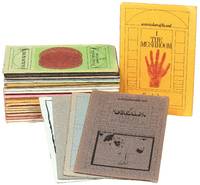
443801Canton New York: Institute of Further Studies 1985. Softcover. Very Good. 28 issues. Octavos. Each issue mimeographed or offset printed from typescript and stapled in illustrated card wrappers. The postcard originally tipped into Issue 16 is detached but present and scarce thus. Occasional toning and creasing a touch of foxing here and there but a generally very good set with the exception of the Wieners issue which has tidemarks on the wraps.<br /> <br /> A complete run of this periodical one of the most unusual and brilliant undertakings of American postwar poetry. The series grew out of The Magazine of Further Studies and was a specific response to Charles Olson's text "A Plan for the Curriculum of the Soul" in the fifth issue of that magazine a remarkable map-text by Olson that listed subjects names and other topics and which was reproduced inside the covers of early issues. After Olson's death John Clarke took 28 of these topics and the periodical was born.<br /> <br /> Authors of complete issues include Albert Glover Duncan McNaughton John Wieners Michael Boughn Lisa Jarnot Fred Wah John Clarke Robert Duncan Alice Notley Robin Blaser Robert Dalke George F. Butterick Edward Kissam Edgar Billowitz Harvey Brown Lewis Macadams Ed Sanders Michael Bylebyl David Tirrell Daniel Zimmerman Drummond Hadley James Koller Gerrit Lansing Michael McClure John Thorpe Joanne Kyger Anselm Hollo and Robert Grenier.<br /> <br /> Accompanying the run is a letter from the editor John Clarke discussing David Tirrell and his authorship of the 19th issue on alchemy. The typed letter covering the entire recto and half of the verso gives remarkable insight into the life of Tirrell who had studied with J.H. Prynne and gone on to become a member of the psychedelic band Dendron and also a member of Timothy Leary's Millbrook Community. It also includes a mention of tripping with The Fugs and provides an overview of how the authors were chosen for each issue. Fair only with extensive toning watermarked and creased but complete and legible.<br /> <br /> A scarce complete run from the collection of a contributor to the project and with valuable insight into the series and the life of another contributor. Institute of Further Studies unknown
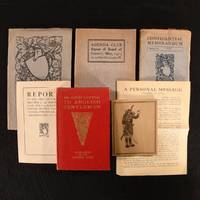
1910951F81London: The Print Collectors Quarterly; Williams & Norgate 1910-1913. First edition. Cloth. Very Good Indeed. 9.5" by 6". Not Stated. A fascinating and very scarce collection of works about the philanthropic society 'The Agenda Club' which aimed to channel the energies of young men towards social good. A collection of seven vanishingly scarce works by and about 'The Agenda Club' a philanthropic society operating in the first part of the twentieth century described in a letter to The Spectator as 'a kind of co-ordinating society or intelligence department to bring together and direct the energies of men principally young men who want to do something to help their fellow-men but scarcely know how to go about it'.The club's founding committee included professionals such as a barrister journalists and a business organiser and it aimed to recruit men of leisure and independent means to support its work. The initiative was framed as a practical and well-structured approach to social improvement balancing idealism with pragmatic execution.Present here are seven publications by and about the club all of which are vanishingly scarce:The 1910 work 'An Open Letter to English Gentlemen' by Joseph Thorp the founded of the club. This volume described by the author as an open letter provides 'the briefest outline of the methods and principles of the club'.An undated four page 'Personal Message Please Destroy After Reading' from Club secretary Joseph Thorp aiming to reassure members of the club that the financial troubles experienced by the club three months prior are now solved and defending the club against claims that they have achieved nothing'.The 1911 'Report of the First General Meeting of the Agenda Club Held at the Royal United Service Institution' explaining that nearly 200 members attended and that 570 members are listed and discussing the election of the club board.The 1911-1912 'Record and Programme of the Agenda Club' discussing 'A National Health Week' book lists membership and a summary of planned work.A discussion of the February 12 1912 'First Public Dinner of the Agenda Club' in which the Samurai and 'their share in the making of New Japan' was the principle topic of discussion with focus on 'the privations of the Samurai'. Also discussed was 'football vs life'The May 1913 'Report of the Board of Control' beginning with the line 'the work of the past year must be regarded with feelings of satisfaction and disappointment'. The report explains recruitment activities the holding of a campaign titled 'Health Week' a campaign on the treatment of golf caddies and shop assistants and a report on the finances of the club.An undated 'Confidential Memorandum' of the club discussing the methods organisation and processes of the club. With a loosely inserted membership application form.The initiative was framed as a practical and well-structured approach to social improvement balancing idealism with pragmatic execution. The club seems to have ceased operation by the year 1914. In the publisher's original paper wraps and cloth bindings. 'Open' back strip a touch faded otherwise externally excellent. Wrap heads of 'Memorandum' age toned with tide marks. Otherwise externally fine. Internally firmly bound. Pages clean and bright with the exception of marginal ink notations to 'Public Dinner'. Very Good Indeed The Print Collectors Quarterly; Williams & Norgate hardcover
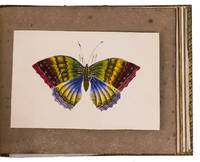
18316723Heerenveen 1831. Oblong 4to. Contemporary gold- and blind-tooled brown morocco each board richly decorated with frames and an oblong lozenge-shaped centrepiece gilt edges. Manuscript with many contributions in French and English a single contribution in Dutch and a four-line verse in German mainly written in the same hand probably of the owner of this album. With 45 mounted or occasionally loosely inserted drawings paintings and prints in various formats some coloured by contemporary hands. 96 ll. A beautiful example of a richly decorated and illustrated album amicorum a book of poetry and a scrapbook in one. Alba amicorum were a popular and pleasant pastime at this time as the first sentence of the album immediately makes clear: "Albums are all the rage and scrap-books too". Although the album contains many poems by various poets possibly mostly copied by the owner of the album herself a girl from a noble family probably Miss van Boetzelaer the album also contains many contributions by others particularly women. Examples are F. Testa Adèle B. J. van Winter H.v.W. A. van der Goes H.G. v.d. G. J.C. van Beresteyn H.J.B. C.B. A. de Schwartzenberg et Hohenlansberg H. Repelaer van Driel A.G. v. B. en A. de la B. The contributors probably made the drawings and watercolours to accompany their written entries and the owner mounted them in the album herself. Some of the most remarkable among the richly illustrated contributions are a loosely inserted mountain landscape in watercolour by Johannes van Ravenswaay 1815-1849 a bouquet with flowers in gouache by Wilhelma van Boetzelaer an English teacher at the royal military academy at Breda and another bouquet by A.J. Taets d'Amerongen née de Boetzelaer. Another beautiful drawing of three hummingbirds is executed in gouache and decorated with gold by Suzette van B. who wrote several contributions for this album. Also beautiful are a still life with fruits drawn by Mimi Stratenus two gouaches of butterflies on pith paper by C. Bicker Borski and Christine van Berestyn and gouache paintings of a rose by Elisa Hanbury and a butterfly by Dorothée Palland Sandberg. Also mounted in this album are engraved portraits of William Shakespeare 1564-1616 and Pierre Corneille 1606-1684 probably reflecting the poetic tastes of the albums owner. This album is not only a beautiful example of the alba amicorum culture among noble women which flourished for centuries but also a book for a woman made primarily by women reflecting an important part of the culture of noble women in the first half of the 19th century.Some occasional spotting and browning and the large number of insertions has overfilled the binding so that it bulges slightly but otherwise in good condition. A very interesting album amicorum with many contributions drawings and prints by women in a beautiful contemporary binding. unknown
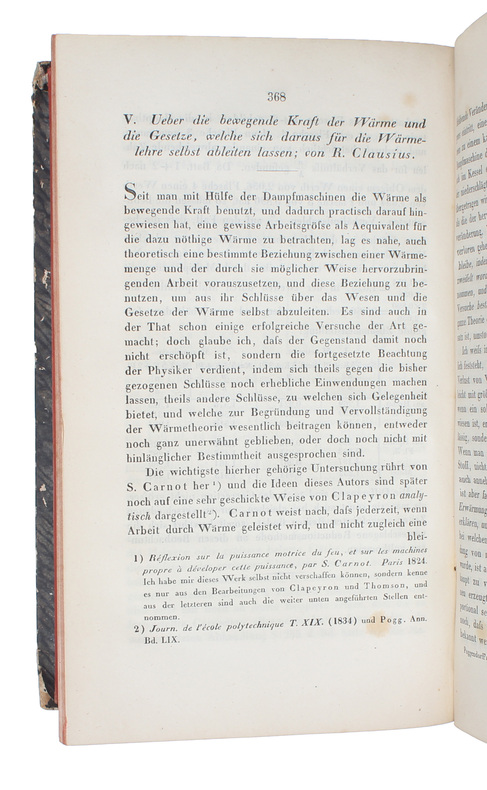
185053436Leipzig, Johann Ambrosius Barth, 1850. Contemp. marbled boards. Gilt spine, titlelabel with gilt lettering. Light wear to spineends, corners and edges. Stamps on title-page (Gusstahlfabrik Fried. Krupp). In ""Annalen der Physik und Chemie"", Dritte Reihe, 19. Band (79. Band der ganzen Reihe). IX,(1),580 pp. and 3 folded engraved plates. (Entire volume offered). Endpapers and the first and last few leaves with brownspots. Clausius's paper: pp. 368-397 a. pp. 500-524. Internally clean.
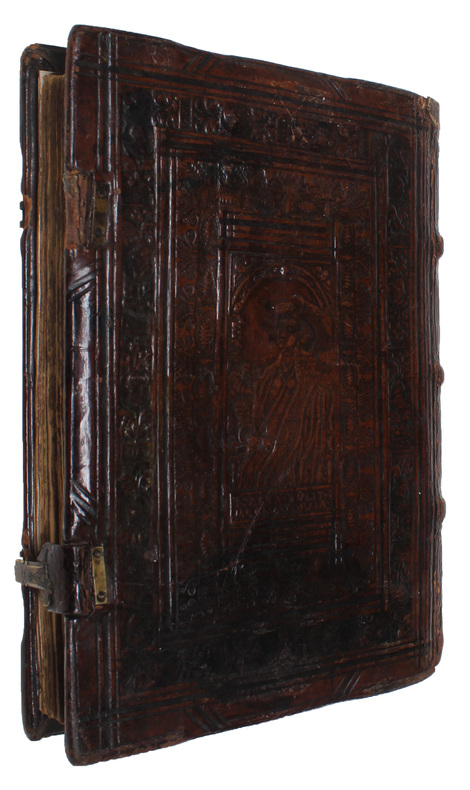
157656695(Colophon:) Kiøbenhaffn (Copenhagen), Matz Wingaardt, 1576. 4to. Pragtfuldt samtidigt hellæderbind af kalveskind over træ med skråtskårne kanter og 2 lukkestroppe med messingbeslag (det ene hængsel løst), antageligt udført af en dansk bogbinder. 3 ophøjede ægte bind på ryggen og med blindtrykte stregbordurer. Permer med dobbelte stregrammer og 2 brede rammer udført med ruller og stempler. Midtfelterne med stort pladetrykt billede af Justitia, på bagpermen et billede af Justinian ?. Kapitæler med mindre reparationer. Titelbladet med en træsnit illustration af den danske konge med rigsvåbnet. Kolofon med Gotfred af Ghemens trykkermærke i træsnit. 111 unummerede blade. Indersiden af forpermen har notater i gl. hænder vedrørende bogens indhold. Fra Oscar Wandels bogsamling med hans exlibris. Da bogen ikke er ombundet foreligger den her i dens opsrindelige størrelse med pænt brede marginer. Få spredte brunpletter. Nogle blade med en svag skjold nederst på siderne. De første 6 blade (incl. titelbladet) er noget restaurerede med senere omkantning. Titelbladet har en smule tab af stregrammen omkring kongen, blad 2 recto har tab af et ord i nederste linie (tagher). Trykt på svært papir.
185053436Leipzig Johann Ambrosius Barth 1850. Contemp. marbled boards. Gilt spine titlelabel with gilt lettering. Light wear to spineends corners and edges. Stamps on title-page Gusstahlfabrik Fried. Krupp. In "Annalen der Physik und Chemie" Dritte Reihe 19. Band 79. Band der ganzen Reihe. IX1580 pp. and 3 folded engraved plates. Entire volume offered. Endpapers and the first and last few leaves with brownspots. Clausius's paper: pp. 368-397 a. pp. 500-524. Internally clean. <br/><br/><em>First edition of this monumental famous paper in thermodynamics in which Clausius for the first time states the Second Law of Thermodynamics one of the most importent laws of Nature having a huge impact on the development of physical theory cosmology communications and information theory. The law states that a the energy of the Universe is constant and b the Entropy of the Universe tends to a maximum."Clausius' contribution to thermostatics is comparable to those of Newton and Maxwell to mechanics and electromagnetism respectively. In the obituary J.W. Gibbs remarked that Clausiu's first memoir "marks an epoch in the history of physics."" Chowdhury and Stauffer in "Principles of Equilibrium Statistical Mechanics".In "The Nature of the Physical World" Eddington writes: "The Law that entropy increases - the Second Law of Thermodynamics - holds I think the supreme position among the laws of Nature. If someone points out to you that your pet theory of the Universe is in disagreement with Maxwell's equations - then so much the worse for Maxwell's equations. If it is found to be contradicted by observation - well these experimentalists do bungle things sometimes. But if your theory is found to be against the Second Law of Thermodynamics I can give You no hope; there is nothing for it but to collapse in deepest humiliation.".Parkinson "Breakthroughs" 1850 P. </em> hardcover