184 817 résultats
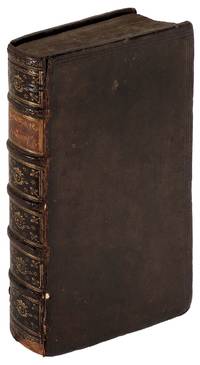
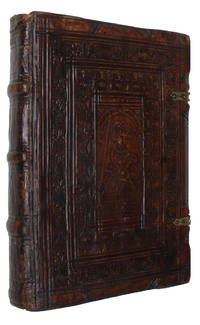
157656695Colophon: Kiøbenhaffn Copenhagen Matz Wingaardt 1576. 4to. Pragtfuldt samtidigt hellæderbind af kalveskind over træ med skråtskårne kanter og 2 lukkestroppe med messingbeslag det ene hængsel løst antageligt udført af en dansk bogbinder. 3 ophøjede ægte bind på ryggen og med blindtrykte stregbordurer. Permer med dobbelte stregrammer og 2 brede rammer udført med ruller og stempler. Midtfelterne med stort pladetrykt billede af Justitia på bagpermen et billede af Justinian . Kapitæler med mindre reparationer. Titelbladet med en træsnit illustration af den danske konge med rigsvåbnet. Kolofon med Gotfred af Ghemens trykkermærke i træsnit. 111 unummerede blade. Indersiden af forpermen har notater i gl. hænder vedrørende bogens indhold. Fra Oscar Wandels bogsamling med hans exlibris. Da bogen ikke er ombundet foreligger den her i dens opsrindelige størrelse med pænt brede marginer. Få spredte brunpletter. Nogle blade med en svag skjold nederst på siderne. De første 6 blade incl. titelbladet er noget restaurerede med senere omkantning. Titelbladet har en smule tab af stregrammen omkring kongen blad 2 recto har tab af et ord i nederste linie tagher. Trykt på svært papir. <br/><br/><em>Extremely rare first printing of what is arguably the world's first facsimile namely Mads Vingaard's 1576 reproduction of the first printing of the Law of Sealand originally printed by Ghemen in 1505 and here re-issued in exact reproduction. This wonderful print is not merely a "line to line word to word"-reproduction but a facsimile making use of the same types and exact reproductions of the woodcuts. It is generally believed that "the first facsimile in the history of the book was a manuscript of Austrian provenance - the Goldene Bulle - reproduced in 1697 by the Frankfurt law historian Heinrich Günther Thülemeyer and Johann Friedrich Fleischer" from "Imagination Almanach" 1986-1993 Sammelheft. 1993; 2006. The present reproduction predates that work otherwise hailed as the first "facsimile" in the history of the book by more than a century!Some credit Plantin in the 17th century with being the first to produce a facsimile. This is also about a century after Mats Vingaard's facsimile of the Law of Sealand. Like the laws of Sealand and The Law of Scania The Law of Jutland" constitutes a law book "Rechtsbuch" in German in the sense of a private collection of those common laws pertaining to inheritance ownership marriage measurement of land murder theft vandalism etc. that were commonly applicable in the region.The medieval Danish regional laws possess an immense importance both linguistically and legally and the influence is evident even today both in the development of our legal system and of our written language. At the time of their foundation the Danish kingdom was divided into jurisdictional areas lands that in turn were divided into townships. Each land had a county council which also served as a judicial court. It quite quickly became standard for the township court to be able to refer verdicts and rulings to the county/land council. In the 13th century there were three main lands namely Jutland Sealand and Skåne. With time these three lands came to rule over all townships and thus we find three ruling legal books from the 13th century namely the three earliest Danish law books - Jyske Lov the Sealandic Laws and Skånske Lov. They were all printed for the first time in 1505 and 1505 respectively. It is not until 1683 with "Danske Lov" that Denmark gets a law that covers the entire kingdom. The 1576 facsimile is scarce and Thesaurus estimates that only ab. 10 copies still exist on private hands. </em> unknown
1523673826New. Brand new and still unused unknown
201415363ca. 2014. Mixed media assemblage. Spray paint on fiberglass in welded steel frame. Approximately 12.5” x 18.5”. Boastful but accurate state- ment done in flat black spray paint on the verso of a fiberglass "No Trespassing" sign above liberated by the artist from an abandoned building no doubt during his illicit activities. <br/><br/>Reminiscent of certain Jim Crow era signs a subtle and astute work. unknown books
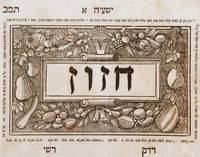
161952679Basel: Ludwig König 1619. First edition in part. Hardcover. Good. Eight parts in three volumes folio biblical texts and commentary in four parts continuously foliated; three supplemental sections each with separate foliation; Tiberias 1655 with separate pagination here bound after the Haftarot - Vol. 1: 6 title and prelims 1-228 1 sect. title 234-441 1 blank ff. Vol. 2: 1 sect. title 442-705 3 blank 707 sect. title-837 1 blank ff. Vol. 3: 839 half-title-881 1 blank 883-946; 8 Targum Yerushalmi; last leaf unfoliated; 67 Masorah 1 blank; 1 title 2-36 Haftarot ff.; 8 title and prelims 108pp. Despite the gap in foliation between the first and second parts and numerous errors in foliation throughout the Rabbinic Bible collates complete with all blanks noted in Prijs Die Basler hebräischen Drucke and the Haftarot bound at the end. Largely arranged in two columns of biblical texts in square font surrounded by commentaries in rabbinic Rashi font; biblical texts read from right to left. This copy with collective Hebrew title surrounded by biblical quotations in Hebrew set within elaborate woodcut architectural borders; brief preface in Hebrew by Abraham Braunschweig at the verso. Hebrew sectional titles set within the same woodcut borders for the three other biblical sections and the Haftarot with a plain letterpress half-title for the Five Megillot. Opening word of each biblical book set in large one-third to one-half page cartouche vignettes with elaborate woodcut borders and surrounding letterpress Hebrew text. Main title Jewish date chronogram = 5378 1618-1619. Near-contemporary half calf over speckled boards worn and rubbed; spines with raised bands gilt morocco lettering pieces and old paper labels heavily faded. About two-thirds of the text embrowned ranging from minimal to moderately heavy; worm tracing in a 1- by 2-inch section at leaves 541-553 affecting text. A good complete set notably containing the Ashkenazi Haftarot readings not found in all copies.<br /> <br /> Sixth Rabbinic Bible in Hebrew: Mikra'ot Gedolot edited by Johann Buxtorf I 1565-1629 professor of Hebrew at the University of Basel and the foremost Christian Hebraist of his era with the assistance of the Jewish scholars Abraham Braunschweig who served as the principal corrector and Mordechai Gumplin of Posen. This was "a truly audacious undertaking for his time" Burnett as no Christian scholar had yet attempted to edit the entire biblical corpus including the Aramaic versions Targumim and masoretic notes. Based mainly on the third Rabbinic Bible published by Daniel Bomberg at Venice in 1546-1548 the editor has carefully incorporated elements from two other Venetian editions. At the verso of the Latin title Buxtorf provides a detailed bibliographical excursus on the earlier Venetian editions and offers a tribute to Bomberg's industry by reprinting the colophon of the second Venetian Rabbinic Bible 1524-1525 at the conclusion of the masoretic appendix with text by the Hebrew grammarian and lexicographer Elijah Levita 1468 or 1469-1549 and a new introduction by Abraham Braunschweig. The design of the sectional titles and separate book title vignettes closely model those of the Venetian editions. "Buxtorf did not plan simply to reprint one of the existing Venice editions but rather to assemble the best features of them all into one work" and "to provide theologians with what he considered the most important tools for interpreting the Old Testament" Burnett. Buxtorf served in an official capacity as Basel's Hebrew censor charged with the oversight of all Jewish printing in the city and insuring that "no 'blasphemies' or slurs against Christians or Christianity appear in any book printed in Basel" Burnett. He carefully edited the Jewish commentaries in the Rabbinic Bible in accordance with this mandate "and removed many words and phrases which had escaped the attention of earlier censors" Burnett. <br /> <br /> The Rabbinic Bible contains the vocalized Masoretic text of the Hebrew Scriptures with accents and a vocalized Targum an Aramaic paraphrase of the biblical text: Onkelos for the Pentateuch; Jonathan b. Uzziel for the Prophets; and Targum Hagiographa for the Writings. The Hebrew and Aramaic versions are printed in square characters and presented in facing columns at the center of each page. The Jerusalem Targum of the Pentateuch appears as an appendix. In addition to the Aramaic paraphrases the Rabbinic Bible includes a massive scholarly apparatus of biblical commentaries by Rashi Ibn Ezra Baal ha-Turim Jacob b. Asher R. David Kimchi Radak R. Levi b. Gershon Ralbag Saadia Gaon and R. Isaiah along with the Masora a corpus of critical notes on the external form of the Biblical text compiled by Jewish scholars from late antiquity through the medieval era. As frequently occurs a copy of Buxtorf's work on the textual history of the Hebrew Bible Tiberias the 1655 revised edition is bound-in. This work was made possible by the publication in 1538 of Elijah Levita's Masoret ha-Masoret a commentary on the Masora which Buxtorf translated into Latin for his own private use in 1593. While "Buxtorf was concerned with the integrity of the consonantal text and the origin and integrity of the vowel points and accents of the Hebrew Bible from the very beginning of his scholarly career." While he had earlier published a long excursus on the age of the vowel points and accents in his 1609 Thesaurus Grammaticus "Tiberias is Buxtorf's fullest and most impressive work on the history of the biblical text" Burnett. Intended as a reference work for Christian students and scholars interested in studying the Masora Buxtorf was also keen to refute the view advanced by Levita that the Hebrew vowel points were early medieval innovations. Our folio version of Tiberias was intended to accompany the Rabbinic Bible and has the same architectural borders at the title. König also published a quarto edition in the same year but only the folio version includes a critical commentary on the Masora in which Buxtorf proposes various corrections to the Masoretic notes. <br /> <br /> As noted at the title Buxtorf's faithful study and tireless labor studio fido et labore indefesso yielded notably long-lasting results: "The Basel rabbinical Bible became a standard tool for research among Christian scholars and would remain so. until the end of the nineteenth century" Burnett. A vast array of early modern scholars including Protestants like Johannes Drusius and John Selden as well as Roman Catholics like Robert Bellarmine and Andreas Masius owned a copy or two of the Rabbinic Bible. "Johannes Buxtorf's thoroughly censored "Christian" version of the Rabbinic Bible Basel 1618-19 only made it easier for Hebraists to own copies of their own" Burnett Christian Hebraism in the Reformation Era p.163.<br /> <br /> A note on the date of publication: "The actual printing began between the mid-August and mid-September of 1618. According to the colophon production ended on the 24 of Ab 379 = August 4 1619 but since this date also appeared on the colophon of the Bomberg Biblia rabbinica edition of 1524-25 reprinted unchanged in the 1546-48 and 1568 editions it is suspect. Prijs suggested that the probable completion date was sometime during Ab of 379 between July 12 and August 10 of 1619" Burnett. References: Biblia Sacra: Burnett 7. Cowley 87. Darlow & Moule 5120 like our copy bound with the 1665 second edition of Tiberias cf. 5093. Davidson Otsar ha-shirah vol.1 p.406 no.8954. Prijs 219. Steinschneider 423 423b. VD17 23:675325G. S. Burnett Christian Hebraism in the Reformation Era Leiden: Brill 2012 p.163. Tiberias: Burnett 114. Prijs 272a. For detailed analyses of both works see: S. Burnett From Christian Hebraism to Jewish Studies Leiden: Brill 1996 pp.169-239 chaps. 6 & 7. Ludwig König hardcover
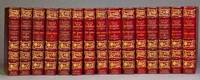
51630London: Printed by the Grolier Society. Édition Magnifique. One of 26 Letter "R" . " This copy has been printed and specially bound for M.E. McC. Darlington." Printed on Japan Vellum by the Edinburgh Press. All Plates in three states one hand-colored. 15 vols. 8vo ca. 1-3/4 inches width per volume size varies 8-7/8 height ca. 25 inches length in total. Bound in full red morocco with the gilt stamped initials of M.E. McC. Darlington in the center of the upper covers elaborate red morocco dentelles with white interior doublures with Grolier coat of arms t.e.g. by the Grolier Bindery stamped on lower front pastedown. Édition Magnifique. One of 26 Letter "R" . " This copy has been printed and specially bound for M.E. McC. Darlington." Printed on Japan Vellum by the Edinburgh Press. All Plates in three states one hand-colored. 15 vols. 8vo ca. 1-3/4 inches width per volume size varies 8-7/8 height ca. 25 inches length in total. Printed by the Grolier Society unknown
144688hardcover. Began the 9th Day of April 1691; and Ended the 27th of September 1743. Vol. I. Published by Order of the General Assembly. title vignette. iv 840 2pp. folio contemporay calf; expertly rebacked in modern calf with leather labels; first few and last few leaves heavily foxed in margins; some light browning to text; binding moderately rubbed edges of corners worn small rubberstamp of a former owner on margin of t.p. N.Y.: Hugh Gaine 1764.<br/> <br/> "The largest issue of Gaine's press and the first piece of government printing he secured. The pp. 2 is `An Act of reversing the Attainder of Jacob Leisler and others' and is often lacking. The work was edited and the index made by Abraham Lott Junr." Ford The Journals of Hugh Gaine I p. 113 This work is complete in itself vol. II was published in 1766. Evans 9756.<br/> <br/> unknown
17793689<b>Scarce Contemporary Stony Point Battle Plan</b><br /><br />This rather crude woodcut depicts a battle plan of General "Mad Anthony" Wayne's daring and dramatic capture of the British fortification at Stony Point about 30 miles up the Hudson River from New York City. The battle planned in detail by Washington took place around midnight on July 16 1779. <br /><br /> The lower portion of the battle plan includes a four item key: "A. The British Fortress B. Abattes abatis in front C. The Reserve D. The detached Party who stormed the Works." Nebenzahl's <i>A Bibliography of Printed Battle Plans of the American Revolution 1775-1795</i> cites only a 1784 London-printed battle plan by Faden for the Stony Point engagement #145. The offered plan is not noted by Nebenzahl was published in America and was issued five years earlier than the Faden plan. The<i> Bickerstaff's Boston Almanack</i> for 1780 would almost certainly have been published in November or December of 1779 – within six months of the actual battle. <br /><br /> A very scarce almanac in the trade. Auction records indicate the most recent copy sold at the Gutman sale in 2005 for $4800. Prior to that Swann sold an example in 1979. <br /><br /><b>References:</b> For the almanac: Evans: 16287; Drake: 3290. For the map: Cresswell: 309. <br /><br /><b>Condition: </b>Map appears on verso of title page and measures about 6 ½ x 3 ¾." Almanac is complete in 24 pp. Slight loss of road table text at upper tip of final leaf.<br /><br />ICN 7643. Printed and sold by Draper and Folsom, and John Mycall of Newbury.
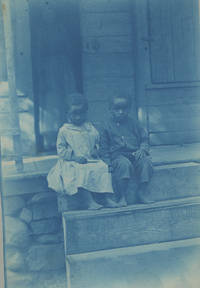
1880List1314Northern California 1880. 4to one album in burgundy cloth the other oblong brown pebbled cloth. Seventy-one sepia-toned and cyanotype photographs most measuring 6 ½ x 4 ½ inches. Near fine with some light wear to albums photographs very good or better with very good contrast some showing a hint of fading. A very early pair of vernacular photograph albums centering on the experiences of a wealthy family in San Francisco Monterey and the surrounding areas in the late 1880s. The bulk of the images show the family and their unidentified circle in domestic scenes with the vernacular architecture and landscapes of the Bay Area on full display. Other images show landmarks including Golden Gate Park the Francis Scott Key monument various views of the first Hotel del Monte in Monterey which would burn in 1887 dating the photographs to the period prior to the fire. The album also includes photographs of African American families. <br /> <br /> The image quality is generally quite strong and the photographer was either a professional assembling the album which includes many portraits of family and presumed friends for themselves or the work of a highly skilled amateur. The Initials on the front pastedown are “M.J.R.†though this could be a later owner. The albums were from the estate of the muralist Clara Fargo Thomas who was a resident of New York and could possibly have been from one of her family members though we are unable to glean much detail from the contents. The few annotations offer little clues one just reading “5/11/89 - Golden Gate Park†and another identifying a house as 509 Webster St. in San Francisco though the typical Victorian architecture and sloped street of the house suggest it could have just been a photograph of San Francisco’s unique architecture. <br /> <br /> The photographs of the people give insight into the lives of the new wealthy class of San Francisco residents of the late 19th century with others interestingly showing rural scenes and people. The photographer also had an eye for the flora of the region which is displayed throughout. It is unclear what the relationship of the African-American subjects was to the photographer and why they appear in the album. Overall a compelling group of images and the earliest example of vernacular photograph albums of California images we can find in the trade. unknown
5439Basel Switzerland: Johannes Herwagen 1563. 1st Edition. Pigskin binding. Very Good. 4 Folio Volumes bound in contemporary full blind-tooled tawed-alum pigskin Clasps missing. Title within architectural border with device of Johann Herwagen. Profusely illustrated with woodcut maps Astronomy music tables diagrams. Text in two columns; with Index. 4 vols. Folio. This is the first of three continental editions of the works of Bede the others being from Cologne in 1612 and 1688. Johann Herwage a printer originally from Strassburg married the widow of the great Basel printer Johann Froben and for a while collaborated with his stepson Hieronymus Froben. From 1532 however he again started printing under his own name. Johannes Herwagen unknown
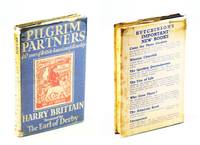
1942163H4369London: Hutchinson & Co. Publishers Ltd. 1942. Book. Fair. Hardcover. First Edition. 8vo - over 7¾" - 9¾" tall. 156 pages. Index. Seventeen black and white plates. "In this unusual and important book the author traces the remarkable history of 'The Pilgrims' a unique organization which may well prove the basis and meeting-ground for an even closer fellowship between the the two great English-speaking peoples on whose constant friendship the peace of the world so largely depends." - from dust jacket. "The goal to move America into global government is not new. It was the goal of many British aristocrats specifically Cecil Rhodes and industrialist Andrew Carnegie along with the Pilgrim Society." - Joan Veon 2007. Average wear to unmarked book which is foxed at edges. Above-average wear and yellowed tape repairs to dust jacket now preserved in archival-grade Brodart. A worthy example of this elusive title much-sought by conspiracy researchers. Please note that this is not a limited edition copy. Hutchinson & Co. (Publishers) Ltd. Hardcover
190823509PUblished By The Reilly & Britton Co. Chicago 1908. Glossy COLOR Frontispiece by Howard Heath Light Wear OF 4 Boys in Bubble Like Vehicle Title Page Corner Dog Ear light Soil. Splendidly Illustrated Blank Flyleaf page at Back MISSING There are pages of colorful illustrations.Hardback NODUSTJACKET 1908 1ST EDITION VG-/GOOD SOLD AS-IS. NO JACKET Cover is Brown black & White Slight SOIL & Darkening SPINE COVER Front has slight Rub Scuff Tiny Chips TEARS Extremities & Wear Lettered in Black on Spine WITH Tears Ends 12 mo. with three titles listed on page Preceding Contents. Ending with in Egypt Interior nice Tight Light FOX Stains Wear few wrinkled or Dogeard pages. 310 pgs ADS Light edgewear tan. 8vo Decorations and lettering on boards is still strong and easy to read. Interior few Pencil Marks Pages slightly age tonedSize of book is about 5 1/2 and 7 1/2. Cover Couple corners Rubbed Thru The cover has heavy shelfwear and edge rubbing with tears at top and bottom of spine. .First Edition . One of the scarcer titles in the series and one especially hard to find in collectible condition. .This is Very Scarce Title. First Edition. Hard Cover. PUblished By The Reilly & Britton Co., Chicago hardcover
51630London: Printed by the Grolier Society. Édition Magnifique. One of 26 Letter "R" . " This copy has been printed and specially bound for M.E. McC. Darlington." Printed on Japan Vellum by the Edinburgh Press. All Plates in three states one hand-colored. 15 vols. 8vo. Bound in full red morocco with the gilt stamped initials of M.E. McC. Darlington in the center of the upper covers elaborate red morocco dentelles with white interior doublures with Grolier coat of arms t.e.g. by the Grolier Bindery stamped on lower front pastedown. Édition Magnifique. One of 26 Letter "R" . " This copy has been printed and specially bound for M.E. McC. Darlington." Printed on Japan Vellum by the Edinburgh Press. All Plates in three states one hand-colored. 15 vols. 8vo. PLATES IN THREE STATES ONE OF 26 COPIES. Printed by the Grolier Society unknown books
1861007995Madrid: Imprenta y Litgrafia Militar del Atlas S. Bernardino 1861. First Edition. Half Calf. Pebbled Cloth. Very Good. D. J. Villegas. Majesterial pictorial survey of Spanish cavalry costume from the era of the Roman Empire -- called here the Caballeria Primitiva -- up to 1861 with the number of illustrations devoted to a century increasing with each successive century. Thus the Gothic era or seventh century is given a single plate while the nineteenth century then in its seventh decade receives 14 plates. Oblong folio 30.5 by 41 cm. Title leaf half-title leaf two page intro followed by 69 hand-colored lithographic plates and 40 explanatory pages which are interspersed with plates. Plates have lightly colored or more accurately tinted backgrounds which have a flatness to them. However richer coloring was applied to costume the men and their horses. Gum Arabic sometimes used to enrich the color as well. At the close of the book there is a one page indice. Starting of joints which also rubbed considerably. Cloth on boards scratches and other signs of moderate wear. Leaves within age toned with scattered soiling generally light and not disconcerting. Imprenta y Litgrafia Militar del Atlas S. Bernardino unknown
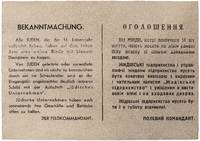
1941537087Not specified but German-occupied Russia: Der Feldkommandant 1941. Unbound. Near Fine. 11.5" x 8.25". Printed on gray paper in two columns one each in German and Russian with an identical message. A bit of very slight soiling near fine. A notice ordering Jews of 14 years or older to wear a white band with a blue Star of David on their left arm and ordering all Jewish-owned business to be clearly legibly marked as such on the front door and front window as a "Judishes Unternehmen" "Jewish Company". Additionally the final paragraphs states that Jewish-owned business would be required to be open on Saturdays. We could find no record of this seemingly innocuous but chilling broadside which is presumably rare. Der Feldkommandant unknown
177963924Boston: Printed by Thomas & John Fleet 1779. Broadside. 25 x 19 cm. Signed in type by John Pickering Speaker and read and concurred a true copy by John Avery Dep. Sec'ry. Old fold lines some tears to edges with loss at upper corners as though from being posted one closed tear along a fold line slightly affecting two words some overall toning to paper. Thomas and John Fleet inherited the printing business from their father Thomas Fleet who died in 1758. Thomas Fleet Sr. was known to employ enslaved men as printers working "at print and case" in his shop according to Isaiah Thomas in his "The History of Printing in America" Worcester: 1810 vol. 1 pp.294-301 & 352-3. Two of the men Pompey and Cesar were young when Fleet died "but they remained in the family and continued to labor regularly in the printing house with the sons of mr. Fleet. until the constitution of Massachusetts adopted in 1780 made them freemen." ESTC: Huntington MHS. We add LC. EVANS 16361 which calls for 2pp. evidently in error. FORD. Broadsides 2184. CUSHING. Mass. Laws 1060. <br/><br/> Printed by Thomas & John Fleet] unknown books
59180Virtually all of the material dates from the 1860s to the 1920s with a sampling preceding and following that period. The collection includes:<br/> I. Works by Adelaide Fries <br/>1. Three typed or autographed letters signed to 1 her grandfather 2 the "Board of Trustees of Salem Congregation" and 3 John Fries the latter two concerning historical matters. <br/>2. Three typed letters signed to "Libby" concerning a project they were working on in 1945; one of the letters is accompanied by a carbon copy 11-pp typescript with manuscript corrections by Fries of the opening chapter of a book that Fries hoped "Libby" would illustrate. <br/>3. "An Ocean Voyage" an undated 2-page typed poem by Fries signed by her. <br/>4. Approximately 200 pages of typescript with some manuscript corrections comprising carbon copies of various biographical and historical sketches of Moravian and/or North Carolina figures and issues. <br/>5. "The Salem Pottery" a 5-page autograph manuscript signed and dated 5 January 1914. <br/>6. "Moravian Customs" a 45 page typescript with many manuscript corrections and additions of "four lectures delivered before the Woman's Auxiliary of the Home Moravian Church October 1933 to February 1934." Self-wrappers with significant wear tied. <br/>7. Small group of records about 25 items pertaining to personal finances; a few receipts for books purchased from The Moravian Publication Office in London are included. <br/>8. Personal scrapbook containing mementoes from an 1894 trip to Roaring Gap N.C. including a long poem commemorating the trip by the Fries sisters Blair and other friends; accompanied by newspaper clippings four pencil drawings by Mary Fries and two photographs one of the Roaring Gap Hotel the other of the participants. Several pieces of ephemera from an 1899 trip to Europe are laid in. <br/>9. Personal scrapbook documenting Fries's 1913-1914 service as president of the North Carolina Federation of Women's Clubs including newspaper clippings programs and other printed ephemera photographs ribbons postcards and a few manuscript items. <br/>10. "History as Told in Salem's Memorabilia" translated from the original German by Fries: a scrapbook containing 1916 Winston-Salem Journal clippings of Fries's regular column dealing with 18th century Moravian history. <br/>11. Personal scrapbook containing clippings of Fries's column "Chips from Historic Timber" from The Wachovia Moravian 1896-1903 with many manuscript annotations and corrections.<br/>II. Correspondence to Fries: More than 40 autograph and typed letters and postcards to Fries from Stephen Weeks 6 items other North Carolina historians 6 Moravian officials and historians 11 and other professional associates 23.<br/>III. Photographs: 60 photographs of family and friends all but a few unidentified but many with Winston-Salem backmarks and views of local scenes.<br/>IV. Genealogy: About 50 pages 4to and folio of typed and manuscript genealogical notes most relating to the von Schweinitz and Adam Spach families.<br/>V. Moravian manuscript: von Schweinitz Bishop E.A. Short Account of Celebration of Oct 26/1866. 4-page autograph manuscript an autobiographical account of the Bishop's Jubilee or 50-years service for the Moravian Church. 4to. The Bishop was Adelaide Fries's grandfather.<br/>VI. Ephemera: More than 200 peices of ephemera including printed programs handbills pamphlets sheet music embroidered bookmarks and other small hand crafts and manuscript notebooks account books receipts music etc. All of this material relates either to the Fries or Blair families Winston-Salem or the Moravian Church.<br/>VII. Blair family: Collection of material produced by Adelaide Fries's sister Mary her husband William A Blair and their family including correspondence approximately 75 letters and postcards; 3 scrapbooks containing more correspondence and other manuscript material newspaper clippings and various pieces of printed ephemera; several typescripts; and a number of other miscellaneous items. For the archive of approximately 500 items:. <br/><br/> unknown books
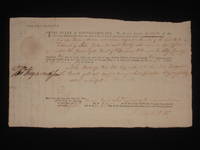
178507931South Carolina 1785. Partly printed document signed "Thos. Hayward Junr." One page 13" x 8" dated July 5 1785 being a summons for Thomas Serven and James Fogartie executors of the last will and testament of John Garden.to be and appear before the Justices.Docketed on verso by the Sheriff that the order had been carried out. Very good small hole in one letter of the signature. Thomas Hayward 1746-1809 was planter jurist revolutionary soldier and Signer of the Declaration of Independence from South Carolina. An officer in the Revolutionary War he was captured by the British in 1780. His slaves were then sold to sugar planters in Jamaica. <br/><br/> unknown books
1926055829Istanbul: Ikbal Kitabhânesi Chaphâna-ye Abajoli. AH 1345 = 1926 1926. Hardcover. Very Good. 8vo - over 7¾ - 9¾" tall. Original full burgundy cloth with original purple endpapers. The title and publisher are lettered in gilt on the front board with the period price "Fiyati 125 gurush" on the rear board. Foolscap 8vo 18 x 10 cm. In Persian. 47 pages of text followed by 36 1 chromolithographed maps on numbered double-page leaflets. There is an additional lithographed index map of Iran. Minor shelf wear on the front and rear boards slightly faded endpapers many maps loosely inserted into the binding a small tear on the 32nd map. Overall a very good clean and complete copy. The first and only edition of this extremely rare and attractive pocket atlas of Qajar Iran produced during the Pahlavi period in the second year of the rule of Reza Shah Pahlavi. The atlas divides the country into 30 sections accompanied by 36 chromolithographed maps and one lithographed index map providing economic agricultural financial demographic commercial and political information. It was published by Hossein Ketabchi an Iranian bookseller and publisher of Azerbaijani origin who owned the Iqbal Publishing House in Istanbul between 1902 and 1943. According to the preface and introduction which begin with praise for the ruling Pahlavi dynasty particularly Reza Shah the Iranian publisher arranged each map in this atlas at a scale of 1:2000000. The maps are organized geographically starting from Khorasan in the east and moving westward to Tabriz. The final two maps include place names toponyms. The maps included: Iran general political map and neighbouring countries and regions Baluchistan Afghanistan Turkestan Arabia Iraq the Caucasia etc. map of the mountains with an inlaid relief map of cities and regions such as Qum Isfahan Tehran etc. map of Mashhad Tous and Jam map of Shirvan Bojnurd Jajrom and Bastam map of Astrabad Gorgan Mazandaran and Semnan map of Nishapur Sabzavar Shahrud Tebes and Gonabad map of Semnan Lasjerd Ardestan and Naeen map of Mazandaran Tehran Qazvin and Rasht with Khazar shore map of Qazvin Mianeh County Rasht and Hamadan map of Langran Ardabil and Tabriz map of Tabriz Khoy Maku and Urmiya with the Lake of Urmiya map of Urmiya Sakhar and Sanandaj Iran Kurdistan map of Hamadan Kermanshah Borujerd and Dezful Khozistan Province map of Karbala Bagdad and Khanakin Iraq map of Khozistan Dezful and Shushtar map of Fars Province Shiraz Bandar-e Bushehr map of Fars Province Shiraz Firuzabad and Farg map of Isfahan Naeen Abadeh and Merakan Hormozgan Province map of Qum Kashan Isfahan and Golpayegan map of Yazd Kerman Province Marand and Bavanat map of Kerman Province Baft Bam and Orzu map of Bandar Abbas Bandar Lengeh Term and Bandar-e Jask with strait of Hormuz with the north of the Persian Gulf a part of the Arabia present day UAE and Omman map of Fars Province Larestan County and Jahangiri map of Qaen Birjand Tebes Tun and Kuhestan of Mazandaran Province map of Harat of Yazd Province Khaf Qaen Birjand and Dorud map of Mistan Nehbandan and Sarhad district map of Ladez Jaleq Kuhak and Sarbaz in Sistan and Beluchistan regions map of Makran Bahuklat and Bandar Gavater with the sea of Oman and shores map of Makran Qasr-e Qand Shahbaz map of Bam Reykhan South Khorasan Bampur and Sarbaz map of trade routes of Iran map of Iranian railways demographic map of Iran relief maps of Iran from Bayazid to Tehran from Bagdad to Tehran three inlaid maps relief maps of Iran from Mashhad to Tehran from Isfahan to Tehran three inlaid maps and relief map of Iran from Bandar Abbas to Tehran and from Kashan to Bushehr including three inlaid maps. Hossein or Hüseyin later known as "Hüseyin Kitapçi" after the Surname Law in Turkey began his career at the Iranian-origin Sems Publishing House before founding his own publishing house in 1902. Until he died in 1943 he made significant contributions to literature publi <br/> <br/> Ikbal Kitabhânesi, Chaphâna-ye Abajoli., [AH 1345 = 1926] hardcover
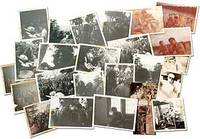
1967393485San Francisco 1967. Unbound. Good. A collection of snapshots taken at the New Year's Wail concert on January 1 1967 at the Panhandle near Golden Gate Park in San Francisco with some accompanying images. Various sizes. Condition is overall good with tape remnants or shadows mostly in the margins. Several are captioned.<br /> <br /> The "The New Year's Wail / New Year's Whale" was organized by the Hells Angels as a thank you to and a celebration of the Haight Ashbury community for "crowdfunding" the bail money for their member Chocolate George after a traffic arrest. The Diggers helped to promote the event which featured Big Brother and the Grateful Dead as well as Orkustra with Bobby Beausoleil later of the Manson Family. The bands played on a flatbed truck and the photographer was clearly very close to the bands probably on the truck itself. Of the dozen candid photographs of the concert all but one the only color image of some Hells Angels and their bikes in the crowd feature the bands: Joplin appears in at least eight of them and Jerry Garcia in three with other shots of other band members in various combinations. Also accompanied by several other images: two color images of Joplin singing date stamped in May 1967 damage to the margins although the images of Joplin are largely clear. Also with a color photo of a psychedelically decorated hippie crash pad as well as another 14 images of several young men presumably the photographer and his friends: one with a motorcycle several in military garb sitting on a dock smoking pot one on a ship's deck and several overseas in Thailand and the Philippines. unknown
144688hardcover. Began the 9th Day of April 1691; and Ended the 27th of September 1743. Vol. I. Published by Order of the General Assembly. title vignette. iv 840 2pp. folio contemporay calf; expertly rebacked in modern calf with leather labels; first few and last few leaves heavily foxed in margins; some light browning to text; binding moderately rubbed edges of corners worn small rubberstamp of a former owner on margin of t.p. N.Y.: Hugh Gaine 1764.<br/><br/> "The largest issue of Gaine's press and the first piece of government printing he secured. The pp. 2 is `An Act of reversing the Attainder of Jacob Leisler and others' and is often lacking. The work was edited and the index made by Abraham Lott Junr." Ford The Journals of Hugh Gaine I p. 113 This work is complete in itself vol. II was published in 1766. Evans 9756.<br/><br/> unknown books
1630SAV156Strassburg: In Verlegung Lazari Zetzners Seligen Erben 1630. Hardcover. Good. 1625-1630. Four parts in one volume separately titled two with engraved borders. Oblong 8vo 133x175mm. Pagination: Part 1: 3-111 1pp. lacking title; Part II: 135 1pp. pp. 19-20 misbound but present ; Part III: 87 1pp.; Part IV: 159 1pp lacking 5 engravings at pp. 69-70 89-90 141-144 157-158. Sold as is. 228 oblong copperplate engravings of Old and New Testament compositions covering biblical books of Genesis to Apocalypse with Latin German and French text from a chronicle by Johann Ludwig Gottfried. Old German Type. This copy opening with the dedication by Merian to the austere and noble Frankfurt town mayor Johann Martin Bawer von Eiseneck Baur von Eysseneck and followed by the Favorable Reader pages. Part I of the Icones Biblicae covers the books of Genesis to end of Deuteronomy. Part II is dedicated to Anna Maria Königin and Jacob Sandrarts a burger and tradesman of Frankfurt respectively and covers the books of Joshua to second book of Kings. Part III the shortest and dated 1630 covers books of Chronicles to II Maccabees. Part IV dated 1629 with engraved title with Christ as Humilitas and astounded St. Paul in Glory covers New Testament chronicles and scenes including all four Gospel writers Acts of the Apostles and the Apocalypse. Later half calf over speckled boards; front cover loose some minor excisions as noted above preliminary leaves and some corners and margins repaired some margins shaved close with loss scattered stains overall a good compact copy rich in engravings. <br/><br/>Merians engravings and Gottfrieds trilingual chronicle together an iconographic compendium to the Bible the Icones Biblicae published between 1625 and 1630 by Zetzners in Strassburg. The printers De Bry in Frankfurt produced another edition of the same title from 1625 to 1627. After 1631 other editions of the "Icones Biblicae" appeared in Amsterdam and Cologne. The initial work was conceived as a monumental collection of great scenes from the Bible designed by Merian and accompanied with short descriptive texts in German Latin and French by German theologian and historian Johann Ludwig Gottfried. Swiss-born engraver Matthaeus Merian the Elder lived in Frankfurt most his life where he produced several religious historical and topographical publications for the European market. Perhaps best known for his detailed prints of European cities Merians biblical imagery both of Old and New Testament compositions were also well integrated into the vernacular culture of his time. Merians superb engravings are reminiscent of seventeenth century European landscapes plentiful in period details and notable for Baroque-ized exaggerations consisting of raucous figures in high drama situations. It is purported Rembrandt van Rijn consulted a copy of the "Icones Biblicae" for ideas for his compositions. OCLC locates only one copy but that of De Bry in a US institution. This Zetzners edition is uncommon outside Europe. Altogether a scarce work and commonly lacking a few engravings which were probably pulled for artistic reference. In Verlegung Lazari Zetzners Seligen Erben hardcover
163238184London: Printed by M. Flesher for Rich: Royston in Ivie-lane next the exchequer Office London 1632. Hardcover. Very Good. Hardcover. This is the third edition of Montaigne's influential and famous essays and on the title page it says that whereunto this edition is now more newly added an index of the principal matters and personages mentioned in the book. The celebrated architectural illustration that is engraved on the title page is by Martin Droeshout responsible for the iconic portrait of Shakespeare in the First Folio also appeared in this edition for the first time Montaigne is credited with pioneering the modern essay form. His Essays are a collection of personal reflections exploring a wide range of topics from human nature to philosophy literature and personal experiences. Published in three books they were written and revised over several decades with the first edition appearing in 1580. The remarkable modernity of thought apparent in Montaigne's essays coupled with their sustained popularity made them arguably the most prominent work in French philosophy until the Enlightenment. Their influence over French education and culture is still strong. Wikipedia They were originally written in Middle French and published in the Kingdom of France. Montaigne's stated design in writing publishing and revising the Essays over the period from approximately 1570 to 1592 was to record "some traits of my character and of my humours." Montaigne's Essays went through several stages of publication evolving from a two-book work in 1580 to a final posthumous edition in 1595. The first English translation of Montaigne's Essays was published in 1603 by John Florio. This translation titled The Essayes or Morall politike and millitarie discourses was a significant event in English literature introducing the French philosopher's work to an English-speaking audience. <br /> <br /> Bound in full brown leather; the spine has raised bands with titling and ornaments in gilt. There are small chips on the right side of each band. A small piece of leather at the bottom of spine edge is torn away and their is a slight crack to the top of spine along the front cover. The covers have some bumping and rubbing and a few small spots. It appears that the formal endpapers are missing and there is just rough paper covering the inside covers. It is torn and revels glue remnants <br /> <br /> The front inside cover has a bookplate with a coronet and the Latin motto "Vernon Semper Viret" meaning in English "Vernon Always Flourishes". This appears to belong to George John Warren Venables-Vernon 5th Baron Vernon 1803-1866 who was a British politician and member of parliament. He was also a devotee of Dante and The Inferno.<br /> <br /> The text pages have bright white margins but the printed text sections are somewhat browned. There small brown spots along the margins of pages 55-60 with one having become a hole. There are three books of essays with the second and third books having title pages dated 1631. The first book: pages 1 - 177; the second book: pages 183-440; the third book: pages 443-631. It is followed by the "Index or Table of subjects that is unpaginated. Despite the noted condition issue this is still a very good copy of this important book. LIT/073125. Printed by M. Flesher, for Rich: Royston, in Ivie-lane next the exchequer Office, London hardcover
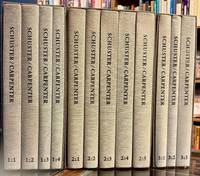
1988022752New York: Rock Foundation 1988. First edition. 12 volumes in 3 parts and 3 slipcases. Large folios gray cloth. Very slight rubbing to spines and slipcases; Near fine or better. No signs of previous ownership. Schuster 1904-1969 a pioneer in the Study of Folk Symbols spent his life traveling the world gathering them and compiled an extensive and organized file of examples. Carpenter compiled and wrote this book from those files. It is also a masterpiece of printing and book design by Meriden/Stinehour Press. Rock Foundation unknown
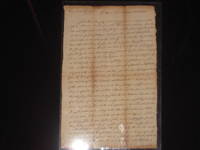
178307938Pennsylvania 1783. Manuscript Document Signed one page 8 1/4" x 12 1/2" - dated April 30 1783; light toning at folds very good. James Smith 1719-1806 was a Lawyer member of the Continental Congress from 1776 to 1777 and Signer of the Declaration of Independence from Pennsylvania. <br/><br/> unknown books
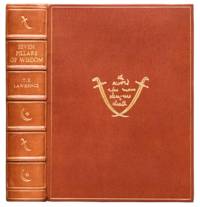
1935895London: Jonathan Cape 1935. First Trade Edition. Bound by Bayntun-Riviere. Fine. LAWRENCE T. E<br /> Seven pillars of wisdom: a triumph<br /> London. Jonathan Cape 1935. First trade edition.<br /> <p>Quarto. 672pp. With a photogravure portrait frontispiece of Lawrence from the plaster bust by Eric Kennington 53 plates four in colour and four folding maps. Bound by Bayntun-Riviere stamp-signed to front turn-in in contemporary gilt-tooled brown morocco A.E.G. marbled endpapers Housed in custom tan cloth slipcase. An immaculate copy.</p> <br /> <p>A handsomely bound copy of the first trade edition of Lawrence's magisterial account of the Arab Revolt during the First World War.</p> . Jonathan Cape unknown