78 250 résultats
142 x 104 mm. Mounted on slightly larger cardboard. "Herrn Pagia zur freundlichen Erinnerung [...]" ("To Mr. Pagia, in fond remembrance"). - From the atelier of H. Eckert in Prague with his printed signet to original cardboard. - Well preserved.
4to. 1 p. With an autograph envelope. Charming letter in French and German to the silent film star Dagmar Godowsky, thanking her for a "pharmaceutical package" and telling her about a conversation with her brother and his imminent departure for Lake Geneva: "Mille merci de votre envoi pharmaceutique votre frère avec lequel j'ai eu eine telephonische conversation reste ici 2, 3 jours et moi qui pars aujourd'hui au Lac de Genève pour 3 jours (afin de décider pour l'été). En toute hâte. Mille meilleures choses à vous, chère amie, küsse die Hand". Above the text, Stravinsky adds in German that he is in sufficient health: "Gesundheit Got [!] sei bedankt ganz gut". - In her memoir, Dagmar Godowsky (1897-1975) named Stravinsky as one of her great lovers. Little is known of the relationship, but the letter bears beautiful testimony to Stravinsky's familiarity with the actress. Her younger brother Leopold Godowsky Jr. was a violinist and chemist who, together with Leopold Mannes, created the first practical colour transparency film, Kodachrome. - Traces of folds. With tears to the folds and minimal browning.
8vo. 1 p. on bifolium. In pencil. To his friend, the patron, music critic, and tenor Pyotr Suvchinsky (1892-1985), correcting a note in the score of "Perséphone". As Stravinsky demonstrates with the help of two short musical notations of the "6th measure of the beginning", the last syllable of the word "mois-son" (crops) was to be sung in B and not in a higher D. The notations with French captions are followed by a short explanation in Russian, starting with the exclamation "For God's sake". - Stravinsky had invited his friend and fellow expatriate Suvchinsky to sing the part of Eumolphe in the production of the theatrical ballet "Perséphone". In a letter from 23 July 1933 Suvchinsky wrote to thank Stravinsky: "Your promise [of the part in "Perséphone"] is the first gift that I have received in Paris" (Levitz, p. 321). Nevertheless, the role was created by René Maison at the premiere at the Paris Opera on 30 April 1934. - "Perséphone" was a collaboration between Igor Stravinsky and the Nobel laureate André Gide. The famous dancer Ida Rubinstein had initiated the project in 1933 and later danced the lead role. For the libretto Gide revised a sketch from 1912, but the collaboration proved difficult, as Stravinsky took liberties in adapting the text to his musical vision. Ahead of the premiere, Gide distanced himself from the project, as he was dissatisfied with Jacques Copeau's staging and Kurt Jooss's choreography. Only much later did Gide acknowledge the quality of Stravinsky's composition. - Well preserved. Tamara Levitz, Modernist Mysteries: Persephone (Oxford: Oxford University Press, 2012)
Envelope neatly cut open and laid flat, forming an 8vo leaf. Addressed in Tchaikovsky's hand to the German musicologist Hugo Riemann (1849-1919). A gilt stamped seal on what was the verso of the envelope features Tchaikovsky's Cyrillic initials; the name "Petya" (in Cyrillic) "Tchaikoffsky" (in Roman letters) is inked on the upper right margin. It may have been written after the letter was opened and folded flat, as it would have been upside down on the original envelope. - Contemporary inkstains and smudges, traces of former mounting.
2¼ SS. auf Doppelblatt. 8vo. An den Musikverleger Anton Diabelli, zum Tode des Bassisten Gottfried Reggla, für den er das komische Bassduett "Der Doktor und der Patient" geschrieben hatte: "Der Tod unseres guten Reggla hat mich sehr ergriffen; ein in jeder Beziehung schwerer Verlust. Es drängte sich mir wohl gleich die Frage auf, ob wir nun den Titel des Duetts ändern sollen? - ich möchte sie kaum bejahend lösen. Mir wenigstens wird Reggla's Nahme auf dem Titelblatte als ein werthes Denkmahl an den lieben Abgeschiedenen erschienen, - vielleicht dürfte noch mancher so wie ich darüber urtheilen, und gerade deßhalb das Werk sich anschaffen, weil es zugleich als Souvenir des so früh Heimgegangenen ihnen dienen wird. Übrigens stelle ich es ganz Ihrem Ermessen anheim, was hier am zweckmäßigsten zu thun ist. - Ich bin selbst von einem heftigen Fieber aufs Krankenlager geworfen worden, und bin noch nicht im Stande auszugehen, sonst würde ich Sie schon aufgesucht haben. - Für die mir übersandten 3 Exemplare des spanischen Duetts danke ich schönstens; eines werde ich der Frau v. Kiss bringen, eines behalte ich mir, u. eines bekommt Ciccimarra zur Anempfehlung an seine Schüler. Wenn Sie mir noch 3 Exemplare senden wollten, ich könnte sie ebenfalls auf eine für uns beyde vortheilhafte Weise an gewisse musikalische Notabilitäten, die das Duett doch nicht kaufen, wohl aber es überall preisen werden, vertheilen. Wollen Sie sonach, wenn es Ihnen möglich erscheint, mir durch den Überbringer dieses Briefs noch 3 Exemplare zukommen lassen. Sollte eine Correctur des italienischen Stücks kommen, so lange ich noch Patient bin, so bitte ich um deren Überschickung, Riemerstraße Nr. 812, 2ter Stock [...]".
1 S. Qu.-4to. Mit rotem Lacksiegel. "Des französischen Sprichworts: 'pour un homme d'un vrai talent il n'est pas difficile de reussir mais bien difficile de parvenir' eingedenk, empfehle ich allen meinen Gönnern und Freunden, die mich ihres geneigten Andenkes würdigen, Vorzeigern Dieses: Herrn Albert Wurm. Steht die Thür einmal offen, so wird schon die Vielseitigkeit seines Talents als Tenorist und Schauspieler und das, den Künstler adelnde, Betragen des Menschen Alle, in dem Maaß, als sie ihn kennen lernen, für ihn einzunehmen nicht verfehlen [...]". Vogler zeichnet als "Großherzoglich Hessischer geistlicher Geheimrath, des Verdienst-Ordens Kommanden." - "Vogler muß als Schlüsselfigur der Musikgeschichte gesehen werden. Er begann als erster mit einer systematischen Musikanalyse [...] Seine Mannheimer Tonschule wurde zum Vorbild für die Gründung von Konservatorien und Musikschulen. Er ist der geistige Vater der vergleichenden Musikwissenschaft, aber auch von Bedeutung für die Palestrina-Renaissance und das Musikdrama deutscher Prägung. Er lieferte der Romantik entscheidende Anregungen bezüglich Musikästhetik, Instrumentation und Harmonisation; seine Schriften gehören zu den führenden der Zeit" (MGG XIII, 1896f.). Vom Sänger, Schauspieler und Tänzer Ferdinand Albert Aloys Wurm (1783-1834), der 1801-04 in Warschau engagiert war, seit 1809 am Nationaltheater Berlin spielte und 1817 an die Leipziger Bühne wechselte, ist ein Portrait von Lanzedelly überliefert.
4 SS. auf Doppelblatt. 8vo. Bedeutender früher Brief an eine vertraute Berliner Freundin (Marie von Schleinitz?) über Bülows und Wagners Aktivitäten zur Vorbereitung der "Tannhäuser"-Premiere in Paris, die Wagners internationalen Durchbruch sichern sollte. Der Aufführungstermin sei nun "décidement demain 27 février" (sie wußte noch nicht, daß der Termin, wie bereits zuvor mehrfach, erneut kurzfristig verschoben worden war; tatsächlich fand die Premiere erst am 13. März statt). In den Proben seien die Diven, von denen man Probleme erwartet hätte, überraschend gefügig gewesen ("Les cantatrices si capricieuses d'ordinaire ont de fait bonne volonté pour Wagner"), während ausgerechnet Wagners große Hoffnung, der Startenor Albert Niemann (1831-1917), die Erwartungen nicht erfülle ("il parait que Niemann sur lequel on avait tant compté est le seul qui ne satisfasse que médianement, et ne remplisse l'attente qu'à moitié"). Hans [von Bülow, Cosimas damaliger Gatte] entfalte eine unvergleichliche Aktivität und kümmere sich neben seinen Dirigaten auch um wichtige Kontakte in Paris (u. a. bei einem Besuch des Herausgebers der "Revue Germanique", Charles Dollfus, und beim späteren Ministerpräsidenten Émile Ollivier). Bülow bemühte sich auch den von Wagner verehrten Altmeister Berlioz für jenen zu gewinnen, doch verblieb dieser in seiner kritischen Haltung gegenüber Wagners "Zukunftmusik" ("Il a vu aussi ou plutôt aperçu ce pauvre Berlioz qui abdique sa dignité et sa grandeur d'homme de génie pour faire cause commune avec les envieux et qui suscite à Wagner autant d'ennemis que possible"). Verdis neue Oper ("Un ballo in maschera", Pariser Erstaufführung im Théâtre-Italien am 13. I. 1861) habe Bülow gesehen und sei nicht begeistert gewesen ("Il a vue le nouvel opéra de Verdi dont il n'est pas enchanté"). Die Unterstützung ihres Vaters fehle Bülow in Paris, doch sei es Liszt leider nicht möglich, ohne weiteres abzureisen ("Mon père ne peut malheureusement pas quitter ainsi je crains bien qu'il ne manque Hans à Paris"). Liszt ertrinke in Arbeit ("il a la mer à boire") und dirigiere eine Reihe von Kindersonaten für die Fröbelbewegung ("tacte une série de Kindersonaten avec programme pour l'éducation Fröbel"). Cosima bittet ihre Freundin, ihr die Briefe von Friedrich Hebbel zu übersenden (- dessen Manuskript der "Nibelungen" sie damals einsah, nachdem sie zwei Jahre zuvor Hebbels Tragödie "Maria Magdalena" ins Französische übersetzt hatte), und teilt ihr mit, dass sich ihre Gesundheit etwas gebessert habe. - Liszt hatte seine kranke Tochter am 21. Februar 1861 zu sich auf die Altenburg nach Weimar gebracht. Der besorgte Vater befürchtete damals, daß er sie, wie zwei Jahre zuvor seinen Sohn Daniel, an die Schwindsucht verlieren würde. Die genesende Cosima begann im Folgejahr eine Beziehung mit Wagner, den sie 1870 ehelichte und dessen Erbe sie als Leiterin der Bayreuther Festspiele noch fast ein halbes Jahrhundert pflegen sollte. Die langersehnte "Tannhäuser"-Premiere in Paris geriet indes trotz langer und gründlicher Vorbereitung und trotz Protektion durch Napoleon III. zum Debakel und mußte nach lediglich drei Aufführungen abgesetzt werden.
8vo. 2 pp. on bifolium. To a count, thanking for an invitation of which he is not sure he can avail himself, as he is still exhausted from the previous few days, asking for a period of 24 hours to make a decision, and hoping to be able to express his appreciation in person either the following night or a couple of days later: "Monsieur le Comte, croyez-moi bien flatté de votre aimable invitation. Au moment où je suis, je me trouve encore tellement épuisé et souffrant par les fatigues des derniers jours, que je vous dois prier de m'accorder un delai de 24 heures pour que je puisse vous dire, si il me sera possible de venir demain soir. Permettez-moi donc de vous faire annonce demain matin, comment je me trouve; j'espère une bonne nuit, et alors je serais très heureux de vous pouvoir dire déjà demain mes remerciments, ce que je ne manquerais pas faire en tous cas quelques jours plus tard […]". - With former collector's number "94" in pencil. Traces of former mounting on reverse; traces of an old fold near lower right corner; tiny flaw to upper margin.
4 SS. auf 2 Bll. 4to. An den Bühnenbildner Caspar Neher, dem er u. a. über die augenblickliche Situation in Deutschland schreibt: "Ich kann mir denken, wie schwer es für euch sein muss, nach allem was ihr in den letzten Jahren erlebt habt, euch an das Leben in einem sorgenfreien Lande zu gewöhnen. Ihr seid ja jahrelang von der Welt abgeschnitten gewesen und seid daher ein bischen in der Situation eines Inselbewohners, der nach jahrelanger Abwesenheit aufs Festland kommt, und seine erste Reaktion ist, dass er sich nach seiner Insel zurücksehnt […] Aber wir leben in einer Übergangszeit und erst in einigen Jahren wird man wissen, was aus Europa werden wird - und ob die Welt wieder zu normalen Zuständen zurückkehren wird […]". - Stellenweise gering fleckig.
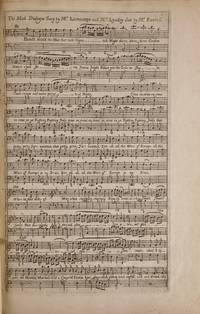
41185Folio. Contemporary dark brown leather-backed blue/gray boards. Titled "A collection of Songs by several eminent Masters" in contemporary manuscript on recto of first page of music. Engraved throughout.<br /> <br /> Provenance<br /> With "Lucy Gregory July the 6th 1756" and "Prince Gregory" in contemporary manuscript to front pastedown. Manuscript titling and annotation "Ex dono Revd. Dr. Dawson For use of Musical Society Windsor Castle to be returned to Dr. Dawson When ye club ceases viz when it is reduced to three persons" to blank recto of first song along with title and index to blank verso of final song.<br /> <br /> Contains 33 songs including works by Barrett Blow Eccles Galliard Handel 8 Leveridge Orlandini Pepusch Daniel Purcell Henry Purcell 2 Weldon and others. Scored mainly for voice most for one voice and few for two and figured basso continuo with single-line flute arrangements for some songs.<br /> <br /> 1. Handel. "A Favorite song in the Opera of Theseus" "See see your faithfull lover pineing". London ca. 1720. i blank 2 i blank pp. BUC p. 1001.<br /> <br /> 2. Purcell H. "Sing all ye muses. A song set by Mr. Henr. Purcell The Words by Mr Durfey." London ca. 1700. From Part I of The Comical History of Don Quixote. 4 pp. BUC p. 861 another edition. Scored for two voices and figured basso continuo.<br /> <br /> 3. Handel. "Mi brilla in English and Italian" "Be Kind and Love" / "Mi brilla nel seno". London ca. 1720. i blank 2 i blank pp. HWV 10 Silla.BUC p. 93. <br /> <br /> 4. Purcell H. "The Mad Dialogue Sung by Mr. Leveridge and Mrs. Lynsey" "Behold the man with gigantick might". From The Richmond Heiress. London ca. 1700. 3 i blank pp. BUC p. 862.<br /> <br /> 5. Handel. "Vieni torna in English & Italian" "Turn o turn thee dearest Creature / Vieni torna Idolo mio". London ca. 1715. i blank 2 i blank pp. HWV 9 Teseo. BUC p. 1041.<br /> <br /> 6. Handel. "A Favourite Song by an Eminent Master Within the Compass of the Flute" Recitativo: "Lo here my Love" / Aria: "Love in her eyes sits playing". London ca. 1725. i blank 2 i blank pp. BUC p. 624.<br /> <br /> 7. Handel. "A Song with a Symphony for an Octave Flute & Violins" Recitativo: "Ye verdant Plains" / Aria: "Hush ye pretty warbling Quire". London ca. 1722. i 3 paginated 4-6 i blank pp. HWV 49 Acis and Galatea. BUC p. 432 date incorrect; JISC two copies at Oxford and the British Library. In score for piccolo violin voice and unfigured basso continuo. <br /> <br /> 8. Handel. "A song by an Eminent Master" "Would you gain the tender Creature". London ca. 1750. HWV 49 Acis and Galatea. BUC pp. 432 1091.<br /> <br /> 9. Eccles. "Air in the Opera Semele. The words by Mr Congreve" "Come Zephrys". London ca. 1730. i blank 2 i blank pp. BUC p. 309. <br /> <br /> 10. Orlandini. "A favourite Song in the Opera of Arsaces Sung by Sigr. Senesino" "Se sol la mia morte" / "Cœlestial Corinna". London ca. 1721. i blank 2 i blank pp. BUC p. 56. "Lucy Gregory" in contemporary manuscript to upper outer corner of final blank page. <br /> <br /> 11. Anon. "The Ladys Repulse or Favourite Minuet in Hercules" a pasticcio. London ca. 1715. 2 pp. BUC p. 478. <br /> <br /> 12. Barrett. "A Song sett by Mr. Iohn Barrett Sung by Mrs. Lindsey" "Mistake not Nymph". London ca. 1705. 1f. recto music verso blank pp. BUC p. 86.<br /> <br /> 13. Barrett. "Liberia A Song Set to Musick" "Liberia's all my Thought". London ca. 1715. 1f. recto music verso blank pp. BUC p. 86.<br /> <br /> 14. Purcell D. "Lovely Charmer. A song in the Island Princess." London ca. 1700. 1f. recto music verso blank pp. BUC p. 856.<br /> <br /> 15. Leveridge. "A Favorite Song in the new Opera The words by Mr. Leveridge." London ca. 1720. 1f. recto music verso blank pp. BUC p. 339.<br /> <br /> 16. Anon. "Tom a Bedlam" "Forth from my dark and Dismall cell". London ca. 1720. 1f. recto music verso blank pp. BUC p. 345. <br /> <br /> 17. Leveridge. "A Scotch Song Sung by Mr. Leveridge the words by Mr Durfey" "Farewell my Bonny". London ca. 1710. 1f. recto music paginated "10" verso blank pp. BUC p. 325.<br /> <br /> 18. Blow. "Go Perjur'd Man. A Song for two Voices." London ca. 1710. 1f. recto music verso blank pp. BUC p. 115.<br /> <br /> 19. Anon. "A song by a Gentleman" "How charming". London ca. 1730. 1f. recto music verso blank pp. BUC p. 370.<br /> <br /> 20. Weldon. "Orpheus Song to the Waves Sett by Mr. Iohn Weldon Sung by Mrs. Linsey." "Stop O ye Waves". London ca. 1710. 1f. recto song verso version for flute pp. BUC p. 1065.<br /> <br /> 21. Anon. "A Song by a Great Master" "Beauteous Idol charming Creature". London ca. 1720. 1f. recto music verso blank pp. BUC p. 93. <br /> <br /> 22. Turner. "A Song On Mira's Singing and Beauty" "Singing charms The Bless'd above". London ca. 1710. 1f. recto music verso blank pp. BUC p. 1024.<br /> <br /> 23. M. F. "A song in the Italian style by F M" "Ah Crudel prenesto". London ca. 1720. 1f. recto music verso blank pp. BUC p. 638. A humorous song satirizing Italian opera with text in nonsense-Italian.<br /> <br /> 24. Galliard. "Sung by Mr. Pack in The Opera of Circe" "Fairest if thou can'st be King". London ca. 1720. 1f. recto music verso blank pp. BUC p. 358.<br /> <br /> 25. Vanbrughe. "Apollo to Daphne by Mr. Vanbrughe" "My Dearest Daphne". London ca. 1735. Not in BUC but may be from Vanbrughe's collection Mirth & Harmony; see BUC p. 1034.<br /> <br /> 26. Anon. "The Address with The Lady's Answer" "Ah lovely Nymph". London ca. 1725. 1f. recto music paginated "7" verso blank pp. BUC p. 11. <br /> <br /> 27. Handel. "A Song the words by Mr. Kirkland set to a Trumpet Minuet of Mr. Hendell's" "Phillis the Lovely". London ca. 1725. 1f. recto music verso blank pp. HWV 349 Watermusic. BUC p. 781. <br /> <br /> 28. Young and Leveridge. "The Reproach" "Send back my long stray'd Eyes" and "Mr. Leveridge's Tune." London ca. 1720. 1f. recto music verso blank. BUC p. 1098. The instrumental tune appears to be unrelated to the song; here may however be some association as the song incorporates imagery related to the eyes and the tune's name not given here is "Black-eyed Susan." <br /> <br /> 29. Anon. "A Song after the Italian Manner by an Eminent Master" "Lovely cruel charming fair". London ca. 1715. 1f. recto music verso blank pp. BUC p. 632 another edition. <br /> <br /> 30. Handel. "Di godere in English & Italian by Mr. Hendell" "Di godere" / "Oh my dearest". London ca. 1720. 1f. recto music verso blank. HWV 228. Not in BUC; possibly related to an edition in Foundling Museum. JISC "This song appeared in two editions in 1719: the first was in The Yearly Subscriptions a volume of twenty songs advertised on 5 December the second in the Monthly Mask of Vocal Music issued on 24 December".<br /> <br /> 31. Pepusch. "A Song in the Mask of Martillo" "Tender Hearts to ev'ry Passion". London ca. 1716. 1f. recto music verso blank pp. BUC p. 722. <br /> <br /> 32. Carey. "The Midsummer Wish Taken from the Journal" "Waft me some soft and cooling Breeze". London ca. 1725. 1f. recto music verso blank pp. BUC p. 165. <br /> <br /> 33. Leveridge. "A Song in the Beau Demolish'd Sung by Mr. Leveridge" "Whilst I'm carrouzing". London ca. 1730. 1f. recto music verso index in contemporary manuscript pp. BUC p. 615. <br /> <br /> Binding worn rubbed and bumped; spine partially lacking; lower board nearly detached. Minor dampstaining and worming; occasional small stains. John Barrett ca. 1674-ca. 1745 was an English composer and organist pupil of John Blow. "Like many of his contemporaries such as Jeremiah Clarke John Eccles and Daniel Purcell Barrett composed mainly for the theatre and his many songs mostly of the double-barrelled art song variety are both tuneful and attractive." Christopher Powell revised by H. Diack Johnstone in Grove Music Online<br /> <br /> John Blow 1649-1708 was an English composer organist and teacher. "By his mid-20s he had become the foremost musician in England and in later years he was the elder statesman of the Restoration school whose chief luminary was Henry Purcell." Bruce Wood in Grove Music Online <br /> <br /> John Eccles ca. 1668-1735 was an English composer. "Eccles's greatest talent is revealed in his many songs. Remarkable for their beautifully contoured melodies and impeccable prosody they quickly capture the mood and subtleties of the poetry and are eminently singable. His large works are notable for their dramatic pacing and their carefully planned tonal architecture. In the latter respect he surpassed even Purcell and was far in advance of his day. Eccles brought the Restoration tradition to its close. After Purcell's death in 1695 he was undoubtedly the greatest of the Restoration theatre composers." Stoddard Lincoln in Grove Music Online<br /> <br /> John Ernest Galliard ca. 1687-1749 German composer and oboist "certainly played a significant role in London's musical life in the first half of the 18th century." Roger Fiske revised by Richard G. King in Grove Music Online<br /> <br /> George Frideric Handel 1685-1759 English composer of German birth was "one of the greatest composers of his age." Anthony Hicks in Grove Music Online<br /> <br /> Richard Leveridge 1670-1758 English bass and composer was "a leading singer on the London stage and a popular composer of songs." Olive Baldwin revised by Thelma Wilson in Grove Music Online. <br /> <br /> Giuseppe Maria Orlandini 1676-1760 was an Italian composer. "The large number and wide spread of performances of his operas confirm the opinions of Burney La Borde Martini and Quadrio that Orlandini was highly celebrated as a composer of dramatic music. He was best known for his comic intermezzos in which genre his importance almost certainly outweighs that of Pergolesi. Indeed Orlandini's Bacocco e Serpilla under various titles and with added music by various composers appears to have been the most frequently performed piece of musical drama in the entire 18th century." John Walter Hill and Francesco Giuntini in Grove Music Online<br /> <br /> Johann Christoph Pepusch 1667-1752 a German-born composer and theorist active in England is best known for his arrangement of music for The Beggar's Opera to John Gay's libretto; he composed works in all genres including vocal music.<br /> <br /> Daniel Purcell ca. 1664-1717 brother or cousin of Henry Purcell was an English composer and organist. "Although he was a victim of invidious comparison with Henry Daniel was a talented composer whose style while perhaps too ornate is never dull or incompetent." Mark Humphreys revised by Robert Thompson in Grove Music Online<br /> <br /> Henry Purcell 1659-1695 composer and organist "was one of the most important 17th century composers and one of the greatest of all English composers." Peter Holman and Robert Thompson in Grove Music Online<br /> <br /> John Weldon 1676-1736 an English organist and composer "of considerable talent" was a pupil of Henry Purcell. Margaret Laurie revised by Stephen Bullamore in Grove Music Online. unknown
1810WRCAM49175Mainly New York Philadelphia & Boston 1810. 38pp. Folio. Modern backstrip over contemporary marbled boards label and endpapers renewed. Corners worn boards rubbed. Minor foxing and toning some dampstaining. The second page of "The Moment is Sad" is lacking otherwise complete. Good. A wonderful collection of early American sheet music mostly American imprints most printed on two pages. The printers of these early sheets include some of the most notable names of the period such as Hewitt Graupner Blake and Paff. Dichter & Shapiro in the Introduction to their EARLY AMERICAN SHEET MUSIC include these four publishers in a list of names they deem "eminently worth while." The highlights of the songs within the book are as follows: <br> <br> 1 Fortune Michael: "Jefferson & Liberty. A New Song. To the Air of Jefferson's March." Philadelphia. 1801. First edition. The most notable music sheet in this collection. Fortune an Irish immigrant wrote the song to commemorate Jefferson's election and sent Jefferson a copy of the song. The music was published by the first American antiquarian bookseller N.G. Dufief who at the time he published this was trying to sell Jefferson Benjamin Franklin's library for the Library of Congress. For whatever reasons jealousy self-interest Jefferson turned him down and Dufief auctioned it in 1803. Perhaps Dufief hoped to advance his sale by sponsoring this publication. Very rare with only one copy listed in OCLC at Oxford University. WOLFE 4607. SHAW & SHOEMAKER 734. <br> <br> 2 "The Downfall of Paris." Boston. 1806. First state with no page number. One printed page of music with no lyrics. WOLFE 2737. <br> <br> 3 "The Battle of the Nile: A Favorite Patriotic Song." Philadelphia. ca. 1804. First printing by this publisher. A paean to Nelson's victory over Napoleon in Egypt. WOLFE 461. <br> <br> 4 Mozart: "Away with Melancholy." New York. ca. 1795. An early printing of this song an excerpt from THE MAGIC FLUTE. SONNECK & UPTON p.35. <br> <br> 5 Briggs Edward Smith: "A Hindustani Girls Song. Tis thy will and I must leave thee." New York. ca. 1800. "Soon a british fair will charm thee thou alas! Her smiles must woo / but tho' she to rapture warm thee don't forget thy poor HIN-DOO." SONNECK & UPTON p.188. <br> <br> 6 Gaveaux Pierre: "La Pipe de Tabac. A Favorite French Song." New York. ca. 1800. Not in Wolfe. SONNECK & UPTON p.332. <br> <br> 7 Gaveaux Pierre: "The Dish of Tea or Ladies Answer to the Pipe Tabac." New York. 1802. WOLFE 2896. SONNECK & UPTON p.110. hardcover books
185718642Alençon, Poulet-Malassis et de Boise, 1857. In-12 de [4]-XX-243-[1] pages, demi-maroquin vert à coins, dos à nerfs joliment orné, tête dorée, couvertures et dos conservés. La reliure est signée René Aussourd.
4to. Liszts Entwurf des Titelblatts zu einer Neubearbeitung seiner "Fantaisie", niedergeschrieben am Titelblatt derselben, die im frühen Winter 1840 in Hamburg entstanden und in Wien bei Pietro Mechetti qm. Carlo erschienen war. Liszt notiert sehr präzise, wie der Titel dieser Revision und Erweiterung auszusehen habe, nämlich "Réminiscences de Lucrezia Borgia | executée par l'auteur dans en concerts de Paris et Vienne | 1er Partie: Trio du 2d Acte. | 2d Partie: Chanson à boire, - Duo et Finale". Weiters sollte "bey der 2ten Abtheilung" noch vermerkt werden "2d Edition, entièrement corrigé et augmentée par l'auteur". "Auf dem 1. Titel Blatt" solle "blos F. Liszt | Lucrezia Borgia" stehen. "NB 9, oder 10 Seiten von den 29 bleiben gänzlich so wie jetzt gestochen". Mit geringfügigen Änderungen gegenüber Liszts Entwurf erschienen die "Réminiscences de Lucrezia Borgia" dann 1849 im selben Verlag. - Etwas knittrig und fleckig und mit stärkeren Randläsuren- und einrissen.
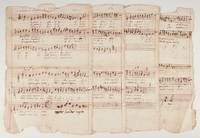
39441Folio ca. 335 x 235 mm. 8 pp. in total with each of the four parts notated in ink on both sides of a single leaf. Text in Latin.<br /> <br /> Includes settings of "In lumen tu splendor" "Ibant Maji quam indesant" "Hic nempe mundi gaudia" and "Qui pius puidens." <br /> <br /> With several corrections; a short passage added to the end of the first page of the Canto part in another hand.<br /> <br /> Somewhat worn; slightly browned; creased at central folds with several small holes; frayed at edges with small chips; some show-through; portions of both upper and lower blank margins lacking affecting titling but not notation. We have not located any other sources of the present works either manuscript or printed. unknown
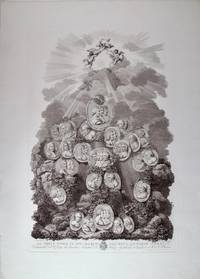
180740691Firenze: La Societa Rainaldi 1807. Each print features small circular engraved portraits and includes mythological elements at the upper portion amongst clouds and rays of sunlight with a background of a rocky outcrop including elements including vegetation and a running stream. The scenes evoke the celestial qualities of music and a reverence for the musicians depicted. <br /> <br /> On good quality laid paper sheet size 695 x 505 mm; plate impression 650 x 365 mm.<br /> <br /> Plate 1<br /> With printed dedication "Al Nobil uomo il Sig: March: Cav: Gius: Antonio Corsi Comandante del R. Corpo dei Cacciatori di Firenze e Gentlehome di Camera di S. M. il Re d'Etruria." <br /> <br /> Subjects include:<br /> Abel d'Arezzo Bach Bertoni Caffaro Campioni Cimarosa Clari Corelli Durante Fux Galilei Galuppi Gluck Handel Jomelli Ligneville Manna Leo Marcello Martini Miers Morales Palestrina Pena Perez Pergolesi Piccinni Poli Porpora Rameau Redi Rousseau Sacchini Sala San Martino Scarlatti Schuster Stefani Traetta Valotti and Zarlino.<br /> <br /> Plate 2<br /> With printed dedication "Al Nobil Uomo il Sig: Giovanni di Poggio Baldovinetti Patrizo Fiorentino. La Societa Rainaldi D.D.D." <br /> <br /> Subjects include:<br /> Albinoni Anfossi Arrighi Asoli Basili Bianchi Borghi Bornei Brunetti Buonvicini Caruso Cherubini Cicchi Colla ERgizio Domenico Gizzi Gazzaniga Gretry Guglielmi Hasse Haydn Lully Manfredini Mariani Mayer Méhul Mozart Paër Paisiello Paolucci Pleyel Porta Prati Puccini Righini Sabbatini Salieri Saratelli Sarti Schüster Tarchi Tozzi Trillo Vinci and Zingarelli.<br /> <br /> Plate 3<br /> With printed dedication "Al nobil uomo il sig: Conte Priore Ant: Colombani Verzeri Amatore delle Belle Arti e Professore dilettante della Musica."<br /> <br /> Subjects include:<br /> Capuzzi Cervetto Chabrand Clememnti Cramer Sr. Cramer Jr. Creuzer Kreutzer Dragonetti Dussek Ferrari Galeotti Geminiani Giardini Janevitz Janovich Krunpholtz Krumpholtz Mad. Krumpholtz La Motte Locatelli Lully Manfredi Mastrino Nardini Piantanida Pugnani Rodhe Roda Rolla Salomon Somis Steibelt Tartini Veracini and Viotti <br /> <br /> Several small marginal tears professionally repaired. Light horizontal crease to each plate hardly visible. <br /> <br /> A highly attractive set of important figures in the musical pantheon. Arrigoni & Bertarelli 2053 2097 and 3264. Rare. La Societa Rainaldi unknown
176543831S.l.n.d., , (1765 ca). Manuscrit in-12 oblong (134 x 190 mm) de (1)-73-(3) ff. de musique notée à l'encre brune avec la description des figures en regard, table, veau fauve, dos orné à nerfs, trace de pièce de titre, triple filet doré d'encadrement sur les plats, dentelle intérieure, tranches jaspées (reliure de l'époque).
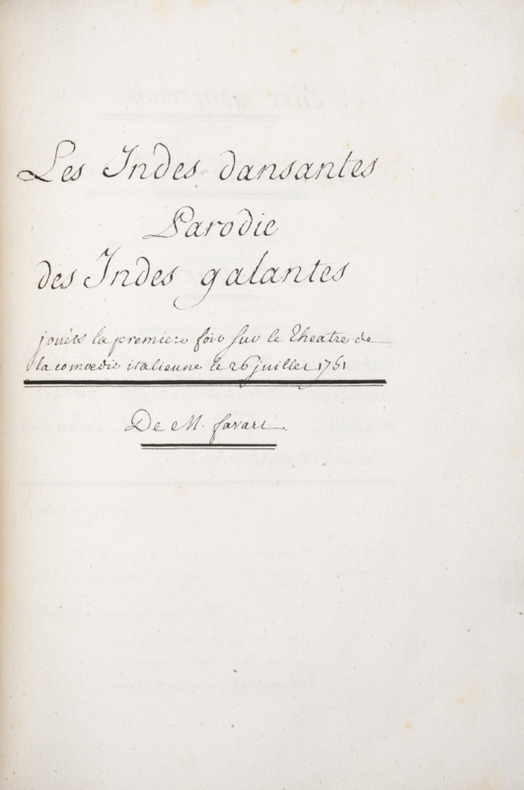
175141030, , 1751-1753. Manuscrit in-4 à 28 lignes par page de (498) pp., table, veau granité, dos orné à nerfs, pièce de titre en maroquin rouge, tranches rouges (reliure de l'époque).
Collection of 471 songs in 211 fascicles, of which 42 are in manuscript, 169 mimeographed, engraved, or printed musical pieces. From the "Hernalser Men's Choral Society of Vienna". Various formats, mainly folios. The wide repertory of a popular Viennese choral society which flourished during the last third of the 19th century. Amongst the numerous songs are compositions by Strauss, Schrammel, Ziehrer and Schubert. Most contain the complete arrangement, with the paper colour indicating the voice range (1st Tenor, 2nd Tenor, 1st Bass, etc.). The residue of many earlier choral societies' works can be found in this archive, which was continually built over the lifetime of the Hernalser Men's Choral Society.
35602030, Paris, Dentu, 1861; in-12, demi-chagrin rouge, nerfs, tr. jasp. (Reliure de l’époque). 70pp.- EDITION ORIGINALE. En janvier et février 1860 Baudelaire avait assisté aux concerts que Wagner donna au Théâtre-Italien, dirigeant lui-même l’orchestre et les chœurs. Il confia à Malassis: «ça été un événement dans mon cerveau». Les fortes émotions éprouvées par la rencontre de ces deux génies, Baudelaire les analyse ici. La première de Tannhäuser ,eut lieu à l’Opéra le 31 mars 1861. L’hostilité du public et des critiques obligea Wagner à retirer sa partition après trois représentations. Baudelaire répond aux sifflets des béotiens, à la sottise épanouie du «Tout (à l’égout)-Paris» qui va à l’Opéra pour les danseuses avec ardeur vengeresse extrêmement revigorante. Séduisant exemplaire, strictement relié à l’époque pour un amateur dont le cachet avec le chiffre A.B. figure sur le faux-titre. Il provient de la bibliothèque de F. Vanderem, un des plus fins bibliophiles du siècle, qui avec ses écrits sur la Bibliophilie nouvelle, sut fixer, voire codifier la bibliophilie avec des règles et des théories dont les amateurs contemporains feraient bien de s’inspirer encore. « Le petit ex-libris de F. Vandérem confère à tous ses livres, et jusqu’au plus modeste, la valeur même d’un cachet de garantie qui les signalera à la faveur et leur assurera la survie » a dit le dr. Lascoutx dans la préface du catalogue de la vente Vandérem 1939 (première partie), dans lequel ce volume est décrit sous le n°107 avec la mention : Très rare et particulièrement rare en reliure d’époque. F. Vandérem avait fait une place prépondérante à Baudelaire dans sa collection : 125 numéros consacrés à son idole.
Calling card format. 1 page. With autogr. envelope. Recommending "Monsieur de la Nux" - presumably the French composer Paul Véronge de la Nux - to the music store of the Hug brothers. - In fine condition.
8vo. 1½ pp. on bifolium. Requesting his correspondent to undertake the translation of a rather complicated 10-page German article into French. This text is to serve as the introduction to a volume issued by the Bucharest Academy of Sciences for a collection of Rumanian folk songs. - A note at the top right corner of page 1 scraped, otherwise perfect; from the collection of Charles Williamson and Tucker Fleming.
1782rx1271A Paris, Chez Panckoucke, Libraire, Hôtel de Thou, rue des Poitevins., A Liège, chez Plomteux, imprimeur des états Relié 1782 "Treize volumes reliés demi-basane (reliure début XIX) dont 8 volumes de texte, de""Aiguillier"" à ""Zinc"" et les 5 volumes de planches contenant l'intégralité des planches associées au texte des 8 volumes. Nous possédons donc 1094 planches, dont 874 simples et 220 doubles sur les 2018 pour la catégorie Arts et Métiers mécaniques, mais seules ces 1094 planches sont concernées pour les 8 volumes de texte de cette même catégorie à proprement parler ; dos insolés, épidermures sur le cuir, frottements aux mors, coiffes et plats, par ailleurs intérieur frais, ensemble en bon état dans une reliure datant des 20 premières années du XIX° siècle. Livraison a domicile (La Poste) ou en Mondial Relay sur simple demande."
8vo. 1 p. on bifolium. To Mrs. Erskine, possibly the wife of the Scottish orientalist and historian William Erskine: "Mr. Mendelssohn presents his Compts. to Mrs. Erskine & regrets most sincerely not to be able to accept of Mrs. Erskine's very kind invitation; as he must leave London already next week he is not sure whether he will be able to thank Mrs. Erskine in person for her kind note, but he hopes to find an opportunity of doing so [...]". - Mendelssohn was known to have been in London in April 1847, to hear Jenny Lind sing in Meyerbeer's "Robert le Diable". Mendelssohn greatly admired Lind and in the 1840s she became a protégée - it was rumoured that in 1847 he had written to her to suggest an elopement, though she was married at the time. - On laid paper watermarked "J. WHATMAN", with two early horizontal folds, in very good condition. - Though not formally signed, the use of his name at the beginning is effectively a signature.
Un volume (22x31 cm) di 256 pagine. DATTILOSCRITTO, in lingua inglese. TYPESCRIPT. Legatura in mezza tela muta. Alla pagina bianca un invio firmato Herzen “fur Claus uns fur Aribert”: il Claus è il musicologo e librettista tedesco Claus H. Henneberg. E' possibile che il dattiloscritto sia stato inviato ad Henneberg per una eventuale traduzione in tedesco. In tedesco venne peraltro pubblicato in volume “Igor Stravinsky”, Berlin, Colloquium, 1964, ma questo testo è successivo di almeno 7 anni. The Gracious Master viene citato nel libro di Chandler Carter “The Last Opera: “The Rake's Progress” in the Life of Stravinsky and Sung Drama” (Indiana University Press, 2019) e nella biografia di Vincent Giroud “Nicolas Nabokov: A Life in Freedom and Music”. L'unico altro dattiloscritto conosciuto dell'opera si trova nei Nicolas Nabokov Papers, Beinecke Rare Books and Manuscript Library, Yale University. Qui viene indicata una data presunta, 1970, e la definizione Biography of Igor Stravinsky. Dal testo del dattiloscritto, che cita in fine il manifesto pubblicato dal comune di Venezia per la morte del maestro, si può dedurre una data compresa tra la fine del 1971 e il 1974.
"In-4°, (16 cc inclusi l’occhietto e il frontespizio inciso), 338 pp, (3). Con una carta n.n. contenente uno spartito musicale tra pag. 122 e 123, e diversi diagrammi incisi su legno nel testo. Pelle coeva francese, dorso in oro, nervature, timbro della ‘Bibliothéque d’artillerie’ su occhietto e frontespizio, copia in buono stato. Edizione unica. “René Ouvrard (Chinon 1624-Tours 1694) fu un teorico, musicista, ecclesiastico e letterato francese. Da giovane Ouvrard si formò in teologia e musica a Tours. Intorno al 1657 fu maître de chapelle alla cattedrale di Bordeaux, intorno al 1660 chef de la maîtrise alla cattedrale di St. Just, Narbonne e dal 1653 all'ultimo maître de musique alla Sainte-Chapelle fino a quando nel 1679 si ritirò a Tours come canonico presso chiesa di San Gatien. Ouvrard ha scritto ampiamente sulla teologia, sulle arti e sulla scienza. Era attivo sia nei circoli accademici che musicali, specialmente a Parigi, e corrispondeva con importanti personalità sia della chiesa che laici. Anche se le sue composizioni sembrano non essere sopravvissute, è noto per aver favorito lo stile italiano (in particolare mottetti e oratori nello stile di Carissimi), per il quale ha sviluppato il gusto durante la visita in Italia nel 1655. I suoi scritti contengono contributi significativi a una conoscenza della teoria musicale, sia attraverso la sua presentazione completa che attraverso i suoi tentativi di metterla in relazione con altre attività intellettuali dei suoi tempi "". (Grove). ""Nel 1679, quando era maître de chapelle alla Saint-Chapelle a Parigi, Ouvrard pubblicò presso La Caille un'opera intitolata Architecture harmonique ... Non era al suo primo lavoro sulle proporzioni, poiché due anni prima aveva presentato un'opera sull'Art et la Science des nombres, in cui aveva già notato il legame tra proporzioni armoniche e speculazioni matematiche. Consiglia al lettore ""che si deve supporre la dottrina delle proporzioni, stabilita nel libro L'art et la science des nombres, soprattutto nel sesto libro di Arithmétique harmonique, per comprenderne appieno la dimostrazione ... Questi pochi elementi permettono di collocare René Ouvrard tra il neoplatonismo che animava una parte delle strutture interiori della realtà. Scriveva nella prefazione de L'Art et la science des nombres che ""l'aritmetica è come la chiave di tutte le altre scienze"" e che in questo ordine di idee, Platone può essere preso come modello, poiché ha trasformato ""gli uomini in Dio"" mentre insisteva sulle arti e sulle scienze. E’ un neo-platonismo nel senso che la ragione non basta, sebbene gli uomini siano in possesso dei veri principi della natura nel mondo fisico. Ouvrard usa quindi una dialettica i cui poli sono la ragione e la pratica sperimentale, formate come osservazioni ben concepite”(Vendrix). Cioranescu 51683; Wellcome II, p. 275; The New Grove (1980) XIV, p. 32; P. Vendrix (Proporzioni armoniche e proporzioni architettoniche dan la théorie française des XVII et XVIIIe siècle, International Review of the Aesthetics and Sociology of Music 20 (1), June 1989), pp. 3-10 In-4°, 16 unn. ll. (including additional engraved title and half-title), 338 pp, 3 unn. ll.. With one unnumbered leaf containing music scores between pages 122-123 and several woodcut diagrams in the text. Contemporary French calf, spine gilt. Stamp of the “Bibliothèque d’Artillerie” on half-title and title, a very good copy. Only edition. “René Ouvrard (Chinon 1624-Tours 1694) was aFrench theorist, musician, ecclesiastic and man of letters. As a youth Ouvrard trained in theology and music in Tours. About 1657 he was maître de chapelle at Bordeaux cathedral, about 1660 chef de la maîtrise at th St. Just cathedral, Narbonne and from 1653 at the latest maître de musique at the Sainte -Chapelle until in 1679 he retired to Tours as canon at the church of St. Gatien. Ouvrard wrote widely on theology and on arts and science. He was active both in academic and musical circles, especially in Paris, and corresponded with leading church and lay figures. Although his compositions semm not to have survived, he is known to have favored the Italian style (especially motets and oratorios in the style of Carissimi), for which he developed a taste while visiting Italy in 1655. His writings contain significant contributions to a knowledge of music theory, through both his comprehensive presentation of it and his attempts to relate it to other intellectual pursuits of his day”. (Grove). “In 1679, when he was maître de chapelle at Saint-Chapelle in Paris, Ouvrard published at La Caille a work titled Architecture harmonique...He was not at his first work on proportions, as two years before he presented a work on Art et la Science des nombres, in which he already noticed the link between harmonic proportions and mathematic speculations. He advices the reader ‘that one must suppose the doctrine of proportions, established in the book titled L’art et la science des nombres, especially in the sixth book of Arithmétique harmonique, in order to fully understand the demonstration...These few elements allow to place René Ouvrard among the neo-platonism which surrounded a part of the inner structures of reality. He wrote in the preface of L’Art et la science des nombres that ‘arithmetics is like the key of all the other sciences’ and that in this order of ideas, Platon can be taken as a model, as he transformed ‘men into God’ while insisting on arts and sciences. It is a neo-platonism in the sense that the reason is not enough, although men are in possesion of nature’s real principles in the physic world. Ouvrard then uses a dialectic whose poles are the reason and the experimental practice, shaped as well-planned observations” (Vendrix). Cioranescu 51683; Wellcome II, pag.275; The New Grove (1980) XIV, pag. 32; P.Vendrix (Proportions harmoniques et proportions architecturales dan la théorie française des XVII et XVIIIe siècle, International Review of the Aesthetics and Sociology of Music 20(1), June 1989), pag.3-10"