78 242 résultats
8vo. 2½ pages on bifolium. In Italian. To a count, with thanks for his interest in "La Bohème", which had premiered on 1 February 1896 at the Teatro Regio in Turin. Puccini has sent Ricordi his letter; they will see what they can do for the actor who is of such interest to the count. - On stationery with embossed address. Small traces of mounting on page 4.
in-4 antico (mm.225x163), pp. VIII, 166, 1 cb, (20), 4 (tavv), (6), 1 cb, leg. p. pelle coeva, tagli dorati. Belliss. front. xilogr. con titolo inserito in cornice architettonica acompagnata dalle figure allegoriche della Teologia e Filosofia. Iniziali e final. xilogr. Testo incornicato da doppio filetto. Al fine, numerate da A a D, sono ripiegate 4 belle tavv. inc. in rame che raffigurano la Torre dell'Orologio astrologico di piazza San Marco a Venezia, uomini che suonano le campane della cattedrale di Liegi, una imponente campana, un organo che azionato dal musicista trasmette il suono a numerose campane collocate sopra di esso. E' presente il fascicolo a4 che contiene l'aggiunta "De horologiis et campanis". Prima rarissima edizione di testo peculiare sulle campane, opera dell'agostiniano Angelo Rocca (1545-1620) conosciuto come il fondatore della Biblioteca Angelica di Roma, grande erudito e filologo che fu anche collaboratore dei Manuzio e direttore della Tipografia Vaticana con Sisto V. Lo studio si concentra sull'origine delle campane, la terminologia, il lavoro del suonatore di campane e le occasioni liturgiche in cui si suonano. L'opera fu ripubblicata solo nel 1745. Picc. lavoro di tarlo sulle prime 3 cc, incluso front. Qualche pagina leggermente brun. La cb tra il testo e l'indice è successiva. La prima tav. con una picc. mancanza nella parte incisa (architettura del palazzo) anticamente riparata da rinforzo di carta al verso. La seconda tav. ripiegata è anch'essa rinforzata al margine esterno e presenta una perdita nella parte incisa. Graesse VI, 142. Giuseppe Santini (Picenorum Mathematicorum, 1779) cita l'autore come originario di Rocca Contrata nel Piceno ma non cita questa sua opera. Anche Riccardi lo cita ma non quest'opera. Raro. [114]
Kleines Visitkartenformat. Stellenweise leicht fleckig und mit kleinen Montagespuren verso.
Zusammen 293 SS. auf 176 Bll. (Qu.-)Folio. Mit einigen Beilagen (s. u.; Pkte. 14 bis 18). Der aus Wien stammende Musiker studierte Komposition bei Robert Fuchs am Wiener Konservatorium und war dort hernach als Korrepetitor und Chorleiter, später auch als Professor für Harmonielehre, Kontrapunkt und Form tätig. Zu seinen Schülern zählten u. a. Herbert von Karajan, Rudolf Serkin, Erich Leinsdorf, Samuel Barber, Erich Zeisl, Louis Horst, Marlene Dietrich, Alois Hába und Hellmut Federhofer. Seiner jüdischen Abstammung wegen 1938 seines Amtes enthoben, emigrierte Stöhr im Jahr darauf in die USA und lehrte am Curtis Institute of Music in Philadelphia, wo u. a. Leonard Bernstein und Eugene Bossart seine Schüler waren. Von 1941 bis 1950 lehrte er am St. Michael's College in Vermont, wo er als Emeritus noch bis 1960 blieb. - Die vorliegende Sammlung von Notenmanuskripten umfaßt im einzelnen: I) "Schneeflocken" für dreistimmigen Frauenchor mit Klavierbegleitung. Text von Capilleri. 7 SS. auf 4 Bll. Folio. Wohl eh. Notenmanuskript. II) Sechs Männerchöre à capella. Op. 25. Sommer 1909. Wohl eh. Notenmanuskript. 19 SS. auf 12 Bll. Folio. - 1) Zum neuen Jahre. Nach Mörike. 2) Trinklied. Nach O. J. Bierbaum. 3) Ritter rät dem Knappen dies. Nach O. J. Bierbaum. 4) Schmied Schmerz. Nach O. J. Bierbaum. 5)Traumsommernacht. 6) Das Wunder kommt. Nach O. J. Bierbaum. Wohl eh. Notenmanuskript. III) Dreistimmige Frauenchöre mit Klavierbegleitung. 1903. 17 SS. auf 12 Bll. Folio. - 1) Juchhe. Nach Reinick. 2) Die gestorbene Rose. 3) Ständchen. 4) Morgenlied. Wohl eh. Notenmanuskript. IV) Vier Phantasiestücke für Violoncello und Pianoforte. Op. 17. 29 SS. auf 22 Bll. Folio. Wohl eh. Notenmanuskript. V) Der Strom. Chor für drei Frauenstimmen und Pianoforte. 1903. 15 SS. auf 10 Bll. Folio. Wohl eh. Notenmanuskript. VI) Der Strom. Text von Reinick. Arrangement für dreistimmigen Frauenchor mit Klavierbegleitung. 1903. 6 SS. auf 3 Bll. Qu.-folio. Wohl eh. Notenmanuskript. VII) Der Strom. Text von Reinick. Arrangement für dreistimmigen Frauenchor mit Orchester. 1903. 6 SS. auf 3 Bll. Folio. In Bleistift. Wohl eh. Notenmanuskript. VIII) Schneeflocken. 2 SS. auf 1 Bl. Qu.-folio. In Bleistift. Wohl eh. Notenmanuskript. IX) "Fortsetzung der Violinsonate". 1910. 20 SS. auf 10 Bll. Qu.-folio. In Bleistift. Wohl eh. Notenmanuskript. Fragment. X) "Der Frühling naht (Fortsetzung)". 1915. 19 SS. auf 10 Bll. Qu.-folio. In Bleistift. Wohl eh. Notenmanuskript. Fragment. XI) "I Fortsetzung (Trompetenkonzert)". 20 SS. auf 10 Bll. Qu.-folio. In Bleistift. Wohl eh. Notenmanuskript. Fragment. XII) [Orchesterwerk]. 35 SS. auf 18 Bll. Num. 1 bis 35. Qu.-folio. Wohl eh. Notenmanuskript. Fragment. - II. Satz. 1902. 19 SS. auf 17 Bll. Qu.-folio. Wohl eh. Notenmanuskript. Fragment. - III. Satz. ("Fine 30/11 1902"). 1902. 63 SS. auf 36 Bll. Wohl eh. Notenmanuskript. XIII) [Diverse Fragmente]. 16 SS. auf 8 Bll. Qu.-folio. Wohl eh. XIV) [Beilagen:] Verschiedene Manuskriptfragmente von Werken Stöhrs in Abschrift von anderer Hand. Zusammen 59 SS. auf 53 Bll. Folio. XV) Symphonie A-moll. II. Violine. Wien 1909. Matritzenabzug. 20 SS. auf 12 Bll. Folio. XVI) Sechs Lieder für eine Singstimme mit Klavierbegleitung. 1906. Matritzenabzug. 19 SS. auf 12 Bll. Folio. XVII) Zwölf Lieder für eine Singstimme. Matritzenabzug. 33 SS. auf 19 Bll. Folio. XVIII) Ernst Ludwig (Komponist, 1852-1925): Zwei Lieder. Neapolitanisch. Herbst. Op. 14. Wien und Leipzig, Musikalienhandlung Alexander Rosé und Robert Forberg, o. J. 7 SS. Folio. Mit eh. Widmung und U. des Komponisten an Stöhr, dat. Wien, März 1905. - Tls. etwas angestaubt und mit Randläsuren.
8vo. 2 pp. on bifolium. To an "Illustre Signore" who has requested his aid in weighing the skill of a fellow composer. However, Verdi does not know the gentleman in question ("Non conosco il sig. Maestro Mercuri") and thus cannot pass judgement on him: instead, he suggests it would be better to have a contest in order to find a satisfactory answer. Verdi goes on to say that he is happy that these circumstances have given him the advantage of corresponding with a person who greatly honours Italy and science ("una persona, che onora tanto l'Italia e la scienza"), and he dares to hope that he will be forgiven for not having been able to answer more satisfactorily the question he was asked. - The maestro in question was likely Agostino Mercuri (1839-92) who wrote several operas. His son later claimed in a biography of Mercuri that his father was familiar with many great musical names of his age, including Verdi, but perhaps this was an exaggeration, or refers to a later acquaintance after Mercuri wrote his most famous opera, "Adelinda", the year following this letter. - Gently creased along folds; subtle paper repair to small closed tear.
(56) SS. Mit Holzschnitt-Initialen zu Beginn der Gesänge bzw. Gesangsabschnitte. Neuer Halbpergamentband unter Verwendung einer alten Notenhandschrift mit gedr. Titelschild am Vorderdeckel. Verblasster dreiseitiger Rotschnitt. Qu.-8vo. Typendruck zu 24 Kompositionen: Diskantstimme einer von drei Motettensammlungen, die Wannings noch nachweisbares Schaffen repräsentieren (es gehören dazu noch außerdem die Tenor-, Alt- und Bass-Stimmen sowie die für die Quinta und Sexta vox). Der aus dem niederländischen Kampen gebürtige Komponist Johann Wanning (1537-1603), 1560 an der Universität Königsberg immatrikuliert, wirkte bis 1567 als Altist in der Kapelle des Herzogs; 1569 wurde er Kapellmeister an der Marienkirche in Danzig. "Die rund einhundert Stücke enthaltenden Drucke zeigen [Wanning] als beachtenswerten Komponisten lateinischer Evangelienmotetten, die er in vollständigen Jahrgängen veröffentlichte. Dabei hängen die drei Sammlungen eng miteinander zusammen: die 'Sententiae' enthalten de tempore-Stücke für sämtliche 52 Sonntage, die beiden anderen Sammlungen solche für alle anderen kirchlichen Feiertage, die 'Sacrae Cantiones' von 1580 überdies, zum Teil besonders vielstimmig, Motetten für Festgottesdienste bei Ratswahlen und ähnlichen Anlässen. Wannings Motetten, größtenteils ein- und zweiteilig, sind von gediegener polyphoner Satzarbeit, oftmals farbig im Klang und reich in Ausdruck und Wortausdeutung; sie stellen beste liturgische Gebrauchsmusik ihrer Zeit dar und zeugen zugleich vom hohen Leistungsstand der Danziger Marienkapelle" (MGG XIV, 238). "Der Name Wanning’s erklang bis nach Italien und Angelo Gardano in Venedig druckte beide Sammlungen 1590 in Stimmbüchern nach" (ADB). - Stellenweise wasserrandig und fleckig. VD 16, ZV 18797. RISM W 203. Eitner X, 179. BUC, S. 1056. ADB XLI, 159. OCLC 497745167.
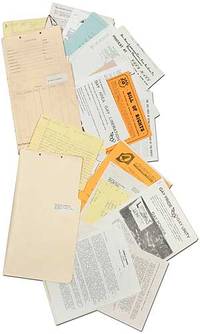
393879San Francisco 1975. Hardcover. Near Fine/Near Fine. An archive of material related to Bay Area Gay Liberation a short-lived far-left political action group including various flyers bulletins press releases correspondence and assorted ephemera most notably related to its support of the 1975 United Farmworkers march on the Gallo Wine headquarters. Two manilla folders with typed labels housing various loose stapled and paperclipped sheets of various size and color. Overall near fine with scattered nicks and tears old folds from being mailed and occasional oxidized staples or paperclips. <br /> <br /> The papers come from the personal files of Michael B. Music a politically active gay man who worked as an office manager and organizer for BAGL’s cofounder Howard Wallace while employed at the San Francisco Neighborhood Legal Assistance Foundation which is printed on one of the folders. While BAGL's agenda of inclusion and rights for all eventually succumb to the stronger pull of the blossoming San Francisco gay rights movement it left an impressive wake in its year of existence.<br /> <br /> The material found here includes several of the founding documents such as a handwritten "statement of purpose" calls to action sign-up forms and flyers soliciting membership; the first four issues all of the BAGL Bulletin; a group of documents related to the BAGL Evaluation Workshop; and flyers concerned with police harassment food stamps potluck dinner gay bar bill of rights and Chilean Resistance solidarity to name a few. These are accompanied by various notes in Music’s own hand concerning all matters of the organization's business with mentions of Harvey Milk Jose Sarria and Wallace.<br /> <br /> A sizable portion of the BAGL archive deals with the controversial move to support the UFW's march on Gallo as representatives of the Gay Liberation Movement. Included are notes lists and letters wherein Music questions why they should or should not support the UFW handbills calling for support of the march and rallies in support of the UFW efforts checklists of health and safety concerns during the march copies of a letter he sent to Cesar Chavez requesting a meeting in hopes of a formal statement of support for the Gay community and a three-page carbon of a report from a BAGL member describing her experience during the Gallo march and the UFW's response to requests for recognition and support.<br /> <br /> An enlightening archive of material from a little known but vocal and active segment of the gay community that helps to shed light on its place in the evolution of the Gay Rights struggle. hardcover
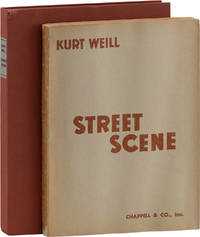
194880631New York: Chappell & Co. Inc 1948. First Edition. First printing. Inscribed on title page: "For Joe Littau a merry Christmas and thanks for a beautiful job!" signed "Kurt Weill" undated but annotated in pencil presumably by Littau: "Xmas 1948." Quarto 30cm. Original buff wrappers printed in red on front cover; 274pp. Professional paper repairs at spine ends; expected tanning to exterior and text; still a superlative copy overall and quite uncommon. Housed in a custom-made cloth clamshell box. <br /> <br /> A terrific association copy of this acclaimed late work by Weill for which he won the inaugural Tony Award for Best Original Score in 1947. Street Scene is perhaps the apotheosis of Weill's socially-engaged musical theater a blend of operatic and theatrical elements with which he first experimented in his collaborations with Bertolt Brecht of the Thirties including Three Penny Opera and The Rise and Fall of the City of Mahagonny. Street Scene based on Elmer Rice's naturalistic working-class drama of the same name was especially noteworthy for including lyrics by the African-American poet Langston Hughes whom Weill sought out specifically to "lift the everyday language of the people into a simple unsophisticated poetry" quoted by Jane Vial Jaffe in her program notes to a 2008 production. This was Hughes' first experience writing for musical theater.<br /> <br /> Street Scene premiered at the Adelphi Theater in New York in January 1947 and met with critical success though its high production costs forced the production to close in April. The show has never been revived on Broadway but it has been staged regularly by operatic companies including revivals by the New York City Opera in 1959 1979 and 1990. <br /> <br /> Inscriptions by Weill are uncommon; it's an honor he appears to have bestowed only on very close friends and collaborators. In this case the presentation is to Joe Littau the well-known pit conductor who was at this time the Musical Director for Weill's 1948 musical "Love Life" which ran on Broadway from October 1948 to May 1949. Chappell & Co., Inc unknown
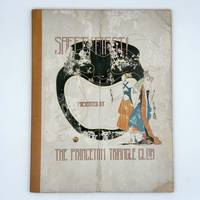
1916369594Cincinnati / New York / London: John Church Company 1916. First edition. 99 pp. Large 4to. Illustrated color card covers orange cloth spine as issued. Rubbed wear to corners; front and back covers folded cracked and repaired. Numerous autograph emendations in blue pencil and ink; autograph essay in ink on verso of cast listing. In custom quarter morocco slipcase and chemise. First edition. 99 pp. Large 4to. The third consecutive and final Triangle Club production Fitzgerald participated in writing the lyrics for all 18 songs in this 1916 comedy as he had for the two prior shows Fie! Fie! Fi-Fi! 1914-1915 and The Evil Eye 1915-1916.<br /> <br /> This particular staging featured two people with the surname Harris: the first E. Harris was one of the composers and besides the title page this is futher noted by the multiple autograph additions of the letter "E" in blue pencil on the song list page. The second was W. Irving Harris who appeared as "Detective No. 1" a role which was originally printed as being played by E. Harris; this error is corrected in ink.<br /> It was this latter Harris who in 1975 penned the warm unpublished remembrance of Fitzgerald at Princeton on blank page 4 which begins "Scott Fitzgerald of course was in a class by himself." He continues "The lyrics of 'One-Lump Percy' the parlor-snake spoofed the antics of contemporary collegians and for 'Charlotte Corday' Scott should have been given an extra high mark in his course in French history/literature! 'Where Did Bridget Kelly Get Her Persian Temperament' was another song that brought down the house."<br /> <br /> Harris closes with "I remember Scott as exceedingly unassuming and modest and as a member of the Triangle Club a true enthusiast. As far as I know everyone liked him and no one would have thought of competing with his skill as a lyricist. The work was all his - and as you will see speaks for itself." Bruccoli A4 John Church Company unknown
196815318New York 1968. Near fine. Eight Kodak color transparency slides. 2" square with image area 1 3/8" x 15/16" approx. Date-stamped "MAR 68" to border of verso. No- tated in ink outside of image area with names numbers. Clean well preserved. Near fine. High-resolution jpgs of all images provided. <br/><br/>A collection of exceptional but presumably unpublished images of Jimi Hendrix performing at New York City's Hunter College on March 2 1968. Seven capture the guitar hero on stage: with his signature Stratocaster kneeling before a giant stack of amplifiers playing with his teeth etc. The eighth is a candid portrait likely snapped backstage. Though we've been unable to determine the photographer the photos are of clear professional caliber and bear a certain re- semblance to the work of legendary rock-and-roll photographer El- liott Landy. An iconic selection of original vintage slides capturing the signature style of a rock legend. unknown books
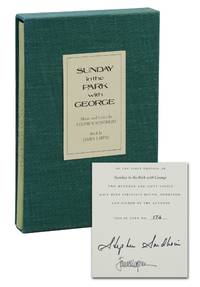
140944526New York: Dodd Mead & Company 1986. Signed limited first edition. First edition limited issue. Signed by Stephen Sondheim and James Lapine on limitation page #194 of 250 such numbered copies. 203 pp. with 16 pages of b/wphotographs. Bound in publisher's green cloth with gilt spine lettering housed in publisher's darker green slipcase. Sunned spine else Fine in slipcase with slight lifting to corner of label. <p>A musical inspired by Georges Seurat's painting "A Sunday Afternoon on the Island of La Grande Jatte." Winner of the 1985 Pulitzer Prize for Drama and numerous other awards. Dodd, Mead & Company unknown
2003149182N.p.: N.p. 2003. Archive of material from the 2003 musical including three rehearsal scripts dated 7/29/03 3/31/03 and 10/23/03 with various production materials bound in including sheet music production schedules and cast and crew contact information. Two scripts noted as belonging to uncredited cast member Walter O'Neil with his holograph pencil and ink annotations throughout noting blocking and staging directions. <br/><br/>Based on Gregory Maguire's 1995 novel a revisionist imagining of L. Frank Baum's 1900 novel "The Wonderful Wizard of Oz" from the perspective of Elphaba the misunderstood Wicked Witch of the West. A wildly successful musical which made its Broadway debut at the Gershwin Theatre on October 30 2003 named one of the highest-grossing Broadway productions and running for 6836 performances to date. Nominated for ten Tony Awards and winning three including Best Actress in a Musical for Idina Menzel.<br/><br/>Set in the magical land of Oz.<br/><br/>7/29/02 script:<br/><br/>Housed in a blue three-ring binder. Title integral with the first page of the script dated 7/29/02 noted as Workshop script. 148 leaves with last page of text numbered 147. Xerographic duplication rectos only with green undated revision pages throughout. Pages Near Fine.<br/><br/>3/31/03 script:<br/><br/>Housed in a black three-ring binder with an illustrated flyer for the musical tucked into the front wrapper. Title page present dated 3/31/03 noted as Rehearsal Draft. 146 leaves with last page of text numbered II-9-146. Xerographic duplication rectos only with white revision pages throughout dated variously between 4/03/03 and 6/20/03. Pages Near Fine.<br/><br/>10/23/03 script:<br/><br/>Housed in a black three-ring binder. Title page present dated 10/23/03 noted as New York Rehearsal Script. 125 leaves with last page of text numbered II-8-123. Xerographic duplication rectos only. Pages Near Fine. N.p. unknown books
4 gr. voll. in-8 gr., pp. XX, 445; 444; 702; 476, 27, 8, LVI, leg. inizio sec. cartone marmorizz. con tass. in pelle e tit. oro al d. Tagli spruzzati. All’inizio di ogni capitolo gr. vignetta in rame con ritratti di musicisti o figure allegoriche. Con 59 belliss. tavv. (di cui 2 ripp.) inc. in rame al primo vol., 6 tavv. (di cui 3 ripp.) al secondo vol. e altre 3 tavv. e 2 tabb. ripp. al terzo vol. Con altre figg. ed esempi musicali n.t. Le tavv., inc. da Bouland, raffigurano strumenti musicali e musicisti in costume; le più significative e curiose sono quelle che ritraggono strumenti antichi dei paesi orientali. A pag. 200 del primo vol. è inserito -con numerazione autonoma da I a XX- un supplemento dal titolo: "Recueil de pieces sur la musique greque". Nel secondo voll. le pagine da 65 a 108 sono tutte di tavv. in rame con musica. Con ampi indici al fine. Corposa storia della musica del francese Laborde (1744-1794), una vera enciclopedia. Cioranescu 35063. Salvo qualche strappo alla carta della leg. bell’esempl. a largi margini in ottimo stato di conservazione. [016]
in 4° grande - pp.pp 8nn + 280 + 1b - Tela con fregi ai piatti ed al dorso - Incisione in antiporta ripiegata - Macchie ed abrasioni alla legatura, pagine lievemente brunite.
63 Bll. (Bl. 54 entfernt). Lederband der Zeit mit goldgepr. Deckel- und Rückentitel ("Album" bzw. "H. Hané"). Kl.-4to. Das vorliegende Stammbuch versammelt über mehrere Jahrzehnte hinweg zahlreiche Autographen von mehrheitlich Instrumentalisten und Sängern, daneben finden sich aber auch einige Schriftsteller, Maler und gekrönte Häupter. Musikgeschichtlich interessant sind vor allem jene Beiträge, die von Auftritten stammen; so traten etwa Marthe Remmert und Marianne Brandt am 16. Oktober 1883 in St. Gallen auf und Helene Geisler und Teresina Tua am 6. August 1886 im Hotel Axelmannstein in Bad Reichenhall. - Die mehrfach in den Widmungen direkt angesprochene Hedwig Beyer(-Hané) dürfte die Halterin des Buches gewesen sein; fortgesetzt wurde die kleine Autographensammlung vermutlich von ihrem Sohn Hermann, der von 1908 bis 1910 den Berliner Philharmonikern als Solocellist angehört hatte. - Die Beiträger sind namentlich: Lawrence Alma-Tadema, Ludwig Barnay, Hugo Becker (2), Franz Behr, Bianca Bianchi, Fritz Blumer, Marianne Brandt (geb. Marie Bischoff), Jenny Broch, Luise Büchner, Hans von Bülow (2), Teresa Carreño (2), Ernesto Consolo, Bernhard Cossmann, Eugen d'Albert, Karl Dawidow, Maurice Dengremont, Paul Eckhoff, Flora Friedenthal, Anton Fuchs, Anna Führing (2), Helene Geisler, Dagobert von Gerhardt, Rudolf Gottschall, Gustav Graben-Hoffmann, Friedrich Haase, Friedrich Wilhelm IV., Therese Halir, Otto Henne am Rhyn, Ferdinand Hiller, Adolf Hinrichsen, Hans von Huber, Joseph Joachim (2), Robert Kaufmann, Max Klinger, Gustav Kogel, Georg Heinrich Krüger (Missionar in China), Johann Caspar Lavater, Adolph von Menzel, Johannes Messchaert, Emma Mettler, Conrad Ferdinand Meyer, Lina Morgenstern, Moritz Moszkowski, Julie Müller-Bächi, Jean Louis Nicodé, Franz Xaver Ondrícek, Rosa Paumgartner-Papier, Francis Planté, Oscar Pletsch, Laura Rappoldi-Kahrer, Carl Reinecke, Martha Remmert, Eleonore Fürstin Reuß, Emil Rittershaus, Bertrand Roth, Anton Rubinstein, Elsa Ruegger, Leopold von Sacher-Masoch, Moriz Saphir, Pablo de Sarasate, Emile Sauret, Johannes Scherr, Marie Schmidtlein, F. H. Schneider, Franz Xaver Schnyder von Wartensee (2), Paul von Schönthan, Franz Xaver Seidl, Marie Soldat, Karl Sondershausen, Josef Staudigl, Richard Strauss, Heinrich Szadrowsky, Friedrich von Tschudi, Teresina Tua, Carl Vogt, Cosima Wagner, Ernestine Wegner, August Wilhelmj, Julius Wolff, Heinrich Zschokke und Hermann Zschokke-Bodmer. - Neben Faksimiles von Adelbert von Chamisso, Friedrich von Schiller und Emil Sauer sowie vier nicht identifizierten Beiträgen finden sich auf zwei Postkarten auch ca. 25 Unterschriften von Mitgliedern der Meininger Hofkapelle, die von ihrem Abschiedscommers Wünsche sendet. - Von kleinen Gebrauchsspuren abgesehen sehr gut erhalten.
4to. XI, (1), 58 pp. With an engraved title vignette, 5 initials, 5 head- and tailpieces, and 8 engraved plates. Modern full calf with giltstamped red spine label. First edition of this famous treatise on the musical instruments of classical antiquity, posthumously published. The engraved plates show a total of 59 instruments, including 24 different wind instruments. Bianchini (Blanchinus, 1662-1729) served in high offices under Popes Clement XI and Innocent XIII. - Very wide-margined, untrimmed copy in excellent state of preservation, showing only a little staining to the title page; one leaf with marginal repair and some 5 lleaves browned in the upper margin. RISM (écrits impr.) p. 148. Eitner II, 32. Hirsch I, 71. Wolffheim I, 1126. Fétis I, 406.
2 SS. auf Doppelblatt. 4to. Mit eh. Adresse (Faltbrief). An die Musikhandlung C. F. Peters in Leipzig, der er den Erhalt seines Honorars "für mein letztes Concert" meldet: "[...] Ihre Bemerkungen über die Composition meines letzten Concerts sind sehr richtig [...] Es ist gantz wahr daß dieses Concert nicht so lieblich tönt wie das erste; dies kann aber auch nicht der Fall sein, denn ich habe es in einem pathetischen Stil geschrieben, und den mechanischen Theil desselben weit schwerer gesetzt. Dies geschah, um die Kenner zu befriedigen, und zugleich dem Virtuosen etwas Künstliches zu liefern, worauf sie doch Werth zu setzen scheinen, und besonders weil man in der Recension meines ersten Concerts es zu leicht gefunden hatte. Mein künftiges Concert (das ich Ihnen bei Gelegenheit schicken werde) soll aber, wie ich hoffe, den Ohren mehrerer Zuhörer, so wie jenes erste schmeicheln, und dem Virtuosen doch auch zu gläntzen Gelegenheit geben [...]". - Das Adreßblatt mit einigen Ausrissen.
in-4, pp. (4), 38 di notazioni musicali con testo. Copertina originale in cartoncino rustico. Al frontespizio grande stemma di Pietro d'Aragona, "Capitano di cavalli ... nello stato di Milano", dedicatario del volume. Prima ed unica edizione della sola parte di Tenore. Rarissimo, un solo esemplare in 6 parti è censito presso il Royal College of Music di Londra. E' l'unica opera conosciuta di Francesco Di Maggio, nativo "della città di Castelvetrano nel Regno di Sicilia" ultimo rappresentante della scuola polifonica siciliana, dopo Pietro Vinci, Antonio Il Verso, Giuseppe Palazzotto Tagliavia. In ottime condizioni (lievissimo alone nel margine inferiore).. British U.C. of early music II, 642. Eitner VI, 274-5. Fétis V, 401. Rism, 5-331..
pp. (16), 316, in-8, mezza pelle con angoli e tassello al dorso
I: 21½ SS. auf 11 Bll. Gr.-4to. - II: 63 SS. auf 32 Bll. Folio. Stark bearbeitetes, unvollständiges Manuskript eines bibliographisch nicht nachweisbaren Aufsatzes über das Transponieren. Die Fassung Nr. I dürfte hierbei als Grundlage für Fassung Nr. II gedient haben, doch weist diese (wie aus folgender Gegenüberstellung der einzelnen Kapitel ersichtlich) nicht allein vom Umfang sondern auch vom Inhalt her deutliche Unterschiede auf. - I: 1. "Uiber den Bau der diatonischen Scala". 2. "Intervalle". 3. Verwand[t]schaft der Töne". 4. "Accordfolge mancher bekannter Cadenzen". 5. "Schlüssel". 6. "Deren Verhältniß [!] zu einander". 7. "Practische Beyspiele". 8. "Transposition". 9. "Chromatische Vorkommniße [!]". 10. "Andere Vortheile" (alle Zitate von S. 5). - II: "Die Transpositionslehre zerfällt in folgende Abschnitte": I. "Über den Bau der diat. Scala". II. "Intervalle". III. Verwand[t]schaft der Töne". IV. "Accordfolge mancher bekannter Cadenzen". V. "Schlüssel". V.1. "deren Verhältnisse zueinander". V.2. "Populäre Erklärungsmethoden". V.3. "deren Übersicht". VI. "Transponiren". VII. Unterschiede der älteren Schreibart v. der neuen". VIII. "Transposition für andere Instrumente". IX. "Erfahrungssätze, die Erleichterungen bezwecken" (alle Zitate von S. 9). - Der aus Butschowitz (Mähren) gebürtige Musiker und Musikpädagoge, der als "einer der besten Pianisten seiner Zeit" gilt (MGG IV, 276) erfuhr seinen Klavier- und Kompositionsunterricht durch Anton Halm und Ignaz von Seyfried und wurde 1833 Professor am Konservatorium der Gesellschaft der Musikfreunde, wo er bis 1856 als Klavierpädagoge wirkte. Fischhof gilt als "Meister der klassischen Wiener Klavierschule [...] er trat besonders als Interpret Bachs, Beethovens, Mendelssohn Bartholdys und Chopins hervor. Seine umfangreiche Musikbibliothek mit Manuskripten und Autographen war vor allem für die Bach- und Beethovenforschung von Bedeutung" (DBE). Zu Fischhof vgl. (Auswahl) die entspr. Artikel in ADB, NDB, ÖBL, MGG, Riemann, Wininger und Wurzbach.
Zusammen 31¾ SS. auf 27 Bll. (Gr.-)8vo. Schöne Briefe an den Komponisten, Arrangeur und Dirigenten Eduard Kremser, die sich hauptsächlich auf seine Tätigkeit beim Wiener Männergesangsverein beziehen: "Gestern sprach ich mit Herrn Hellmesberger und der meint daß eine kräftige Probe - kurz vor dem Conzert hinreichen dürfte. Da ich aber für diese Probe noch eine letzte Correktur an den Auflagstimmen machen möchte so bitte ich Sie, so gut sein zu wollen und mir die Partitur für 1-2 Tage zu borgen [...]" (a. d. Br. v. 8. I. 1877). - "Die Zeit der Entscheidung der Chormeister-Angelegenheit im M. G. V. rückt näher, und ich bin unendlich neugierig zu erfahren inwiefern meine Chancen sich geändert d. h. gebessert haben, ich bin höchst gespannt wie die letzte Entschließung des Vereins fallen wird [...]" (a. d. Br. v. 11. IX. 1880). - "Für die große Freude die Sie mir gestern durch die unvergleichliche Wiedergabe des Chores 'Herbst' machten, sage ich Ihnen nochmal meinen wärmsten Dank. - Sollten Sie das Stück heuer bei einer Sommerliedertafel wieder bringen, so wäre ich sehr vergnügt darüber. Bei einiger Akustik des Raumes ist das Stück auch im Freien von sicherer Wirkung. (Ich hörte es vor 2 Jahren vom [G]razer Männergesangvereine, der es auch im Freien repetiren mußte.) [...]" (a. d. Br. v. 12. XI. 1885).
3 SS. auf Doppelblatt. 8vo. An Frau Chardin, eine Vertraute der Familie Liszt: "[...] Bulow, qui devait diriger la féte musicale le 25 à Carlsruhe, est tomber malade par un refroidisement il vat mieux, mais il est trop faible le medecin defend de travailler. Cosima est bien contraiée. de mon fils jattende de nou-velle je crois, qu'il sera en ce moment à St. Tropez auprés d'Ollivier [...] Je suis chere Madame seul, bien seul, personne de mes connaisance est ici, tous à la campagne ou aux eaux [...]". - Vgl. hierzu Serge Gut, "Franz Liszt", dt. Ausg. 2009, S. 763: "1864 [...] 21. bis 26. August. Als ihr Präsident nimmt Liszt an der dritten Tonkünstler-Versammlung des ‹Allgemeinen Deutschen Musikvereins› in Karlsruhe teil [...] Hans von Bülow wird wegen eines Nervenleidens von Kapellmeister Max Seiffert aus Löwenberg vertreten [...] Auch Cosima ist gekommen und fährt mit ihrem Vater anschließend nach München, um dem kranken Bülow beizustehen [...] 4. bis 12. Oktober. Liszt wohnt in Paris bei seinem Schwiegersohn Émile Ollivier. Er sieht seine alte Mutter zum letzten Mal [...] 14. Oktober. Am 12. von Paris abgereist, fahren Liszt und Cosima nach ‹La Moutte› in Saint-Tropez, zu der Villa Émile Olliviers [...]". - Bl. 2 mit kleinem Papierdurchbruch (geringf. Textberührung).
3¾ SS. auf Doppelblatt. 8vo. An Frau Chardin, eine Vertraute der Familie Liszt, mit der Mitteilung, dass sie ihren Sohn, der nach dem Ende der Karlsruher Musikfeier nach Weimar gefahren sei, gegen den 20sten d. Mts. erwarte. Cosima habe auch an der Feier mitgewirkt, ihr Gemahl hingegen nicht, da er infolge einer Erkrankung in Bayern bleiben musste: "[...] Mon fils que j'attend vers le 20 de ce mois, est aprés la fête musicale de Carlsruhe aller à Weimar. Cosima a assistée [!] aussi a cette féte. mais son pauvre Marie n'a pas pu diriger et à rester encor [!] maladif en Baviere. elle viendra ici avec son pére, mais sans enfant [...] p. S. je vous prie d'avoir de la patience pour lire cette griffonage [...]." - Vgl. hierzu Serge Gut, "Franz Liszt", dt. Ausg. 2009, S. 763: "1864 [...] September. Liszt verläßt München am 3. September, fährt über Stuttgart und erreicht in der Nacht vom 4. zum 5. September Weimar". - Mit kleinen Montagespuren.
8vo. 1 page on bifolium. To the music publisher C. F. Peters, with the offer of several chamber music pieces for publication, including manuscripts of a duo, the "Phantasiestücke" for violoncello and piano (op. 86), as well as a violin sonata, which Raff praises as particularly well-made: "Ihrem gef. Wunsche gemäß lege ich Ihnen anbei die Manuscripte des Duo, und der Fantasiestücke für Piano & Violoncell vor. Obgleich Sie nur das Eine der Beiden Werke behalten zu wollen in Aussicht stellen, so erlaube ich mir gleichwohl auch die Violinsonate beizulegen. Ich darf, ohne unbescheiden zu seyn, sagen, daß dieses Werk zu dem Besten gehört, das seit Beethoven in dieser Gattung producirt worden ist [...] ". - With Peters' annotation on verso.