78 242 résultats
1 S. auf Doppelblatt. Kl.-4to. In Bleistift. Dreizehn Takte für Singstimme mit fünf vierzeiligen Strophen, die erste unterlegt, die anderen am Rande notiert: "Sie ging zum Sonntagstanze, | schon klang Musikgetön, | u. sie in ihrem Kranze, | sie war so wunderschön [...]".
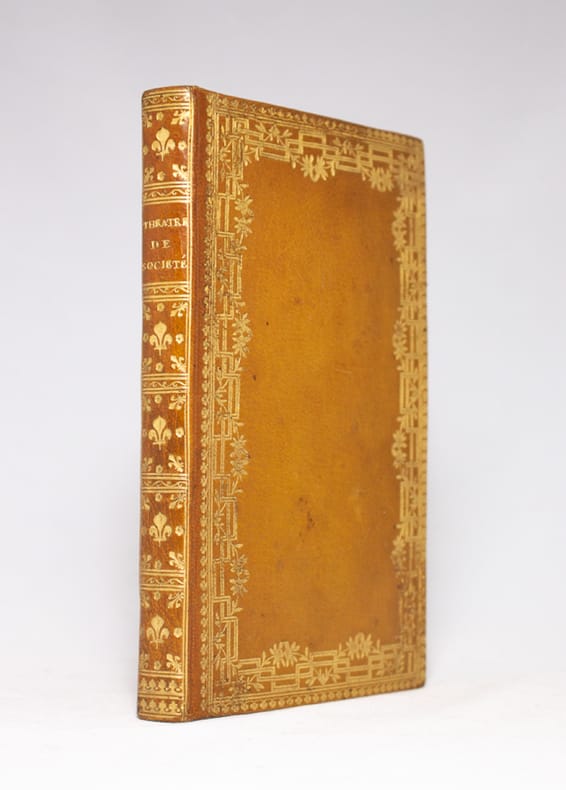
176416516Paris, La Veuve Duchesne; Gueffier, 1764-1766. 3 ouvrages en un volume in-8 de 120-62-80 pages, plein maroquin citron, dos lisse orné de fleurs de lys et petits fers dorés, dentelle géométrique avec des motifs floraux en encadrement des plats, filet doré aux coupes, roulette dorée aux chasses, gardes de tabis rose, tranches dorées.
1974152441N.p.: N.p. 1974. Draft Working script for the 1975 Andy Warhol-produced musical copy belonging to Monique van Vooren. Includes 36 additional unbound pages primarily revisions as well as twelve pages staple bound containing the bulk of dialogue for van Vooren's character Venus with name repeatedly circled in holograph pencil. Annotations throughout both copied and in holograph ink and pencil. Frequent annotated changes to sequence as well as dialogue missing sequential pages and unbound revisions reflect the continually changing and famously chaotic production. <br/><br/>From the estate of actress Monique van Vooren. <br/><br/>The musical opened on January 29 1975 at the Little Theatre. It was a star-studded opening night and after party at Sardi's with Warren Beatty Andy Warhol Diane von Furstenberg Diana Vreeland Kurt Vonnegut Rex Harrison Yoko Ono and others in attendance. Unfortunately scathing reviews followed and after only four days and a run of ten performances the production closed on February 1 1974.<br/><br/>In 1970 John Phillips inspired by the 1969 Apollo 11 moon landing conceived of a space-themed musical project a space opera originally entitled "Space" and spent the next five years on the project in its various incarnations. In 1974 Phillips' wife Genevieve Waite persuaded Andy Warhol to produce the project as a Broadway musical with Warhol's collaborator Paul Morrissey slated to direct. The project was renamed "Man on the Moon" with Waite von Vooren and Denny Doherty slated to star. Reportedly two weeks before opening night co-producer Richard Turley fired Morrissey installing a more experienced Broadway director uncredited who changed everything casting stage directions songs and script. <br/><br/>Phillips would later used some of the songs from the musical for the soundtrack of the 1976 Nicolas Roeg film "The Man Who Fell to Earth" starring David Bowie. In 2009 "Andy Warhol Presents Man on the Moon" was released as part of the "John Phillips Presents" series and included unreleased demos and songs recorded at a dress rehearsal at The Factory by Warhol.<br/><br/>Self wrappers integral with first page. 87 leaves with last page of text unnumbered. Xerographic duplication rectos only. Pages Very Good plus to Near Fine bound with ring binder mechanism lacking wrappers.<br/><br/>Twelve pages bound with staple to top left. Near Fine.<br/><br/>36 unbound pages Very Good to Near Fine. N.p. unknown books
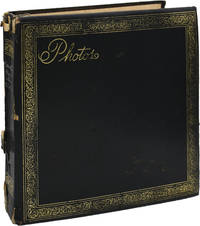
1970146874N.p.: N.p. 1970. Archive of 288 vernacular color photographs of country music acts from the 1970s housed in a contemporary photo album with the subject of nearly every photograph identified by holograph ink captions. Occasional additional notations give a date range between 1972-1980 for the photographs with most being dated 1977-1979. <br/><br/>The photographs primarily consist of performers on stage indicating the photographer was near the stage with a strong sense of composition and timing. Photographs of performers casually posing for the camera indicate the photographer likely had backstage access for some of the performances. <br/><br/>Based on additional information in some of the handwritten captions the photographs were primarily taken at concerts or events in the Western New York region - Chautauqua Dunkirk Little Valley and Lakewood - all within an hour of each other as well as the nearby Erie County NY Fair and Expo and Pittsfield PA. Other locations include the New York State Fair and Pittsburgh PA. <br/><br/>Included are images of country music legends Johnny Cash Dolly Parton Loretta Lynn Conway Twitty Hank Snow June Carter Cash The Carter Family Minnie Pearl Tanya Tucker Tammy Wynette and Wanda Jackson. Also included are photographs of singers who while lesser known today were among the biggest stars of the era including Bobby Goldsboro Crystal Gayle Donna Fargo Freddy Fender Jeannie C. Riley Buddy Alan Charlie Walker Peggy Sue Bill Anderson Kenny Price LeRoy Van Dyke Lynn Anderson Jay Lee Webb Jean Shepard and Kitty Wells. Finally the album contains images of smaller and possibly even regional acts some of which appear unknown to us presenting a broad survey of a transitional era in country music as rock soul and pop began to fuse with the more traditional country sound that had begun declining in popularity toward the end of the previous decade. <br/><br/>For more details please inquire. <br/><br/>Photographs variously sized primarily 3.5 x 5 inches but up to 7.5 x 9.75 inches. Generally Near Fine. <br/><br/>Housed in an about Very Good generic photo album with starting and loss to the spine fraying and rubbing. Several internal pages loose or with dried glue leading to occasional slipping of the photographs. N.p. unknown books
2½ SS. auf Doppelblatt. 8vo. An Frau Chardin, eine Vertraute der Familie Liszt. Anna Liszt habe noch keine Neuigkeiten von ihrem Sohn erhalten, dem sie nach Rom geschrieben hatte. Sie vermute ihren Sohn in Pest, da dieser im August dort seine religiöse Musik aufführen wollte; auch Cosima und ihr Gemahl seien schon seit einigen Tagen in Pest: "De mon fils je ne pas de nouvelle en ce moment. [I]l y a 18 jours que je lui ai écrit à Rome, mais je ne pas de reponse. je crois qu'il est à Pest. hongrie. comme il m'a dit au primtemps d'y aller la au mois d'aout ou il veut faire éxecuter de sa musique religieuse. Cosima et son mari s'y trouve deja dans cette ville depuis plusieurs jours. elle m'écrivez [!] il y a 10 jours quel [!] à entendue [!] que son pére y est [...]". - Vgl. hierzu Serge Gut, "Franz Liszt", dt. Ausg. 2009, S. 764: "1865 [...] 8. August bis 12. September. Aufenthalt in Pest [...] Am 12. August treffen auch Eduard Liszt sowie Cosima und Hans von Bülow in Pest ein. 15. August. Liszt dirigiert, bekleidet mit einer Soutane, im neuen Redoutensaal die Uraufführung seiner Legende von der Heiligen Elisabeth (in ungarischer Sprache) [...]".
8vo. 1 p. In French. To an unidentified recipient whom Liszt asks to visit him the following day so that he can importune and, in doing so, thank him: "Je ne sais vous remercier autrement, cher excellent ami, qu'en vous importuner de nouveau - Venez donc demain ici et pardonnez moi de n'être pas encore venu vous serrer la main [...]". - Numbered in pencil on recto and with an old collector's note in ink on verso. Minor brownstaining; four pin holes and traces of former mounting.
Folio. 2 pages. Recto the first 16 measures to "Vorgefühl von Jul. v. Rodenberg", here still described as op. 176, later printed as op. 173 at André. - Verso a scherzo (allegretto) for violin and piano counting 22 measures, full score transcription, as well as 56 measures of undescribed melodic and chordal sketches. - Julius von Rodenberg, of whom the text to "Vorgefühl" originates, belonged to the inner circle of friends of the elder composer. - Slight staining and with some small repairs of the margins' blemishes.
1 p. (mm. 205 x 135), datata: Parigi 11 Giugno 1859, indirizzata “Al Maestro Celeberrimo Gambini / Genova” (scritto sul verso del foglio), di 17 righe: “Pregiatissimo Amico e Collega / Achille Montuoro compositore distinto di musica, e persona distinta di carattere, sarà porgitore di queste poche linee, egli viene a Genova per prendere l’appalto del vostro Teatro Carlo Felice. Se potete assisterlo in questa importante impresa renderete servizio a lui e al vostro Paese volendo egli servirlo come merita tanto per la scelta di artisti di primo ordine quanto per la scelta di opere che egli porrà in scena col gusto e col zelo che è di sua specialità. Quanto vorrete fare per lui che vi raccomando sarà come fatto al / vostro Amico / G. Rossini”. Solo piccolo strappo alla piegatura, altrimenti esemplare ben conservato.
8vo. ½ page on bifolium. With autograph address on verso. To his French publisher Léon Escudier (1821-81), regretting his being unable to visit him, but asking him to come to his place instead, as he has several things to tell him: "Son de plato di non poter venire da voi; ed avrei pure tante cose a dirvi. Fatemi dunque l'estremo favore di venire da me verse le 12 ore […]". - With former collector's number "98" in pencil. Traces of former mounting on reverse; address leaf with two marginal tears.
37834Paris, E. Dentu, 1861. In-12, 70p. Reliure demi-maroquin grenat à coins, dos lisse avec titre doré à froid, couverture et dos conservés.
12466Used; Like New/Used; Like New. An ornamental music folder boards covered in gold velvet the front board decorated with four brass corner ornaments each inlaid with multi-color cloisonné surrounding an elaborate and large central decoration in brass and detailed cloisonné with a raised image of a lyre at the center. 14.25 x 11.25x .5 inches. From the collection of King Farouk of Egypt sold originally at the 1988 Oakland Galleries auction of the J.W. Menhall Estate including items from the King Farouk Collection and sold here with a copy of the sale catalogue in which the folder is illustrated. <br><br><br />Farouk I of Egypt was the tenth ruler from the Muhammad Ali Dynasty and the penultimate King of Egypt and the Sudan succeeding his father Fuad I of Egypt in 1936. He ruled during a turbulent time in Egyptian and Middle East history that was marked by the creation of the Arab League the first Arab-Israeli conflict and heated nationalist opposition to the British. Instead of being the shrewd political leader that Egypt needed Farouk was a materialistic womanizer and corpulent spendthrift whose outrageous lifestyle eventually led to his downfall. Enamoured of the glamorous royal lifestyle although he already had thousands of acres of land dozens of palaces and hundreds of cars the youthful king often travelled to Europe for grand shopping sprees earning the ire of many of his subjects. It is said that he ate 600 oysters a week and in 1951 he bought the pear-shaped 94-carat Star of the East Diamond and a fancy-coloured oval-cut diamond from jeweler Harry Winston. Overthrown in the Egyptian Revolution of 1952 he was forced to abdicate in favor of his infant son Ahmed Fuad who succeeded him as Fuad II of Egypt. He died in exile in Italy. hardcover books
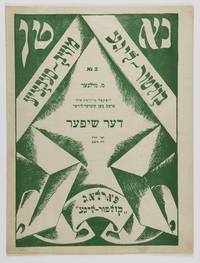
192051339Warsaw: Kultur Lige 1920. First edition. Softcover. vg to near fine. Quarto. Unpaginated. 6 pages. Original wrappers in white and green with 4 different modernist type-fonts as well as designs by acclaimed artist and illustrator Issachar Ber Ryback 1897-1935. Middle leaf loose. Sheet music for the song Der Shifer The Sailor composer by Russian-Jewish pianist Mikhail 'Moses' Milner 1886-1956 with lyrics by seminal Yiddish-language writer I.L. Peretz 1852-1915. The lyrics in Yiddish are printed together with the musical notation as well as separately on the back wrapper. This is the second installment in the Kultur-Lige's series of Yiddish children's songs for vocal and piano. Wrappers with very minor smudges and stains. back cover repaired at the bottom left corner with no loss of text or image. Interior clean. Wrappers in very good interior in near fine condition overall. Wrappers protected in modern mylar. Quite scarce. Yiddish title: No.2 × ×טן קולטור-ליגע מוזיק-סעקציע <br /> Subtitle: וו××§×ל־סיו×יטע: ×ויף פרצס צען ×§×™× ×“×¢×¨Ö¾×œ×™×“×¢×¨: דער שיפער פ×ר ×©×˜×™× ×ž×™×˜ פי×× ×<br /> Authors: מ. ×ž×™×œ× ×¢×¨ ×™.ל. פּרץ יששכר בר ריבק <br /> Publication: פ×רל××’ קולטור-ליגע וו×רשע<br /> <br /> Bibliographic resource: Kazovsky 'The Artists of the Kultur-Lige' p.22 please note the image shown is not the same volume as this one.<br /> <br /> It should be noted that all published songs in the series were issued in wrappers utilizing the same Ryback layout and design but were printed in various colors. Kultur Lige unknown
1898134291Leipzig, Fritzsch, 1874-1898. 4°. M. Notenbeisp. u. Abb. Hlwdbde. m. hs. Rsch. Einbde. teils etwas berieben u. bestoßen.
1856485703 vol. in-folio (28 x 40 cm) cartonnage recouvert de papier imitation veau raciné, papier au filigrane à Aigle à deux têtes couronnées et initiales D. V. C., Venezia, 1856 - 1857, 134 ff. ; 142 ff. ; 96 ff.
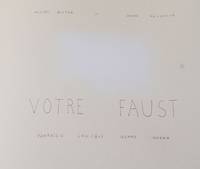
3477Wien: Universal 1973. Early edition. In original paper. Folio size Facsimile of the manuscript. Fine condition. Early edition. In original paper. Folio size Facsimile of the manuscript. 203 folio page. Votre Faust is an opera in two acts by the Belgian composer Henri Pousseur for five actors four singers twelve instrumentalists and tape. The text is by the French author Michel Butor. Originally written between 1960 and 1968 it was premiered in 1969 in Milan and revised in 1981. Although about seven hours of performable material exists the variable structure does not permit use of it all in a single version and performances to date have been between three and three-and-a-half hours. Very rare. Universal unknown
1½ SS. 4to. Mit eh. Adresse (Faltbrief) und rotem Siegel. An den Verleger Carl Friedrich Peters (1779-1827) in Leipzig: "Ob ich gleich von Ihnen weiß, dass Sie von Guitarr Sachen mit Gesang, als Verleger, nicht viel mehr halten, so erlaube ich mir dennoch nachträglich zu meinen Sendungen Sie zu befragen, ob Sie nicht einiges, und zwar einzeln, aus dem so allbeliebten Freischütz für die Guitarre von mir nehmen wollen […]". - Der Musiklehrer führte die Gitarre in Norddeutschland ein. Zu diesem Instrument schrieb er eine mehrfach neu aufgelegte Gitarren-Schule.
in-8, pp. (16), 669, (7), bella legatura dell'epoca in marocchino nocciola, decorata in oro, ai piatti due riquadri di triplice filetto, fiorone agli angoli, al centro placca ovale contenente armi gentilizie, dorso a 5 nervi, titolo e motivi vegetali in oro, tagli dorati. Stemma del cardinal Farnese al frontespizio; il volume è interamente stampato in rosso e nero, con musica notata. Uno dei fondamentali trattati di musica sacra, voluto da Palestrina che ebbe da Papa Gregorio XIII l'incarico di regolare e unificare le musiche e i toni dei cori. Fu il giovane Guidetti (1532-1592) a redigere per quello scopo il presente trattato, grazie alla sua profonda conoscenza delle fonti manoscritte di musica sacra. (Antico timbro al frontespizio, rare fioriture, piccolo difetto al dorso).. .
Small 8vo. ½ p. In French. To an unknown recipient, giving him the address of the French composer Louis Delâtre: "Voici l'adresse de M. Louis Delâtre: 73, Via della Scala, Firenze: et une infinité de remercimens […]". - Provenance: Robert Bory, musicologist.
¾ S. 4to. Mit eh. Adresse (Faltbrief). An den Musikkritiker und Komponisten Carl Gollmick: "Ihrem Wunsche gemäß zeige ich Ihnen hierdurch den Empfang des mir gütigst übersandten Manuscriptes an. Berufsgeschäfte hinderten mich augenblicklich dem Werke meine ganze Aufmerksamkeit zu widmen, doch soll dieß umgehend geschehen und werde ich mir erlauben Ihnen sofort meine offene ehrliche Ansicht mitzuteilen [...]". - Das Adreßblatt lose beiliegend; beide Blatt mit kleinen Randläsuren.
8vo. 3 pages. With autogr. address. To Mademoiselle Collin in Berlin: "I have just arrived in Paris, Mademoiselle, and I find your letter dated Oct. 22. You do me justice by not doubting the real interest I take in the success of your enterprise. I am most grateful to my friends for the kind reception they have given you; I may have the opportunity to thank them orally if Mr. Spontini's plan to execute my Oratio 'David' is realized next summer [...]" (transl. from the French original). - Slightly wrinkled, and small damage to edges.
In-4°; pp. (12), 128, 1 tavola, alcuni legni nel testo. Edizione originale di questo popolare manuale settecentesco di musica barocca. La tecnica musicale che qui Gibel (1612-1682, direttore di musica e cantore a Minden, ricordato anche per aver introdotto la nota con sillaba do in luogo di ut) espone verteva sui problemi di intervallo, temperamento e tonalità e si basava su calcoli aritmetici e geometrici (radice quadrata e cubica, studio delle linee rette, del cerchio ecc.) . Legatura coeva in cartonato, parzialmente intonso, leggermente brunito, .
Tre voll. In -4°, pp. XVI, 269, (5); 315, (5); (2), VIII, 248, 8 tavv. ft; notevoli fori di tarlo ma non sul testo. Important holes out of text.
964s. l. : 1861-1889. « [MADAME PARENT] EST À L'ENSEIGNEMENT PROFESSIONNEL DU PIANO CE QUE MME DE SÉVIGNÉ FUT AUX LETTRES »
Lettera scritta da Milano nella quale Rossini annuncia la morte di Carlo Severini. -- Amico del compositore, dal 1830 Severini era direttore, con Edouard Robert, del Théâtre Italien” di Parigi. Nella notte tra il 13 e il 14 gennaio 1838, dopo una rappresentazione del Don Giovanni di Mozart, un incendio devastò la Sala Favart, sede del teatro. Assieme all’edificio andarono distrutti i materiale scenici. Severini, nel tentativo di mettersi in salvo, perse la vita. L’incendio interruppe un’intensa e fortunata stagione. -- «Dai giornali avrete sentito l’infausta notizia dell’incendio del R. Teatro Italiano di Parigi e la morte del povero vostro cognato Severini che non trovando altro mezzo si gettò dal balcone, visse un’ora e spirò senza poter proferire parola alcuna [...]. Vi consiglio però mettervi in viaggio per Parigi, passate per Milano, vi darò istruzioni lettera e cercherò giovando agl’interessi della vostra famiglia [...] di onorare la memoria del povero mio amico [...].» -- «Severini Severo Carlo. Era nato a Bologna. Venne a Parigi per gli affari politici del 1831 [...]. Esercitò nella gran Capitale della Francia la professione di Maestro di lingua italiana. A que’ dì lo conobbe Rossini, e trovata in lui onestà ed intelligenza, buon cuore e mente sveglia, lo nominò régisseur di quel Teatro Italiano [...]. D’allora fino al 15 gennaio 1838 occupò [...] questa non facile carica; quel giorno, [...] appiccatosi al Teatro Italiano un orribile incendio, egli [...] precipitando dall’alto, s’uccise. Severini fu compianto da tutta Parigi, ove erano non solo note, ma ammirate le sue squisite e rare virtù. Le sue ossa riposano in un maestoso tumulo nel cimitero di Montmartre» (F. Regli, Dizionario Biografico, Torino, coi tipi di Enrico Dalmazzo, 1860, p. 501). Ghedini, avvocato bolognese, divenne amministratore e usufruttuario di alcuni beni di Carlo Severini.
Small 4to. 2 pp. To an unidentified English admirer ("Dear Madame"), in English: "I regret very much having been prevented earlier to reply to your very kind letter. I feel it quite a special honour that you, Madame, wished to see me as a guest in your house. Thanking you for your friendly invitation I must inform you that it is quite impossible for me to visit England in May or June. I am forced to deprive me of the pleasure this time of seeing England, so highly acclaimed by me [...]". - Written on the first and terminal pages of a folded sheet; horizontal fold.