78 260 résultats
Ca. 160:165 mm bzw. Visitkartenformat. Wohl Fragment eines Notenmanuskripts, auf dem Strauß nach Abschluss notierte: "Durch mühsame Arbeit schwer errungen". Die Visitenkarte mit der in Bleistift verfassten Widmung "für Adele" war ursprünglich mit Siegellack auf das Blatt montiert. - Das Notenblatt unregelmäßig beschnitten und etwas angestaubt bzw. knittrig sowie mit Siegelrest; die Visitenkarte tadellos erhalten und gleichfalls mit Siegelrest verso.
8vo. 1 page. Mounted on backing paper. To the composer and conductor Alfred Cellier, requesting a meeting: "Can you manage to call upon me anytime tomorrow after 5 p.m. I want to speak to you. If you like, you will find dinner at 6.30 [...]". - Cellier had written some of the overtures to the famous operas created by Sullivan and W. S. Gilbert; he conducted and directed many of these original productions. - With collector's note to backing paper and slight staining due to seeped glue.
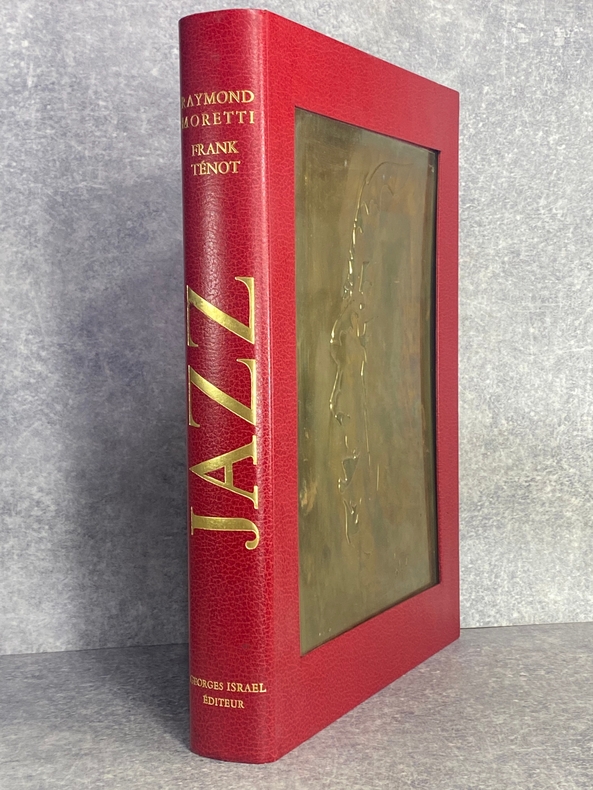
19831905PARIS. GEORGES ISRAEL EDITEUR. 1983. IN-FOLIO (35,5 X 47,5 X 6 CENTIMETRES ENVIRON) DE 56 + (7) PAGES, SOUS COUVERTURE CARTONNEE BLANCHE ILLUSTREE EN DORE ET EMBOITAGE CARTONNE ROUGE DE L'EDITEUR, PLAT SUPERIEUR ILLUSTRE EN DORE, TITRE DORE SUR DOS LISSE. ILLUSTRE DE 13 LITHOGRAPHIES HORS TEXTE : UNE EN NOIR EN FRONTISPICE ET 12 EN COULEURS, DONT 11 A DOUBLE PAGE. AVEC 3 LITHOGRAPHIES SIGNEES AU CRAYON PAR RAYMOND MORETTI, 2 DOUBLES ET UNE SIMPLE (PAGES 12-13, 16-17 ET 35). PREMIER TIRAGE LIMITE A 1350 EXEMPLAIRES NUMEROTES, TOUS SUR VELIN PUR CHIFFON DES PAPETERIES D'ARCHES, CELUI-CI H. C., JUSTIFIE A LA MAIN ET SIGNE PAR L'EDITEUR. ENRICHI D’UN TRES BEL ENVOI CALLIGRAPHIE PAR L’ARTISTE, ADRESSE A FRANK TENOT ET TENANT TOUTE LA DOUBLE PAGE BLANCHE EN TETE DE L’OUVRAGE, EN NOIR ET EN DORE : « MERCI FRANK DE TON TRAVAIL ET DE TON AMITIE. MORETTI 85 ». ON JOINT UNE PLAQUE EN CUIVRE AVEC LE PROFIL DE LOUIS AMSTRONG PAR MORETTI (27,5 X 37 CENTIMETRES ENVIRON). PETIT DEFAUT A L’EMBOITAGE, SINON BEL ENSEMBLE.
229368Paris, H.-L. Guérin & L.-F. Delatour, 1761 in-12, xij pp., 164 pp., [2] ff. n. ch. d'approbation et de privilège, avec 2 planches dépliantes hors texte, veau fauve moucheté, dos lisse cloisonné et fleuronné, pièce de titre cerise, encadrement de simple filet à froid sur les plats, simple filet doré sur les coupes, tranches mouchetées de rouge (reliure de l'époque). Coiffes un peu rognées, coupes frottées.
2 SS. auf Doppelblatt. 8vo. An den Direktor des Grazer Ständischen Theaters Karl Remmark (1802-86), mit einer Empfehlung für Karl August Quanter und Louise Lebrun: "Lieber alter Freund! Dich herzlich grüßend, muß ich mich eines Auftrags entledigen, den ich um so lieber annahm, als ich weiß, daß meine Verwendung vielleicht nicht ganz umsonst sein wird. Das Pauli'sche Fach ist bei uns durch Hrn. Quanter so vortreflich besetzt, daß es wohl keiner weitern Recomendation bedarf, um denselben in das beste Licht zu stellen. Auch das Fach der Bauer ist durch D.lle Lebrün ausgezeichnet praesentirt. Diese beiden haben die Absicht auf der Ständischen Bühne zu Gratz einen großen Gastrollen Cyklus zu geben, u. wandten sich an mich um näheren Aufschluß. Ich weiß es, daß Du gewiß auch ein gutes Geschäft machen wirst, wenn Du dieses Gastspiel annimmst, u. gewiß werden beyde zugleich mit der 1/2 Einnahme zufrieden sein, u. zum Benefiz 2/3 der Brutto Einnahme. Die Zeit könnte wohl Aprill May Juny sein, so wie übrigens Du selbst am besten die Sache zu arrangiren weißt. Sende mir einige Zeilen als Antwort umgehend [...]". - Nachdem der aus Böhmen stammende Tichatschek sein Medizinstudium abgebrochen und stattdessen eine Gesangsausbildung begonnen hatte, kam er als Chorist ans Kärntnerthor-Theater; als Solosänger in Graz sang er erste Tenorpartien und begeisterte gleichermaßen Publikum wie Kollegenschaft. "Als er dann in Dresden mit großem Beifall in Gastrollen gesungen hatte, erhielt er 1838 ein Engagement am dortigen Hoftheater, bei welchem er nun dauernd verblieb, mit diesem treuen Festhalten an einer und derselben Bühne eine Erscheinung bietend, welche in der Theaterwelt der Gegenwart geradezu phänomenal genannt werden kann. Als Gast erschien er auf allen größeren Bühnen Deutschlands, auf jeder enthusiastische Aufnahme findend“ (Wurzbach). Musikgeschichtlich bedeutsam war Tichatscheks beherztes Eintreten für Richard Wagner zu einer Zeit, da sich dessen Werke "noch lange nicht allgemeiner Anerkennung erfreuten, ja noch vielfach Anfechtung erfuhren" (Eisenberg).
6 SS. auf gefalt. Bögen. Tinte auf Papier, mit Überarbeitungen in Blei- und Rötelstift. Folio. Der "Waffentanz aus Told' parodierender Posse: 'Wastl, oder die böhmischen Amazonen'" (Überschrift). Franz Xaver Tolds "Wastl oder die böhmischen Amazonen" (eine Variation seines Vorjahreserfolgs "Frauen im Serail") entstand 1841 für das Josefstädter Theater, wo Titl seit 1840 (als Nachfolger von Heinrich Proch) als Kapellmeister wirkte. - Sauber und wohlerhalten.
270:185 mm auf etwas größerem Untersatzkarton. Schönes sepiafarbenes Portrait aus dem Atelier Daghi, Parma, mit dessen blindgepr. Signet. Die Widmung gilt einem Otto Bursik.
Vintage photograph, 225 x 168 mm. Mounted on cardboard, signed by the photographer "Traube, Salzburg". Early photograph taken at the "Richterhöhe", with the Hohensalzburg Fortress in the background. Inscribed on the cardboard to the Austrian writer and dramatist Kurt Frieberger (1883-1970): "Herrn Ministerialrat Dr. Kurt Frieberger zur freundlichen Erinnerung an die singende Familie Trapp".
171217449Paris Raymond Mazieres 1712 in-12 veau brun moucheté, dos à ners (fente sur 1 cm à un mors). frontispice, (6ff. n.c.), 139pp. (2ff.n.c.), 22 pp. de musique notée non comprises dans la pagination.
Calling card format. 1 page. To the unnamed Count Andrea Zorzi, an eccentric Venetian nobleman from an ancient family and a supporter of Verdi (he is said to have owned a silver cane upon which the titles of each Verdi opera were engraved as he heard them): "Ringrazio e contraccambio gli auguri". - Mild toning.
Edizione originale. Minimi difetti alla copertina, nel complesso ottimo esemplare. Uno dei capolavori dell’artista milanese, dove vengono approfondite le relazioni tra arte astratta e musica contemporanea, scale musicali e scale cromatiche. Raro.
2 SS. auf Doppelblatt. 8vo. Intimer französischsprachiger Brief an ihre Halbschwester Claire de Charnacé (1830-1912) betreffend eine plötzliche psychische Erkrankung ihrer Mutter Marie d'Agoult (1805-76). Trotz Cosima Wagners distanziertem Verhältnis zur Mutter, das durch den Konflikt zwischen d'Agoult und dem Vater Franz Liszt schwer belastet war, zeigt sie sich im Brief überaus besorgt und mitfühlend, auch ihrer Halbschwester gegenüber, zu der sie ein inniges Verhältnis hatte: "Arme Liebe, welch traurige Dinge Sie mir mitteilen und Sie aushalten müssen! Ich kann mir eine so plötzliche Krankheit nicht erklären, der letzte Brief von Mutter datiert vom 15. Juni und ist völlig vernünftig. Ich muss gestehen, dass ich seit den Ereignissen, die sie ferngehalten hatten, einen Rückfall befürchtete; als ich sie hier sah, fand ich sie bei so guter Gesundheit, dass ich völlig beruhigt war, wobei mich ihre große Zerstreutheit überraschte, aufgrund derer sie dieselben Dinge 5 oder 6 Mal fragte. Aber ich sagte mir, dass ihre Gedanken woanders waren, dass sie aus Höflichkeit fragte und die Antworten nicht hörte. Ich wusste nicht, worauf ich 'Rasen geben' beziehen sollte, da es unserem Garten nicht daran fehlt und wir haben überhaupt nicht über hier zu machende Arrangements gesprochen. Warum wurde Mama nach Paris zurückgebracht? Sie hat mir geschrieben, dass sie bis auf weiteres in St. Lupicin bleiben wird und ich habe ihr geschrieben, dass sie besser nach Tribschen kommen sollte, statt zu diesem Zeitpunkt nach Paris zurückzukehren. Denken Sie, dass ich ihr schreiben soll, soll ich sie auf ihre Krankheit ansprechen? Weiß sie, dass sie phantasiert? [...] Ich bin tief betrübt durch diese Neuigkeit und alles was Mama betrifft, macht mich schrecklich trübsinnig. Ich glaube nicht, dass es ein trostloseres Leben auf der Erde gibt als das Ihre und all mein Mitleid kann sich nicht in Liebe verwandeln. Es sind gerade diese dunklen Stunden, in denen ich die wohltuende Wirkung meiner häuslichen Tätigkeiten fühle; jeden Tag dieselben Dinge zur selben Zeit zu tun zu haben und sie mit Liebe zu tun, einen Vogel zu hören, einen Berg von hier und dort zu betrachten, die Welt zu vergessen - das sind meine Ressourcen und meine Stützen [...]". - Mit Sammlervermerken in Blei. Drei Quetschfalten, ein Einriss im Falz mit Textberührung und kleinere Einrisse ohne Textberührung. Minimal fleckig.
1 S. auf Doppelblatt mit eh. Adresse am Gegenblatt verso (Faltbrief). Gr.-8vo. Während ihrer frühen Ehejahre mit dem Pianisten und Dirigenten Hans von Bülow, an den radikalen Theologen und Philosophen Bruno Bauer (1898-82): "Je reviens de Leipsick; ville et habitants sont affreux, c'est assez vous dire monsieur que j'aurais été ravie de renouveler ma jolie partie de Treptow, mais il m'est interdit de trop me hasarde dehors, afin que si puisse réserver quelques jours pour mon long voyage; si viens donc vous prier monsieur de me faire le grand plaisir de me dédommager de ma perte, en prenant le thé avec moi, Mercredi soir [...]". - Größere Feuchtigkeitsflecken.
2 SS. auf Doppelblatt. 8vo. An einen Kapellmeister mit Dank für zugesandte Blätter: "Die vier Wochen, welche nun seit den Festspielen verflossen sind, haben mir so Mancherlei zu erledigen gebracht, dass ich wirklich zu der Erfüllung meines Wunsches, Ihnen auf das Herzlichste zu danken, nicht kommen konnte. Nehmen Sie diesen verspäteten Dank freundlich auf, werther Herr Kapellmeister, und seien Sie überzeugt, dass ich u. die Meinen wir mit Vergnügen von den schön ausgestatteten Blättern Kenntniss genommen haben. Möchten Ihre künstlerischen Bestrebungen sich Ihnen erfolgreich erweisen! [...]". - Das Doppelblatt beidseitig mit jeweils etwa 2 cm langen Einrissen entlang der mittigen horizontalen Faltlinie; papierbedingt leicht gebräunt und mit einem winzigen Papierdurchbruch im Mittelfalz.
½ S. 8vo. Eine Notenzeile aus "Nachtigall und Rabe" unterlegt mit Text. Darunter Widmung: "Unvergeßlich bleiben die sanften schmelzenden Töne, der wichtige gefühlvolle Vortrag, durch welchen die liebenswürdige Philis wetteifernd mit der Nachtigall sich so rühmlich auszeichnete […]".
8vo. Together (1+1+1 =) 3 pp. on 2 bifolia and one single sheet. To E. Zilcken, who had supported establishing a concert hall in The Hague since 1851, inquiring about the possibility to tour several Dutch cities during his leave of absence from the Warsaw Music Society, and mentioning a collaboration with the Hungarian composer and violinist Leopold von Auer (1845-1930) in London the past summer: "Comme j'entrevois la possibilité d'obtenir un congé à la Societé de Musique de Varsovie, pendant les mois de Décembre (1877) et Janvier (1878), je prends la liberté de vous demander si je pourrais, à cette époque faire une tournée dans les 4 ou 5 villes principales de la Hollande [...] J'ai fait cet été un peu de musique à Londres, avec notre ami Auer [...]" (26 Sept. 1877). - To the same, announcing his imminent departure to Brussels and admitting his relief that a friend of Zilcken's from Brussels was not informed that his concert in The Hague was not a commercial success: "Merci bien pour votre aimable lettre que je reçois à l'instant; je repars demain matin pour Bruxelles [...] Il parait que je n'ai qu'à vous adresser de terribles secrets; voici venir encore une confidence, une prière sustante adressée en toute confiance: Vous m'obligeriez infiniment en ne mettant pas notre jeune amie de Bruxelles [...] au courant d'une non-réussite matérielle de mon concert à La Haye [...]" (15 Feb. 1884). On headed stationery of the Hôtel Adrian in Amsterdam. - To a friend about a concert ticket: "Le 6me Billet Blanc est pour Hendriks [...] au quel je viens de serrer la main [...]" (7 Sept., no year). On stationery with embossed monogram.
8vo. Altogether 13 pp. Fine letters to an unidentified childhood friend: "Nehme meinen herzlichsten Dank entgegen für die schöne Cranzparade und die ungemein schmeichelhafte Aufschrift welche Du mir anläßlich meiner bescheidenen Mitwirkung bei der letzten Straußparade überreichen ließest [...]" (27 Oct. 1910). - "Du hast keine Ahnung, wie leid es mir thut, daß gerade Du mich nicht zu Hause angetroffen hast, aber mein Zustand forderte Luft - Luft - Luft. Wie würde ich mich gefreut haben, dich meinen liebsten treuen Jugendfreund bei mir begrüssen zu können. Schon der Gedanken, Du warst bei mir, ließ alle meine Jugendjahre die ich mit dir verlebte in meinem Geiste erwachen: Schöne Zeit! goldne Zeit! [...]". - Two letters on stationery with printed letterhead; one letter marked in blue crayon by another hand. Holes punched in left margin (occasionally slightly touching letters).
1 S. auf Doppelblatt. 4to. Mit eh. Adresse (Faltbrief). An den Kirchenmusiker und Komponisten Jean-François Le Sueur (1760-1837) in Paris mit der Empfehlung eines jungen Mannes, den er, Zingarelli, hätte instruieren sollen. Unglücklicherweise sei es jedoch nie zu dieser Ausbildung gekommen. Zingarelli vermutet, der junge Mann habe kein Interesse, und verweist auf ähnliche Fälle solcher Jünglinge, die alle nach Italien kämen, große Lebemänner spielten, dann mit hohen Erwartungen nach Frankreich zurückkehrten, jedoch keinerlei Ruhm fänden, sondern von der Nachwelt vergessen würden: "J'atendois de revoir chez-moi le jeune homme, qui vous avez eu la bonté de me raccomander avec si grande chaleur, et affection; mais je ne l'ai jamais vu, et je vous l'avoue franchement. Ces jeunes gens, qui recoivent la prise quand ils sont en Italie, se croyent des grand-hommes, ils s'amusent en grands-seigneurs, et retournent en France remplis de grandes esperances, et leur nom retourne dans l'oublie [...]". - Mit Ausriss durch Brieföffnung und zwei Randeinrissen.
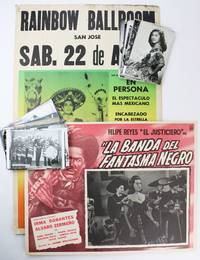
19602410Various places in California New York & Mexico 1960. Very good. Sixty items total including fifty-five photograps and five posters. Generally light wear. An attractive archive of visual materials including posters broadsides original photographs and real photo postcards that promote leading mariachi singers and musicians of the mid-20th century including Salvador López La Prieta Linda José Alfredo Jiménez Lucero Aguilar Miguel Angel Montes Francisco Avitia Ignacio Jaime Jorge de Crespo and Alfredo “El Mayoral†Gonzalez. Notably many of the larger pieces feature singer and actress Irma Dorantes b.1934 one of the last surviving stars from the Golden Age of Mexican cinema. The widow of legendary Mexican ranchero singer and actor Pedro Infante Dorantes enjoyed a string of hit songs in the 1950s and ‘60s including her recording of “Recuerdos de Ipacarai†with El Mariachi Mexico de Pepe Villa.<br /> <br /> “Mariachi music has origins deep in Mexican history. The sound of its string instruments and its oldest rhythms are rooted in Mexico’s colonial times 1519-1810; people from Spain and African slaves and their descendants mingled with hundreds of American Indian cultures to create a new Mexican culture marked by many regions each with its own signature musical tradition. The music that was called ‘mariachi’ as early as the 1850s emerged from the ranches and small towns of western Mexico particularly in the states of Jalisco Michoacán Nayarit Colima and Aguacalientes. When big-city radio stations movies studios and record companies took mariachi music to new audiences throughout and abroad in the 1930s mariachi music was transformed into one of Latin America’s favorite musics. By the 1950s its standard sound of two trumpets three or more violins vihuela small guitar and guitarrón big bass guitar was set. Since then its repertoire of fast-paced songs expressive canciones rancheras ‘country’ songs polkas syncopated huapangos romantic boleros and more has been heard throughout the Americas and around the world†Smithsonian Folkways.<br /> <br /> The present collection includes:<br /> <br /> 1 An original photograph 6 ½†x 7†of José Alfredo Jiménez in performance. Jiménez 1926-73 was by far the most important prolific and popular composer of música ranchero in Mexico during the 20th century. His extraordinary repertoire of more than 1000 songs encapsulated the sentiment ideals and concerns of the common man in a folksy yet poetic way.<br /> <br /> 2 Six black-and-white photographs 7†x 5†of various musicians. Four are identified with holographic annotations on the verso while another is accompanied by a typed press caption indicating that the image captures Las Hermanas Huerta performing “Cantando Bajo el Recuerdoâ€.<br /> <br /> 3 Forty-one black-and-white real photo postcards 3 ½†x 5 3/8†of various musicians all identified in the negative or on the verso. The photographs of Alfredo “El Mayoral†Gonzalez and La Prieta Linda are autographed.<br /> <br /> 4 Six press photographs 8†x 10†of both solo performers and bands including two images of Lorenzo Elisea y Sus Piratas and a shot of singer Amalia “La Tariácuri†Mendoza 1923-2001 on stage.<br /> <br /> 5 Original photograph 13 ¾†x 11†on Irma Dorantes on horseback during a performance in New York. The undated image is signed by photographer F. Camacho on the recto. Dorantes was known for her equestrian shows and in 1964 she and her horses Gatillo de Oro and Justiciero headlined a residency at the Million Dollar Theater in Los Angeles.<br /> <br /> 6 Lobby card 16 3/8†x 12 ½†for “La Banda del Fantasma Negro†1964 the Jaime Salvador film starring Irma Dorantes and Alvaro Zermeño.<br /> <br /> 7 Black-and-white poster 18 ¾†x 13 ¾†of Irma Dorantes reproducing a portrait of the singer by Mexican photographer Carlos Ysunza Nieto.<br /> <br /> 8 Large poster 17 ½†x 22 ½†promoting a benefit performance of “Feria de la Cancion†featuring Irma Dorantes Cuarteto Ruffino and Trio Hermanos Martinez-Gil. Circa 1961 no place noted. Printed in blue on yellow cardstock with a later horizontal crease.<br /> <br /> 9 Large poster 14†x 22†for an August 22 1964 performance by Irma Dorantes at the Rainbow Ballroom in San Jose California with opening acts by comic Rudy Frudy and Mariachi San Miguel. Printed by Woolever Press in Los Angeles on white cardstock with a rainbow gradient.<br /> <br /> 10 Oblong broadside ca. 1958 18 ¾†x 13 ¾†advertising a coronation ball headlined by bandleader Paco Armenta and “el sensacional†Conjunto Tropical Santaneros†at Salon del Cllub de Leones in Calpulalpan a municipality in Tlaxcala in southeastern Mexico. Printed in color on a thin sheet of white stock with some loss to the upper corners.<br /> <br /> Most of the material is unrecorded with no listings in OCLC or elsewhere. In addition to highlighting many leading Mexican musicians of postwar era this archive captures the fashion and aesthetics of mariachi at a formative moment in its evolution. unknown
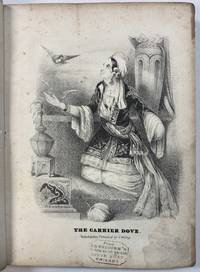
184141574Philadelphia Baltimore etc. 1841. Attractive folio contemporary half calf and marbled paper over boards hinges starting lower spine wear. Morocco ownership label of Aurelia Tremper 1824-1887 a wealthy Philadelphian with significant land holdings in Torresdale Park and who acquired this book some time before her marriage to Andrew Stevenson. Some of the song sheets are lightly to moderately spotted. Good plus consisting of: <br /> <br /> Highlights: <br /> Francis Johnson. "Philadelphia Gray's Quick Step . . . as Performed by Johnson's Brass Band." 3 pages. Illustrated cover; minor worming; inked stamp of Philadelphia music seller. A composition by Francis "Frank" Johnson 1792-1844 of Philadelphia one of the first successful African-American composers. An earlier issue was printed by the predecessor firm of Fiot Meignen & Co. Philadelphia: L. Meignen & Co. circa 1839-1842.<br /> John Smith. "The Fireman's Song." Dramatic illustrated cover. Boston 1839. <br /> "Yankee Doodle & Star Spangled Banner / Hail Columbia." 4 pages no cover. Philadelphia: Ld. Meignen & Co. circa 1842. Listed in Levy & Fuld's addendum to Muller "Unrecorded Early Printings of 'The Star Spangled Banner'" Notes 27:2 December 1970 #55 stating that it is a reprint of an earlier Osborn's Music Saloon edition. .<br /> A Lady of Charleston. "United States Marine March." 2 facing pages. Philadelphia: A. Fiot undated.<br /> <br /> C.F. Wieland. "The Carrier Dove." Illustrated cover. Philadelphia 1839<br /> "The Carrier Pigeon." Philadelphia undated<br /> W. Clifton. "The Last Link is Broken." Philadelphia undated.<br /> John H. Hewitt. "The Betrothed." Illustrated cover. Philadelphia 1840<br /> Lockhart & Arkwright. "Xarita or the Bride of Andallo." Quite foxed. Philadelphia undated<br /> J.E. Spilman. "Flow Gently Sweet Afton." Stated second edition. Philadelphia 1838<br /> John Smith. "The Fireman's Song." Dramatic illustrated cover. Boston 1839<br /> W.A. Newland. "Nothing Else To Do." Philadelphia 1839<br /> George Linley. "To Meet Again With Thee." Philadelphia undated<br /> Mrs. Hemans. "The Captive Knight." Boston undated<br /> Frederic Berat. "My Normandy." Philadelphia undated<br /> Seymour & Weigl. "Leonore." Baltimore MD undated<br /> A Young Lady of Georgia. "No More." Philadelphia 1836<br /> Moscheles. "Erin is My Home." Baltimore undated<br /> Fry & Bellini. "Do I Not Prove Thee." Philadelphia 1841<br /> G.A. Hodson. "The Lake of Como Morning." Philadelphia undated<br /> G.A. Hodson. "The Lake of Como Evening." Philadelphia undated<br /> PlanchÈ & Barnett. "Rise Gentle Moon." Philadelphia undated<br /> Moore & Stevenson. "The Meeting of the Waters." New York undated<br /> Henri Herz. "We Have Lived and Loved Together." Philadelphia undated.<br /> J. Beuler. "Come and Take Tea in the Arbor." Illustrated cover stated second edition. Philadelphia undated.<br /> Madam Malibran. "There is No Home Like My Own." Philadelphia undated<br /> Alexander Ball. "Tell Him I Love Him Yet." Baltimore 1835<br /> Henry R. Bishop. "Home Sweet Home." Philadelphia undated<br /> Jeffery & Nelson. "The Rose of Allandale." Philadelphia undated<br /> "Yankee Doodle & Star Spangled Banner / Hail Columbia." 4 pages no cover. Philadelphia: Ld. Meignen & Co. circa 1842. <br /> Louis Major. "Grand Pot Pourri Brillant." Philadelphia undated.<br /> Rossini. "Overture of the Celebrated Opera Il Turco in Italia." Boston undated.<br /> Francis Johnson. "Philadelphia Gray's Quick Step . . . as Performed by Johnson's Brass Band." 3 pages. Illustrated cover; minor worming; inked stamp of Philadelphia music seller. Philadelphia: L. Meignen & Co. circa 1839-1842. <br /> George Hews. "Webster's Quick Step." Philadelphia undated<br /> A Lady of Charleston. "United States Marine March." 2 facing pages. Philadelphia: A. Fiot undated<br /> "The Russian March." Philadelphia undated<br /> C.P. Francis. "The Grand Russian March." Philadelphia 1835<br /> Auber & Unger. "March from the Opera of Fra Diavolo." Philadelphia undated with 1841 gift inscription<br /> John H. Hewitt. "The Nahant Quadrilles." Illustrated cover. Philadelphia 1836<br /> "Admired Cotillions for Balls and Private Parties." Baltimore undated<br /> "The Campbells are Coming / The Cheat." Philadelphia undated<br /> T. Comer. "The Boyleston Quadrilles." Boston 1836<br /> E.L. Walker. "The Rochester Waltz & Gallopade." Philadelphia undated<br /> A Lady. "The Much Admired Kensington or Brattleborough Waltz." Philadelphia undated<br /> W.C. Peters. "The Bardstown Waltz." Baltimore undated<br /> H. Herz. "Cinderella Waltz." Philadelphia undated<br /> W.C. Peters. "The Bonhorst Hop Waltz." Baltimore undated<br /> Louis Strack. "Mary's Waltz." Baltimore undated<br /> S. Carusi. "The Corinthian Waltz." Washington undated<br /> "The Stop Waltz." Baltimore undated<br /> "Duke of Reichstadts Waltz." Philadelphia undated<br /> Henry Rohbock. "The Mary Waltz." Baltimore undated<br /> "Nicholson's Celebrated Waltz." Baltimore undated<br /> R. Schroeder. "The Swiss Boy." Philadelphia undated<br /> "Herr Clines' Dance." Philadelphia undated<br /> "Juvenile Waltzes." Baltimore undated<br /> J. Geldon. "None So Pretty a Juvenile Lesson." Philadelphia undated<br /> "Barcarolle Waltz." Philadelphia undated<br /> "Richmond Waltz." Baltimore undated<br /> "The Fall of Paris." Philadelphia undated<br /> Thomas Smith. "Napoleon's Fall." Philadelphia undated<br /> <br /> Other illustrated covers include C.F. Wieland "The Carrier Dove" Philadelphia 1839; John H. Hewitt "The Betrothed" Philadelphia 1840; J. Beuler "Come and Take Tea in the Arbor" stated second edition Philadelphia undated; and John H. Hewitt "The Nahant Quadrilles" Philadelphia 1836. $1750.00. unknown
1925009941NY: Viking 1925. The first edition of this title bound in tan cloth stamped in dark brown and blue. A minor bit of scuffing to bottom edge of front panel but overall the book is tight and clean. Inscribed on the front free endpaper "Sincerely James Weldon Johnson". 187 pages. The book contains the words and music to 61 spirituals; musical arrangemen ts by J. Rosamond Johnson with additional numbers by Lawrence Brown. Includes Johnson's 40-page preface which begins with Johnson's poem "O Black and Unknown Bards". Signed by Author. First Edition. Hard Cover. VG/No Jacket. 4to - over 9¾" - 12" tall. Viking Hardcover
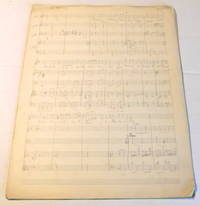
192296239July 1922. 1922. Good. - Quarto 14 inches high by 10-3/4 inches wide. Printed self-wraps. What is offered here is the American composer Douglas Moore's original pencil manuscript for his composition "A Sad Song" with lyrics by Stephen Vincent Benet written in Moore's hand and signed by him. The composition for Voice Violin Cello and Piano is written on a signature consisting of 4 pages of music paper. Titled by the composer at top left the score is signed by him at top right. Halfway down the second page Moore has penciled the word "probably" in the margin followed by dots above 3 bars of music. The pages are slightly soiled with creases to the edges and corners. Good.<p>Together with what appears to be an INK COPY of the score for Voice and Piano with the 3-page score penned in an unknown hand and with a few pencil corrections on 2 sheets of GSNY music paper. Dated July 1922 under the composer's name at the top right of the first page this is the Soprano's copy and is inscribed "A Sad Song to Louise Llewellyn de Jarecka" along the top. The pages are slightly soiled particularly along the edges. The creased edges and corners are chipped with a small piece out from the bottom left corner of the first sheet not affecting the score.<p>Also with a LITHOGRAPHED version of the copyist's holograph manuscript "composed for The Chamber Ensemble" with the words added in pencil in an unknown hand. This is a 3-page score printed and penciled on a signature consisting of 2 sheets of G. Schirmer music paper. The pages are slightly soiled particularly along the edges. There are creases with minor chipping to the edges and corners. Good. <p>These are the soprano Louise Llewellyn Jarecka's personal copies of the score which she first performed with the Chamber Ensemble of NY at the home of Mrs. Randolph Guggenheimer located at 923 5th Avenue in NYC on November 25 1922. The score was arranged for the Chamber Ensemble of NY by the composer. Jarecka subsequently performed the work with the Chamber Ensemble of NY at a Chamber Music Society of Cleveland concert in the Wade Park Manor Ballroom in Cleveland Ohio on November 6 1923.<p>A review by James H. Rogers in the Cleveland Plain Dealer published on page 11 of the November 7 1923 edition of the paper reads: "Singer with Trio Shows Rare Gifts: Chamber Ensemble of New York Gives Pleasing Program at Manor". "At the concert on Nov. 6 1923 Soprano Louise Llewellyn Jarecka sang Moore's 'A Sad Song'. The song is original with a lot of sparkle to it and it is cleverly and ingeniously put together."<p>Stephen Vincent Benet's poem "A Sad Song" was subsequently published in his book "Tiger Joy" in 1925. Douglas Moore met Benet at Yale in 1915. They became close friends which resulted in several collaborations in the 1930's. In a letter to his future wife Rosemary Carr penned from Paris on February 19 1921 Benet writes: "Dear Jane . Thanks for your letter. It was nice of you to write. Doug is going to put the poem about you & the pig "A Sad Song" to music." Benet often celebrated his love for his wife in poems such as in "A Sad Song". In most of his poems he referred to her as Rosemary but he sometimes referred to her as Jane.<p>The American composer educator and author Douglas Stuart Moore 1893-1969 studied at Yale University under D.S. Smith and Horatio Parker. While at Yale Moore composed several songs including Yale's "fight song" "Goodnight Harvard". After serving in the First World War Moore traveled to Paris where he studied with Vincent d'Indy and subsequently Nadia Boulanger and Charles Tournemire. A year before composing "A Sad Song" Moore became Director of Music and organist at the Cleveland Museum of Art. Moore was Professor of Composition at Columbia University from 1926 through 1962. As Secretary of the Alice M. Ditson Fund during the years of the Second World War Moore helped numerous European musicians escape to the US and helped arrange stipends for composers such as Bela Bartok who was paid to transcribe the folk songs in his collection. Among his compositions Moore is best known for his operas "The Devil and Daniel Webster" "The Ballad of Baby Doe" and "Giants in the Earth" the latter of which won him the Pulitzer Prize for Music in 1951<p>The concert singer & writer Louise Llewellyn Jarecka 1880-1954 was the wife of the composer Tadeusz Jarecki. A student of Marcella Sembrich Jarecka was invited by President Wilson to sing at the White House. During the 1920's and 1930's she sang with many European Orchestras and in the Polish Opera.<p>RARE. July, 1922. paperback
193558719New York:: Playbill Incorporated 1935-1981. publisher's printed wrappers. A collection of forth autographed Playbills autographed by multiple cast members including Helen Hayes Dorothy Kilgallen Ethel Merman in pencil Jessica Tandy Milo O'Shea and dozens of others. . 8vo. Playbill Incorporated, unknown
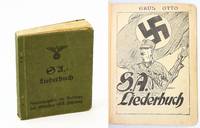
1933545j1632München Munich: Jos. C. Huber. Good. 1933. First Edition Thus. Hardcover. Songbook of the Sturmabteilung SA / Storm Troopers the Nazi Party's original paramilitary wing. Includes one-page forward by Ernst Röhm Chief of Staff of the S.A. who was murdered the following year during the Night of the Long Knives. Text in Fraktur old German script. 4-291 13 pp. Original drab military green decorated cloth over thin flexible boards. Prior owner's name Otto Grun stamped atop title page and written inside front board. Four pages of notes in pencil near back. Tight and square. 13 x 10cm. A sound example of this rare S.A. artifact. ; Illustrations; 24mo . Jos. C. Huber hardcover
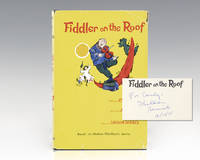
1964131388New York: Crown Publishers 1964. First edition of this classic work. Octavo original cloth illustrated. Presentation copy inscribed by the lyricist Sheldon Harnick on the title page "For Candy: Sheldon Harnick 12/16/15." Near fine in a near fine price-clipped dust jacket small name to the front free endpaper. Jacket drawing by Tom Morrow. An exceptional signed example. Fiddler on the Roof is a musical with music by Jerry Bock lyrics by Sheldon Harnick and book by Joseph Stein set in the Pale of Settlement of Imperial Russia in 1905. It is based on Tevye and his Daughters or Tevye the Dairyman and other tales by Sholem Aleichem. The story centers on Tevye the father of five daughters and his attempts to maintain his Jewish religious and cultural traditions as outside influences encroach upon the family's lives. He must cope both with the strong-willed actions of his three older daughters who wish to marry for love – each one's choice of a husband moves further away from the customs of their Jewish faith and heritage – and with the edict of the Tsar that evicts the Jews from their village. The original Broadway production of the show which opened in 1964 had the first musical theatre run in history to surpass 3000 performances. Fiddler held the record for the longest-running Broadway musical for almost 10 years until Grease surpassed its run. It remains the seventeenth longest-running show in Broadway history. The production was extraordinarily profitable and highly acclaimed. It won nine Tony Awards including best musical score book direction and choreography. It spawned five Broadway revivals and a highly successful 1971 film adaptation and has enjoyed enduring international popularity. It has also been a popular choice for school and community productions. Crown Publishers hardcover