78 235 résultats
Altogether 9 ff. and envelope. All addressed to Count Andrea Zorzi, an eccentric Venetian nobleman from an ancient family and a supporter of Verdi; he is said to have owned a silver cane upon which the titles of each Verdi opera were engraved as he heard them. Most items with a short sentence or two: "ringrazio e contraccambio auguri di gran cuore". - Condition varies: some are browned; the telegram is chipped with some loss and toning.
8vo. 1½ pp. Bifolium with integral address panel. In Italian, to Léon Escudier, the French publisher of Giuseppe Verdi's works: "I have received almost contemporaneously your very much valued letters. Lucca has assured me that you would have the preference of the Opera of London, and that this affair shall be definitively concluded when I and Lucca in April shall pass through Paris to go to London. As to the Opera, it suffices that you sustain me. I want to advise you that in the Carnival of 1847 I must write an Opera for L. which shall be performed in Rome, thus I could not make in that period another Opera. For the present we must suspend this business, and the case wh shall speak of it when I shall be in Paris. Give me news of Ernania [...]" (transl.). - Traces of folds; small tear on f. 2. Formerly the property of a private Chicago-area collector.
24 SS. auf 12 Bll. 4to. Die wiederholt in der Literatur erwähnten Tagebuchaufzeichnungen, vornehmlich seine "wöchentlichen Bemerkungen über meinen Schüler Emil von Metzradt", zum größten Teil (mit Abweichungen) abgedruckt bei Joß S. 140 ff., wobei unser Text auf S. 141 beginnt ("oder wohl gar falsch seyn sollten") und die profunden Leitlinien bis zum Schluß (Joß S. 148) beinhaltet. Im Manuskript folgen dann noch 25 wöchentliche Aufzeichnungen, endend mit dem 21. Oktober. - Die insgesamt zwölf voll beschriebenen Blätter sind Teil des Tagebuches, das Wieck in den Jahren 1810-15 geführt hat. Die vorliegenden Aufzeichnungen betreffen zwar primär den Unterricht eines einzelnen Schülers, doch sind dies hier mehr grundlegende Äußerungen zum Musikunterricht schlechthin, als Bekenntnis niedergeschrieben. "[...] Dieser kleine Aufsatz, sage ich, mag zum Beweiß der Liebe für mein ehrenvolles Geschäft [...] und für die Wahrheit seÿn; der ich nie etwas, aufzuopfern gewohnt bin; - und so wünsche ich nur noch, daß dieß alles eben so unbefangen aufgenommen werden möge, als es Schmeichelei u. Heuchelei liebt und selbst andere verkennt; dieß wird mich hinlänglich belohnen. Ich schließe mit den Worten Pauli an alle diejenigen, welche in dem jetzigen schwindeligen und überspannten Zeitalter den schönen u festen Vorsatz haben, ihre Kinder gut zu erziehen - mit den Worten schließe ich: 'prüfet und behaltet das Beste'. - W." ([S. 17]). - Leicht angestaubt und gebräunt und mit kleinen Randläsuren.
1635132<p>Exceedingly rare first edition</p><p>of Doni renowned landmark of music theory</p><p>The innovation of the "<em>Lyra Barberina</em>"</p><p>Only one copy sold at auction in the last 50 years</p><p>Doni Giovanni Battista.<em> Compendio del trattato de'generi e de'modi della musica. Di Gio. Battista Doni. Con un discorso sopra la perfettione de' concenti. Et un saggio a due voci di mutationi di genere e di tuono in tre maniere d'intauolatura: e d' vn principio di madrigale de principe ridotto nella medesima intauolatura. All'eminentiss. e reuerendiss. sig. il sig. cardinal Barberino. </em>In Roma : per Andrea Fei 1635.</p><p>4to 20 x 15 cm half vellum binding boards enriched with hand-colored paper pp. 40 171 1 signature †ⴠa-dⴠA-VⴠXⶠleaf b1 incorrectly numbered c1 xylographic decorations and headpieces on title page the coat of arms of Cardinal Francesco Barberini text in Latin and Greek.</p><p>At leaf Q3v: <em>Aggiunta con descrizione e rappresentazione in spartito dei cinque Modi o Tuoni generali denominati Dorio Frigio Lidio Iastio Eolio</em>; at leaf V1r: <em>Il principio d'un madrigale del Principe.</em></p><p>5 folding plates with musical notations</p><p>In his <em>Compendio</em> Doni is the first to theorise the introduction of elements of the ancient tonal system into contemporary musical practice and the need to return to the <em>Greek tonal system</em> an ancient music theory characterized by its use of tetrachords four-note scale segments various modes named after Greek regions like Dorian Phrygian and Lydian and the concept of octave species which describes different arrangements of whole and half steps within an octave.</p><p>His theories took up the themes that Vincenzo Galilei had expressed in his <em>Dialogo della musica antica e moderna</em>. He compared the moderns to the ancients concluding that apart from very few examples Monteverdi in particular true chromatic compositions do not exist. Very important in these works is the clear distinction that the author places between the madrigal genre and the recitative style following the reform of the <em>Camerata Fiorentina</em>.</p><p>Doni recognized the advancements made by his predecessors such as Mei 1573 and Salinas 1577 in understanding the Greek tonal system though he disagreed with some of their interpretations. He was critical of others like Glareanus whom he accused of falsely claiming to have revived Greek modes without properly engaging with the ancient Greek musical sources. Doni also dismissed Nicola Vicentino's attempts to revive the ancient chromatic and enharmonic genera as mistaken and useless.</p><p>A significant aspect of Doni's work was his interpretation of the <em>tonoi</em> and octave species based on close readings of the original Greek treatises. His analysis provided a basis for our contemporary understanding of these concepts.</p><p>Doni differentiated between tonos and mode drawing insights from Ptolemy's discussions on the modulation of tonos compared to melody. He highlighted how modulation in tonos involves altering the pitch of the voice throughout the melody while keeping the intervals suitable as opposed to changing only a part of the melody.</p><p>Additionally Doni credited Ptolemy with establishing the distances between the <em>tonoi</em> describing the specific intervals that separate various <em>tonoi</em> such as Dorian Phrygian Lydian and Mixolydian.</p><p>This understanding of the relationships between different <em>tonoi </em>was crucial in the historical study and interpretation of ancient Greek music theory.</p><p>One of Doni's significant innovations was his modification of the lyre an instrument he renamed the <em>Lyra Barberina</em> in honor of his patron Cardinal Francesco Barberini.</p><p>This instrument was intended to revive the ancient <em>Greek</em> <em>lyre</em> reflecting Doni's passion for connecting past and present musical traditions.</p><p>In the Appendix we find the Pedro de Heredia's madrigal <em>Passa la vita</em> on a text by Pope Urbanus VIII</p><p>One of the woodcuts in the book shows a violin fingerboard with a layout for the ancient Doric mode. Other woodcuts illustrate Greek tonalities and chromatic musical progressions.</p><p>Conditions: wormholes restored at last 40 leaves sometimes touching few letters some marks of use and light waterstains along the text.</p><p>References: Claude V. Palisca 1997. <em>Giovanni Battista Doni's Interpretation of the Greek Modal System</em>. The Journal of Musicology 151 3–18; RISM B VI.1 p. 272; Gregory p. 76; Gamba 1912; Damschroder & Williams p. 74.</p><p>Wider description and more images:</p><p>https://tinyurl.com/1635DONI-PDF</p> Andrea Fei
1 S. Qu.-8vo. Mit eh. Adresse. Unveröffentlichtes Schreiben an den Dirigenten Raphael Maszkowski in Koblenz: "Möchten Sie etwa, mit Berufung auf mich, an Hrn. S. Kauffmann in Breslau schreiben? Nicht daß Sie sich zu nennen [?] oder zu bewerben hätten, aber man denkt dort sehr an Sie u. es ist vielleicht gut, wenn Sie Ihre Geneig[t]heit aussprächen - falls Sie solche haben. Vielleicht können Sie Ihre Sommerreise über Br[eslau] machen? (S. Kauffmann, Breslau, Tauenzienplatz [!] 3.a.) Verzeihen Sie die flüchtige Karte aber ich bin im Begriff ein wenig nach Italien zu rutschen [...]". - Stärker gebräunt und gering angestaubt bzw. fleckig; mit einer vertikalen Knickfalte und etwas abgegriffen.
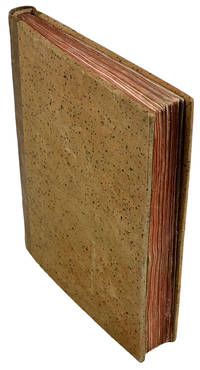
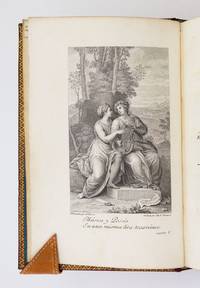
1779ST19371Madrid: Imprenta Real 1779. FIRST EDITION. 235 x 150 mm. 9 1/4 x 6". 10 p.l. 126 XL pp. 1 leaf errata. <br/> EXCELLENT CONTEMPORARY CRIMSON MOROCCO BY DEROME LE JEUNE his ticket with address of Rue St. Jacques on verso of front free endpaper covers framed with thick and thin gilt rules raised bands spine compartments with central floral sprig surrounded by a lozenge of small tools volute cornerpieces gilt titling gilt-rolled turn-ins gilt edges cobalt blue paste-paper endpapers. WITH SIX CHARMING ENGRAVED ALLEGORICAL PLATES after G. Ferre. Front pastedown with morocco bookplate of Mortimer L. Schiff and small book label with a gilt cipher on a red peach. A Large Paper Copy. Palau y Dulcet IV 107; RSIM B VI 429; MGG VI 1403 f.; Gregory-Bartlett I 129. Three minute dents to front board a hint of wear to bands and corners isolated faint foxing blank recto of frontispiece leaf and blank verso of final leaf with faint blue shadown from endpapers but all of these quite trivial and otherwise A BEAUTIFUL COPY--fresh clean and bright internally with very wide margins and strong impressions of the plates and in a lustrous binding showing with few signs of use.<br/> <br/> This is surely one of the handsomest poetical treatises on music ever produced and it is offered here in a binding done by one of the finest craftsmen working in Europe during the period of the book's publication. The work is written in the "silva" form of poetry used by persons of high rank illustrated with fine engravings and put into elegant morocco by the finest hands among the large Derome family of binders. According to Palau our first edition is "beautiful and printed on fine paper." He says further that although the strongly expressed opinions of the youthful author on contemporary composers caused the work to be "unfairly attacked" it was "appreciated by professors of music and collectors of literature in that genre" especially in Italy and America. A child of the Enlightenment Iriate 1750-91 gained entry to intellectual and artistic circles in Madrid through his uncle who was librarian to the king of Spain. He translated works by Horace and Virgil into Spanish by royal request and wrote criticism poetry and dramas. He is best known for his satirical fables on the contemporary literary scene "Fábulas literarias." There were no fewer than 18 members of the Derome family who made their livings as binders in Paris from the middle of the 17th century until the first quarter of the 19th but by far the most distinguished family member was Nicolas-Denis called "le jeune" 1731-88. Known for the gracefulness of his bindings and for being capable of "amazing delicacy" in Hobson's words Derome le jeune was simply the leading binder of the day and his work was much in demand. Because he refused to turn away customers Derome was forced to hire a number of assistants whose work he could not always supervise closely. However Thoinan says that the binder's best work is indicated by the presence of his ticket as here. The volume's provenance adds to its luster: it was in the distinguished library of American bibliophile Mortimer Schiff 1877-1931. In Dickinson's words Schiff a financier and philanthropist Schiff "brought together an unrivaled collection of decorative bindings." His library included works by great printers important illustrated books and works printed on vellum but chiefly fine and historic bindings. The "Reliures" database of the Bibliothèque Nationale de France commends Schiff for assembling "one of the most important inter-war libraries" noting that his collection was "renowned for its collection of French bindings.". Imprenta Real unknown
(21) Bll. mit sechs Kompositionen für Klavier und Singstimme mit unterlegtem Text. Brauner Lederband der Zeit mit goldgepr. Mäander-Bordüre, Vorderdeckel mit einer Stickerei auf Stramin ("Andenken") mit Schmuckbordüre und Goldperlchen, vorderer Spiegel mit Wagners auf Stramin gesticktem Monogramm in Goldrahmen. Kl.-qu.-Folio (295:231 mm). Im vorliegenden Album finden sich die sorgfältigen Abschriften der Lieder 1) "Glockentöne von Proch" (op. 21 von Heinrich Proch); 2) "Mein' Hütten von A. Müller" ("Mein Hütten laß i nit […]" von Anton Müller); 3) "Im Thale von Proch"; 4) "C' est une larme. Romance de P. Lafont" (Charles Philippe Lafont, französ. Violinspieler, 1781-1839); 5) "Wach auf! von Loewe" (Carl Loewe, 1796-1869, "Der Hahn hat gekräht, die Lerche singt [...]"); 6) "Lied von Paul Fleming aus Oehlenschlägers Inseln im Südmeer" ("Laß Dich nur Nichts nicht dauern mit Trauern [...]"). - "Zur freundlichen Erinnerung", wie es am Titel heißt, "gesammelt von Albert Wagner / Würzburg den 8ten October 1839". Albert Wagner, der ältere Bruder von Richard Wagner, war nach Stationen in Leipzig, Breslau, Hamburg und Augsburg seit 1829 in Würzburg tätig. In den 1840er Jahren gab er seine Sängerlaufbahn infolge eines zunehmend stärker werdenden Halsleidens auf; von 1852 bis 1865 wirkte er als Regisseur an der Berliner Hofoper. - Die ersten und letzten Bll. stellenweise etwas fleckig; der Einband stellenweise etwas beschabt und berieben, gleichmäßig gebräunt und teils leicht fleckig; die Stickerei am Vorderdeckel leicht stockfleckig.
1 S. Qu.-kl.-8vo (88:126 mm). Zusammen mit einer Portraitphotographie auf Untersatzkarton montiert. Vier Takte aus dem zweiten Satz der "Musik für Saiteninstrumente, Schlagzeug und Celesta", die gut vier Monate später, am 21. Jänner 1937, in Basel uraufgeführt wurde. Diese für den Schweizer Dirigenten und Mäzen Paul Sacher geschriebene Auftragsarbeit wurde ein sensationeller Erfolg: "Innerhalb eines Jahres folgten weltweit annähernd 50 Aufführungen unter Dirigenten wie Ernest Ansermet, Wilhelm Furtwängler, Ernst von Dohnányi, John Barbirolli und Eugene Ormándy" (Wikipedia). - Im Titel ein unbedeutender Tintenwischer.
4to. 3 parts in one volume. (12), 210, (6) pp. With woodcut printer's device, a headpiece and a few woodcut illustrations in the text. Numerous examples of sheet music. Contemporary full vellum with handwritten spine-title. First and only edition. - Rare treatise on musical theory by the Italian composer Berardi (1636-94), a highly prolific artist and theorist particularly focused on church music. It includes the "Osanna" from Berardi's "Iste confessor" mass (pp. 69-78) and displays his broad knowledge of relevant publications on the subject, as well as his admiration for other scholars, including Athanasius Kircher, Marin Mersenne, and his teacher Marco Scacchi, all of whom he frequently quotes. The "Miscellanea" discuss, inter alia, the canto fermo, as well as the history of counterpoint and its practice in the 17th century (pp. 112ff.), promotes a more liberal and frequent use of dissonances (pp. 82ff.), and analyses the manner and form of tempi generating different musical effects (pp. 56ff.). It explains the musical forms of the day as well as the relations between classical and modern music, rejecting the "uniformity of the past and preferring melodic composition instead" (cf. MGG). - Head and foot of spine slightly rubbed; covers a little bowed. Paper evenly browned and brownstained throughout; upper margin somewhat waterstained. Handwritten ownership of the friar Griziottus of Piacenza, as well as of Charles Missieli to title-page. Missieli's ownership is further stamped in four places, partly erased from the title-page, p. 122, and final page, but remaining on p. 196. A few marginal notes and highlights in pen and pencil. Rarely seen at auction. RISM B VI, 138. MGG II, 1174. Eitner I, 451. Fétis I, 349. Gregory/Bartlet I, 31. Hirsch I, 61. Catalogue of Printed Books of Music in the British Museum T, 142. Catalogue of Early Books on Music in the Library of Congress, 31. Graesse I, 338.
2 SS. 8vo. Mit eh. adr. Kuvert. An den Konzertveranstalter Max Ulrich in Zürich, der ihn zu einem Musikfest eingeladen hatte, mit einer Empfehlung für seine Schüler Hans Erich Apostel und Otto Jokl: "Leider kann ich [...] mir zu dieser Zeit keine Ferien gönnen. Hingegen erlaube ich mir eine Bitte: Könnten Sie es vermitteln, daß die 2 Komponisten Apostel und Jokl, die beim Musikfest erstaufgeführt werden und natürlich dabei sein möchten eingeladen werden. Beide sind wirklich mittelos und verdienen ein solches Entgegenkommen vollauf [...] Wollen Sie sich [...] vielleicht direkt an diese Herren wenden, da ich dieser Tage auf 's Land fahre (eben um zu arbeiten) und eine weitere Vermittlung über mich zeitraubend wäre [...]". - Mit gestempeltem Briefkopf. Tadellos erhalten.
2 SS. 8vo. An einen "liebwerten Herrn Generalmusikdirektor", d. i. Hugo Balzer, damals Generalmusikdirektor in Freiburg i. Br., mit Dank "für Ihr Telegramm, das mich sehr gefreut hat. Ich bin sehr begierig Näheres darüber zu hören. Vielleicht sind Sie so gut u. veranlassen, daß mir ein, zwei Programm(bücher)e gesandt werden und ev. auch Kritiken u. Bühnenbilder. Wenn ich auch nicht dabei sein konnte, so ist meine Anteilnahme an Ihrer Tat (denn das ist es!) doch genau so rege, als wenn ich mitgearbeitet hätte [...] Empfehlen Sie mich bitte auch unbekannterweise Ihrem Intendanten Dr. Krüger u. allen den Künstlern die am 'Wozzeck' teilhatten". - Bergs "Wozzeck" war am 17. Mai d. J. in der Inszenierung von Walter Felsenstein unter der Leitung von Hugo Balzer (Bühnenbild: Carl Kolter ten Hoonte) in Freiburg aufgeführt worden. Der erwähnte Max Krüger war von 1924 bis März 1933 Intendant des Freiburger Theaters gewesen; nach der schicksalshaften Reichstagswahl vom 5. März 1933, bei der die NSDAP mit großem Abstand die stimmenstärkste Partei wurde, folgte ihm im April Albert Kehm nach. - Mit gestempeltem Briefkopf. Tadellos erhalten.
1 S. Kl.-8vo. Orts- und Datumsangaben von fremder Hand in Bleistift am Kopf. Mit einer Beilage (s. u.). An seinen Verleger Fritz Simrock in Berlin: " L[ieber] S[imrock] Ich gehe Freitag früh nach Köln u. wohne bei Hiller wo Sie Suite serieuse Nal u. Damajanti u. A. mehr auch finden [...]". - Ferdinand Hillers Kantate "Nala und Damayanti" (op. 150) nach Friedrich Rückerts aus dem Epos "Mahabarata" entlehnter Geschichte "Nal und Damajanti" war 1870 erschienen. - Beiliegend ein eh. adressierter Briefumschlag von Brahms an den Bremer Kaufmann, Politiker und Senator Gustav Rassow (Poststempel Leipzig, 31. I. 1895).
1 S. Qu.-8vo. Mit eh. Adresse. An seinen Verleger Fritz Simrock in Berlin: "Der 1te Nov. hat mich gründlich ausgeraubt u. so bitte ich Sie mir frdl. die Hälfte einer M. zukommen zu lassen, die andere Hälfte dieser M. aber an Kirchner, Hbg. Neuerwall 34 III. zu schicken, der schwerlich besser dran ist als ich. Sie vergessen doch nicht, mir bei erster Gelegenheit einen Extra Abzug von 2 Clavierstücken zu schicken? In Schubert's Lexikon steht noch eine Oper Numa v. Bizet verzeichnet (1871 comp.) was ist mit der? Das M[ädchen] von Perth ist eine so schauderhafte Partitur, daß ich die Geduld verlor u. den Kl.A[uszug] abwarte um hinein zu kommen [...]". - Brahms war mit dem Komponisten, Dirigenten, Organisten und Pianisten Theodor Kirchner seit den frühen 1860er Jahren freundschaftlich eng verbunden. 1884 wurde für ihn, der zeitlebens in sehr schlechten finanziellen Verhältnissen lebte, "eine Spendenaktion initiiert, an der sich unter anderem Edvard Grieg, Hans von Bülow sowie Carl Reinecke beteiligten. Der Erlös wurde angelegt und der Zins wurde Kirchner zum Lebensunterhalt zur Verfügung gestellt. Sein Freund Johannes Brahms unterstützte ihn jedoch, wie schon in den Jahren zuvor, weiterhin finanziell" (Wikipedia). - Mit kleinen Anmerkungen von anderer Hand in grünem Farbstift.
1 page. "Dr ABruckner | 27. Mai 1892". - In pencil, somewhat dusty and with a crease. Traces of a paperclip and imprinted: "Prof. Anton Bruckner | Ehren-Doctor der Philosophie | der k. k. Universität in Wien | Ritter des Franz Josef-Ordens | k. k. Hoforganist".
6 ff., notated in black ink on 12-stave Cameo Music Papers No. 5-3124, rectos only. Folio. Signed at the foot of each page and dated "Cairo 1960" on first and last pages. With copyright notices to foot of page 1: "2016 by Halim El-Dabh Music LLC", signed, and "1960 by C.F. Peters Corp 373 Park Ave. South New York, N.Y. 10016". A fair copy, including autograph note to page 3: "In whichever order, try to include as many notes within the time limits, including some in chords if so desired. Start and end with one of the heavy shaded notes". - "Conceived in 1954, 'Thulathia' was composed in 1960 and first performed at the Brookline Public Library in Brookline, Massachusetts. 'Thulathia' means 'a cello unification of three into one', i. e., 'a trio in one'. Grape clusters of the vine connect the energy. The concept is extended to include a cluster of grapes in a united grape vine. Instructions for playing the grapes is explained at the bottom of page 3" (notes provided by the composer). - The Egyptian-born American composer, performer, ethnomusicologist, and educator El-Dabh came to the U.S. in 1950, becoming a part of the New York music scene that included Cage, Varèse, and Hovhaness. He went on to study composition with Krenek, Copland, Dallapiccola, and others. An early pioneer of electronic music, El-Dabh composed one of the earliest known works of tape music, or "musique concrète", in 1944, 'The Expression of Zaar'. He also scored four ballets for Martha Graham: 'Clytemnestra' (1958), 'One More Gaudy Night' (1961), 'A Look at Lightning' (1962), and 'Lucifer' (1975). "El-Dabh is probably the best known composer of Arabic descent and his works are highly regarded in Egypt, where he is considered the foremost living composer among that nation's 'second generation' of contemporary composers" (Wikipedia). - Slightly worn and creased; light red stain to upper left margin of pages 1 and 5.
Oblong folio. Title, 2 pp. on folded sheet. 64 bars. "Allegro" for harpsichord by Giovanni Battista Martini (1706-84), from Friedrich Wilhelm Marpurg's collection "Raccolta delle più nuove composizioni di clavicembalo di differenti maestri ed autori" (Leipzig, Breitkopf). Penned by Gerber during his years in Leipzig as a law student and cellist in the Leipzig orchestra. - Gerber, musical instructor of the children of the Prince of Sondershausen, succeeded his father as court organist and court secretary in 1775. - Some browning, with a large brownstain.
Kleines Visitkartenformat. Hinter Glas gerahmt (79:110 mm). "Hin ist alle meine Kraft | alt und schwach bin ich | Joseph Haydn". Haydn verbrachte von 1797 an die letzten zwölf Jahre seines Lebens in seinem 1793 erworbenen Haus in der Vorstadt Windmühle (Untere Steingasse 73, heute Haydngasse 19), wo u. a. die zwei Oratorien "Die Schöpfung" und "Die Jahreszeiten" sowie sechs Messen für die Esterházy-Familie entstanden. Ab 1802 war er krankheitsbedingt nicht mehr in der Lage zu komponieren oder öffentlich aufzutreten.
8vo. 45 ff. with a total of 49 entries (some mounted). Contemporary green calf binding. Two addenda. A pretty album begun by Kienzl in 1873, containing numerous prominent contributors. Foremost of all are Franz List, who signs the printed music to Kienzl's "Die Lotosblume" (pasted in) "in kind memory" on 12 July 1877, and Ernst Mach, who on 27 October 1875 entered a full-page poem (with brief musical quotation) which wittly relates the physics and philosophy of sound waves and music. Among the other contributors are Richard Sahla (violin virtuoso, conductor and composer, 1855-1931; with musical quotation), Adolf Jensen (composer, 1837-79), Ferdinand Thieriot (conductor and composer, 1838-1919; with musical quotation), Franz Stelzhamer (poet, 1802-74; pasted in), Anastasius Grün (i. e. Anton Graf Auersperg, writer and politician, 1806-76), Louise Codecasa (painter, 1856-1927/33), Richard Heuberger (composer and critic, 1850-1914), Peter Rosegger (writer, 1843-1918), August Wilhelm Ambros (musical scholar and composer, 1816-76), Josef Popper-Lynkeus (social reformer and inventor, 1938-1921), Sophie Menter (pianist, musical educator and composer, 1846-1918), Oskar Teuber (theatre historian, journalist and writer, 1852-1901), Robert Hamerling (writer, 1830-89), Anton Emanuel Schönbach (German scholar, 1848-1911), Alfred Woltmann (art historian, 1841-80; 29), Adolf Wallnöfer (composer and operatic tenor, 1854-1946; with musical quotation), Oscar Paul (musical scholar, 1836-98; with musical quotation), Jakob Eduard Schmölzer (composer, flautist and collector of folk songs, 1812-86), Hans Brandstetter (sculptor, 1854-1925; 44, with mounted pencil drawing), Emanuel Geibel (writer, 1815-84), and Aglaja Orgéni (singer and voice instructor, 1841-1926). - Well preserved.
4to. 1½ pp. To the politician Ernest Thurtle, acknowledging his success in abolishing the British Army's death penalty to punish crimes such as desertion or cowardice: "Then the Lords gave me a fright. Lord Allenby too, whom I like and admire. Surely if I had been in London, able to see him, he would at least have kept silence - if not supported you. Yet doesn't it make you surer you were right, to see all the General Staff opposing you? In the end you downed the Lords, as you had downed the Government. I feel it is a blessed victory. The old state of law hurt me. It was such a damnable judgement upon our own flesh & blood [...] I haven't really said thank you for all you did: because I feel that it was only your duty really. People who care anything at all about their countries don't like to see them fouling themselves [...]". - After over 300 British soldiers had been executed by firing squad following brief trials during World War I, Thurtle had first introduced his measure for the law's abolition in 1924. - A few small marginal tears to the folds.
4to. 1 S. An seinen Verleger Nikolaus Simrock zum Fortschritt der Arbeit an der Drucklegung des "Elias": "Gestern habe ich die beiden Violin-Stimmen des 1sten Theils [...] erstellen lassen u. schicke sie heut corrigirt auf dieselbe Art zurück. Da es mir nicht möglich war den Englischen Text ganz deutlich [...] zu schreiben, so schicke ich morgen früh per Fahrpost die Nummern des Engl. Clavier-Auszugs [...] Danach kann nun fast überall in die beiden Geigenstimmen der Text sicher u. correct unterlegt, auf der deutschen Clav. Ausg. gestochen werden. Gewiß wird es am besten sein, wenn Sie jetzt vor allen Dingen an den Saiten-Instrumenten arbeiten lassen, damit von denen sobald als möglich die nöthigen Exemplare nach England abgehen können. Ich werd Ihnen alle Correcturen die ich erstelle unverzüglich zurückschicken, u. sehe nun [...] den übrigen Saiten-Instrum., Chorstimmen etc. entgegen". - Partitur, Klavierauszug und Stimmen konnten im Herbst 1847 fertiggestellt werden. Schwer erkrankt, konnte Mendelssohn die für den 18. Oktober vorgesehene Uraufführung in Berlin nicht mehr dirigieren; er starb am 4. November.
2 SS. Qu.-8vo. 29 Takte für eine Singstimme mit Klavierbegleitung, bezeichnet "Un peu lentement", mit dem unterlegten Text "Avant que le Soleil ait éclairé nos plaines, je fais retentir les échos [...]". - Naumann hielt sich 1785/86 als Gastdirigent und Opernkomponist in Kopenhagen auf. Autographen des Dresdener Hofkirchenkomponisten und Oberkapellmeisters sind von größter Seltenheit. - Stellenweise gering fleckig und angestaubt und mit leichten Faltspuren.
1 S. Qu.-8vo (90:147 mm). Zwei Takte aus dem ersten Thema seiner Sonate für Violine und Klavier in G-Dur (1927, Werkverzeichnisnummer 2284), seinem letzten Kammermusikwerk, das Ravel der befreundeten Violinistin Hélène Jourdan-Morhange, die sein Interesse an zeitgenössischer amerikanischer Musik teilte, gewidmet hatte. Da sie rheumatischer Probleme wegen das komplexe Werk - an dem Ravel fünf Jahre gearbeitet und dabei nach und nach angeblich alle unnötigen Noten eliminiert hatte - jedoch nicht selbst spielen konnte, fand die Uraufführung am 30. Mai 1927 im Salle Érard mit Ravel am Klavier und mit Georges Enesco an der Violine statt. - Von einer vertikalen Knickfalte abgesehen tadellos erhalten; verso die Bitte eines zeitgenössischen Sammlers: "Ich bitte um ein Autogramm".
Oblong 4to. 1 page. A delightful musical autograph in C major (with a brief D minor development) written a year after the composer settled in his Paris apartment on rue de la Chaussée-d'Antin. The dedicatee, 'M. Mendes', may possibly be Mario do Céu da Silva Mendes, daughter of the eminent Portugese writer Joao da Silva Mendes. She would have been nine at the time, but was an able pianist even then and later became a notable performer and teacher; the image of the famous composer jotting down a musical flourish for a young admirer is a difficult one to resist. - Edges slightly frayed, and small traces of mounting.
50 Hefte in 3 Bänden. Halbleinenbände der Zeit. Quer-Folio. Vollständiges Exemplar der durchweg gestochenen Reihe. Sämtliche Hefte liegen in frischen und sauberen Abzügen der Erstausgabe vor. Deutsch, S. 496. Hirsch V, 650.
Zusammen (2+1 =) 3 SS. auf 2 Bll. Qu.-kl.-8vo. Mit einigen Beilagen (s. u.). Beide Schreiben an eine Antonie, wohl die mit ihr befreundete Sängerin Antonie Kufferath, verheiratete Speyer. "Herzlichen Dank liebe Antonie - und Ihrem lieben Mann für die wundervollen Blumen. Bald hoffe [ich] Sie zu sehen (vielleicht komme ich, wenn's schöne bleibt, mal zu Ihnen) [...]" (27. IX. 1886). - "Herzlich gern nehme ich Eure Einladung an, werde aber wohl allein kommen, da Fillunger nicht hier ist u. Marie Eugenie nicht gern allein läßt [...]" (22. XI. o. J.). Die Sängerin Marie Fillunger war die Lebensgefährtin ihrer Tochter Eugenie. - Beiliegend 2 unterschiedliche Visitenkarten von Clara Schumann (die eine mit Spuren alter Montage, die andere am oberen Rand etwas gebräunt) und je eine ihrer Töchter Marie und Eugenie (die von Marie ebenfalls mit Spuren alter Montage).