Kircher, AthanasiusBiblio.com

78 260 résultats
047901Kempten: Rudolhum Dreherr. First Edition. Hardcover Full Leather. Very Good Condition. Rebound in modern calf in an antique style endpapers refreshed lacking original final blank and half title otherwise complete with engraved title with a tear and loss in the margin repaired with paper portrait and two plates. Some browning and degradation to bottom edge of title and following leaf apparently from the removal from previous ownership marks largish stain running from 205-212 but nor really affecting legibility generally light and scattered staining elsewhere. 44 229 17 pp. Ferguson 371 Graesse K22 Brunet III 668<br /> <br /> Famous for being the first book entirely devoted to the science of acoustics and for first mentioning the aeolian harp Phonurgia Nova was spurred into publication by a rival's Samuel Morland claim to having invented the speaking trumpet which Kircher had been using for decades. <br /> Size: Folio. Quantity Available: 1. Shipped Weight: 2-3 kilos. Category: Music; Inventory No: 047901. Rudolhum Dreherr hardcover
1925RMILKIN00TWMethuen 1925. Very Good. Milne A. A. The King's Breakfast. Music by H. Fraser-Simson; Decorations by E. H. Shepard. London: Methuen 1925. #18 of 100 signed copies. 17pp. Small folio. Signed by author. Book condition: Very good with lightly bumped corners a few scratches and label discolored by its own adhesive. Signed by Milne Fraser-Simson and Shepard. Rare. Methuen unknown books
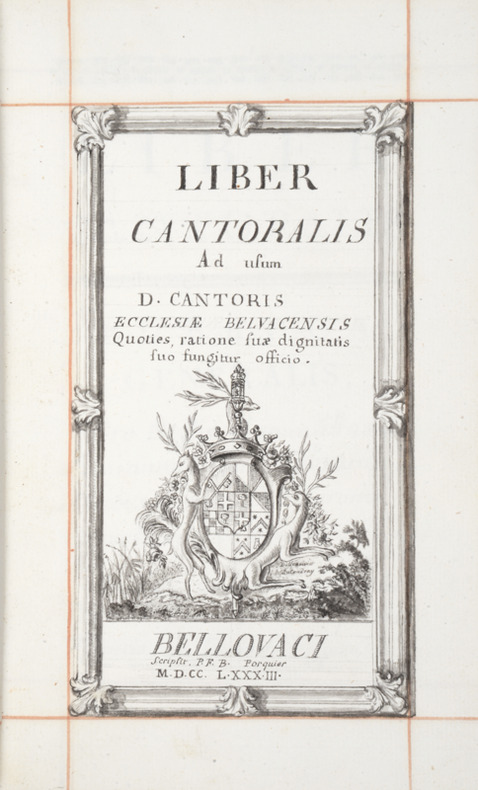
178341437Beauvais, , 1783. Manuscrit in-8 réglé de XL-201 pp., maroquin rouge, dos à nerfs orné à la grotesque, pièce de titre en maroquin vert, triple filet doré d'encadrement sur les plats, gardes de papier dominoté, filet or sur les coupes, roulette intérieure dorée, tranches dorées (reliure de l'époque).
Qu.-8vo. 46, (2) SS. Neuer Halbpergamentband (unter Verwendung alter Pergament-Handschrift) mit Titelschild. Kostbarer Typendruck der Discantus-Stimme zu 16 Kompositionen, mit Holzschnitt-Initialen zu Beginn der Gesangsabschnitte. - "Truchseß von Waldburg, der als Kardinal maßgebend an der Kirchenmusikreform des Trienter Konzils geteiligt war, brachte den Niederländer Jacobus de Kerle nach Augsburg (Domorganist 1568-75), bedeutend als Messen- und Motettenkomponist; [...] die kath. Kirchenmusik [erlebt] in den Jahrzehnten zwischen dem Religionsfrieden von 1555 und dem Dreißigjährigen Krieg eine glanzvolle Epoche, die im Wirken des [...] J. de Kerle [...] gipfelt" (A. Layer in "Musik in Bayern", Bd. I). - Stellenweise etwas fingerfleckig. RISM K, 447. Eitner V, 353. Lesure (Musique imprimée avant 1800), S. 342. BUC, S. 569.
78 eigenh. Werkmanuskripte, -skizzen und 3 eh. Bearbeitungen (zus. 792½ SS.), 191 eh. Briefe und Postkarten, 11 eh. Notizbücher (zus. 11.699 ½ SS) und 435 Photographien u. a. sowie 986 hs. bzw. ms. Briefe und Postkarte von Künstlerkollegen, Familienmitgliedern und Freunden (zus. 2725 SS.) sowie zahlreiche Photographien und Dokumente. Diverse Formate. - Beiliegend 101 gedruckte Werke und Bearbeitungen des Komponisten. Versch. Orte, ca. 1910-1925. Zus. 1142 SS. Umfangreicher Teilnachlass des Musikers und Komponisten (vgl. ÖBL, Kosel u. Dt. Musiker Lexikon). Geboren am 26. März 1864, studierte Liftl Waldhorn, Klavier, Musikgeschichte und Harmonie am Wiener Konservatorium und wurde u. a. von Anton Wunderer (1850-1906) und - wie in unserem Nachlass dokumentiert - Franz Krenn (1816-97) in den Fächern Kontrapunkt und Komposition privat unterrichtet. Im entsprechenden, für den Nachweis der Studien erforderlichen Zeugnis bescheinigt ihm der Komponist, dass sein Schüler "mehrere Compositionen verfaßt und dieselben mit großer Geschicklichkeit instrumentiert und dadurch gezeigt [hat], daß er nicht nur jedes einzelne Instrument kennt, sondern auch ihre Verwendung im Orchester zu behandeln versteht [...]" (Zeugnis, dat. 15. V. 1890). Seine Studien an der Horakschen Schule fortsetzend, absolvierte Liftl anschließend den Staatsprüfungskurs und 1892 die Lehramtsprüfung, bei der - wie aus vorliegendem Zeugnis hervorgeht - Franz Krenn (s. o.), Leopold Landskron (Komponist, 1842-1900) und Eduard Hanslick (Musikwissenschaftler und Kritiker, 1825-1904) seine Prüfer waren. Seine musikalische Begabung führte Liftl ans Theater an der Wien und auf zahlreiche Konzertreisen. Als Musiklehrer zudem am Piaristenkonvikt in Wien tätig, lernte er, der auch privaten Musikunterricht erteilte, u. a. die junge, aus Mähren stammende Musikerin Wilhelmine kennen, die er 1904 ehelichen sollte. Nach einer Fehlgeburt im Frühjahr des darauffolgenden Jahres sollte die Ehe bis zur Geburt von Helga (7. VII. 1909) kinderlos bleiben. Bis 1920 am Piaristenkonvikt, war er nach 1921 an der Theresianischen Ritterakademie tätig. Wie aus dem mit "Repertoire des Burgtheaters" betitelten Kalender (dat. 1. Mai 1903) hervorgeht, war Liftl auch als Bühnenmusiker für über 400 Theaterstücke (die alphabetisch verzeichnet sind) am Burgtheater und - wie aus einem Brief seiner Gattin kurz nach Liftls Tod ersichtlich ("Vom Theater war er wohl schon 2 Jahre pensioniert, machte aber für seine Kollegen noch sehr gerne öfter in der Oper oder Burg Dienst [...]", Br. v. Mina Liftl an Karla und Jaro v. 5. IX. 1932) - an der Oper tätig. Sein kompositorisches Schaffen von der Operette "Die Lügenwaage" bis hin zu Walzern, Märschen und verschiedenen Tänzen umfasst an die 100 Titel. Erwähnenswert sind weiters seine hier gleichfalls vorliegenden Bearbeitungen von Werken Bachs, Mozarts, Schuberts, Wagners u. a. - Detaillierte Verlistung auf Anfrage.
Edizione originale. Ottimo esemplare ben completo della busta originale. Il carrarese Aldo Giuntini (1896-1969), formazione musicale al pianoforte, studi irregolari e prime prove caratterizzate da uno «scolorito linguaggio espressionista» (Saracino, p. 545b), trova infine ispirazione nel Futurismo: a partire dalle prime interessanti prove, i Brani sintetici e le Sintesi musicali per pianoforte (Carrara 1928), fino alla conoscenza diretta con Marinetti, nel 1933. Giuntini diventa il campione dell’«aeromusica» (manifesto pubblicato su «Stile futurista» I,2, agosto 1934) e accompagna il capo del Futurismo in varie serate tra declamazione e musica. -- Il primo disco che vede riuniti Marinetti alla voce e Giuntini al pianoforte è quello delle «Sintesi musicali futuriste», pubblicato nel 1938 ma che raccoglie anche i materiali 1933-34. Marinetti così lo presentava, nell’occasione: «Il Movimento futurista italiano attira l’attenzione del mondo sul grande musicista futurista Aldo Giuntini, creatore della sintesi brevità nella musica. Le sue sintesi musicali futuriste di un minuto ciascuna escludono qualsiasi sviluppo tematico per captare l’essenza pura della musica» — sottolineando la cifra stilistica di Giuntini, abile nel comporre «brevissimi [...] pezzi pianistici (1 minuto di durata) costruiti su aggregati esatonali, percussivamente scanditi e ritmicamente variati con effetti dinamici ripetitivi» (Saracino, p. 545c). -- «Gli eroi musicali della nostra guerra» è il secondo e ultimo disco pubblicato dal duo: le «sintesi musicali» traggono questa volta ispirazione dall’«aeropoema simultaneo» di Marinetti «Canto eroi e macchine della guerra mussoliniana» (Milano 1942), dedicato ai caduti d’Etiopia: Giuntini mette in musica: -Gli eroi Borsini e Ciaravolo affondano col cacciatorpediniere Nullo nel Mar Rosso; -Il mare; -La festa dei motori di guerra; -Accerchiati vincemmo a Passo Uarieu; -Battaglia simultanea di terra, mare, cielo. -- La calda e baritonale voce di Marinetti introduce i brani e, in alcuni pezzi, si inserisce mimando scambi di battute o parti in discorso diretto: memorabile la resa di Vincenzo Ciaravolo che, con appropriato accento di Torre del Greco, urla «Comandante comandante sono l’attendeeente Ciàraaaavolo vengo pure io» (così stampato in Canto eroi e macchine, p. 66). -- Come comprensibile, data la natura effimera del prodotto, i dischi cosiddetti “futuristi” sono rarissimi sul mercato antiquario: non abbiamo notizia di lotti offerti in cataloghi antiquari negli ultimi trent’anni, né di apparizioni in asta. Il disco qui presentato manca dal catalogo online del sistema bibliotecario nazionale, altrimenti detto Iccu, e sia Lombardi che Cammarota concordano nel definirlo, rispettivamente, «raro» e «rarissimo». -- Curioso il macroscopico errore di datazione «1931» nell’enciclopedia di Lombardi. Gli eroi musicali della nostra guerra è da datare al 1942 sia per il riferimento al poema marinettiano, sia per la sigla identificativa «Columbia DQ 3661»; alcuni esemplari, inoltre, recano stampigliato sulla busta un timbretto con data «FEB. 1942». L’errore rimarca tuttavia la condizione ancora provvisoria degli studi sul Futurismo musicale, e in particolare la mancanza di qualsivoglia approfondimento specifico sull’opera di Aldo Giuntini. E. Saracino, Giuntini, Aldo (voce del Dizionario del Futurismo, Firenze 2001, p. 545); D. Cammarota, Filippo Tommaso Marinetti: bibliografia (Milano 2002), n. V.244; D. Cammarota, Futurismo: bibliografia di 500 scrittori italiani (Milano 2006), n. V.241.12; D. Lombardi, Nuova enciclopedia del Futurismo musicale (Milano 2009), p. 131; C. Salaris, Pentagramma elettrico (Pistoia 2009), n. 61; A. Latanza & D. Lombardi, Musica futurista 6: Filippo Tommaso Marinetti declama (compact disc Milano 2010, MM006 Mudima), n. 14
Edizione originale. Alone al margine di alcune carte ma bellissimo esemplare in barbe nella brossura originale; estremamente raro in queste condizioni. Capolavoro di Stendhal, sospeso — come usuale nelle sue prime opere — tra saggio letterario-filosofico, biografia non autorizzata e grande affresco narrativo. Rossini diventa quindi lo spunto per discorrere ad ampio raggio di musica e di storia della musica, con l’intero capitolo quarto della prima parte dedicato a «Mozart e l’Italie». Escoffier, Le Mouvement Romantique, 511; Cordier, Bibliographie stendhalienne, n. 64; Carteret, Le Trésor, p. 347 2 voll.
Zus. 8 SS. auf 4 Einzelbll. und 1 Doppelblatt. Beil. 3 Bll. Photoreproduktionen und ms. Transkription eines der Briefe sowie 2 Photoreproduktionen u. ms. Transkription eines eh. Briefes mit U. von Richard Wagner. 4to, 8vo und qu.-12mo. Interessante Korrespondenz mit dem Möbelfabrikanten J. A. Eysser über die Ausstattung der Villa Wahnfried. - Über die Verzierung einer Zimmerdecke mit Rosen: "Fräulein Meyer setzt 25 Pf. an für Herstellung der 12 Rosen, ich möchte nun wissen wie viel dutzend für den Plafond gebraucht werden würden um mir einen Begriff des Preises des Plafonds zu machen [...]" ([1. III. 1878]). Bereits einige Jahre zuvor hatte sie vergeblich wegen der Gestaltung des Plafonds angefragt: "Euer Wohlgeboren bedauere ich sehr mittheilen zu müssen, dass, da Sie mich Monate lang ohne Nachrichten gelassen haben, ob und wann Sie die Decke mir ausführen könnten ich mich bei der Eile die es mit unserem Einzuge hat, an einen anderen Bildhauer habe wenden müssen. Ich sehe mir Ihre Probe an um Sie meinem Manne bei etwaigen Arbeiten des Theaters zu empfehlen [...]" (6. XI. 1873). - Mit der Bitte, einen Brief an den Stofffabrikanten Le Mire zu übersenden: "Frau Richard Wagner ersucht Herrn Eyser diesen Brief an Herrn Le Mire, worin sie anzeigt, dass die Muster nicht angekommen sind zu unterzeichnen und abzusenden, auch die Anzahl der Meter hinein zu schreiben welche sie für eine halbe Portiere der kleinen Thüre (nicht bis zur Decke) und für den Kleinen Bilder Vorhang gebrauchen wird [...]" (o. O. u. D.). Cosimas Brief an Le Mire in französischer Sprache liegt bei: "Je crois devoir vous prévenir que les échantillons annoncés il y a huit jours ne sont point encore arrivés [...]". - Der in Photokopie enthaltene Brief Richard Wagners an Eysser betrifft das Auftragsstorno eines Schreibtisches für Cosima. - Einige unbedeutende Randeinrisse.
1 S. auf Doppelblatt. 8vo. An seinen Verwalter, den Mainzer Weinhändler Carl Voltz, betreffend eine Zahlung an den Wiener Stofffabrikanten Carl Giani: "Es liegt mir daran, von Ihnen den Empfang meiner letzten Depeche, so wie den richtigen Wortlaut derselben, bestätigt zu wissen. Meine Weisung lautete auf fl. 901. 70. oest[erreichische] W[ährung], also neunhundert u. 1 Gulden 70 [Kreuze]r oesterreichisch[e] [Währung], an 'Carl Giani. Seilergasse 9. Wien'. Alles in Ordnung?". - Die Rechnung könnte in Zusammenhang mit der Einrichtung der Villa Wahnfried in Bayreuth stehen, welche die Wagners am 28. April 1874 bezogen hatten. Carl Gianis Kunstanstalt für Stickerei und Weberei war in der zweiten Hälfte des 19 Jahrhunderts ein führender Hersteller dekorierter Textilien in Mitteleuropa. - Mit Empfängernotiz in Tinte (2. Bl. recto). Minimal fleckig und etwas knittrig.
18322092902141600340Not Available 1832. Soft Cover. Fine. Size: 114 x 56 cm Number of books: 1 Not Available paperback
"Fotografia autografa, Johann Strauss figlio (1821 - 1899) fotografia con dedica e firma autografe datata 14 ottobre 1894 - foto Rudolf Krziwanek - Vienna Foto Krziwanek - Vienna 1894, fotografia originale con tre righe di dedica, data cronica e firma autografe dello Strauss a penna nera. Testo in tedesco. La fotografia è, applicata a supporto cartaceo. Al margine inf. e al retro della fotografia dati a stampa del fotografo. Cm 10,5x6,5 (fotografia), cm 31x24 (supporto cartaceo). Acclusi una fotocartolina primonovecentesca in b/n (ritratto dello Strauss) e uno schedino descrittivo del precedente collezionista. Condizioni di conservazione Fotografia in buone condizioni con minimi segni del tempo, pressoché, trascurabili aloni. Per maggiori dettagli vedi foto. Fotografia autografa del più, celebre compositore della famiglia Strauss. Suoi i più, bei valzer della "belle epoque" viennese. Per maggiori dettagl vedi foto schedino. Rarissimo, di grande valore collezionistico. Provenienza raccolta Amorth. SC03.D16499 N "
1 S. Qu.-8vo. Mit eigenh. Adresse. An seinen Verleger Fritz Simrock in Berlin: "Wir sind hier im Trubel, Frl. Spies, Hegar etc etc ich kann den Augenblick nichts andres schreiben als diesen frdl. Gruß an Sie, zugleich schönste Treppenreisen bei S[enff] und A[stor] herzlich anwünschend! Hoffentlich ist übrigens hernach kein Schreiben mehr nöthig, sonst versucht dies Ihr J. B. / Wollen Sie nicht meinen Brief bei P. lesen?". - Hermine Spies galt als eine der führenden Altistinnen in Europa und als hervorragende Interpretin der Werke von Johannes Brahms, dem sie auch persönlich freundschaftlich verbunden war; der Schweizer Cellist Johannes Hegar war der Patensohn von Brahms. Simrock seinerseits hegte Pläne zur Übernahme der Musikverlage von Bartholf Senff und Edmund Astor, der Teilhaber im Musikverlag seines Schwiegervaters Rieter-Biedermann war. - Ein größerer Papierdurchbruch am unteren Rand (minimale Buchstabenberührung).
Altogether 35 pp. Various formats (4to to small 8vo). With 5 envelopes addressed in von Einem's hand. Copious correspondence with his aunt, Baroness Irmgard v. Willisen, and his cousin, Countess Michaela v. Stolberg. Von Einem reports on his compositions, his travels and holidays, touches upon internal family affairs, and discusses extensively the complications and problems arising during his various productions. - Fine collection of letters and postcards, encompassing half a century of the life of the important opera composer (‘Dantons Tod’, e. g.) with amusing, pointed, and occasionally rather caustic remarks.
Small 8vo. 4 pp. on bifolium. With envelope. An exceptionally fine love letter to his future wife Adele, née Deutsch: "Is it fair - to turn Jean's head in such a way - that he does not know himself anymore? What are you doing to him? The better he gets to know you - the more often he sees you - the worse it gets for the poor man. Oh, don't leave him ever - his life is chained to yours, he loves you so dearly - so very much - he has never loved anyone as much as he loves you. Don't deprive him of that which no living person was able to give to him or will ever be able to: this happiness which you give him, adored Adele. I embrace you with loving kisses, your Jean whom you have made so very happy […]" (transl. from the German original). - Two postscripts added: "I probably extended my visit too long today and in the meantime reproach myself for it"; "I would like to ask you to give my regards and most cordial greetings to your amiable cousin and your dear sister, but I don't dare to".
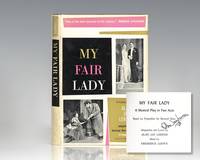
195679755New York: Coward-McCann 1956. First edition of "one of the best musicals of the twentieth century" The New York Times. Octavo original boards illustrated frontispiece of Andrews and Harrison. Signed by Alan Jay Lerner on the title page. Affixed to front free endpaper is a signed photograph of Julie Andrews and "with the compliments of Miss Andrews" affixed to the pastedown. Laid in signed photograph by Stanley Holloway Alfred P. Dolittle. The verso of the front free endpaper has a signed photograph of Rex Harrison affixed to it. On the dedication page is a card signed by Robert Coote Colonel Pickering and a signature of Wilfrid Hyde-White who played Colonel Pickering in the film version. There's also a magazine clipping of Harrison's behatted head also signed by him. Near fine in a near fine dust jacket with light wear. Jacket design by David Lyons. My Fair Lady is a musical based on George Bernard Shaw's Pygmalion with book and lyrics by Alan Jay Lerner and music by Frederick Loewe. The story concerns Eliza Doolittle a Cockney flower girl who takes speech lessons from professor Henry Higgins a phoneticist so that she may pass as a lady. The original Broadway and London shows starred Rex Harrison and Julie Andrews. The musical's 1956 Broadway production was a notable critical and popular success. It set a record for the longest run of any show on Broadway up to that time. It was followed by a hit London production a popular film version and many revivals. My Fair Lady has been called "the perfect musical". Coward-McCann hardcover books
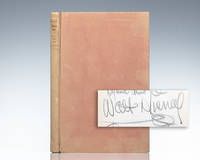
1936146500San Francisco: Bohemian Club 1936. First edition of this Grove Play produced and performed by and for Bohemian Club members. Octavo original orange boards. Signed by Walt Disney opposite the dedication page. Additionally signed and inscribed by nearly 70 individuals. In his book 'Walt Disney: An American Original' Bob Thomas recounts the story of Walt Disney's visit to the Bohemian Club in 1936 the year in which his signature appears in this volume -- apparently the snoring from the following evening inspired the snoring scene in the Dwarfs' cottage in Snow White. In very good condition ownership inscription to the front pastedown "For Orrville Taylor. Bohemia Aug 1 1936 from H. P." with a large sketch of the mountainside. American entrepreneur animator and film producer Walt Disney is arguably the most important figure in the history of animation. A national cultural icon his innovative spirit and vision revolutionized the genre of animated cartoons making them a major part of mainstream popular entertainment. Founded as the Disney Brothers Cartoon Studio in 1923 and incorporated as Walt Disney Productions in 1929 Walt Disney Animation Studios has produced 57 feature films. For much of its existence the studio was recognized as the premier American animation studio; it developed many of the techniques concepts and principles that became standard practices of traditional animation. Bohemian Club hardcover
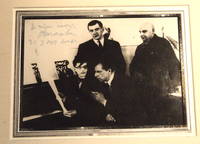
196925411Moscow 1969. 1969. Very good. INSCRIBED AND SIGNED BY SHOSTAKOVICH - sc A 6-1/2 inch high by 9-1/4 inch wide black & white gelatin silver photograph distributed by the photographic agency of H. Roger Viollet with their stamp on the verso. This famous image from September 19 1929 depicts the young bespectacled Shostakovich seated at the piano holding up a sheet of the music for the Bedbug so that Meyerhold the director of the play who is seated next to the composer with a cigarette in hand can look at the page. Standing behind the two a cigarette dangling from his mouth is the poet and author of the play Vladimir Mayakovsky with the great painter and photographer Alexander Rodchenko who designed the sets for the production standing at the viewer's right. Shostakovich has inscribed the photograph at the top left in Russian with words equivalent to "Best Wishes". The inscription and signature penned in blue ink is signed "D. Shostakovich" and dated "25 I 1969 Mokba". The photographic agent's credits stamped on the verso state "H.Roger Viollet / 6 Rue de Seine Paris - 6e / Tel. ODE. 81-10 / Attention Obligatoire / Collection Viollet". This particular signed photograph is from the collection of the autograph collector and scholar Ray Rawlins who wrote numerous books on the subject with his discreet oval collector's mark stamped at the bottom right of the verso illustrated with a device of an arm holding an arrow and the words "Rawlins Collection: Historical Docs and ALS". The photo is further annotated in pencil on the verso: "RV 40877 / Theatre Meyerhold / le compositeur Chostakovitch / qui a compose la musique de la Punaise / assis a ses cote Meyerhold / debout de gauche a droite: / le poete Maiakisky auteur de la Punaise / et l'artiste Rodchenko qui s'occupe des decors pour 'la Punaise'." There are light brownish diagonal stains to the lower left of the verso with some minor creasing. The photograph is mounted into a mat with document tape from the top corners of the verso. The image itself has but some light spotting to the image and minor soiling to the left edge likely due to the overlap of the mat. There is some very minor fading and some very few spots most likely the result of the developing process. A rare and very significant signed photograph.<p>Provenance: From the collection of Ray Rawlins author of "The Stein and Day Book of World Autographs". <p>Along with Meyerhold Mayakovsky and Rodchenko Shostakovich embraced the Soviet Revolution which by its nature seemed to promise to liberate the arts from the constraints of staid conservative tradition. And though the promise seemed to hold true at first allowing great creativity and experimentation the artists were to find themselves criticized by those in power with little tolerance for those whose work even hinted at opposition. Shostakovich found himself alternately being hailed as a hero of Soviet music denounced as a formalist and attacked by Pravda. Such denunciation in Stalinist Russia could well lead to arrest. Indeed many of Shostakovich's friends and family were arrested or executed during the years of terror. In the early period from 1921 to 1927 the Bolshevik's experimentation with a New Economic Policy allowing some limited private enterprise resulted in considerable freedom and the arts flourished. Even criticism of the NEP and government policy was tolerated to some degree. But the line was always a fine one and by 1927 Stalin tightened his grip on the economy and the arts. It was in the period following 1928 the year Stalin buried the NEP that the futurist poet Mayakovsky wrote his play "Klop" The Bedbug for Meyerhold. It was an ambiguous satire of Soviet society. Shostakovich composed the incidental music for the play his Opus 19. Moscow, 1969. unknown
Seconda edizione riveduta, corretta, ed accresciuta dall'abbate Giacinto Ceruti ornata con CXL rami incisi d'Arnoldo Wanwesterout - in 4° - pp.XVI + XXIII + 214 - Mezza pelle con titolo e fregi in oro al dorso nervato - Frontespizio illustrato da Vincenzo Brenna e inciso da Francesco Rastaini, tavole incise da Wanwesterout, capilettera e testatina - Tagli spruzzati, piatti rivestiti in carta decorata e pergamena all'interno. Testo bilingue italiano e francese su due colonne. Ampi margini - Dorso in parte staccato, mancanze alla carta dei piatti, due tavv. staccate, diverse tavv. legate in ordine invertito, tav. XXXIII mancante - Titolo in francese al frontespizio: Description des instrumens harmoniques en tout genre par le pere Bonanni. Numerazione della tav. XIV compare insieme alla tav. XIII, la tav. XXIX è divisa in due numerate 1 e 2, a p. 115 una tav. non numerata dal titolo 'Varietà di cetere'. Celebre testo del gesuita F. Bonanni o Buonanni (1638-1725), fondamentale per la storia della musica, ricercato per il ricco apparato iconografico dove vengono mostrati musicisti e strumenti di ogni genere e paese, dall'antichità all'età moderna
4 volumes In-4, 383-325-285-273p. La première édition (de la plus grande rareté évidemment) de lÕintégrale des quatuors à cordes de Haydn publiée en 1802 par Pleyel et connue sous le nom de ÇÊBonaparte EditionÊÈ. COLLECTION COMPLéTE des QUATUORS DÕHAYDN Dédiée au Premier Consul BONAPARTE Gravée par Richomme. Cette Ïuvre à caractère exclusif était réservée aux quelques 290 souscripteurs, dontÊ: Sa Majesté l'Empereur-Roi, à Vienne, S.A.R le Grand-Duc de Toscanne, S.A.R. la Grande Duchesse,[É], Boieldieu, Cherubini, Kreutzer, Labiche, Rouget de lÕIsle, Cramer, Clementi, Dussek, Viotti, Bocherini, Razumowski, ErdÏdy, Esterhazi, Schoendorf, Thurn et Taxis, [...]. Avec liste dÕabonnement et, en frontispice, un beau portrait de Haydn, par Pierre-Narcisse Guérin, sculpté par Louis Darcis et gravé par Aubert. Les pages de titre ainsi que le texte musical sont également entièrement gravés. Il existe une polémique parmi les experts sur la question de lÕauthenticité des six quatuor Opus 3. On suppose quÕil pourrait sÕagir de compositions de Roman Hoffstetter. Volume I, premier violonÊ: Titre et beau portrait en pleine page de Haydn, gravés par AubertÊ; Catalogue thématique de tous les quatuors dÕHaydn, avoués par lÕAuteur et classés selon lÕordre dans lequel ils ont paruÊ; Noms des souscripteursÊ; Partitions, 383 pages gravées par Richomme. Demi-basane, plats en percaline grenat, titre doré à chaud, dos à faux-mors, orné en queue de fleurons dorés, In-folio, 26,5 x 32 cm, 2,810 kg Ë Paris, chez Pleyel, Auteur et ƒditeur de Musique, rue Neuve des Petits Champs, N¡ 1286, vis-à-vis la Trésorerie Nationale, s.d. mais 1800 ƒtatÊ:ÊPapier légèrement flavescent, dos et plat frottés, autrement bon état. Volume II, second violonÊ: Titre gravé par AubertÊ; Table du second violonÊ; Partitions, 325 pages gravées par Richomme Reliure dÕattente, cartonnage rouge jaspé et passé, dos lisse avec titre imprimé, In-folio, 27 x 36,5, 2,675 kg Ë Paris, chez Pleyel, Auteur et ƒditeur de Musique, rue Neuve des Petits Champs, N¡ 728, entre les Rues de la Loi et Helvétius, s.d. mais 1800 ƒtatÊ:ÊPapier légèrement flavescent, dos, plats et coins frottés, autrement bon état. Volume III, altoÊ: Titre gravé par AubertÊ; Table de lÕaltoÊ; Partitions, 285 pages gravées par Richomme Reliure dÕattente, cartonnage rouge jaspé et passé, dos lisse avec titre imprimé, In-folio, 27 x 36,5, 2,175 kg Ë Paris, chez Pleyel, Auteur et ƒditeur de Musique, rue Neuve des Petits Champs, N¡ 1286, vis-à-vis la Trésorerie Nationale, s.d. mais 1800 ƒtatÊ:ÊPapier flavescent, dos, plats et coins frottés, mouillures importantes nÕaltérant pas la lecture, autrement bon état. Volume IV, basseÊ: Titre gravé par AubertÊ; Table du violoncelleÊ; Partitions, 273 pages gravées par Richomme Reliure dÕattente, cartonnage rouge jaspé et passé, dos lisse avec titre imprimé, In-folio, 27 x 36,5, 2,262 kg Ë Paris, chez Pleyel, Auteur et ƒditeur de Musique, rue Neuve des Petits Champs, N¡ 728, entre les Rues de la Loi et Helvétius, s.d. mais 1800 ƒtatÊ:ÊPapier légèrement jauni, dos, plats et coins frottés, autrement bon état. Nombre de pagesÊ: 1280 pp. PoidsÊ:Ê9,930 kg Voir photos
1st edition. Period-style half leather with marbled boards, 12mo, 93 pages. In German. Singerman 1749. The David Einhorn Hymnal. Title translates as Songs for Jewish Public Worship. The Kneseth Israel (Philadelphia) board minutes from May 4, 1862, note that: A communication from Dr. Einhorn was handed in and reads as follows: To the respectable board of directors of Keneseth Israel! Since there is a decided shortage of hymn books not only in our reform congregation but in all the others in America, I am determined to put together a collection of songs, about 80-90 pages. They should be put to use during the service, and I will give them to the congregation if the congregation is wiling to undertake the printing....I suggest to the respectable board to take over the publication of the hymn collection and let me know soon, that the printing can start. Philadelphia, April 28, 1862. Dr. Einhorn. Decided, to accept the communication from Dr. Einhorn and make preparations for the printing [translation of minutes located at KI and at HUC in Cincinnati]. Then, according to the minutes of the next meeting, the board decided to fund the printing, which included 100 bound volumes. Reform Liturgy Scholar Judah Cohen has noted that the hymnal was almost entirely Einhorn, at least based on these records, and created in his view as a service to the growing reform movement. Rabbi Dr. Lance Sussman, Senior Rabbi at Kenesseth Israel in Philadelphia and a scholar on the history of the Synagogue and on 19th Century American Jewish history, reported on the H-Judaic internet listserv that I believe from the time Einhorn arrived in Baltimore from Europe in 1855, KI was in touch with him about its music program. KI had a gentile organist, William Fischer, who partnered with Einhorn both before and during Einhorn's time in Philly. Einhorn had fled Baltimore on April 19, 1861, following his delivery of an anti-Slavery sermon; a mob sought to tar and feather and he fled to Philadelphia where he became spiritual leader of Congregation Keneseth Israel. SUBJECT(S) : Jewish hymns. Reform Judaism -- Liturgy -- Texts. Jewish hymns. Reform Judaism Liturgy and ritual. OCLC: 9033019 OCLC lists only 6 copies worldwide (HUC, Gratz, Penn, Princeton, Princeton Theological, LBI). Far scarcer than famous first American Jewish hymnal published 20 years earlier in Charleston, which shows up with 9 holdings in OCLC. Institutional perforation stamp to title and final leaf, one other margin stamp. Otherwise very clean, an attractive copy of this exceedingly scarce and important American Jewish Hymnal by one of the 2 most import leaders of American Reform in the 19th Century (the other being Isaac Wise) . (AMR-51-15-BD)
Collezione consecutiva di 12 annate. Notevole insieme conservato in 4 volumi. Il settimanale politico letterario progettato come supplemento al quotidiano Il Fanfulla uscì dal 27 luglio 1879 al 31 ottobre del 1919. Molti i direttori negli anni a partire da Ferdinando Martini; Baldassare Avancini, Luigi Capuana, il critico musicale Eugenio Cecchi, Enrico Nencioni e come responsabile Bonaventura Severini. Di grande successo per la modernità delle proposte e informazioni culturali ebbe prestigiose firme, da Giosuè Carducci, Matilde Serao, Grazia Deledda, a Gabriele D’annunzio che iniziò a collaborare appena diciannovenne, Giovanni Verga vi pubblicò in anteprima le sue novelle, Collodi, Edmondo De Amicis, Federico De Roberto, Antonio Fogazzaro, Cesare Pascarella e molti altri. Fu la prima pubblicazione periodica a carattere nazionale. Disponiamo dei primi 12 anni (1879-1890) completi di indici, supplementi e frontespizi che accompagnavano la raccolta dei numeri. In straordinaria condizione. 4 voll.
1 S. Qu.-gr.-8vo. "Nei giorni tuoi felici ricordati di me! | l'eterno amico | Giorgio Albrechtsberger M: D: C: [Domkapellmeister] | 8. Jan: 1799.". - Stärker fleckig und mit Montagespuren am linken Rand. - Sehr selten.
Titel, 8 SS. Lose gefalt. Bögen. Qu.-Folio. "6 Bagatellen für Piano-Forte" (opus 4) des Berliner Musikpädagogen. Bleistift- und z. T. Buntstiftüberarbeitungen; oberhalb der "No. 1" signiert. Die Noten dieses Frühwerks erschienen 1852 bei Senff in Leipzig. - Der junge Bargiel, Halbbruder Clara Schumanns, war Soloaltist im Berliner Domchor gewesen; nach Beendigung seiner Studien am Leipziger Konservatorium (u. a. bei Moscheles) "kehrte er nach Berlin zurück, wirkte hier zunächst als Privatlehrer und begründete seinen Ruf als Komponist" (MGG I, 1268).
8vo. ¾ p. Perhaps to the German conductor and composer Carl Riedel, informing him that he will send the score with its single parts of an unnamed work. Riedel - with whom Borodin became acquainted through Franz Liszt - was a highly respected choral conductor in his native country and was one of the founders of the Allgemeiner Deutscher Musikverein. - Small traces of mounting on reverse; left margin untrimmed.